Doubull-Mastiff
The Doubull-Mastiff is a cross between the Bullmastiff and the Mastiff. Because each hybrid inherits a unique combination of traits from both parents, we recommend thoroughly researching both breeds before choosing a Doubull-Mastiff. Pay special attention to temperament, health issues, and care requirements, as your dog may express characteristics from either parent breed.
Bullmastiff
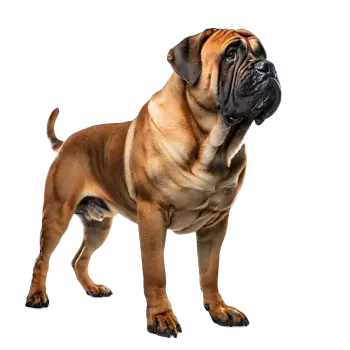
The Bullmastiff presents a symmetrical, powerfully built appearance that conveys great strength, endurance, and alertness while remaining active and agile. Male Bullmastiffs stand between 25 to 27 inches at the withers and weigh 110 to 130 pounds, while females measure 24 to 26 inches in height and weigh 100 to 120 pounds. The breed standard favors the more substantial dog within these limits, emphasizing the importance of size and mass in the breed's original function as a gamekeeper's guardian. The body is nearly square in proportion, with the length from the tip of the breastbone to the rear of the thigh only slightly exceeding the height at the withers. The Bullmastiff's head is a defining characteristic of the breed, appearing large and square with a broad skull and well-developed cheeks. The muzzle is short and broad, approximately one-third the length of the entire head, with a pronounced stop between the eyes. The expression is keen, alert, and intelligent, achieved through dark, medium-sized eyes set wide apart. The V-shaped ears are carried close to the cheeks, set high and wide on the skull to create a square appearance. The nose is black with large, broad nostrils, and the dark mask extends up and around the eyes, adding to the breed's distinctive look. The coat is short, dense, and close-lying, providing excellent weather protection for outdoor work. Acceptable colors include red, fawn, and brindle, with the fawn ranging from light brown to reddish-brown and red varying from light red-fawn to dark, rich red. Brindle coats display a striped overlay pattern on the fawn or red base color. A small white spot on the chest is permitted, though other white markings are considered a fault. The tail is set high, strong at the root, and tapers to the hocks. The breed's gait is free, smooth, and powerful, with good reach and drive demonstrating the dog's athletic capability despite its substantial size.
Key Characteristics
Temperament Temperament Temperament Temperament Temperament Temperament Training and socialization are essential for successful ownership of this powerful breed. Early exposure to various people, places, and situations helps temper the Bullmastiff's natural wariness and develop appropriate responses to new experiences. The breed's intelligence and desire to please facilitate training, though their size means that establishing good behavior patterns while young is crucial. Bullmastiffs require firm but fair leadership and respond best to consistent, positive training methods. Their strong protective instincts combined with their massive size mean that responsible ownership requires commitment to proper training and management throughout the dog's life.
Health Considerations Health Considerations Health Considerations Health Considerations Health Considerations Health Considerations Cancer represents a significant health concern for Bullmastiffs, with studies indicating that cancer-related deaths account for approximately 34 percent of mortality in the breed. Various types of cancer can affect these dogs, making regular veterinary examinations important for early detection. Additional health issues include entropion, where the eyelids roll inward and irritate the eye, and hypothyroidism, which affects the thyroid gland's hormone production. The breed is also known for snoring and drooling due to their facial structure. Prospective owners should seek breeders who perform comprehensive health testing and provide documentation of their breeding dogs' health clearances.
Mastiff
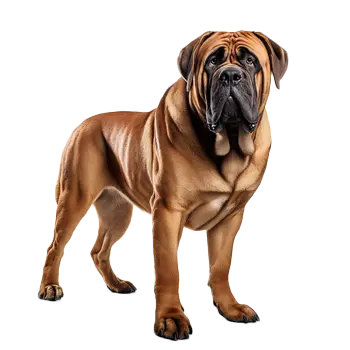
The Mastiff, also known as the English Mastiff, ranks among the largest and most massive dog breeds in the world. Male Mastiffs stand at a minimum of 30 inches at the shoulder and typically weigh between 160 to 230 pounds, with some exceptional individuals exceeding these weights. Females are somewhat smaller, measuring at least 27.5 inches in height and weighing 120 to 170 pounds. The breed presents a powerful, heavy-boned structure with a rectangular body that combines great mass with surprising athleticism. The overall impression is one of grandeur and dignity, befitting a breed that has served as a guardian and companion throughout centuries of human history. The Mastiff's head is massive and broad, contributing significantly to the breed's commanding presence. The skull is broad between the ears with a slightly rounded forehead and a pronounced stop between the eyes. The muzzle is short, broad, and square when viewed from any angle, measuring approximately half the length of the skull. Deep, drooping jowls frame the face, and the lips hang below the lower jaw. The eyes are medium-sized, set wide apart, and brown in color, darker being preferred. Small, V-shaped ears are set high on the skull and lie close to the cheeks. A black mask covers the muzzle, extending up around the eyes and between them, providing a characteristic expression. The Mastiff's coat is short, straight, and close-lying, providing a sleek appearance that highlights the breed's muscular definition. Acceptable colors include fawn, apricot, and brindle, all with the distinctive dark mask. Fawn ranges from light silver to golden yellow, apricot appears as a deeper reddish-gold, and brindle displays dark stripes over a lighter base coat. The chest is wide and deep, extending to the elbows, and the back is muscular and level. The tail is set moderately high, broad at the root, and tapers to the tip, reaching the hocks when the dog is relaxed. Movement should be powerful and effortless, with good reach and drive.
Key Characteristics
Temperament Temperament Temperament Temperament Temperament Temperament Despite their calm demeanor, Mastiffs require consistent training and extensive socialization from an early age. Their enormous size means that even friendly behaviors can overwhelm people, making good manners essential. The breed responds well to positive training methods but can be sensitive to harsh correction, which may cause them to become withdrawn. Mastiffs thrive on human companionship and may develop separation anxiety if left alone for extended periods. Prospective owners should understand that these dogs consider themselves integral family members and prefer to be wherever their people are. Their relatively low energy level as adults makes them adaptable to various living situations, though sufficient space to accommodate their size remains important.
Health Considerations Health Considerations Health Considerations Health Considerations Health Considerations Health Considerations Bloat, or gastric dilatation-volvulus, presents a life-threatening emergency that Mastiff owners must understand and watch for vigilantly. This condition can develop rapidly and proves fatal without immediate veterinary intervention. Heart disease, particularly dilated cardiomyopathy, affects the breed and causes progressive weakening of the heart muscle. Progressive retinal atrophy can lead to vision loss, while degenerative myelopathy affects the spinal cord and causes progressive paralysis. Cancer occurs with concerning frequency in the breed and accounts for a significant percentage of deaths. Additional health considerations include cystinuria, a condition affecting the urinary system, and hypothyroidism. Regular veterinary examinations and health screenings help identify problems early when intervention may be most effective.
Important to Remember
Each hybrid dog is unique and may inherit any combination of traits from either parent breed. The information above represents the characteristics of the purebred parent breeds. Your Doubull-Mastiff may favor one parent over the other or display a blend of both. We strongly encourage you to read the complete breed profiles for both the Bullmastiff and Mastiff to fully understand the range of possible temperaments, health concerns, and care requirements.