Doubull-Mastiff
The Doubull-Mastiff is a cross between the Bullmastiff and the Mastiff. Because each hybrid inherits a unique combination of traits from both parents, we recommend thoroughly researching both breeds before choosing a Doubull-Mastiff. Pay special attention to temperament, health issues, and care requirements, as your dog may express characteristics from either parent breed.
Bullmastiff
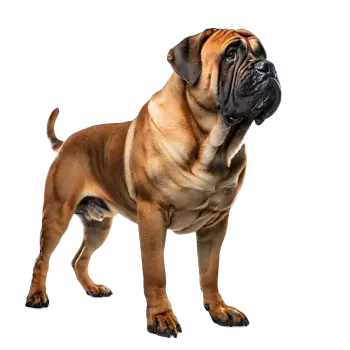
The Bullmastiff presents a powerfully built physique that commands attention while remaining remarkably agile for its substantial size. Males typically stand between twenty-five and twenty-seven inches at the shoulder, weighing from one hundred ten to one hundred thirty pounds, while females measure slightly smaller at twenty-four to twenty-six inches and weigh between one hundred and one hundred twenty pounds. The breed exhibits a distinctly solid, square-bodied appearance with broad, muscular shoulders, a deep chest, and well-developed hindquarters that convey both strength and athleticism. The overall structure suggests impressive power combined with surprising grace of movement when the dog is in good health. The head represents one of the breed's most distinctive features, characterized by its broad, square appearance with a wrinkled forehead and shortened muzzle. Dark hazel eyes sit beneath distinctive shaggy eyebrows, while the nose remains consistently black with large nostrils. Small v-shaped ears hang close to the cheeks, set wide and high on the skull, further emphasizing the head's boxy contours. The neck displays exceptional muscularity, slightly arched and strong, leading to a body that maintains level proportions from shoulder to hindquarters. The tail sits high on the rump, reaching to the hocks and carrying either straight or with a slight curve. The Bullmastiff's coat presents a short, dense covering that lies flat against the body, providing weather resistance while remaining easy to maintain. Coat colors include fawn, reddish-brown, or brindle, often accompanied by darker shading on the muzzle, ears, and around the eyes. This darker masking creates an expressive face that can alternate between intimidating alertness and gentle affection. The breed may display some white markings on the chest, though extensive white elsewhere would be considered undesirable. Despite the short coat length, the dense texture offers adequate protection from inclement weather while shedding only moderately throughout the year, making the Bullmastiff relatively straightforward to groom with regular brushing.
Key Characteristics
Temperament Temperament Temperament Temperament Temperament Temperament Intelligent and capable learners, Bullmastiffs nevertheless exhibit an independent thinking style that can present training challenges. They require confident, consistent leadership from owners who can establish clear boundaries and maintain them throughout the dog's life. Without proper structure and mental stimulation, these dogs may develop unwanted behaviors including excessive protectiveness or stubbornness. Their working heritage means they benefit from having jobs or tasks to perform, whether formal obedience training, canine sports, or simply participating in family activities. When properly trained and socialized, Bullmastiffs exemplify the perfect balance between courageous protector and gentle family companion, offering unwavering devotion and reliable temperament.
Health Considerations Health Considerations Health Considerations Health Considerations Health Considerations Health Considerations Gastric dilatation-volvulus, commonly known as bloat, poses a life-threatening emergency for this deep-chested breed. The condition occurs when the stomach fills with gas and potentially twists on itself, cutting off blood flow and requiring immediate surgical intervention. While research has not identified definitive preventive measures, feeding multiple smaller meals throughout the day rather than one large meal may help reduce risk. Additionally, Bullmastiffs benefit from cardiac monitoring, as dilated cardiomyopathy can affect the breed. Regular veterinary care, proper nutrition, appropriate exercise, and awareness of breed-specific health issues all contribute to helping Bullmastiffs live their fullest, healthiest lives possible.
Mastiff
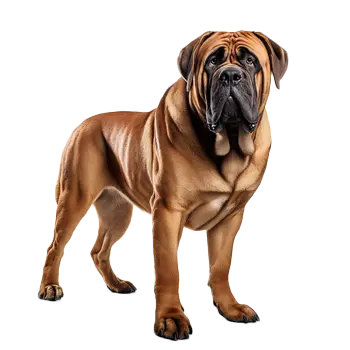
The Mastiff stands as one of the largest and most imposing dog breeds in existence, with males reaching heights of thirty to thirty-three inches at the shoulder and weights ranging from one hundred sixty to over two hundred thirty pounds. Females measure slightly smaller at twenty-seven to thirty inches tall, typically weighing between one hundred twenty and one hundred seventy pounds. Despite this massive size, well-conditioned Mastiffs move with surprising grace and fluidity, displaying a powerful yet smooth gait that belies their bulk. The breed's sheer mass and muscular development create an intimidating presence that historically made them effective guardians, as few would willingly challenge such an enormous canine. The head presents a defining characteristic of the breed, appearing heavy and square with a relatively short muzzle and distinctive drooping jowls that give the face a somber, dignified expression. Small dark hazel or brown eyes convey intelligence and alertness despite the breed's generally calm demeanor. The ears remain small in proportion to the massive head, colored darker than the body and hanging downward in a pendant fashion. A black mask consistently appears around the eyes, nose, and muzzle, creating striking contrast against lighter coat colors. The broad skull features a slightly curved top, while the muzzle displays substantial width and depth, housing powerful jaws. The neck appears thick and muscular, necessary to support the considerable weight of the head. The Mastiff's body exemplifies power and substance, with a massive frame built for strength rather than speed. Broad shoulders lead to a deep chest that provides ample room for large lungs and heart, while the back remains relatively level and well-muscled. The coat consists of straight, coarse outer hairs of moderate length lying close to the body, with a shorter, denser undercoat beneath. Standard colors include fawn, apricot, and brindle, all featuring the characteristic black mask on the face and ears. Some dogs display darker shading across the back and shoulders. The tail sets high on the rump and tapers toward the tip, reaching approximately to the hock joints. This imposing physical structure, combined with the breed's substantial bone structure and muscular development, creates one of nature's most impressive canines.
Key Characteristics
Temperament Temperament Temperament Temperament Temperament Temperament Intelligent yet somewhat independent-minded, Mastiffs respond best to patient, positive training methods. Their sensitive nature makes them unsuited to harsh corrections or heavy-handed training approaches. These dogs think for themselves and may occasionally choose their own course of action, particularly if they perceive their family needs protection. Training should begin early and maintain consistency throughout the dog's life, establishing clear boundaries and expectations. The breed's substantial size and strength make obedience training non-negotiable, as an untrained Mastiff can become difficult or even dangerous to manage. When properly trained and socialized, Mastiffs exemplify dignified nobility combined with gentle affection, creating remarkably devoted family companions.
Health Considerations Health Considerations Health Considerations Health Considerations Health Considerations Health Considerations Cardiovascular disease affects many Mastiffs, with dilated cardiomyopathy being a particular concern. This condition causes the heart muscle to weaken and enlarge, eventually leading to heart failure. Progressive retinal atrophy and other eye problems can cause vision loss, though affected dogs often adapt remarkably well to blindness when kept in familiar environments. Cancer occurs at concerning rates in Mastiffs, including bone cancer and other malignancies. The breed also faces challenges with overheating due to their brachycephalic facial structure and massive body mass, requiring careful management in warm weather. Regular veterinary monitoring, appropriate nutrition, moderate exercise, and attentive care can help maximize both quality and length of life for these magnificent giants.
Important to Remember
Each hybrid dog is unique and may inherit any combination of traits from either parent breed. The information above represents the characteristics of the purebred parent breeds. Your Doubull-Mastiff may favor one parent over the other or display a blend of both. We strongly encourage you to read the complete breed profiles for both the Bullmastiff and Mastiff to fully understand the range of possible temperaments, health concerns, and care requirements.