Dobie-Basset
The Dobie-Basset is a cross between the Doberman Pinscher and the Basset Hound. Because each hybrid inherits a unique combination of traits from both parents, we recommend thoroughly researching both breeds before choosing a Dobie-Basset. Pay special attention to temperament, health issues, and care requirements, as your dog may express characteristics from either parent breed.
Doberman Pinscher
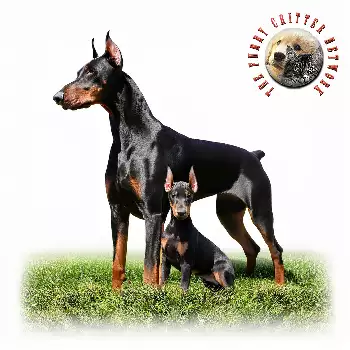
The Doberman Pinscher is a large, powerful working breed that presents an impressive silhouette of strength, athleticism, and noble bearing. Males typically stand between 26 and 28 inches at the shoulder and weigh 75 to 100 pounds, while females are slightly smaller at 24 to 26 inches tall and 60 to 90 pounds. The breed possesses a square, compact build with a well-proportioned body that combines muscular development with elegant lines, appearing neither heavy-set and cumbersome nor refined and racy. The chest is broad and deep, providing ample lung capacity for sustained physical activity, while the back is short and firm with a slight tuck at the loin creating a streamlined appearance. The legs are straight and parallel when viewed from the front, with well-developed thighs and strong bone structure contributing to the breed's characteristic powerful yet graceful movement. The Doberman's head is long and wedge-shaped when viewed from above and in profile, with a flat skull and well-defined stop. The muzzle is deep and broad, approximately equal in length to the skull, housing a powerful jaw with a scissors bite containing 42 correctly placed teeth. The eyes are almond-shaped and moderately deep-set, displaying an alert and intelligent expression that reflects the breed's watchful nature. Ears are typically cropped to stand erect in countries where the practice is permitted, creating the signature alert appearance, though uncropped ears fold naturally alongside the head. The neck is well-arched, muscular, and elegantly carries the head high, widening gradually toward the body and blending smoothly into the shoulder. The coat is short, smooth, hard, and thick, lying close to the body with minimal undercoat. Recognized colors include black, red, blue, and fawn, all with clearly defined rust-colored markings appearing above each eye, on the muzzle, throat, chest, legs, feet, and below the tail. The blue coloration results from a dilution gene affecting black pigment, while fawn similarly dilutes the red coloration. The tail is traditionally docked at approximately the second joint, though natural tails are becoming more common in regions where docking is prohibited. This sleek, aerodynamic coat requires minimal grooming while showcasing the breed's impressive muscular definition and athletic physique.
Key Characteristics
Temperament Temperament Temperament Temperament Temperament Temperament Dobermans maintain a puppy-like playfulness well into adulthood, often until three to four years of age. They are energetic dogs that require substantial daily exercise, particularly during their first several years. While they can adapt to various living situations when adequately exercised, they thrive best in homes where they can participate in family activities and have regular opportunities for both physical and mental engagement. Their combination of athleticism, trainability, and devotion makes them excellent companions for active owners who understand and appreciate the breed's need for structured activity and close human companionship.
Health Considerations Health Considerations Health Considerations Health Considerations Health Considerations Health Considerations Additional health concerns include hip dysplasia, hypothyroidism, progressive retinal atrophy leading to blindness, and gastric dilatation-volvulus, commonly known as bloat. The breed also shows predisposition to various cancers and chronic active hepatitis. The average lifespan for a Doberman Pinscher ranges from 10 to 12 years, which research has shown to be among the shorter lifespans when compared to other breeds. Responsible breeding practices, regular veterinary care, and appropriate health screening can help identify and manage many of these conditions early.
Basset Hound

The Basset Hound is a medium to large scent hound immediately recognizable by its distinctive low-slung body, remarkably short legs, and long, velvety ears. Despite standing only 11 to 15 inches tall at the shoulder, the Basset is a substantial dog weighing between 40 and 65 pounds, with some large males reaching up to 80 pounds. The breed's short stature results from achondroplasia, a form of dwarfism that produces the characteristically short, heavy-boned legs while the body itself maintains the proportions of a much larger hound. The chest is deep and full, extending well below the elbows, while the body is long and level with well-sprung ribs. The Basset's head is large and well-proportioned, featuring a distinctly domed skull and prominent occiput. The muzzle is deep and heavy with substantial flew that contributes to the breed's exceptional scenting ability by trapping scent particles near the nose. The most striking facial features are the sad, soulful eyes that are soft and brown, and the extraordinarily long ears that, when pulled forward, extend well beyond the nose. These pendulous ears serve a practical purpose, helping to stir up ground scent and funnel it toward the nose. The forehead displays loose skin that falls into characteristic wrinkles, particularly when the head is lowered during tracking. The coat is short, smooth, and dense, providing adequate protection from underbrush during hunting. Bassets appear in any recognized hound color, with the most common being tricolor combinations of black, tan, and white, or bicolor patterns of red and white or lemon and white. The tail is long, set as a continuation of the spine, carried gaily in a slight curve, and tipped with white to remain visible when the dog is working in tall cover. The overall impression is of a powerful, heavy-boned hound with remarkable substance for its height.
Key Characteristics
Temperament Temperament Temperament Temperament Temperament Temperament Training a Basset Hound requires patience and understanding of the breed's independent nature. While intelligent, they were bred to work somewhat independently on the trail, making decisions based on scent rather than handler direction. This can translate to apparent stubbornness during training sessions. Positive reinforcement methods work best, as Bassets respond poorly to harsh correction. Their powerful nose can also prove distracting, and once a Basset catches an interesting scent, convincing them to abandon the trail requires considerable effort. Despite these challenges, their gentle disposition and love of human companionship make them wonderful family dogs for owners who appreciate their unique character.
Health Considerations Health Considerations Health Considerations Health Considerations Health Considerations Health Considerations Thrombopathia, a hereditary bleeding disorder similar to but distinct from von Willebrand disease, occurs in Basset Hounds and causes prolonged bleeding after injury or surgery. Genetic testing is available to identify affected dogs and carriers. Hip and elbow dysplasia affect the breed at moderate rates and can cause pain and mobility issues. The Basset Hound's love of food combined with relatively low activity levels creates a strong tendency toward obesity, which exacerbates spinal problems and joint disease. Careful portion control and regular moderate exercise are essential. The typical lifespan ranges from 10 to 12 years with proper care.
Important to Remember
Each hybrid dog is unique and may inherit any combination of traits from either parent breed. The information above represents the characteristics of the purebred parent breeds. Your Dobie-Basset may favor one parent over the other or display a blend of both. We strongly encourage you to read the complete breed profiles for both the Doberman Pinscher and Basset Hound to fully understand the range of possible temperaments, health concerns, and care requirements.