Dashalier
The Dashalier is a cross between the Dachshund and the Cavalier King Charles Spaniel. Because each hybrid inherits a unique combination of traits from both parents, we recommend thoroughly researching both breeds before choosing a Dashalier. Pay special attention to temperament, health issues, and care requirements, as your dog may express characteristics from either parent breed.
Dachshund

The Dachshund is instantly recognizable for its elongated body and remarkably short legs, a distinctive build that earned it nicknames like sausage dog and wiener dog. This breed comes in two sizes according to the American Kennel Club standard. Standard Dachshunds measure eight to nine inches at the shoulder and weigh between sixteen and thirty-two pounds, while Miniature Dachshunds stand just five to six inches tall and weigh eleven pounds or less. The breed's low-to-ground stature belies its muscular and powerful build, designed for stamina and the ability to dig into badger dens. The body is long and fully muscled with a protruding sternum and moderately retracted abdomen, carried boldly and with confidence. Dachshunds present in three distinct coat varieties, each with unique characteristics. The Smooth coat is short, shining, and sleek, neither too long nor too thick, requiring minimal grooming beyond occasional brushing. The Wirehaired variety features a rough, hard outer coat with a softer undercoat distributed throughout, distinctive facial furnishings including a prominent beard and bushy eyebrows, giving it a somewhat scruffy, distinguished appearance. The Longhaired Dachshund sports a sleek, glistening coat that is slightly wavy but never curly, with elegant feathering on the ears, chest, underside, legs, and tail that gives the dog a particularly refined appearance. The breed displays remarkable color diversity including solid reds ranging from deep mahogany to strawberry blonde and creams, two-colored patterns in black and tan, chocolate and tan, blue and tan, and fawn known as Isabella. Additional patterns include the striking dapple or merle pattern with lighter colored areas contrasting against a darker base, the brindle pattern featuring dark stripes over the entire body, piebald with clearly defined patches of white on colored backgrounds, and wild boar which appears as bands on individual hairs creating a grizzled effect most common in Wirehaireds. The Dachshund's long muzzle, expressive dark almond-shaped eyes with an energetic pleasant expression, and long drooping ears set near the top of the head complete its charming appearance.
Key Characteristics
Temperament Temperament Temperament Temperament Temperament Temperament Temperament can vary somewhat among the three coat varieties. Smooth Dachshunds are often described as more one-person or one-family dogs, forming intense bonds with selected individuals. Longhaired Dachshunds tend to be the calmest and most laid-back of the varieties, while Wirehaired Dachshunds are typically the most outgoing, active, and clownish in personality. All varieties thrive on attention from their owners and can develop separation anxiety if left alone for extended periods. They make excellent companions for those who appreciate a spirited, entertaining dog with plenty of personality and character.
Health Considerations Health Considerations Health Considerations Health Considerations Health Considerations Health Considerations Other health concerns include degenerative mitral valve disease affecting the heart, gastric issues including hemorrhagic gastroenteritis, and portosystemic shunt affecting liver function. Miniature Wirehaired Dachshunds may be affected by Lafora disease, a form of progressive myoclonic epilepsy that causes seizures. Despite these potential issues, well-cared-for Dachshunds typically enjoy a relatively long lifespan of twelve to sixteen years. Regular veterinary checkups, appropriate exercise that avoids back strain, maintaining healthy body condition, and use of ramps instead of stairs help optimize their health and longevity throughout their lives.
Cavalier King Charles Spaniel
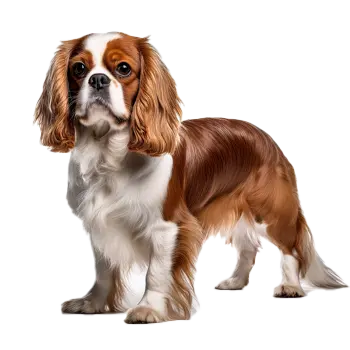
The Cavalier King Charles Spaniel is a toy breed that stands twelve to thirteen inches at the withers and weighs between thirteen and eighteen pounds, making it one of the largest dogs in the toy group. Despite its classification as a toy breed, the Cavalier possesses a sturdy, well-proportioned body that reflects its spaniel heritage and original function as a small hunting companion. The breed carries itself with an elegant yet athletic bearing, capable of keeping pace with more active breeds while remaining perfectly content as a devoted lap companion. The body is compact with a level topline, moderately deep chest reaching to the elbows, and a gracefully carried tail that wags constantly when the dog is happy. The breed's most distinctive feature is its sweet, gentle, melting expression created by large, round, dark brown eyes set well apart on a slightly rounded but never domed skull. This expression is considered an essential breed characteristic and conveys the warm, trusting nature that defines the Cavalier. The muzzle is full and slightly tapered, about one and a half inches from stop to nose tip, with a well-defined stop that is neither too shallow nor too deep. The long, feathered ears are set high on the head and hang beside the cheeks, framing the face beautifully when the dog is alert. A Cavalier's coat is moderately long, silky, and free from curl, though a slight wave is permissible according to breed standards. Cavaliers appear in four recognized color patterns, each with its own historical significance and devoted following. Blenheim features rich chestnut markings on a pearly white background, ideally with a chestnut spot called the Blenheim spot or lozenge mark between the ears, named for Blenheim Palace where the Duke of Marlborough bred these dogs. Tricolor displays jet black markings on white with rich tan points appearing over the eyes, on cheeks, inside ears, on underside of tail, and on legs. Ruby is a whole-colored solid rich reddish-brown throughout with no white markings. Black and Tan shows raven black with rich bright tan markings above the eyes, on cheeks, inside ears, on chest, legs, and underside of tail. The flowing feathering on ears, chest, legs, feet, and tail is a hallmark breed feature.
Key Characteristics
Temperament Temperament Temperament Temperament Temperament Temperament Cavaliers are generally considered easy to train due to their desire to please and their intelligence, though some individuals may show a stubborn streak that requires patient, positive reinforcement methods. They are not protective dogs and will typically greet strangers warmly, making them poor choices for guard duty but excellent for households that frequently welcome visitors. The breed is sensitive to their owner's moods and responds best to gentle handling. Their friendly, sociable nature and moderate exercise needs make them particularly well-suited for first-time dog owners, families with children, and seniors seeking a devoted companion.
Health Considerations Health Considerations Health Considerations Health Considerations Health Considerations Health Considerations Additional health concerns include patellar luxation affecting approximately twenty percent of the breed, hip dysplasia, various eye conditions including cataracts and retinal problems, and Primary Secretory Otitis Media known as glue ear, affecting around thirty percent of Cavaliers. The breed also commonly carries Giant Platelet syndrome, which can complicate blood testing. Due to these health challenges, Cavaliers have a shorter than average lifespan for a toy breed, typically ranging from ten to twelve years. Prospective owners should seek breeders who perform recommended health screenings and support ongoing research into these conditions.
Important to Remember
Each hybrid dog is unique and may inherit any combination of traits from either parent breed. The information above represents the characteristics of the purebred parent breeds. Your Dashalier may favor one parent over the other or display a blend of both. We strongly encourage you to read the complete breed profiles for both the Dachshund and Cavalier King Charles Spaniel to fully understand the range of possible temperaments, health concerns, and care requirements.