Cotralian
The Cotralian is a cross between the Cocker Spaniel and the Australian Shepherd. Because each hybrid inherits a unique combination of traits from both parents, we recommend thoroughly researching both breeds before choosing a Cotralian. Pay special attention to temperament, health issues, and care requirements, as your dog may express characteristics from either parent breed.
Cocker Spaniel
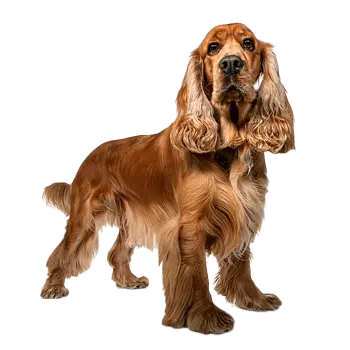
The American Cocker Spaniel is the smallest member of the sporting group, presenting a compact, sturdy body built for a full day's work in the field despite its evolution into primarily a companion and show dog. Males typically stand between fourteen and a half and fifteen and a half inches at the shoulder, while females measure between thirteen and a half and fourteen and a half inches, with weights ranging from twenty to thirty pounds depending on height and build. The body is well-balanced with a short, strong back that slopes slightly from shoulder to tail, creating the distinctive topline that characterizes the breed. The chest is deep and moderately wide, providing ample room for heart and lungs, while the well-sprung ribs and sturdy legs support active movement. The coat of the American Cocker Spaniel is one of its most striking features, consisting of silky, flat, or slightly wavy hair of medium length on the body with abundant feathering on the ears, chest, abdomen, and legs. This luxurious coat comes in three recognized varieties: solid black, any solid color other than black (known as ASCOB, including shades of cream, buff, red, and brown), and parti-color featuring two or more colors with white being one of them. The characteristic feathering requires considerable grooming attention to prevent mats and tangles, making regular professional grooming a necessity for most pet owners who wish to maintain the breed's classic appearance. The head is perhaps the breed's most distinctive feature, with a rounded skull, pronounced stop, and broad, deep muzzle that give the face its characteristic expression. The eyes are round, full, and look directly forward, conveying the gentle, intelligent expression that has made the breed so beloved. Dark brown is the preferred eye color, harmonizing with the coat. The ears are long, well-feathered, and set no higher than a line to the lower part of the eye, lying close to the head and framing the face beautifully. The tail is customarily docked in countries where the practice is permitted, carried in line with the topline or slightly above, wagging merrily to reflect the breed's cheerful disposition.
Key Characteristics
Temperament Temperament Temperament Temperament Temperament Temperament Training a Cocker Spaniel can be a rewarding experience as they are intelligent and eager to please, though some individuals can display stubborn tendencies that require patient, consistent handling. They respond exceptionally well to positive reinforcement and can become anxious or withdrawn if subjected to harsh corrections. Housetraining may take longer than with some other breeds, requiring patience and a consistent schedule. The breed does have a tendency toward submissive urination when excited or anxious, which typically improves with maturity and confidence building. Cocker Spaniels benefit from early socialization to prevent the development of timidity, and they thrive with regular mental stimulation and moderate exercise to prevent boredom-related behaviors.
Health Considerations Health Considerations Health Considerations Health Considerations Health Considerations Health Considerations Hip dysplasia and patellar luxation can affect Cocker Spaniels, causing pain and mobility issues that may worsen with age. Screening breeding stock for hip dysplasia has helped reduce its incidence. Autoimmune hemolytic anemia, a serious condition where the body attacks its own red blood cells, occurs more frequently in Cocker Spaniels than in many other breeds and requires immediate veterinary attention. Heart conditions including patent ductus arteriosus and mitral valve disease have been documented. Hypothyroidism leading to weight gain, skin problems, and lethargy is relatively common and easily managed with medication. The breed may also experience epilepsy, dental problems, and a lip fold dermatitis condition sometimes called Cocker mouth that affects the skin around the lips.
Australian Shepherd

The Australian Shepherd is a medium-sized, well-balanced dog that combines athletic capability with striking good looks. Males typically stand between twenty and twenty-three inches at the shoulder and weigh between fifty and sixty-five pounds, while females measure eighteen to twenty-one inches and weigh forty to fifty-five pounds. The body is slightly longer than tall, with a deep chest that extends to the elbows and provides ample lung capacity for the sustained activity this breed was developed to perform. The topline is level, the loin is strong, and the croup slopes moderately downward, all contributing to the powerful, effortless movement that characterizes a well-built Aussie. The coat is one of the breed's most visually distinctive features, consisting of a medium-length, weather-resistant double coat with a soft, dense undercoat and longer, coarser guard hairs. The coat may be straight to wavy, with moderate feathering on the backs of the legs and a mane of longer hair around the neck that is more pronounced in males. The breed is recognized in four color patterns: black, blue merle (a marbled pattern of gray and black), red (ranging from light cinnamon to liver), and red merle (a marbled pattern of red and cream or buff). All colors may appear with or without white markings and copper points on the face, legs, and chest. The head is clean-cut and in proportion to the body, with a slightly rounded skull and a moderate stop. The muzzle tapers slightly from base to nose and is equal in length to the back skull. Perhaps most striking are the eyes, which may be brown, blue, amber, or any combination thereof, including heterochromia where each eye is a different color. This variety of eye colors, particularly when combined with the merle coat pattern, creates an arresting appearance unique to this breed. The ears are triangular, set high, and break forward at the base when the dog is alert. The tail may be naturally bobbed, docked where legal, or left natural at full length, contributing to the breed's balanced silhouette.
Key Characteristics
Temperament Temperament Temperament Temperament Temperament Temperament Australian Shepherds are typically reserved with strangers, taking time to assess new people before offering friendship, a trait that serves them well as watchdogs but requires proper socialization to prevent excessive wariness or shyness. They generally get along well with other dogs and can coexist with cats, particularly when raised together, though their herding instincts may lead them to chase or attempt to control the movement of other animals. Training an Aussie is generally a rewarding experience due to their eagerness to please and quick learning ability, though their intelligence means they may also learn unwanted behaviors if training is inconsistent. They respond best to positive, consistent training methods and can become frustrated or anxious with harsh corrections.
Health Considerations Health Considerations Health Considerations Health Considerations Health Considerations Health Considerations One of the most important health considerations for Australian Shepherd owners is the MDR1 gene mutation, which affects approximately half of all Aussies. This mutation impairs the blood-brain barrier's ability to pump certain medications out of the brain, potentially causing severe neurological reactions or death when affected dogs receive common medications including some anti-parasitic drugs, anti-diarrheal medications, and certain anesthetics. DNA testing can identify dogs carrying this mutation, allowing owners and veterinarians to choose safe medication alternatives. Epilepsy is another concern, causing seizures that may require lifelong medication management. Autoimmune conditions affecting the thyroid and other systems occur in the breed, as do certain cancers including lymphoma and hemangiosarcoma.
Important to Remember
Each hybrid dog is unique and may inherit any combination of traits from either parent breed. The information above represents the characteristics of the purebred parent breeds. Your Cotralian may favor one parent over the other or display a blend of both. We strongly encourage you to read the complete breed profiles for both the Cocker Spaniel and Australian Shepherd to fully understand the range of possible temperaments, health concerns, and care requirements.