Clumber Pei
The Clumber Pei is a cross between the Clumber Spaniel and the Chinese Shar-Pei. Because each hybrid inherits a unique combination of traits from both parents, we recommend thoroughly researching both breeds before choosing a Clumber Pei. Pay special attention to temperament, health issues, and care requirements, as your dog may express characteristics from either parent breed.
Clumber Spaniel
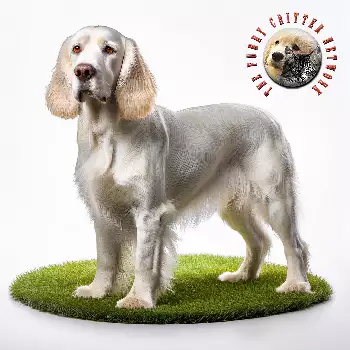
The Clumber Spaniel is the largest of all spaniel breeds, presenting a distinctive long, low, and substantial silhouette that immediately sets it apart from other sporting dogs. Males typically stand between 18 to 20 inches at the withers and weigh between 70 to 85 pounds, while females measure 17 to 19 inches and weigh 55 to 70 pounds. The breed possesses a rectangular body shape with massive bone structure, giving it an appearance of great power and endurance. The body is slightly longer than it is tall, with a deep chest and well-sprung ribs that provide ample lung capacity for sustained field work. The Clumber's coat is dense, straight, and flat with a weather-resistant texture that feels soft to the touch rather than harsh. The ears feature slight feathering with straight hair, while the legs and belly display moderate feathering. A distinctive neck frill adorns this breed, and the standard specifically prohibits shaving of the throat area. The predominant coat color is white with lemon or orange markings, which historically helped hunters spot their dogs while working within gun range. Markings commonly appear on one or both ears and the face, including color around the eyes, freckling on the muzzle, and occasionally a spot on top of the head. One of the most striking features of the Clumber Spaniel is its massive head with a heavy, furrowed brow that creates a pensive, thoughtful expression. The skull is broad with well-developed cheeks, and the muzzle is square when viewed from the side. The eyes are large, deep-set, and dark amber in color, contributing to the breed's characteristic soulful look. The triangular ears are set at eye level with rounded lower edges, hanging close to the head. Despite their hefty build, Clumber Spaniels move with surprising fluidity and grace, displaying a characteristic rolling gait that results from their short legs and wide body.
Key Characteristics
Temperament Temperament Temperament Temperament Temperament Temperament Despite their hunting heritage, Clumber Spaniels have relatively moderate exercise needs and adapt well to various living situations. They enjoy daily walks, play sessions, and interactive activities, but don't require the intense exercise regimens of higher-energy breeds. The Clumber's relaxed and somewhat sedate demeanor makes it well-suited for quieter households. True to their spaniel heritage, they love to chew, carry objects, and retrieve. This breed generally gets along well with children and other pets, though they tend to be more reserved around unfamiliar dogs until they've had time to warm up to them.
Health Considerations Health Considerations Health Considerations Health Considerations Health Considerations Health Considerations Due to their long backs and heavy build, Clumber Spaniels have some predisposition to intervertebral disc disease affecting the cervical and thoracic spine. A 2024 UK study found the breed's life expectancy averages 12.3 years. Other considerations include ear infections due to their pendant ear structure, impacted anal glands requiring occasional veterinary attention, sensitivity to heat requiring access to shade and water, and some difficulty with conception and whelping. Responsible breeders conduct health screenings on breeding stock and track health issues within their lines to produce healthier puppies.
Chinese Shar-Pei

The Chinese Shar-Pei is a medium-sized, compact dog with a distinctive and unmistakable appearance. Standing 18 to 20 inches at the shoulder and weighing between 45 to 60 pounds, this breed presents a solidly built frame with a square profile. The most recognizable feature of the Shar-Pei is its loose, wrinkled skin, which is most prominent in puppies and gradually becomes less excessive as the dog matures. The breed standard describes the head as large with a characteristic hippopotamus-shaped muzzle that is broad and full, setting it apart from virtually every other breed. The Shar-Pei's coat comes in two varieties: the horse coat, which is extremely short and prickly to the touch, and the brush coat, which is slightly longer but still quite short. Both coat types have a harsh texture, and neither should be soft or wavy. Acceptable colors include solid shades of black, cream, fawn, red, sable, and blue, with some variation in shading along the back and ears. A distinctive blue-black tongue, shared only with the Chow Chow among purebred dogs, is a hallmark trait of the breed. The pigmentation extends to the roof of the mouth, gums, and lips. The Shar-Pei features small, triangular ears that fold forward and lie flat against the head, contributing to its unique appearance. The eyes are small and deep-set, typically dark in color, with an expression that appears dignified yet somewhat scowling. The tail is thick at the base and tapers to a point, carried high and curled over the back in a characteristic fashion. The body is compact and well-muscled, with a broad, deep chest and strong, straight legs. The feet are compact and catlike. Movement should be free and balanced, with good reach in front and strong drive from behind, though the unique skin folds can create a slight roll in the gait.
Key Characteristics
Temperament Temperament Temperament Temperament Temperament Temperament Training a Shar-Pei requires patience and consistency, as these dogs are intelligent but also strong-willed and independent. They learn quickly but may choose whether to comply with commands. The breed responds best to confident leadership and positive reinforcement methods, with harsh corrections typically proving counterproductive. Shar-Peis are generally quiet dogs that do not bark excessively, preferring to observe situations before reacting. They adapt reasonably well to various living environments but need regular exercise and mental stimulation to remain balanced. While they can be good family dogs with proper training and socialization, interactions with small children should always be supervised, and they may not be the best choice for homes with other dogs or cats unless raised together from puppyhood.
Health Considerations Health Considerations Health Considerations Health Considerations Health Considerations Health Considerations Other health concerns in the breed include hypothyroidism, which affects thyroid hormone production and can cause weight gain, skin problems, and lethargy. Elbow dysplasia occurs with some frequency, causing lameness and arthritis in the affected joints. Patellar luxation, where the kneecap dislocates from its proper position, has been documented in the breed. The Shar-Pei's unique oral structure, with padded lips and narrow ear canals, increases susceptibility to dental disease and mouth infections. A 2024 UK study found the average life expectancy for Shar-Peis to be approximately 10.6 years. Prospective owners should seek breeders who conduct health screenings and can provide documentation of the genetic health of their breeding stock.
Important to Remember
Each hybrid dog is unique and may inherit any combination of traits from either parent breed. The information above represents the characteristics of the purebred parent breeds. Your Clumber Pei may favor one parent over the other or display a blend of both. We strongly encourage you to read the complete breed profiles for both the Clumber Spaniel and Chinese Shar-Pei to fully understand the range of possible temperaments, health concerns, and care requirements.