Cava-Chin
The Cava-Chin is a cross between the Cavalier King Charles Spaniel and the Japanese Chin. Because each hybrid inherits a unique combination of traits from both parents, we recommend thoroughly researching both breeds before choosing a Cava-Chin. Pay special attention to temperament, health issues, and care requirements, as your dog may express characteristics from either parent breed.
Cavalier King Charles Spaniel
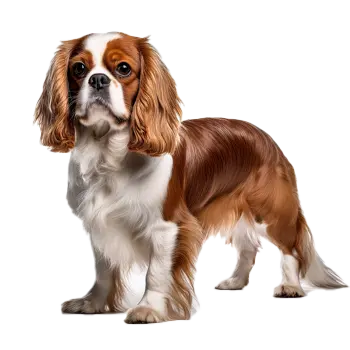
The Cavalier King Charles Spaniel is a toy breed that stands twelve to thirteen inches at the shoulder and typically weighs between thirteen and eighteen pounds, with well-proportioned dogs appearing neither too heavy nor too refined for their frame. Despite their small stature, these dogs possess a sturdy and well-balanced build that reflects their spaniel heritage. The body is slightly longer than it is tall, with a level topline and moderate bone structure that gives them an elegant yet athletic appearance. The chest is moderately deep, extending to the elbows, with well-sprung ribs that provide adequate heart and lung capacity. Their movement is free and graceful, with good reach and drive that demonstrates their sporting ancestry, and they cover ground efficiently with a happy, confident gait. The breed's silky, medium-length coat is one of its most distinctive features, flowing gracefully with moderate feathering on the ears, chest, legs, and tail. The coat comes in four recognized color patterns: Blenheim, which features rich chestnut markings on a pearly white background, often with a distinctive chestnut spot on top of the skull known as the Blenheim spot or lozenge; tricolor, consisting of black and white with tan markings over the eyes, on cheeks, inside ears, inside legs, and under the tail; black and tan, showcasing jet black with rich mahogany tan markings in specific locations; and ruby, a solid rich reddish-brown color throughout without any white markings. The coat is straight or slightly wavy and requires regular brushing several times weekly to maintain its lustrous appearance and prevent matting. The Cavalier's head is perhaps its most endearing feature, with large, round, dark brown eyes that convey a sweet, gentle, melting expression characteristic of the breed. The skull is slightly rounded but appears almost flat between the ears due to the high placement of the ears, which are long, well-feathered, and set high on the head, framing the face beautifully. The muzzle is moderately tapered, full beneath the eyes, with a shallow stop, and the nose is fully pigmented black with well-developed nostrils. The jaw is strong enough for a proper scissor bite. The overall expression should be one of soft warmth and gentle sweetness, hallmarks of this beloved companion breed that has captivated owners for centuries.
Key Characteristics
Temperament Temperament Temperament Temperament Temperament Temperament Socially, Cavaliers are remarkably friendly dogs that typically get along well with children, other dogs, and even cats when properly introduced. They lack the territorial or possessive tendencies seen in some other breeds, viewing strangers and other animals as potential friends rather than threats. This makes them poor watchdogs but excellent family companions. It is important to note that Cavaliers do not tolerate being left alone for extended periods, as their strong attachment to people can lead to separation anxiety if their social needs are not adequately met.
Health Considerations Health Considerations Health Considerations Health Considerations Health Considerations Health Considerations Other health considerations include primary secretory otitis media, a painful ear condition affecting roughly thirty percent of Cavaliers, and various eye conditions requiring regular monitoring. The breed also experiences a giant platelet disorder affecting over half of all Cavaliers, though this condition is typically benign and does not cause clinical problems. Dental disease is common and requires consistent preventive care. The average lifespan ranges from nine to fourteen years, though responsible breeding practices and regular veterinary care can help maximize longevity and quality of life.
Japanese Chin

The Japanese Chin is a delicate toy breed standing eight to eleven inches at the shoulder and weighing between four and eleven pounds, with the ideal weight falling between four and seven pounds for well-proportioned individuals. This dainty dog possesses a distinctively aristocratic appearance that reflects its centuries of development as a cherished companion for Japanese nobility and royalty. The body is square and compact, being approximately as long as it is tall, with a proud, upright carriage that conveys elegance, refinement, and an air of self-importance. Despite their small size, they are solidly built with good bone in proportion to their delicate frame, and they move with a stylish, high-stepping gait that adds to their regal bearing. The breed's head is its most distinctive feature, being large and rounded with a very short, broad muzzle that gives the face a characteristic flat appearance typical of brachycephalic breeds. This unique facial structure creates the breed's famous expression of gentle astonishment, as though perpetually surprised by the world around them. The eyes are large, round, wide-set, and lustrous dark, contributing greatly to the breed's sweet, wondering expression and giving them a distinctly Oriental appearance. Small V-shaped ears hang down gracefully and are set slightly below the crown of the skull, covered with long, silky hair that frames the face beautifully and enhances the breed's overall elegant presentation. The Japanese Chin's coat is single-layered, meaning they lack an undercoat, and consists of long, straight, silky hair that flows gracefully over the body without any curl or wave. The coat is profuse around the neck, shoulders, and chest, forming an impressive mane or ruff that adds to the breed's distinguished appearance, with abundant feathering on the ears, backs of the legs, and tail creating an elegant silhouette. Accepted color patterns include black and white and various shades of red and white, including lemon, sable, and orange variations that range from pale cream to deep chestnut. Tricolor dogs, which are black and white with tan points above the eyes and on the cheeks, also occur and are equally correct. The plumed tail arches gracefully over the back, lying flat and creating an attractive fan shape that completes the breed's sophisticated appearance.
Key Characteristics
Temperament Temperament Temperament Temperament Temperament Temperament Despite their independent nature, Japanese Chins are deeply devoted to their families and do not tolerate being left alone for extended periods. They are sensitive to household emotions and can become anxious or withdrawn in tense environments. Training should be conducted with patience and positive reinforcement, as harsh corrections will cause this sensitive breed to shut down. While they are generally quiet dogs that do not bark excessively, they make excellent apartment companions. They typically do well with older children who understand how to handle small dogs gently and can coexist peacefully with other pets when properly socialized.
Health Considerations Health Considerations Health Considerations Health Considerations Health Considerations Health Considerations Additional health concerns include patellar luxation, a condition common in many toy breeds where the kneecap slips out of position. Atlantoaxial instability, a potentially serious spinal condition affecting the connection between the first two vertebrae, can occur in this breed. Japanese Chins are particularly prone to dental disease due to their small mouths and crowded teeth, requiring diligent dental care throughout their lives. Epilepsy occurs occasionally in the breed. With attentive care and regular veterinary monitoring, Japanese Chins typically enjoy a lifespan of ten to fourteen years, providing many years of devoted companionship.
Important to Remember
Each hybrid dog is unique and may inherit any combination of traits from either parent breed. The information above represents the characteristics of the purebred parent breeds. Your Cava-Chin may favor one parent over the other or display a blend of both. We strongly encourage you to read the complete breed profiles for both the Cavalier King Charles Spaniel and Japanese Chin to fully understand the range of possible temperaments, health concerns, and care requirements.