Cattle Collie Dog
The Cattle Collie Dog is a cross between the Australian Cattle Dog and the Collie. Because each hybrid inherits a unique combination of traits from both parents, we recommend thoroughly researching both breeds before choosing a Cattle Collie Dog. Pay special attention to temperament, health issues, and care requirements, as your dog may express characteristics from either parent breed.
Australian Cattle Dog

The Australian Cattle Dog is a strong, compact, and symmetrically built herding breed that conveys an immediate impression of great agility combined with substantial endurance. Males stand between 18 and 20 inches at the withers, while females measure slightly smaller at 17 to 19 inches, with both sexes weighing between 33 and 50 pounds when in proper working condition. The body is slightly longer than tall, with well-developed musculature that reflects the breed's heritage as a tireless worker capable of driving cattle across vast distances of rugged Australian terrain. The overall appearance should suggest a dog capable of the quick, sudden movements essential for controlling livestock. The breed's distinctive double coat consists of a short, dense undercoat covered by a rain-resistant outer coat of straight, hard hairs that lie flat against the body. The coat is somewhat longer on the neck, forming a mild ruff, and on the thighs, creating modest breeching, but remains close and smooth on the head and front of the legs. Australian Cattle Dogs come in two recognized color patterns: blue and red speckle. Blue dogs display black, blue, or tan markings distributed through a white coat, creating a characteristic blue-mottled or blue-speckled appearance. Red speckle dogs have even red markings throughout a white coat, sometimes with darker red patches on the head. The head is broad and slightly curved between the ears, leading to a definite stop and a powerful, medium-length muzzle that is well filled under the eyes. The breed's pricked ears are moderately sized, broad at the base, and set wide apart on the skull, remaining alert and responsive to sounds. The oval-shaped, medium-sized eyes display an intelligent, alert expression and are typically dark brown in color. The tail is set moderately low, following the slope of the croup, and hangs in a slight curve at rest while being raised when the dog is alert or in motion. The breed's ancestry, which includes the Dingo crossed with various herding breeds including the Scottish Collie, remains visible in its overall appearance and structure.
Key Characteristics
Temperament Temperament Temperament Temperament Temperament Temperament Australian Cattle Dogs demand a high level of physical activity and mental stimulation that far exceeds what many casual dog owners anticipate. They excel in structured activities that engage both their bodies and their minds, including herding trials, agility, obedience competition, and various dog sports that tap into their natural athleticism and intelligence. The breed is not well-suited to apartment living or sedentary households, instead requiring active owners who can provide daily opportunities for vigorous exercise and purposeful engagement. When adequately exercised and mentally challenged, they become calm and devoted household companions, but inadequate stimulation almost inevitably leads to behavioral problems.
Health Considerations Health Considerations Health Considerations Health Considerations Health Considerations Health Considerations Hip dysplasia occurs in Australian Cattle Dogs, though at lower rates than in many other breeds of similar size, with the malformation of the hip joint leading to arthritis and mobility problems over time. Prospective breeding dogs should be evaluated through radiographic screening programs such as those offered by the Orthopedic Foundation for Animals. Primary lens luxation is another inherited eye condition found in the breed, where the lens of the eye becomes displaced, potentially causing pain and vision loss if not promptly addressed. Regular veterinary checkups, maintaining appropriate weight to reduce stress on joints, and providing consistent exercise help ensure these active dogs remain healthy throughout their notably long lives.
Collie
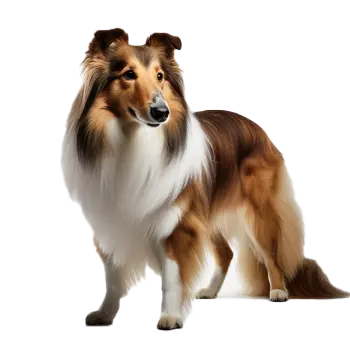
The Collie is a graceful, elegant dog of great beauty that stands with an air of quiet dignity while displaying a well-balanced and proportionate build throughout. Males typically stand between 24 and 26 inches at the shoulders and weigh 60 to 75 pounds, while females are somewhat smaller at 22 to 24 inches tall and 50 to 65 pounds. The breed exists in two coat varieties: the Rough Collie with its magnificent flowing coat, and the Smooth Collie with a shorter, denser coat that lies close to the body. Both varieties share identical structure and type, differing only in coat length and texture. The Rough Collie's abundant coat is its crowning glory, featuring a dense, soft undercoat covered by a straight, harsh outer coat that forms a particularly impressive mane and frill around the neck and chest. The coat is profuse on the tail and forms feathering on the back of the forelegs and abundant breeching on the hindquarters above the hocks. The face and lower legs remain smooth, creating an elegant contrast with the longer body coat. Three recognized colors exist: sable and white, featuring shades from light gold to rich mahogany with white markings; tricolor, displaying black with white markings and tan shading; and blue merle, showing a silvery blue coat marbled with black and accompanied by tan points. The head is perhaps the breed's most distinctive feature, presenting as a well-blunted lean wedge that appears smooth and elegant from both front and profile views. The expression is of paramount importance in the breed, achieved through the perfect balance of skull and muzzle proportions combined with proper eye placement, shape, and color. The almond-shaped eyes are medium-sized and set obliquely, displaying an intelligent, alert expression often described as sweet and gentle. Ears are proportionate to the head size and are carried about three-quarters erect with tips breaking forward when the dog is alert, folding lengthwise and thrown back into the frill when relaxed. The tail is long and carried low with an upward twist at the end, raised gaily but never over the back when the dog is in motion.
Key Characteristics
Temperament Temperament Temperament Temperament Temperament Temperament While naturally protective, Collies are not aggressive dogs and typically approach guardianship through alertness and vocal warning rather than physical confrontation. They readily announce the arrival of visitors but generally accept strangers once properly introduced by their owners. The breed adapts well to various living situations provided their needs for daily exercise and companionship are met, though they truly flourish when given ample time with their families. Collies do not tolerate extended isolation well and may develop anxiety or nuisance barking if left alone for long periods. Their moderate exercise needs can be satisfied through daily walks and play sessions, making them suitable for families who enjoy outdoor activities without requiring the extreme exercise demands of some other herding breeds.
Health Considerations Health Considerations Health Considerations Health Considerations Health Considerations Health Considerations Dermatomyositis is an autoimmune condition found primarily in Collies and Shetland Sheepdogs that causes skin lesions and, in some cases, muscle inflammation. A genetic test helps determine risk factors for developing this condition, though environmental triggers also play a role. Progressive retinal atrophy type rcd2 is a form of inherited blindness specific to Collies, causing early-onset vision loss typically becoming apparent by six weeks of age and progressing to complete blindness by six to eight months. Fortunately, strict testing protocols have made this condition rare in well-bred Collies. Hip dysplasia occurs less frequently in Collies than in many other large breeds but remains a consideration, and screening of breeding stock helps reduce incidence in future generations.
Important to Remember
Each hybrid dog is unique and may inherit any combination of traits from either parent breed. The information above represents the characteristics of the purebred parent breeds. Your Cattle Collie Dog may favor one parent over the other or display a blend of both. We strongly encourage you to read the complete breed profiles for both the Australian Cattle Dog and Collie to fully understand the range of possible temperaments, health concerns, and care requirements.