Bullypoo
The Bullypoo is a cross between the English Bulldog and the Poodle. Because each hybrid inherits a unique combination of traits from both parents, we recommend thoroughly researching both breeds before choosing a Bullypoo. Pay special attention to temperament, health issues, and care requirements, as your dog may express characteristics from either parent breed.
English Bulldog
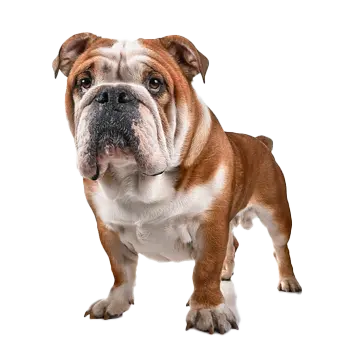
The English Bulldog presents a distinctive and immediately recognizable appearance with its medium-sized, muscular build. Males typically weigh between fifty and fifty-five pounds, while females average around forty to fifty pounds. Despite their shorter stature, standing only twelve to sixteen inches at the shoulder, these dogs possess a powerfully built frame characterized by a compact, stocky body. Their wide, broad shoulders give them a distinctive pear-shaped outline when viewed from above, with the body being wider and heavier in the front and lighter in the hindquarters. The breed features short, sturdy legs that are set wide apart, creating their characteristic rolling gait. Their overall build reflects their original purpose while maintaining a low center of gravity that contributes to their stable, grounded appearance. The most striking feature of the English Bulldog is undoubtedly its distinctive head and facial structure. The head is large, broad, and square with a flat forehead and pronounced, deep-set wrinkles that extend from the top of the skull down to the jowls. Their round, dark eyes are set low and wide apart, giving them an alert yet gentle expression. The muzzle is extremely short and pushed-in, creating the characteristic flat face that defines the brachycephalic breed type. Their nose is broad and slightly upturned with large nostrils, while the jaws are massive and undershot, meaning the lower jaw protrudes beyond the upper jaw to expose the lower teeth in what appears as a distinctive underbite. The small, thin ears fold forward like rose petals, framing the forehead. The English Bulldog's coat is short, smooth, and fine-textured, lying close to the body with a glossy appearance. The skin itself is loose and pendulous, with heavy wrinkles particularly prominent on the face and a characteristic dewlap of excess skin hanging from the throat. Standard coat colors include brindle patterns, solid white, solid red, fawn, and piebald combinations, often featuring various markings and color patches. The tail is naturally short and may be either straight or corkscrewed into a tight curl, typically carried low. This combination of physical features, from the wrinkled face and compact body to the distinctive gait, creates the unmistakable silhouette that has made the English Bulldog one of the most recognizable breeds worldwide.
Key Characteristics
Temperament Temperament Temperament Temperament Temperament Temperament English Bulldogs are relatively low-energy dogs that require only moderate exercise, making them well-suited to apartment living and families with less active lifestyles. They are not outdoor dogs and prefer indoor comfort with their families. While young Bulldogs may display bursts of energy and playfulness, they generally slow down as they mature. Their sensitivity to both extreme heat and cold means they thrive best in temperate, climate-controlled environments. Bulldogs are known to be sensitive to their owner's emotions and moods, picking up on stress or unhappiness in the household. Without proper attention, exercise, and mental stimulation, they can develop behavioral issues including nuisance barking or destructive behavior, though these problems are easily prevented with appropriate care and companionship.
Health Considerations Health Considerations Health Considerations Health Considerations Health Considerations Health Considerations The breed faces a significantly shortened lifespan, with a median life expectancy of only eight to ten years, considerably shorter than many other breeds. This reduced longevity is directly linked to their numerous health problems and extreme conformation. English Bulldogs rank second among all breeds for congenital diseases and related puppy deaths, with common birth defects including flat chests, splayed legs, and cleft palates. Most Bulldogs require cesarean section delivery due to their large heads and narrow birth canals, and the breed has very limited genetic diversity, which hampers efforts to improve overall health. Additional concerns include obesity, which exacerbates existing health problems, and bloat, a life-threatening condition where the stomach twists. Responsible breeding practices, regular veterinary care, weight management, and avoiding temperature extremes are essential for maintaining the health and quality of life for English Bulldogs.
Poodle

The Poodle is an elegant and athletic breed that comes in three distinct size varieties, all sharing the same breed standard for appearance and proportions. The Standard Poodle stands over fifteen inches tall at the shoulder, typically between eighteen and twenty-four inches, and weighs between forty-five and seventy pounds, with males generally being larger than females. The Miniature Poodle measures between ten and fifteen inches in height and weighs twelve to twenty pounds, while the Toy Poodle stands under ten inches tall and weighs approximately five to seven pounds. Despite these size differences, all Poodles share a characteristic square outline with a well-proportioned body, meaning their length from chest to buttocks equals their height at the withers. They possess a long, elegant neck that flows into a straight, level back, giving them a proud and dignified carriage. Their legs are long and straight, contributing to their athletic appearance, and they have a tail that is typically docked and carried high and alert. The Poodle's head is distinctive and refined, featuring a long, straight muzzle and a rounded skull that creates an intelligent, alert expression. Their oval-shaped eyes are set far apart and are typically very dark, almost black, though dogs with brown or cafe au lait coats may have amber eyes. The nose is prominently dark and points slightly downward at the end of their refined muzzle. Their ears are long, flat, and hang close to the head, set at or slightly below eye level. One of the breed's most notable physical characteristics is their powerful, athletic build hidden beneath their coat, with strong, muscular shoulders and well-developed hindquarters that give them remarkable jumping ability and agility. Poodles are known as exceptional jumpers and move with a distinctive, springy gait that demonstrates both grace and purpose. The Poodle's crowning glory is undoubtedly its distinctive coat, which is actually hair rather than fur, growing continuously and rarely shedding, making them a popular choice for allergy sufferers. The coat is naturally dense, curly, and corded if left ungroomed, with a texture that ranges from tight ringlets to softer waves. Without regular grooming, the coat will form thick mats or even dreadlock-like cords. Poodles come in a wide variety of solid colors, including black, white, silver, brown, apricot, cream, red, blue, gray, and cafe au lait, with only solid colors recognized in breed standards. The traditional Poodle clips seen in show rings, featuring areas of closely shaved fur contrasted with elaborate pompoms and patches of full coat, were originally designed with function in mind, providing warmth over joints and vital organs while allowing freedom of movement in water. Pet Poodles are often kept in simpler clips with shorter, more manageable coat lengths that still showcase their athletic build and elegant proportions.
Key Characteristics
Temperament Temperament Temperament Temperament Temperament Temperament All Poodle varieties are active, energetic dogs that require regular exercise and mental challenges to maintain their physical and emotional well-being. Standard Poodles need substantial daily activity including long walks, running, and preferably swimming, which taps into their natural water retriever instincts. Miniature and Toy Poodles require less intense exercise but still need daily walks and play sessions to stay healthy and happy. Without adequate physical activity and mental stimulation, Poodles can become hyperactive, neurotic, and develop problematic behaviors. The breed is characterized by their playful, sometimes comical nature, displaying bursts of energy and enthusiasm that owners find entertaining. Despite their active nature, Poodles do possess an off-switch and can be calm, relaxed companions at home when their exercise needs are met. The smaller varieties can be more sensitive to loud noises and may be prone to nipping or growling when anxious, making early socialization and training particularly important for Miniature and Toy Poodles.
Health Considerations Health Considerations Health Considerations Health Considerations Health Considerations Health Considerations Additional health concerns include epilepsy and idiopathic seizure disorders, particularly in Standard Poodles, where genetic predisposition can lead to recurrent seizures requiring lifelong medication management. Von Willebrand's Disease, a hereditary bleeding disorder caused by insufficient clotting factors, affects all Poodle varieties and can result in excessive bleeding during injury or surgery. Toy and Miniature Poodles specifically face increased risk of luxating patella, where the kneecap dislocates from its proper position causing lameness, and Legg-Calve-Perthes Disease, which involves deterioration of the femoral head due to reduced blood supply. Responsible breeding practices including genetic health testing, regular veterinary examinations, maintaining appropriate weight, providing adequate exercise, and early screening for inherited conditions are essential for promoting long, healthy lives in Poodles. Prospective owners should ensure breeders conduct recommended health clearances including hip evaluations, eye examinations, and DNA testing for known genetic conditions.
Important to Remember
Each hybrid dog is unique and may inherit any combination of traits from either parent breed. The information above represents the characteristics of the purebred parent breeds. Your Bullypoo may favor one parent over the other or display a blend of both. We strongly encourage you to read the complete breed profiles for both the English Bulldog and Poodle to fully understand the range of possible temperaments, health concerns, and care requirements.