Bullmasador
The Bullmasador is a cross between the Bullmastiff and the Labrador Retriever. Because each hybrid inherits a unique combination of traits from both parents, we recommend thoroughly researching both breeds before choosing a Bullmasador. Pay special attention to temperament, health issues, and care requirements, as your dog may express characteristics from either parent breed.
Bullmastiff
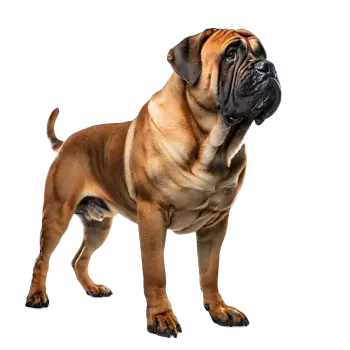
The Bullmastiff is a large, powerfully built dog that presents an image of great strength, endurance, and alertness while remaining symmetrical and active rather than cumbersome. Males typically stand between 25 to 27 inches at the shoulder and weigh 110 to 130 pounds, while females measure 24 to 26 inches and weigh 100 to 120 pounds. The breed displays a nearly square appearance, with the body length from breastbone to rear only slightly exceeding the height at the withers. This foundation breeding of approximately 60 percent Mastiff and 40 percent Bulldog created a muscular animal capable of both power and surprising agility for its substantial size. The more substantial dog within these size limits is generally favored, as the breed was specifically developed to have enough mass and strength to apprehend and hold intruders without causing serious injury. The Bullmastiff's head is one of its most distinctive and impressive features, appearing large, broad, and square with a deeply wrinkled skull when the dog is alert or attentive. The muzzle is fairly short and square, approximately one-third the length of the entire head from nose to occiput, giving the breed its characteristic expression of determination. Dark hazel eyes of medium size are set wide apart with a furrow between them, giving the breed an alert and intelligent expression. The V-shaped ears fold forward and are set high and wide on the skull, level with the occiput, contributing to the characteristic square appearance that is considered essential in proper breed type. The nose is black with well-developed nostrils, and the powerful jaw displays a level or slightly undershot bite with large, wide-set canine teeth. The breed's coat is short, dense, and lies close to the body, providing good weather protection in various conditions while requiring minimal grooming maintenance. Acceptable colors include fawn ranging from light to dark shades, red in various intensities, and brindle, which consists of a fawn or red background with dark striping throughout. All colors display a distinctive black mask that extends up and around the eyes, adding to the breed's imposing and noble appearance. The body features a wide, deep chest well let down between powerful forelegs, muscular sloping shoulders that are not overloaded, and straight strong forelegs with good bone set wide apart. The hindquarters are broad and muscular with well-developed second thighs, supporting the breed's characteristic powerful yet balanced movement that appears free, smooth, and purposeful.
Key Characteristics
Temperament Temperament Temperament Temperament Temperament Temperament Training a Bullmastiff requires patience, consistency, and an understanding of the breed's independent thinking and occasional stubborn streak that reflects their heritage as dogs bred to work independently. These intelligent dogs may test boundaries and require firm but fair leadership established through positive reinforcement methods rather than harsh corrections. Physical punishment or harsh verbal corrections typically prove counterproductive, as the breed can become resentful, withdrawn, or confused. While they possess moderate energy levels and do not require excessive exercise compared to sporting or herding breeds, regular physical activity and mental stimulation help prevent boredom and maintain their physical condition and mental wellbeing. Bullmastiffs generally coexist peacefully with children and other family pets when raised together, though their substantial size necessitates supervision around small children to prevent accidental knockdowns during enthusiastic greetings or play.
Health Considerations Health Considerations Health Considerations Health Considerations Health Considerations Health Considerations Gastric dilatation-volvulus, commonly known as bloat or GDV, is a life-threatening emergency that can affect Bullmastiffs due to their deep chest conformation and large stomach capacity. This acute condition involves the stomach filling with gas and potentially twisting on its axis, cutting off blood supply to vital organs and requiring immediate emergency veterinary intervention to prevent death. Owners should learn the warning signs, which include restlessness, unproductive retching, drooling, and a visibly distended abdomen, and implement preventive measures such as feeding multiple smaller meals rather than one large meal daily, using slow-feeder bowls, and avoiding vigorous exercise for at least an hour before and after mealtimes. The breed also shows predisposition to certain eye conditions including progressive retinal atrophy and entropion, various cardiac issues such as subaortic stenosis and dilated cardiomyopathy, hypothyroidism affecting metabolism, and certain cancers including lymphoma and mast cell tumors.
Labrador Retriever

The Labrador Retriever is a medium to large, strongly built, athletic dog that embodies the ideal working retriever capable of functioning effectively in demanding conditions both on land and in water. Males typically stand 22.5 to 24.5 inches at the shoulder and weigh 65 to 80 pounds, while females measure 21.5 to 23.5 inches and weigh 55 to 70 pounds. The breed presents a balanced, well-proportioned appearance with substantial bone and well-developed muscle that reflects its heritage as a hardworking gun dog bred to retrieve game in challenging terrain and cold water conditions. The overall impression should be of an active, powerful dog with good substance but without coarseness, clumsiness, or excessive weight that would impede working ability. The Labrador's head is clean-cut, broad, and well-developed without exaggeration or heaviness, featuring a moderate stop and powerful jaws capable of carrying game gently without damage, a trait known as soft mouth. The eyes are medium-sized, set well apart, and express the breed's characteristic friendly, intelligent, and eager temperament that has made them beloved worldwide. Eye color ranges from brown to hazel, with black or yellow eyes considered undesirable according to breed standards as they alter the typical expression. The ears hang moderately close to the head, set rather far back and slightly above eye level, and are not large, heavy, or houndy in appearance. One of the breed's most distinctive and important features is its otter tail, which is thick at the base and gradually tapers toward the tip. This rudder-like tail, covered with the same dense, short coat that covers the body, aids powerfully in swimming and directional changes in water, serving as a hallmark of proper breed type. The Labrador's double coat is another essential defining characteristic, specifically designed by nature and selection to protect the dog during water retrieves in cold and demanding conditions. The outer coat is short, straight, and very dense, while the undercoat is soft, weather-resistant, and provides crucial insulation against cold water and air. This combination allows the dog to work repeatedly in icy water without becoming dangerously chilled. Acceptable colors are solid black, yellow ranging from fox-red to light cream, and chocolate ranging from light sedge to dark chocolate brown. A small white spot on the chest is permissible but not preferred, and any other markings are faulted. The coat requires regular brushing to manage shedding, which can be considerable, particularly during seasonal coat changes in spring and fall when the undercoat is shed.
Key Characteristics
Temperament Temperament Temperament Temperament Temperament Temperament The breed's intelligence and strong food motivation make training relatively straightforward compared to many other breeds, but owners should be aware that Labradors retain puppy-like energy and playfulness well into adulthood, typically not fully maturing mentally until around three years of age or sometimes later. This extended adolescence requires patience and consistent training to channel their boundless enthusiasm productively into acceptable behaviors. Without adequate physical exercise and mental stimulation, Labradors may develop destructive behaviors, excessive barking, digging, or become overweight, a tendency strongly exacerbated by their legendary love of food and remarkable talent for convincing owners they are perpetually starving despite being well-fed. Activities such as retrieving games, swimming, hiking, and dog sports like agility, dock diving, rally, and competitive obedience provide excellent outlets for their energy and satisfy their need for mental engagement and working partnership.
Health Considerations Health Considerations Health Considerations Health Considerations Health Considerations Health Considerations Obesity represents perhaps the most significant and most preventable health challenge for the breed, affecting a substantial percentage of Labradors worldwide and significantly impacting their health and longevity. Research has identified a genetic mutation in the POMC gene that affects appetite regulation and satiety signals in many Labradors, making them particularly prone to weight gain and persistent food-seeking behavior regardless of adequate nutrition. Maintaining a healthy weight through carefully measured feeding and adequate daily exercise is crucial, as obesity contributes significantly to joint problems, diabetes, heart disease, respiratory issues, and shortened lifespan. Studies have shown that lean Labradors live on average nearly two years longer than their overweight counterparts. The breed's ear conformation, with hanging ears that trap moisture and limit air circulation, makes them susceptible to ear infections requiring regular cleaning and monitoring. Progressive retinal atrophy is an inherited eye disease that can lead to gradual vision loss and eventual blindness, making eye examinations important for breeding stock. Labradors also face increased risk of certain cancers, particularly hemangiosarcoma and lymphoma, as well as gastric dilatation-volvulus in some individuals due to their chest conformation.
Important to Remember
Each hybrid dog is unique and may inherit any combination of traits from either parent breed. The information above represents the characteristics of the purebred parent breeds. Your Bullmasador may favor one parent over the other or display a blend of both. We strongly encourage you to read the complete breed profiles for both the Bullmastiff and Labrador Retriever to fully understand the range of possible temperaments, health concerns, and care requirements.