Bulldogpoo
The Bulldogpoo is a cross between the English Bulldog and the Poodle. Because each hybrid inherits a unique combination of traits from both parents, we recommend thoroughly researching both breeds before choosing a Bulldogpoo. Pay special attention to temperament, health issues, and care requirements, as your dog may express characteristics from either parent breed.
English Bulldog
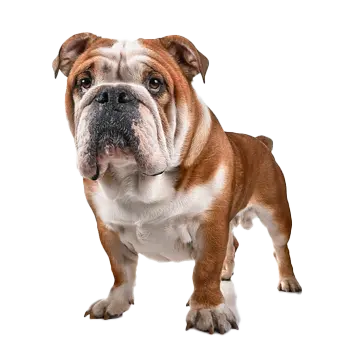
The English Bulldog presents a distinctive and unmistakable appearance characterized by a compact, muscular build. Males typically weigh between fifty and fifty-four pounds, while females average around forty to fifty pounds, both standing approximately twelve to sixteen inches tall at the shoulder. This medium-sized breed exhibits a wide, heavy-set body with broad shoulders and a lighter rear end, creating a distinctive pear-shaped silhouette when viewed from above. The breed's most striking feature is its large, spherical head with an extremely short muzzle that gives the face a flattened appearance, complemented by deep wrinkles and skin folds that extend from the forehead down to the jowl. The English Bulldog's facial features include dark, round eyes set low and wide on the forehead, a black slightly upturned nose, and massive undershot jaws where the lower jaw protrudes notably in front of the upper jaw, creating a characteristic comical grin. Small, thin rose ears sit high on the head, angling forward like flaps. The breed displays thick folds of loose, pendant skin with heavy wrinkles on the face and a prominent dewlap hanging from the throat. Their short, stocky legs are splayed outward and slightly bowed, particularly at the elbows and hocks, creating their distinctive rolling gait. The coat is short, smooth, flat, and fine-textured, lying close to the body with a glossy appearance. English Bulldogs come in various colors and patterns including brindle, piebald, solid white, red, fawn, and fallow, often featuring white markings or black masks. The tail can be either straight or tightly coiled in a distinctive corkscrew formation. Despite their intimidating appearance with drooping lips and prominent jowls, the breed's physical characteristics reflect generations of selective breeding that has transformed them from athletic working dogs into the compact, wrinkled companions recognized today.
Key Characteristics
Temperament Temperament Temperament Temperament Temperament Temperament The breed's sensitivity means they pick up on their owner's moods and emotions, and they require substantial human attention for happiness. English Bulldogs can become depressed or develop behavioral issues if ignored or left alone for extended periods. While they have low energy levels and are content with moderate exercise, they need daily walks to fulfill their primal instincts. Young Bulldogs display more energy, but they naturally slow down with age. Most are friendly and outgoing with strangers, though some individuals may be more standoffish while remaining polite. Their calm, dignified demeanor combined with sudden comically frisky moments and their tendency to sulk when they feel wronged makes them endearing, if occasionally challenging, companions who bring both laughter and love to their families.
Health Considerations Health Considerations Health Considerations Health Considerations Health Considerations Health Considerations The breed experiences numerous other hereditary conditions including cherry eye, entropion, corneal ulcers, and other eye disorders related to their prominent, protruding eyes. Their compressed facial structure predisposes them to dental disease. English Bulldogs are prone to allergies causing skin irritation and hot spots, hypothyroidism, and various cardiac conditions. The average lifespan is notably short at eight to ten years, with heart disease, cancer, and neurological disorders being leading causes of death. Obesity exacerbates all health issues, making weight management critical. Many English Bulldogs require caesarean sections for delivery due to large puppy heads and narrow birth canals. The breed's extensive health problems result in significant veterinary expenses throughout their lives, and prospective owners must be prepared for potential lifelong medical management. Regular veterinary monitoring, maintaining ideal body weight, avoiding temperature extremes, and careful daily hygiene practices are essential for helping English Bulldogs achieve their maximum potential lifespan and quality of life.
Poodle

The Poodle is an elegant, athletic breed recognized in three official size varieties: Standard Poodles stand over fifteen inches at the shoulder and weigh forty-five to seventy pounds, Miniature Poodles measure ten to fifteen inches tall and weigh twelve to twenty pounds, while Toy Poodles stand under ten inches and weigh five to seven pounds. A fourth Medium variety, standing fourteen to eighteen inches, is recognized in some countries. All varieties share a distinctive square outline with balanced, well-proportioned bodies, long elegant necks, and straight backs. The breed presents a proud, dignified carriage with an air of distinction peculiar to itself. Poodles possess a leggy appearance with strong, muscular shoulders and balanced hindquarters, creating an athletic build beneath their distinctive coat. The Poodle's head features a long, straight muzzle combined with a rounded skull and dropped ears covered in long, wavy hair that reach the corner of the lip when pulled forward. Their dark, oval-shaped eyes are set far apart, creating an alert, intelligent, and perceptive expression. Most Poodles have very dark, almost black eyes, though those with brown or cafe au lait coats may display amber eyes. The nose is dark and pointy at the end of their long, thin snout. Poodles are exceptional jumpers with natural athletic ability, possessing stamina and energy that belies their refined appearance. The breed's crowning glory is its distinctive coat, which is dense, curly, and grows continuously rather than shedding in the traditional sense. The tight curls can be maintained as a curly coat or developed into corded styles resembling dreadlocks. Hair grows at an intense rate and must be clipped or groomed regularly to prevent painful matting, as the hair that does fall out gets caught within the coat rather than dropping to the floor. This single-layer coat with no undercoat makes Poodles excellent choices for allergy sufferers. The breed comes in a wide range of solid colors including black, white, silver, brown, gray, apricot, cream, red, silver-beige, and cafe au lait. Show dogs require specific clips with areas of extravagant hair coupled with tight clipping, originally designed to provide warmth over joints and chest while working in cold water. The tail is typically docked and carried high, straight, and alert, waving gaily. Poodles' elegant appearance, combined with their athletic build and distinctive coat, creates a breed that is both beautiful and functional.
Key Characteristics
Temperament Temperament Temperament Temperament Temperament Temperament Without proper exercise, training, and socialization, Poodles can develop problematic behaviors including nuisance barking, hyperactivity, separation anxiety, and aggression toward strangers or other dogs. Early socialization is crucial to prevent them from becoming one-person pets that are wary or nervous around others. The breed requires daily exercise including walks and activities that tap into their natural retrieving instincts, as they were originally developed as water dogs for hunting waterfowl. Poodles are generally not aggressive but are protective of their families and make excellent watchdogs who will bark to announce visitors. They adapt well to their owner's energy levels, displaying an "off switch" that allows them to relax and be couch potatoes when appropriate. Standard Poodles require about an hour of daily exercise, while smaller varieties expend energy more quickly on shorter activities. With proper care, training, and attention, Poodles make brilliant, loving, versatile companions suited for active families who can meet their substantial physical and mental needs.
Health Considerations Health Considerations Health Considerations Health Considerations Health Considerations Health Considerations Addison's disease, or hypoadrenocorticism, occurs with increased frequency in Standard Poodles due to immune-mediated destruction of adrenal tissue, causing lethargy, vomiting, diarrhea, and electrolyte imbalances. The condition has a seventy-five percent heritability rate though specific genes remain unidentified, making it difficult to breed away from. Epilepsy, particularly idiopathic epilepsy, represents another significant inherited neurological condition in Standard Poodles, typically presenting between one and five years of age with recurrent seizures requiring lifelong medication management. Additional health concerns include von Willebrand's disease affecting blood clotting, bloat or gastric dilatation-volvulus particularly dangerous in deep-chested Standards, hypothyroidism causing metabolic slowdown, and various eye conditions including cataracts. Toy Poodles face risks of tracheal collapse, Legg-Calve-Perthes disease affecting hip blood supply, and dental problems from crowding in small mouths. Poodles require regular veterinary wellness exams, genetic health testing through reputable breeders, proper weight management to avoid exacerbating joint issues, and consistent grooming to catch potential health problems early. With diligent preventive care and prompt attention to emerging issues, Poodles can enjoy long, healthy lives as cherished family companions.
Important to Remember
Each hybrid dog is unique and may inherit any combination of traits from either parent breed. The information above represents the characteristics of the purebred parent breeds. Your Bulldogpoo may favor one parent over the other or display a blend of both. We strongly encourage you to read the complete breed profiles for both the English Bulldog and Poodle to fully understand the range of possible temperaments, health concerns, and care requirements.