Boxer Basset
The Boxer Basset is a cross between the Boxer and the Basset Hound. Because each hybrid inherits a unique combination of traits from both parents, we recommend thoroughly researching both breeds before choosing a Boxer Basset. Pay special attention to temperament, health issues, and care requirements, as your dog may express characteristics from either parent breed.
Boxer
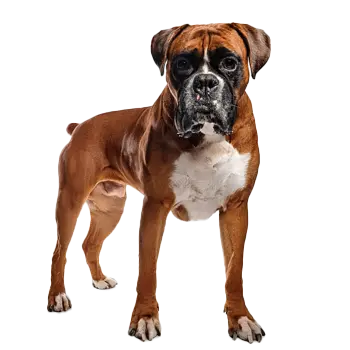
The Boxer is a medium to large-sized breed that presents a powerful and athletic appearance with a distinctly square build that showcases strength without sacrificing elegance. Males typically stand between 23 and 25 inches at the shoulder and weigh 65 to 80 pounds, while females are slightly smaller at 21.5 to 23.5 inches tall and 50 to 65 pounds. The breed possesses a compact, muscular frame with a broad, deep chest, well-developed hindquarters, and a strong, slightly arched neck that contributes to their confident posture and dignified carriage. Their body is well-balanced with a short, straight back and powerful loins that enable impressive athletic performance. The Boxer's coat is short, smooth, and lies tight against the body, requiring minimal grooming beyond regular brushing to remove loose hair. Coat colors include fawn ranging from light tan to rich mahogany, and brindle featuring black stripes on a fawn background in various patterns. White markings are common and may appear on the chest, face, and paws, though these markings should not exceed one-third of the body according to breed standards. The breed's signature black mask covers the muzzle and often extends around the eyes, creating an expressive and alert appearance that is quintessentially Boxer. One of the Boxer's most distinctive features is their brachycephalic head structure with an undershot jaw, where the lower jaw extends beyond the upper jaw. This creates their characteristic pushed-in nose and wrinkled forehead that gives them an endearingly quizzical expression. Their dark brown eyes are medium-sized and convey intelligence and curiosity, while their naturally floppy ears are set high on the head and fold forward when alert. The Boxer's tail is typically docked short in countries where the practice remains legal, though natural tails are increasingly common and carry a gentle upward curve. Their legs are straight and well-boned, with compact, cat-like feet that provide excellent traction. The overall physique reflects their heritage as a versatile working dog capable of great speed, remarkable agility, and sustained endurance.
Key Characteristics
Temperament Temperament Temperament Temperament Temperament Temperament Boxers are high-energy dogs that require substantial daily exercise and mental stimulation to remain happy and well-behaved. They excel in various canine activities including agility, obedience, rally, and therapy work due to their sensitive nature and ability to connect with people. Training should be consistent and positive, as Boxers can be stubborn but respond exceptionally well to reward-based methods that make learning feel like a game. They may experience separation anxiety if left alone for extended periods, as they strongly prefer the company of their family. This breed typically gets along well with other household pets when properly introduced, though their exuberant play style may be overwhelming for smaller or more timid animals.
Health Considerations Health Considerations Health Considerations Health Considerations Health Considerations Health Considerations Other health issues common in Boxers include hip dysplasia, which affects the hip joint and can cause pain and mobility problems. Gastric dilatation-volvulus, commonly known as bloat, is a life-threatening emergency more common in deep-chested breeds like the Boxer. Degenerative myelopathy is a progressive neurological condition that can affect mobility in older dogs. Hypothyroidism may cause weight gain, lethargy, and skin problems. The breed's brachycephalic facial structure can contribute to breathing difficulties, particularly in hot weather. Regular eye examinations are recommended as corneal ulcers can occur due to the prominent eye position. With attentive care and health monitoring, Boxers typically enjoy a lifespan of 10 to 12 years.
Basset Hound

The Basset Hound is a distinctive short-legged breed that combines substantial bone structure with a surprisingly heavy build despite its low stature. This breed typically stands under 15 inches at the shoulder but weighs between 40 and 80 pounds, with males averaging 50 to 65 pounds and females slightly lighter at 45 to 60 pounds. The Basset's unique proportions result from achondroplasia, a form of dwarfism that produces their characteristically short, curved legs while maintaining a long, substantial body that houses considerable strength and endurance. Their massive paws with thick pads support their considerable weight and provide excellent traction on varied terrain. The breed's most recognizable features include extraordinarily long, velvety ears that hang well below the jawline and serve a functional purpose by helping funnel scent toward the nose during tracking. Their deeply wrinkled skin, particularly prominent around the face, neck, and forehead, creates a perpetually mournful expression enhanced by drooping lower eyelids and loose flews that give them their characteristic soulful appearance. The dewlap, a prominent fold of loose skin under the throat, is another distinctive feature that contributes to their unique silhouette. The Basset's large, domed head houses one of the most powerful noses in the canine world, second only to the Bloodhound in scenting ability, making them exceptional tracking dogs. Basset Hounds possess a short, smooth, dense coat that provides excellent weather protection during hunting activities in brush and rough terrain. The coat may appear in any recognized hound color, with tricolor patterns of black, white, and tan being most common and most associated with the breed. Bicolor combinations of lemon and white, red and white, or mahogany and white are also frequently seen and equally acceptable. The breed's long, tapered tail is carried upward in a slight curve during movement, often with a white tip that aids visibility in tall grass during hunts. Their deep chest provides ample lung capacity, while their sturdy rear quarters generate surprising power. The overall impression is of a substantial, well-balanced hound built for endurance rather than speed, perfectly designed for trailing game at a steady pace hunters can follow on foot.
Key Characteristics
Temperament Temperament Temperament Temperament Temperament Temperament Basset Hounds are vocal dogs with a distinctive deep, melodious bay that was originally developed to help hunters locate them in dense brush. They may howl or bark when lonely, bored, or alerting to something interesting, which should be considered in noise-sensitive living situations. While not typically high-energy dogs, Bassets do require regular moderate exercise to prevent obesity, a significant concern for the breed. They enjoy leisurely walks and have surprising stamina when engaged in activities that interest them. Left alone without stimulation, Bassets may resort to digging or other destructive behaviors. Their social nature means they generally prefer company and may develop separation anxiety if isolated for long periods.
Health Considerations Health Considerations Health Considerations Health Considerations Health Considerations Health Considerations Basset Hounds are prone to several eye conditions including glaucoma, particularly primary open-angle glaucoma, which is hereditary in the breed and can lead to blindness if untreated. The drooping eyelids that give Bassets their soulful expression can also lead to ectropion and entropion, conditions where the eyelid turns outward or inward respectively, causing irritation and potential damage to the eye. Their distinctive long ears create warm, moist environments perfect for bacterial and yeast infections, requiring regular cleaning and monitoring. Thrombopathia, a bleeding disorder, occurs in Bassets and should be identified before any surgical procedures. Obesity is an extremely common problem that exacerbates joint issues and shortens lifespan. The breed may also experience hypothyroidism, seborrhea, and various allergies. With appropriate care and weight management, Basset Hounds typically live 10 to 12.5 years.
Important to Remember
Each hybrid dog is unique and may inherit any combination of traits from either parent breed. The information above represents the characteristics of the purebred parent breeds. Your Boxer Basset may favor one parent over the other or display a blend of both. We strongly encourage you to read the complete breed profiles for both the Boxer and Basset Hound to fully understand the range of possible temperaments, health concerns, and care requirements.