Boston Iggy
The Boston Iggy is a cross between the Boston Terrier and the Italian Greyhound. Because each hybrid inherits a unique combination of traits from both parents, we recommend thoroughly researching both breeds before choosing a Boston Iggy. Pay special attention to temperament, health issues, and care requirements, as your dog may express characteristics from either parent breed.
Boston Terrier
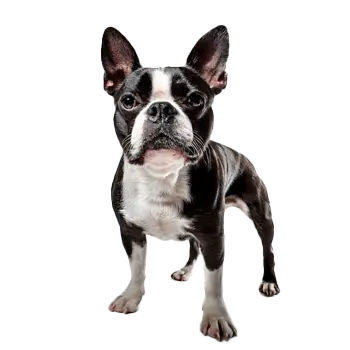
The Boston Terrier is a compact, well-balanced dog with a distinctive tuxedo-like appearance that has earned it the nickname "American Gentleman." This breed stands between 15 to 17 inches at the shoulder and typically weighs between 12 to 25 pounds, with the breed standard dividing them into three weight classes: under 15 pounds, 15 to 20 pounds, and 20 to 25 pounds. The body is short and square-proportioned, with a broad chest and a slightly arched neck that flows smoothly into the shoulders. The breed possesses a sturdy, muscular build despite its relatively small size, conveying an impression of determination and strength. The topline is level and the back is short, giving the dog a cobby appearance. The most recognizable feature of the Boston Terrier is its distinctive head, which is square and flat on top with a short, wide muzzle that gives the face a characteristic brachycephalic appearance. The eyes are large, round, dark, and set wide apart, giving the breed an alert and intelligent expression that many describe as kind and curious. The ears are small and erect, either naturally or cropped, and are carried upright at the corners of the skull. The nose is black and broad with a well-defined line between the nostrils. The jaw is broad and square with short, regular teeth that meet in an even bite or are slightly undershot. The cheeks are flat and the lips cover the teeth completely when the mouth is closed. The coat of the Boston Terrier is short, smooth, and fine in texture, requiring minimal grooming beyond occasional brushing. The breed comes in three accepted color patterns: black and white, brindle and white, or seal and white, with seal appearing black but having a reddish cast when viewed in sunlight. White markings typically appear on the muzzle, between the eyes extending over the head, on the chest forming a distinctive bib, and on part or all of the forelegs and hind legs below the hocks. The tail is short, either straight or screw-shaped, set low, and tapers to a fine point. The overall appearance should be balanced and symmetrical.
Key Characteristics
Temperament Temperament Temperament Temperament Temperament Temperament Despite their small size, Boston Terriers have a confident demeanor and can sometimes be territorial, though serious aggression is not characteristic of the breed. They typically bark to alert their owners to visitors or unusual sounds but are not excessive barkers. The breed does well in apartments and urban environments due to their compact size and moderate exercise requirements. Early socialization helps ensure they develop into well-rounded adults, comfortable in various situations and around different people and animals.
Health Considerations Health Considerations Health Considerations Health Considerations Health Considerations Health Considerations Other health concerns include deafness, which can affect one or both ears and is sometimes associated with excessive white markings on the head, allergies manifesting as skin irritation and digestive issues, and hemivertebrae, a spinal condition where vertebrae are abnormally shaped that can lead to neurological problems. Some Boston Terriers also experience seizures. The breed typically has a lifespan of 11 to 13 years. Responsible breeders screen for these conditions, and prospective owners should request health clearances for the parents. Regular veterinary checkups, maintaining a healthy weight, and appropriate exercise help ensure the best quality of life for these charming companions.
Italian Greyhound

The Italian Greyhound is a true miniature sighthound, embodying supreme elegance and grace in a diminutive package. This breed stands 13 to 15 inches at the withers and typically weighs between 7 to 14 pounds, making it the smallest of the sighthound breeds. The body is slender and muscular, with a distinctive curved back that arches over the loin, a deep narrow chest that reaches to the elbows, and long, fine-boned legs built for speed. Despite their delicate appearance, Italian Greyhounds are sturdy enough to be capable athletes, able to reach speeds of 25 miles per hour in short bursts. The topline shows the characteristic Greyhound curvature, with the highest point typically over the loin area. The head of the Italian Greyhound is long, narrow, and flat on top, tapering to a fine, pointed muzzle with a slight stop. The nose is dark, typically black or brown depending on coat color, with well-opened nostrils. The eyes are medium-sized, dark, bright, and full of expression, conveying an alert and intelligent demeanor that gives the breed its characteristic soulful look. The ears are small, fine in texture, and carried folded back along the head in what is called a "rose" position when at rest, though they may prick forward or fly outward when the dog is alert or excited. The neck is long, slender, and gracefully arched, flowing smoothly into the well-laid-back shoulders. The coat of the Italian Greyhound is short, glossy, and satiny to the touch, lying close to the body with no undercoat. This fine coat provides little protection against cold weather, requiring owners to provide sweaters, coats, or other protective garments in cooler temperatures. Italian Greyhounds come in virtually any color, including black, blue, cream, fawn, red, sable, seal, and various shades of gray, often with white markings on the chest and feet. The only disqualifying color pattern is brindle or tan markings typical of black-and-tan breeds. The tail is slender, tapering to a curved end, set low, and carried low with the end in a gentle curve. Movement should be free, high-stepping, and effortless, displaying the breed's natural elegance.
Key Characteristics
Temperament Temperament Temperament Temperament Temperament Temperament Italian Greyhounds are intelligent but can be challenging to train due to their independent nature and sensitivity. Harsh corrections or punishment-based training methods are counterproductive with this breed and can damage the bond between dog and owner. Positive reinforcement with treats and praise yields the best results. House training can be particularly challenging with Italian Greyhounds, as many are reluctant to go outside in cold or wet weather. They typically get along well with other dogs, especially other Italian Greyhounds or similarly sized breeds, and often coexist peacefully with cats. Due to their delicate build, supervision around larger dogs and young children is essential.
Health Considerations Health Considerations Health Considerations Health Considerations Health Considerations Health Considerations Other health issues affecting Italian Greyhounds include hypothyroidism, which causes weight gain, lethargy, and coat changes, patellar luxation where the kneecap dislocates, epilepsy causing recurring seizures, Von Willebrand disease which is a blood clotting disorder, color dilution alopecia in dogs with diluted coat colors causing hair loss and skin problems, portosystemic shunt affecting liver function, and autoimmune disorders. Legg-Calve-Perthes disease, a hip disorder seen in young small-breed dogs, can also occur. Due to their low body fat and thin coat, Italian Greyhounds are sensitive to cold temperatures and require protection in cool weather. They can also be sensitive to anesthesia and certain medications.
Important to Remember
Each hybrid dog is unique and may inherit any combination of traits from either parent breed. The information above represents the characteristics of the purebred parent breeds. Your Boston Iggy may favor one parent over the other or display a blend of both. We strongly encourage you to read the complete breed profiles for both the Boston Terrier and Italian Greyhound to fully understand the range of possible temperaments, health concerns, and care requirements.