Boston Border Collie
The Boston Border Collie is a cross between the Border Collie and the Boston Terrier. Because each hybrid inherits a unique combination of traits from both parents, we recommend thoroughly researching both breeds before choosing a Boston Border Collie. Pay special attention to temperament, health issues, and care requirements, as your dog may express characteristics from either parent breed.
Border Collie
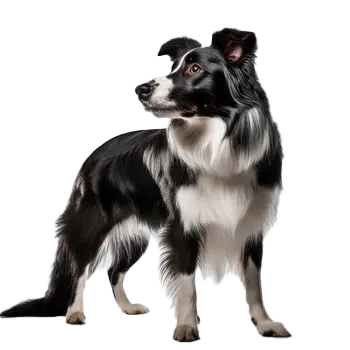
Border Collies are medium-sized dogs displaying an athletic and agile build that reflects their herding heritage. Males typically stand between 19 to 22 inches at the shoulder and weigh 30 to 55 pounds, while females are slightly smaller at 18 to 21 inches tall and 27 to 42 pounds. Their bodies are slightly longer than they are tall, with a muscular frame well-suited for agility and endurance. The breed features a well-proportioned head similar to that of a collie, with ears that stand erect or semi-erect, often partially folded over at the tip, giving them a jaunty and alert appearance. The Border Collie possesses a distinctive double coat that provides weather protection, with two coat types: rough or smooth. Rough-coated individuals have medium-length feathered hair, particularly on the forelegs, haunches, chest, and underside, while smooth-coated Border Collies have short hair covering their entire body. Both coat types are dense and designed to resist harsh weather conditions. While black and white is the most common coloring, Border Collies appear in an impressive array of colors and patterns including red and white, blue merle, red merle, sable, brindle, and tricolor combinations. Their expressive oval eyes vary from brown to blue, and occasionally different colored eyes occur, particularly in merle-patterned dogs. The Border Collie's tail is moderate in length, set low, and features a distinctive upward swirl at the end, especially when the dog is alert or active. Their overall appearance conveys a sense of grace, determination, and focus, with every physical feature contributing to their exceptional working ability. The breed's athletic build allows them to run up to 30 miles per hour and work tirelessly for extended periods, demonstrating the stamina and speed that made them premier herding dogs.
Key Characteristics
Temperament Temperament Temperament Temperament Temperament Temperament Despite their intense working drive, Border Collies form deep bonds with their owners and families, often choosing a favorite person. They are loyal, eager to please, and highly responsive to their handler's cues, from subtle hand signals to raised eyebrows. The breed can be reserved or wary around strangers, requiring early and consistent socialization to prevent shyness or nervousness in unfamiliar situations. Border Collies are sensitive dogs that respond poorly to harsh training methods, thriving instead on positive reinforcement and gentle, consistent guidance. Their devotion to their families and remarkable intelligence make them exceptional companions for active individuals or families who can meet their substantial exercise and mental stimulation needs.
Health Considerations Health Considerations Health Considerations Health Considerations Health Considerations Health Considerations Other health considerations include Border Collie Collapse, a syndrome triggered by intense exercise that causes disorientation and weakness, and Trapped Neutrophil Syndrome, a genetic immune system disorder that is typically fatal but can be screened for through genetic testing. The breed can also be affected by the MDR1 gene mutation, which makes them sensitive to certain common medications. Regular veterinary check-ups, genetic testing where appropriate, maintaining a healthy diet and weight, and providing appropriate exercise are essential for ensuring Border Collies live long, healthy lives. Prospective owners should work with responsible breeders who conduct health screenings and can provide documentation of health clearances for both parents.
Boston Terrier

Boston Terriers are compact, small dogs with a distinctive tuxedo-like appearance that has earned them the nickname 'American Gentleman.' Males typically stand about 17 inches tall at the shoulder while females reach approximately 16 inches. The breed is divided into three weight categories: under 15 pounds, 15 to 20 pounds, and 20 to 25 pounds, allowing for variation within the breed standard. Despite their small stature, Boston Terriers are well-proportioned and sturdy, with broad chests and a square, muscular build that gives them a confident, athletic appearance. The Boston Terrier's head is one of its most distinctive features, being square and rather flat on top with a short, square, broad muzzle that is approximately one-third the length of the skull. As a brachycephalic breed, they have a characteristic 'pushed-in' face with a lower jaw proportionate to the body but a shortened upper jaw. Their large, round, dark eyes are set wide apart and contribute to their alert, intelligent, and appealing expression. The ears are naturally small and erect, positioned near the corners of the skull, resembling 'bat ears' in their upright stance, though some Boston Terriers are born with floppy ears. Boston Terriers have smooth, short coats that lie flat against the body, requiring minimal grooming. Their distinctive coat pattern consists of white markings in specific areas combined with either black, brindle, or seal coloring. According to breed standards, required markings include a white chest, white muzzle band, and a white band between the eyes, with desired markings adding a white collar and white on the forelegs and hind legs. The tail is naturally short and set low on the rump, tapering to a fine point, and docking is forbidden by breed standards. Their compact size, distinctive markings, and expressive features combine to create a breed that is both handsome and instantly recognizable.
Key Characteristics
Temperament Temperament Temperament Temperament Temperament Temperament One notable aspect of the Boston Terrier temperament is their need for social interaction and family involvement. They can suffer from separation anxiety when left alone for extended periods, as they genuinely prefer to be with their people. These dogs are adaptable and versatile, capable of being both playful companions and calm cuddle bugs depending on the situation. While they have energy to burn and enjoy games like fetch and tug-of-war, they are also content to relax with their families after adequate exercise. Their combination of intelligence, affection, moderate energy, and adaptability makes Boston Terriers excellent companions for families, singles, and seniors alike, provided they receive the attention and companionship they need to thrive.
Health Considerations Health Considerations Health Considerations Health Considerations Health Considerations Health Considerations Additional health concerns include deafness, which can be congenital in some Boston Terriers; various allergies manifesting as skin irritation, itching, or digestive issues; and heart conditions such as mitral valve disease. The breed's unique skull structure also predisposes them to hemivertebrae, spinal bone deformities that can cause neurological problems. Due to their large shoulders relative to smaller hind quarters, Boston Terriers often require cesarean sections for safe delivery of puppies. Maintaining a healthy weight is crucial for Boston Terriers to minimize stress on their joints and respiratory system. Regular veterinary check-ups, dental care, proper diet, and avoiding extreme temperatures are essential for managing these health concerns and ensuring Boston Terriers live long, comfortable lives.
Important to Remember
Each hybrid dog is unique and may inherit any combination of traits from either parent breed. The information above represents the characteristics of the purebred parent breeds. Your Boston Border Collie may favor one parent over the other or display a blend of both. We strongly encourage you to read the complete breed profiles for both the Border Collie and Boston Terrier to fully understand the range of possible temperaments, health concerns, and care requirements.