Border Schnollie
The Border Schnollie is a cross between the Border Collie and the Schnauzer. Because each hybrid inherits a unique combination of traits from both parents, we recommend thoroughly researching both breeds before choosing a Border Schnollie. Pay special attention to temperament, health issues, and care requirements, as your dog may express characteristics from either parent breed.
Border Collie
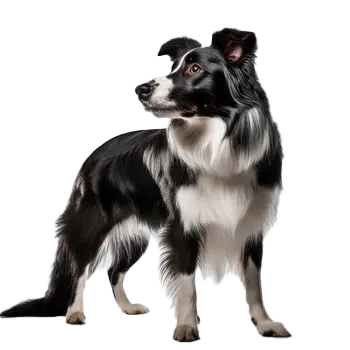
The Border Collie is a medium-sized dog known for its athletic build and remarkable agility, developed through centuries of selective breeding for herding work. Males typically stand between 19 and 22 inches at the shoulder, while females range from 18 to 21 inches. Weight varies from 30 to 55 pounds, with males and females often being similar in size within the breed. The breed possesses a well-proportioned body that is slightly longer than it is tall, giving them the balanced frame necessary for their legendary herding abilities. Their overall appearance conveys grace, endurance, and the capacity for sustained physical activity across challenging terrain. The Border Collie's coat comes in two distinct varieties: rough and smooth. The rough coat is medium length with attractive feathering on the legs, chest, belly, and haunches, while the smooth coat lies closer to the body with minimal feathering throughout. Both coat types feature a dense, weather-resistant double coat with a coarser outer layer and soft, insulating undercoat that provides protection in harsh working conditions. The breed displays an extraordinary range of colors and patterns, with classic black and white being the most common and recognizable. Other accepted colors include red, blue, blue merle, red merle, sable, lilac, brindle, and gold, often combined with white markings in the traditional collie pattern featuring a blaze on the face, white muzzle, white chest, four white feet, and a white tail tip. Distinctive physical features include an intelligent, keen expression that reflects the breed's remarkable mental capacity. The oval-shaped eyes can be brown, blue, or one of each color in merle-patterned dogs, and they convey intensity and focus. The ears are medium-sized and set well apart on the skull, carried either fully erect or semi-erect with the tips folding forward or outward. The head is fairly broad with a distinct stop between the skull and muzzle, and the muzzle itself tapers gradually to the nose. Border Collies move with smooth, effortless, ground-covering strides that demonstrate their tireless working nature and remarkable stamina.
Key Characteristics
Temperament Temperament Temperament Temperament Temperament Temperament Border Collies tend to be reserved or cautious around strangers while remaining deeply loyal and affectionate with their families. They thrive in environments where they have a job to do and a close relationship with their handler. Their sensitivity makes them responsive to training but also means they can be affected by harsh corrections. Early socialization is essential to prevent excessive shyness or nervousness, and they generally do best with experienced owners who understand their unique needs.
Health Considerations Health Considerations Health Considerations Health Considerations Health Considerations Health Considerations Other health concerns include hypothyroidism, which affects the thyroid gland and can cause weight gain, lethargy, and coat problems. Trapped Neutrophil Syndrome is a fatal condition where white blood cells cannot leave the bone marrow, though DNA testing can identify carriers. Border Collie Collapse causes episodes of disorientation and loss of muscle control after intense exercise, particularly in dogs bred for herding work. Regular veterinary checkups, appropriate health screenings, and maintaining a healthy weight through proper diet and exercise help ensure Border Collies live long, active lives.
Schnauzer

The Miniature Schnauzer is a small, robust dog with a distinctive appearance that sets it apart from other terrier-type breeds and makes it instantly recognizable. Standing 12 to 14 inches at the shoulder and weighing between 11 and 20 pounds, this breed presents a compact, square-proportioned silhouette that conveys strength and substance. The body length from chest to rear is approximately equal to the height at the withers, creating a balanced, sturdy frame that reflects both elegance and functionality. Despite their small size, Miniature Schnauzers are solidly built dogs with good bone structure and well-developed muscular definition that reflects their working heritage as farm dogs, ratters, and versatile companions. The breed's coat is one of its most recognizable and defining features, consisting of a hard, wiry outer coat and a soft, dense undercoat that provides insulation and protection. This double coat requires regular grooming and maintenance to preserve its characteristic texture and appearance. The traditional grooming pattern leaves the coat longer on the legs, under the chest, and on the face while keeping it shorter and tighter on the body and neck. This styling accentuates the breed's distinctive silhouette. Accepted colors include salt and pepper, where individual hairs are banded with alternating light and dark colors creating a unique effect, solid black with a black undercoat, and black and silver with clearly defined silver markings. The salt and pepper coloring is the most common and classic appearance for the breed. The Miniature Schnauzer's head is rectangular and strong, adorned with bushy eyebrows that arch slightly upward and a luxuriant beard and mustache that give the face its characteristic wise, dignified, and somewhat old-fashioned expression. The ears are set high on the skull and may be cropped to stand erect in countries where permitted, or left natural, in which case they fold forward in a neat V-shape close to the head. The eyes are small, dark brown, deep-set, and oval-shaped, conveying an alert, keen, and intelligent expression. The muzzle is strong and ends in a moderately blunt manner. The tail was traditionally docked but is now often left natural in many countries where docking has been banned. The overall impression is of a compact, terrier-type dog with considerable substance, personality, and unmistakable breed character.
Key Characteristics
Temperament Temperament Temperament Temperament Temperament Temperament Miniature Schnauzers generally get along well with children, especially when raised together, though interactions with very young children should be supervised. They can coexist peacefully with other pets when properly socialized, though their prey drive may lead them to chase small animals. Early socialization is important to prevent excessive suspicion of strangers or territorial behavior. These dogs thrive on mental stimulation and can become bored and destructive without adequate activity and attention. Their combination of intelligence, loyalty, and manageable size makes them adaptable companions for various living situations.
Health Considerations Health Considerations Health Considerations Health Considerations Health Considerations Health Considerations Portosystemic liver shunts, abnormal blood vessels that bypass the liver, occur in the breed at significantly higher rates than average, with Miniature Schnauzers being nearly 20 times more likely to develop this condition than other breeds. Myotonia congenita is a genetic muscle disorder where muscles contract easily but have difficulty relaxing, causing mobility problems. DNA testing can identify carriers of this condition. Other health concerns include hypothyroidism, diabetes, dental disease due to tooth crowding, and atopic dermatitis. Regular veterinary examinations, appropriate health screenings, and a carefully managed diet help Miniature Schnauzers maintain good health throughout their lives.
Important to Remember
Each hybrid dog is unique and may inherit any combination of traits from either parent breed. The information above represents the characteristics of the purebred parent breeds. Your Border Schnollie may favor one parent over the other or display a blend of both. We strongly encourage you to read the complete breed profiles for both the Border Collie and Schnauzer to fully understand the range of possible temperaments, health concerns, and care requirements.