Border Collie Lakeland
The Border Collie Lakeland is a cross between the Border Collie and the Lakeland Terrier. Because each hybrid inherits a unique combination of traits from both parents, we recommend thoroughly researching both breeds before choosing a Border Collie Lakeland. Pay special attention to temperament, health issues, and care requirements, as your dog may express characteristics from either parent breed.
Border Collie
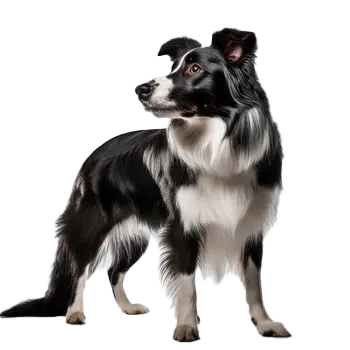
The Border Collie is a medium-sized herding dog renowned for its athletic build and remarkable agility. Males typically stand between 19 and 22 inches at the shoulder and weigh 30 to 45 pounds, while females measure 18 to 21 inches and are slightly lighter. The breed possesses a well-balanced, muscular body that is slightly longer than it is tall, with an approximate ratio of 10 to 9. This proportionate build allows for the fluid, effortless movement essential for covering vast distances while working livestock. The chest is deep and moderately broad, providing ample lung capacity for sustained physical activity, while the ribs are well sprung and the loin is moderately deep and muscular. Border Collies sport a distinctive double coat that comes in two varieties: rough and smooth. The rough coat features medium-length hair that ranges from one to three inches, with feathering on the legs, chest, and belly, while the smooth coat lies closer to the body with minimal feathering. Both coat types include a dense, weather-resistant undercoat paired with a coarser outer layer that protects against harsh weather conditions encountered during outdoor work. The breed displays an impressive array of colors and patterns, with black and white being most common, followed by blue merle, red merle, tricolor, sable, and various other combinations. Any color or marking is acceptable in the breed standard. The head is moderately broad with a distinct stop between the skull and muzzle, giving an intelligent, alert expression that is characteristic of the breed. The ears are medium-sized and set well apart, carried either erect or semi-erect with the tips folding forward or outward. The eyes are oval-shaped and set well apart, varying in color from brown to blue, with merle-patterned dogs sometimes displaying heterochromia. The tail is moderately long, reaching at least to the hock, and is carried low with a slight upward swirl at the tip when the dog is relaxed.
Key Characteristics
Temperament Temperament Temperament Temperament Temperament Temperament Training a Border Collie is typically a rewarding experience due to the breed's eagerness to learn and natural responsiveness to positive reinforcement methods. However, early socialization is critical to prevent shyness or fearfulness. These dogs thrive when given a job to do, whether that involves competitive obedience, agility, flyball, disc sports, or practical herding work. Prospective owners should understand that a Border Collie's remarkable intelligence requires ongoing engagement; a bored Border Collie will create its own entertainment, often in ways that owners find undesirable.
Health Considerations Health Considerations Health Considerations Health Considerations Health Considerations Health Considerations Neurological conditions affect some Border Collies, with epilepsy being among the most common. Idiopathic epilepsy typically manifests between six months and five years of age and can often be managed with medication. Neuronal Ceroid Lipofuscinosis is a progressive and fatal neurological disease for which genetic testing is available. Trapped Neutrophil Syndrome is an immune system disorder with approximately ten percent of the breed being carriers. Border Collie Collapse is an exercise-induced condition causing loss of coordination and disorientation after intense activity. Additional health concerns include deafness, particularly in dogs with significant white markings or merle patterns, hypothyroidism, and osteochondritis dissecans affecting joint cartilage.
Lakeland Terrier

The Lakeland Terrier is the smallest of the long-legged black and tan terrier breeds, standing between 13.5 and 15 inches at the shoulder with an ideal height of 14.5 inches. Males typically weigh around 17 pounds while females weigh approximately 15 pounds. Despite their compact size, Lakelands present a sturdy, workmanlike appearance that reflects their heritage as tenacious hunters in the rugged terrain of England's Lake District. The body is square to slightly off-square in proportion, with a narrow but deep chest that allowed these dogs to pursue quarry into rocky dens and narrow passages. The breed possesses a distinctive double coat consisting of a hard, wiry outer layer and a soft, dense undercoat that provides excellent protection from harsh weather conditions. This coat requires regular maintenance, including weekly brushing and professional hand-stripping every eight to ten weeks to maintain proper texture and appearance for show quality dogs. Pet owners may opt for clipping, though this softens the coat texture over time. The Lakeland displays a wide variety of acceptable colors including solid black, blue, liver, red, and wheaten, as well as saddle-marked patterns such as black and tan, blue and tan, liver and tan, and red grizzle with various tan markings. The head is rectangular and well-balanced with a flat skull and a strong, straight muzzle. Small, dark, moderately oval-shaped eyes convey the alert, confident expression characteristic of the breed. The ears are small, V-shaped, and fold over with the inner edge close to the head, carried alertly forward. The neck is long and refined, leading to well-laid-back shoulders that enable efficient movement. The tail is traditionally docked where legal and is set high, carried upright but not curled over the back. Overall, the Lakeland Terrier projects an impression of liveliness, determination, and stylish elegance in a small but substantial package.
Key Characteristics
Temperament Temperament Temperament Temperament Temperament Temperament Training a Lakeland Terrier requires patience, consistency, and a good sense of humor. While highly intelligent and capable of learning quickly, these dogs possess an independent mind and will often evaluate whether a command is worth following. Harsh training methods are counterproductive; positive reinforcement and firm, fair leadership yield the best results. Early socialization is essential to develop good manners around other dogs, as Lakelands can display same-sex aggression typical of terrier breeds. Their strong prey drive makes them generally unsuitable for homes with cats or small pets unless raised together from puppyhood. With children, Lakelands do best with older kids who understand how to interact respectfully with dogs.
Health Considerations Health Considerations Health Considerations Health Considerations Health Considerations Health Considerations Legg-Calve-Perthes disease affects some Lakeland Terriers, involving degeneration of the femoral head in the hip joint that typically manifests in young dogs between five and eight months of age. Treatment usually requires surgical removal of the affected bone followed by rehabilitation. Hypothyroidism, a condition where the thyroid gland produces insufficient hormones, occurs in the breed and is readily managed with daily medication. Von Willebrand's disease, a bleeding disorder caused by deficient clotting factors, has been identified in Lakelands, making genetic testing advisable before breeding. Patellar luxation, where the kneecap slips out of position, and various skin allergies to environmental or food triggers round out the health concerns that owners should discuss with their veterinarian.
Important to Remember
Each hybrid dog is unique and may inherit any combination of traits from either parent breed. The information above represents the characteristics of the purebred parent breeds. Your Border Collie Lakeland may favor one parent over the other or display a blend of both. We strongly encourage you to read the complete breed profiles for both the Border Collie and Lakeland Terrier to fully understand the range of possible temperaments, health concerns, and care requirements.