Border Akbash Collie
The Border Akbash Collie is a cross between the Border Collie and the Akbash Dog. Because each hybrid inherits a unique combination of traits from both parents, we recommend thoroughly researching both breeds before choosing a Border Akbash Collie. Pay special attention to temperament, health issues, and care requirements, as your dog may express characteristics from either parent breed.
Border Collie
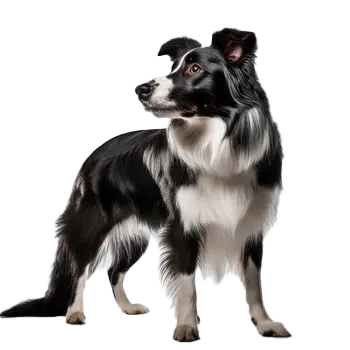
The Border Collie is a medium-sized herding dog that stands between 18 to 22 inches at the shoulder and weighs between 30 to 45 pounds, with males typically larger than females. This athletic breed possesses a lean, muscular frame that combines agility with endurance. The body is slightly longer than tall, with a level topline and well-sprung ribs that descend to the elbows. Their strong, straight legs provide excellent stability and power for the quick turns and bursts of speed necessary for herding work. The breed's distinctive head features a moderate skull width, an intelligent expression, and medium-sized ears that stand erect or semi-erect, contributing to their alert appearance. Border Collies have a double coat that comes in two varieties: rough or smooth. The rough coat is medium to moderately long with feathering on the legs, chest, and tail, while the smooth coat is shorter overall but still features the protective double-layer construction. Both coat types are weather-resistant and provide insulation against harsh conditions. The most common coloration is black and white, though Border Collies can appear in virtually any color including red, blue merle, tricolor, sable, and solid colors. The coat's texture is somewhat harsh to the touch, which helps it repel dirt and moisture. Distinctive physical features include oval-shaped eyes that can range from brown to blue, with the occasional heterochromic pairing in merle-colored dogs. The tail is moderately long and carried low when relaxed, often with a slight upward curve at the tip. The breed's overall appearance reflects its working heritage, with every aspect of its construction designed for speed, stamina, and agility in demanding herding tasks across varied terrain.
Key Characteristics
Temperament Temperament Temperament Temperament Temperament Temperament This breed thrives on having a job to do and excels in various canine sports including agility, obedience trials, flyball, and of course, herding competitions. They are happiest when engaged in activities that challenge both their minds and bodies. Border Collies generally get along well with children when raised with them, though their herding instincts may lead to nipping at heels. They can coexist with other pets if properly socialized, though their strong chase drive means they may pursue cats or smaller animals. The breed's intense work ethic and need for constant engagement make them best suited for active families who can provide the structure, training, and activity they require.
Health Considerations Health Considerations Health Considerations Health Considerations Health Considerations Health Considerations Other health concerns include hypothyroidism, which affects metabolism and can cause weight gain, lethargy, and coat problems but is manageable with medication. Dental disease is common and requires regular care. The breed's deep chest makes them somewhat susceptible to bloat, though not to the degree of larger breeds. Responsible breeding practices, including health testing of breeding dogs, have helped reduce the incidence of many hereditary conditions. Regular veterinary care, appropriate nutrition, dental hygiene, and monitoring for early signs of health issues contribute significantly to the longevity and quality of life for Border Collies.
Akbash Dog

The Akbash Dog is a large, imposing livestock guardian breed that stands between 28 to 34 inches tall at the withers, with males typically at the upper end of this range and females slightly smaller. Weight ranges from 75 to 140 pounds, with males generally weighing 90 to 140 pounds and females 75 to 120 pounds. Despite their substantial size, Akbash Dogs possess a lean, athletic build that combines power with surprising agility and speed. The body is slightly longer than tall, with a deep chest that reaches to the elbows, a level topline, and a visible arch over the loin area that reflects their mixed sighthound and mastiff heritage. Their long, straight legs contribute to their ability to cover ground efficiently and respond quickly to threats. The breed's most distinctive feature is its white coat, which served the practical purpose of distinguishing them from predators in darkness while blending with livestock. The coat comes in two varieties: medium length and long, both featuring a thick double coat with a dense undercoat and longer, coarser guard hairs. The medium coat lies flat with a sleek appearance, while long-coated dogs display slightly wavy hair with a pronounced ruff around the neck and profuse feathering on the legs and tail. Some Akbash Dogs may have light biscuit or gray shading around the ears or in the undercoat, though the overall appearance should be predominantly white. The coat's thickness varies with climate and seasons, providing excellent protection against both cold and heat. The Akbash Dog's head is wedge-shaped and proportionate to the body, with a broad skull that appears somewhat narrower in females. They have pendant ears that hang close to the head, almond-shaped eyes ranging from amber to dark brown, and a black nose. Many Akbash Dogs are born with double dewclaws on the rear legs. The tail is long and carried low when relaxed but curls over the back when the dog is alert or excited. The overall appearance conveys strength, nobility, and alertness, with every aspect of their physical structure designed for their historical role as independent livestock guardians capable of speed, power, and endurance.
Key Characteristics
Temperament Temperament Temperament Temperament Temperament Temperament Akbash Dogs mature slowly, both physically and mentally, with full maturity not reached until two to three years of age. This extended puppyhood requires patience from owners. They are intelligent and capable of learning but prefer to understand the purpose of commands rather than blindly obeying. Training requires consistency, firmness tempered with gentleness, and positive reinforcement. They do not respond well to harsh corrections. The breed is relatively calm indoors and does not require as much active exercise as some large breeds, though they need space to patrol and regular moderate activity. They adapt well to various living situations as long as they have adequate space and their guardian instincts are appropriately directed through training and socialization.
Health Considerations Health Considerations Health Considerations Health Considerations Health Considerations Health Considerations Dilated cardiomyopathy, a heart condition where the heart muscle weakens and enlarges, occurs in Akbash Dogs more frequently than in many other breeds. Regular cardiac evaluations can help detect this condition early. Eye problems, including progressive retinal atrophy and retinal dysplasia, have been reported in the breed. Epilepsy and various autoimmune conditions including sebaceous adenitis, which affects the skin and coat, and autoimmune thyroiditis also occur. Some Akbash Dogs may develop cruciate ligament injuries due to their size and activity level. Umbilical hernias are occasionally seen. Cancer, particularly osteosarcoma and lymphoma, can affect the breed. Regular veterinary check-ups, appropriate health screenings, genetic testing where available, proper nutrition, and maintaining an appropriate weight all contribute to maximizing the health and longevity of Akbash Dogs.
Important to Remember
Each hybrid dog is unique and may inherit any combination of traits from either parent breed. The information above represents the characteristics of the purebred parent breeds. Your Border Akbash Collie may favor one parent over the other or display a blend of both. We strongly encourage you to read the complete breed profiles for both the Border Collie and Akbash Dog to fully understand the range of possible temperaments, health concerns, and care requirements.