Border-Aussie
The Border-Aussie is a cross between the Australian Shepherd and the Border Collie. Because each hybrid inherits a unique combination of traits from both parents, we recommend thoroughly researching both breeds before choosing a Border-Aussie. Pay special attention to temperament, health issues, and care requirements, as your dog may express characteristics from either parent breed.
Australian Shepherd

The Australian Shepherd is a medium-sized, athletic breed with a well-balanced build that emphasizes both strength and agility. Males typically stand between twenty and twenty-three inches at the shoulder and weigh fifty to sixty-five pounds, while females are slightly smaller at eighteen to twenty-one inches tall and forty to fifty-five pounds. Their body is slightly longer than tall, with a solid, muscular frame, deep chest with well-sprung ribs, and a strong, level topline. The breed exhibits a moderate bone structure that supports their active working lifestyle without appearing heavy or coarse. Their movement is smooth, free, and effortless, reflecting the stamina and grace needed for herding livestock across varied terrain. The Australian Shepherd's most distinctive feature is their beautiful double coat, which is medium in length with a texture ranging from straight to slightly wavy. The undercoat varies in density depending on climate, while the weather-resistant outer coat provides protection in various conditions. Hair is shorter and smooth on the head, ears, and front of the forelegs, while the backs of the legs feature moderate feathering and the britches are moderately full. Males typically display a more pronounced mane around the neck compared to females. The breed is renowned for their striking coat colors and patterns, with four primary variations including blue merle, red merle, solid black, and solid red, all potentially accompanied by white markings or tan points. No two Australian Shepherds share identical coat patterns, making each dog uniquely beautiful. Additional distinguishing characteristics include their expressive, almond-shaped eyes that may be brown, blue, amber, or any variation or combination of these colors, often featuring flecks and marbling that add to their alert, intelligent expression. Their triangular ears are set high on the head and carried semi-erect with the tips breaking forward or to the side, contributing to their attentive appearance. Many Australian Shepherds are born with naturally bobbed tails, though tail length can vary within the breed.
Key Characteristics
Temperament Temperament Temperament Temperament Temperament Temperament Training an Australian Shepherd is generally rewarding due to their eagerness to please and rapid learning ability, though they respond best to positive reinforcement methods rather than harsh corrections, as they are sensitive dogs whose feelings can be easily hurt. Their intelligence and trainability make them stars in obedience competitions, agility trials, herding events, and various dog sports. However, their quick minds mean they can pick up bad habits just as easily as good ones, so consistency and clear leadership from puppyhood are essential. Aussies need owners who are active, patient, and committed to providing both the physical exercise and mental engagement that this remarkable breed requires to thrive.
Health Considerations Health Considerations Health Considerations Health Considerations Health Considerations Health Considerations One of the most significant health concerns in Australian Shepherds is the MDR1 gene mutation, which affects roughly half of all dogs in the breed. This mutation causes sensitivity to certain medications, potentially leading to serious neurological toxicity or death when exposed to common drugs including some heartworm preventatives, anesthetics, and other veterinary medications. Fortunately, a simple DNA test can identify carriers of this mutation, allowing veterinarians to adjust medication protocols accordingly. Additional health concerns include autoimmune thyroiditis (the most common autoimmune disease in the breed), epilepsy (which typically appears between six months and five years of age), and various forms of cancer. Responsible breeders screen their dogs for these genetic conditions, and prospective owners should request health clearances including hip evaluations, eye examinations, and genetic testing to help ensure they're getting the healthiest possible puppy.
Border Collie
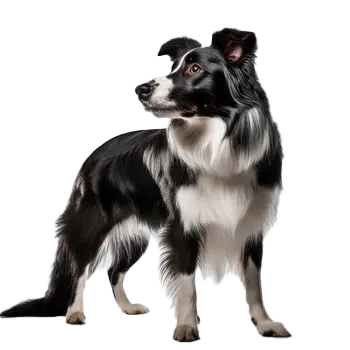
The Border Collie is a medium-sized herding dog with an athletic, well-balanced build that emphasizes agility and endurance over bulk. Males typically stand between nineteen and twenty-two inches at the shoulder and weigh thirty to forty-five pounds, while females are slightly smaller at eighteen to twenty-one inches tall with similar weight ranges. The body is slightly longer than it is tall, featuring a strong, muscular frame with a deep chest, well-sprung ribs, and straight, powerful legs that enable the breed's remarkable speed and stamina. Border Collies possess moderate bone structure that provides strength without heaviness, and their overall appearance reflects the breed's heritage as tireless working dogs capable of covering vast distances while herding livestock across challenging terrain. Their movement is smooth, free, and effortless, with an ability to change direction instantly and accelerate to impressive speeds when needed. Border Collies exhibit considerable variation in coat type, with two primary varieties recognized: rough and smooth. Rough-coated dogs have medium-length, weather-resistant double coats that may be straight or slightly wavy, with feathering on the forelegs, haunches, chest, and underside. Smooth-coated Border Collies feature shorter hair throughout their body while maintaining the protective double-coat structure. Both coat types provide excellent protection against harsh weather conditions. While black and white is the most iconic and commonly seen coloration, Border Collies actually appear in virtually every color and pattern known in dogs, including red and white, blue merle, red merle, tricolor combinations, sable, brindle, and even solid colors. This diversity reflects the breed's working heritage where ability trumped appearance in selection. The Border Collie's head and expression are among their most distinctive features. They possess keen, intelligent, alert eyes that are typically oval in shape and convey an intense, focused gaze known as "the eye" that is essential to their herding technique. Eye color varies from deep brown to blue, amber, or even heterochromatic combinations, particularly in merle-colored dogs. Their medium-sized ears are set well apart and carried erect or semi-erect, giving them a perpetually attentive appearance. The tail is moderately long, set low, and carried with an upward swirl at the end, particularly when the dog is alert or working. Unlike some herding breeds, Border Collie tails are never docked and remain fully feathered, adding to their graceful silhouette.
Key Characteristics
Temperament Temperament Temperament Temperament Temperament Temperament Training a Border Collie is typically straightforward due to their intelligence, eagerness to please, and natural responsiveness to commands, making them stars in obedience competitions, agility trials, herding events, and virtually any dog sport. However, their sensitivity means they don't respond well to harsh corrections or punishment-based training, instead thriving with positive reinforcement techniques that recognize their quick learning and problem-solving abilities. Border Collies need patient, consistent, active owners who understand the breed's needs and can provide the combination of physical exercise, mental stimulation, training, and companionship that these remarkable dogs require. They are not suitable for sedentary lifestyles or owners seeking a low-maintenance pet, but for the right person or family who can meet their needs, Border Collies become incomparable companions who excel at virtually any task they're given.
Health Considerations Health Considerations Health Considerations Health Considerations Health Considerations Health Considerations Other health concerns in Border Collies include epilepsy, particularly idiopathic epilepsy where no underlying cause can be identified, typically manifesting before six years of age and requiring lifelong medication management. Trapped Neutrophil Syndrome affects the immune system and leads to chronic infections in affected puppies, who are often smaller than littermates with developmental delays. Neuronal Ceroid Lipofuscinosis causes progressive neurological deterioration beginning in adulthood. Osteochondritis Dissecans primarily affects rapidly growing puppies between four and nine months, causing joint problems particularly in the shoulder. Some Border Collies carry genes for deafness, especially those with predominantly white coats or double merle genetics. Responsible breeders conduct comprehensive health testing including hip evaluations, eye examinations, and genetic testing for known conditions, and prospective owners should request documentation of these health clearances when selecting a puppy.
Important to Remember
Each hybrid dog is unique and may inherit any combination of traits from either parent breed. The information above represents the characteristics of the purebred parent breeds. Your Border-Aussie may favor one parent over the other or display a blend of both. We strongly encourage you to read the complete breed profiles for both the Australian Shepherd and Border Collie to fully understand the range of possible temperaments, health concerns, and care requirements.