Beabull
The Beabull is a cross between the Beagle and the Bulldog. Because each hybrid inherits a unique combination of traits from both parents, we recommend thoroughly researching both breeds before choosing a Beabull. Pay special attention to temperament, health issues, and care requirements, as your dog may express characteristics from either parent breed.
Beagle
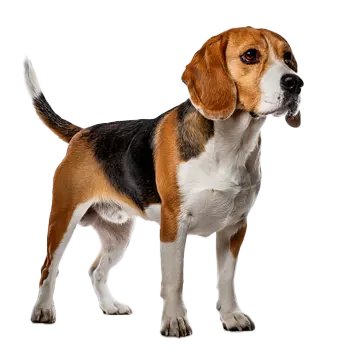
The Beagle is a compact, muscular scent hound that comes in two recognized varieties based on height at the withers. The smaller variety stands under 13 inches and typically weighs up to 20 pounds, while the larger variety measures between 13 and 15 inches and weighs between 20 and 30 pounds. Males generally weigh between 22 and 24 pounds, with females slightly lighter at 20 to 22 pounds. The breed possesses a solid, sturdy build with well-sprung ribs and a level topline that reflects its heritage as an endurance hunter capable of following scent trails for extended periods across varied terrain without tiring. The Beagle's coat is short, hard, and medium in length, providing excellent weather protection while requiring minimal grooming maintenance. The most recognizable color pattern is the classic tri-color combination of black, white, and tan, though the breed also appears in red and white, chocolate tri-color, lemon, and blue tick variations among others. The breed standard allows for any true hound color, giving breeders and owners considerable variety in appearance. The coat lies close to the body and has a slightly coarse texture that helps repel dirt and moisture during outdoor activities, keeping the dog comfortable in various weather conditions. Distinctive physical features define the Beagle's appearance and contribute significantly to its exceptional scenting ability. The breed possesses characteristically long, floppy ears that are set low on the head and hang close to the cheeks, helping to trap scent particles and funnel them toward the powerful nose. Large, expressive brown or hazel eyes give the Beagle its appealing, gentle expression that has charmed dog lovers for centuries. The head features a moderate stop with a straight, square-cut muzzle approximately equal in length to the skull. The nose is broad with well-opened nostrils, usually black but may be lighter in dogs with paler coats. The tail is set moderately high and carried upright with a slight curve, often described as a flag that helps hunters track the dog through tall grass and heavy brush.
Key Characteristics
Temperament Temperament Temperament Temperament Temperament Temperament Beagles are intelligent dogs with moderate energy levels, requiring approximately one hour of daily exercise to remain healthy and mentally content. They are highly food-motivated, which can be helpful during training sessions but also means they are prone to overeating and counter-surfing if given the opportunity. While generally adaptable to various living situations including apartments, Beagles do not do well when left alone for extended periods and may develop separation anxiety or engage in destructive behaviors. They thrive in homes where they receive plenty of companionship and mental stimulation to satisfy their curious nature.
Health Considerations Health Considerations Health Considerations Health Considerations Health Considerations Health Considerations Obesity represents one of the most significant health concerns for Beagles due to their food-driven nature and tendency to overeat whenever food is available. Maintaining proper weight is essential as excess pounds contribute to joint problems, diabetes, heart disease, and reduced lifespan. Intervertebral disc disease can affect the breed, causing back pain and potentially paralysis in severe cases. A condition known as Steroid Responsive Meningitis, sometimes called Beagle Pain Syndrome, occurs in the breed and causes fever and severe neck pain. Leading causes of death in Beagles include cancer, heart disease, and complications from epilepsy, making regular veterinary checkups essential for early detection and management.
Bulldog

The Bulldog is a medium-sized breed with a distinctive thick-set, low-slung body and powerful, heavily muscled build that creates an immediate impression of great strength, stability, and determination. Males typically weigh around 54 pounds and stand 16 to 17 inches at the withers, while females are slightly smaller at approximately 50 pounds and similar height. The breed's compact, muscular frame carries substantial bone and muscle mass distributed across a wide chest and sturdy legs, giving these dogs a weight that often surprises those who attempt to lift them for the first time. The breed's most recognizable features center on its unique head structure, which is massive in proportion to the body with an extremely short, pushed-in muzzle characteristic of brachycephalic breeds. The circumference of the head measured in front of the ears should at least equal the height of the dog at the shoulders. The face is heavily wrinkled with loose, pendulous skin forming distinctive folds and rope-like formations, particularly around the nose, forehead, and cheeks. The jaw is broad, square, and undershot, meaning the lower jaw protrudes beyond the upper jaw, creating the breed's characteristic underbite and exposing the lower incisors when the mouth is closed. Wide-set shoulders and a narrower hindquarters contribute to the Bulldog's distinctive rolling, shuffling gait. The Bulldog's coat is short, smooth, flat, and glossy, lying close to the body and requiring minimal grooming beyond regular brushing to control moderate shedding. Accepted colors include brindle in various patterns, piebald, solid white, red, fawn, fallow, and combinations of these colors with white markings. The breed standard penalizes solid black and black-and-tan markings as undesirable. The tail is characteristically short, either straight or forming a tight spiral commonly called a corkscrew or screw tail, set low and carried close to the body without curving upward. The eyes are set low and wide apart in the skull, round in shape, and moderate in size, never sunken or bulging. The ears are small and thin, set high on the head, and folded back in what is termed the rose ear position.
Key Characteristics
Temperament Temperament Temperament Temperament Temperament Temperament Bulldogs have low energy requirements compared to many other breeds, making them well-suited to apartment living and less active households. They are not athletic dogs and are content with short daily walks rather than extended exercise sessions or vigorous play. This reduced activity need stems partly from their brachycephalic structure, which limits their breathing efficiency and makes them prone to overheating and respiratory distress. Snoring, wheezing, and drooling are common breed characteristics that owners should expect and accept. While generally sociable, some Bulldogs may display aggression toward unfamiliar dogs without proper socialization, and resource guarding behaviors around food can develop in some individuals.
Health Considerations Health Considerations Health Considerations Health Considerations Health Considerations Health Considerations Additional health concerns include hypothyroidism, allergies affecting skin and digestion, intervertebral disc disease, and dental problems resulting from the breed's undershot jaw and severely crowded teeth. Heat sensitivity is extreme in Bulldogs, and they can suffer heat stroke quickly in warm weather or with even minimal exertion, requiring owners to monitor temperature exposure carefully and provide climate-controlled environments. Over 80 percent of Bulldog litters are delivered by cesarean section due to the puppies' large heads and the dams' narrow pelvises making natural birth dangerous. The breed has extremely limited genetic diversity, making improvement of these inherited health issues challenging for responsible breeders.
Important to Remember
Each hybrid dog is unique and may inherit any combination of traits from either parent breed. The information above represents the characteristics of the purebred parent breeds. Your Beabull may favor one parent over the other or display a blend of both. We strongly encourage you to read the complete breed profiles for both the Beagle and Bulldog to fully understand the range of possible temperaments, health concerns, and care requirements.