Basselier
The Basselier is a cross between the Cavalier King Charles Spaniel and the Basset Hound. Because each hybrid inherits a unique combination of traits from both parents, we recommend thoroughly researching both breeds before choosing a Basselier. Pay special attention to temperament, health issues, and care requirements, as your dog may express characteristics from either parent breed.
Cavalier King Charles Spaniel
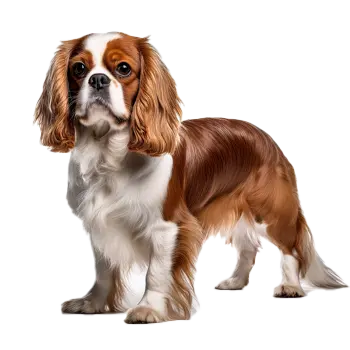
The Cavalier King Charles Spaniel is a graceful, elegant toy spaniel with a sweet, gentle expression that serves as an essential breed characteristic. Standing 12 to 13 inches at the shoulder and weighing 13 to 18 pounds, the Cavalier ranks among the larger toy breeds while maintaining a refined, compact appearance. The body is slightly longer than tall with a level topline, moderate bone structure, and an overall balance that reflects the breed's sporting spaniel heritage. The chest is moderately deep with well-sprung ribs, and the breed should appear neither cobby nor overly long in body. Despite being classified as a toy breed, Cavaliers retain the athletic capability of their spaniel ancestors and can display surprising stamina. The head is a hallmark of the breed, featuring a slightly rounded skull that appears flat due to the high ear placement, a moderate stop, and a full muzzle that tapers slightly without appearing pointed. The large, round eyes are warm dark brown with a lustrous, limpid quality, set well apart and surrounded by dark eye rims with cushioning below that contributes to the melting, sweet expression. The ears are set high on the head, long with abundant feathering, and wide enough to fan slightly forward when the dog is alert, framing the face beautifully. The nose is uniformly black with well-developed nostrils. The coat is one of the Cavalier's most attractive features: medium length, silky, and either straight or slightly wavy, though never curly. Feathering occurs on the ears, chest, legs, tail, and feet, with hair growing between the pads often trimmed. Four distinct color patterns are recognized: Blenheim featuring rich chestnut markings on a pearly white ground, often with a desirable lozenge-shaped spot on the crown; tricolor with jet black markings on white with tan points above the eyes, on cheeks, and under the tail; black and tan with raven black and mahogany tan markings; and ruby, a rich solid reddish-brown. The tail is carried happily but not much above the level of the back when moving.
Key Characteristics
Temperament Temperament Temperament Temperament Temperament Temperament Cavaliers respond well to positive training methods, being intelligent and motivated by both praise and treats. They are generally easier to train than many toy breeds and rarely display stubbornness or independence. However, their deep attachment to humans means they can develop separation anxiety if left alone for extended periods. They are not suited for households where they would spend long hours isolated. Though moderately active, they adapt their energy level to their owner's lifestyle, equally happy with a brisk walk or a quiet afternoon at home. They make excellent companions for seniors, apartment dwellers, and first-time dog owners seeking a loving, uncomplicated pet.
Health Considerations Health Considerations Health Considerations Health Considerations Health Considerations Health Considerations Additional health concerns include hip dysplasia, which occurs more frequently than expected in a toy breed, and patellar luxation where the kneecap slides out of position. Eye problems include cherry eye, dry eye syndrome, cataracts, and retinal disorders. The long ears make them susceptible to ear infections requiring regular cleaning. Episodic falling syndrome, resembling exercise-induced collapse, can occur. Due to these cumulative health challenges, Cavaliers typically live 8 to 12 years, with many experiencing reduced lifespans due to cardiac disease. Working with health-focused breeders who perform appropriate screening tests is crucial.
Basset Hound

The Basset Hound is a medium to large-sized scent hound with a distinctive low-slung, heavy-boned build that belies its considerable substance. Standing only 13 to 15 inches at the withers yet weighing between 40 and 65 pounds, this breed possesses a uniquely elongated body set on short, powerful legs. The short stature results from a form of dwarfism called achondroplasia, which gives the breed its characteristic appearance. The body is long and full with well-sprung ribs, supported by large, heavy-boned legs with massive paws that point straight ahead or turn slightly outward. The chest is deep and full, providing ample lung capacity for extended tracking work. The breed displays remarkable bone density, being heavier in bone pound for pound than any other breed. The Basset Hound's head is one of its most recognizable features, being large and well-proportioned with a distinctively domed skull and prominent occipital bone. The face displays loose, elastic skin that forms deep wrinkles, particularly around the brow and eyes, contributing to the breed's trademark melancholy expression. The ears are extraordinarily long, set low on the head just below eye level, with leather soft enough to reach well beyond the muzzle tip. These pendulous ears serve a functional purpose, sweeping scents from the ground toward the powerful nose, which contains approximately 220 million scent receptors. The eyes are soft, sad, and slightly sunken, showing a prominent haw, and the flews of the upper lip hang substantially below the lower jaw. The coat is short, dense, and smooth with a hard texture that provides weather protection during outdoor tracking. Any recognized hound color is acceptable, though the most common pattern is tricolor consisting of black, white, and tan markings. Bicolored lemon and white combinations are also frequently seen, along with red and white variations. The tail, often called a stern, is long and tapering with a slight upward curve carried sabre-fashion when the dog is moving, featuring coarse hair on the underside. The white tip on many tails serves as a visible flag when the dog works in tall grass or dense cover.
Key Characteristics
Temperament Temperament Temperament Temperament Temperament Temperament Basset Hounds are known for being vocal dogs with a deep, melodious bark and distinctive howl called a bay. This tendency toward vocalization, combined with their exceptional scenting ability, reflects their hunting heritage and original purpose. They can be persistent diggers and may attempt to follow interesting scents if given the opportunity to escape a yard. While generally calm and sometimes described as lazy, they are actually quite tenacious and possess remarkable stamina when engaged in scent work, play, or walks. Their easygoing nature makes them adaptable to various living situations.
Health Considerations Health Considerations Health Considerations Health Considerations Health Considerations Health Considerations Eye conditions affecting Basset Hounds include glaucoma, particularly primary open-angle glaucoma which is inherited in the breed, as well as cherry eye and ectropion caused by loose facial skin. The long ears require regular cleaning to prevent infections from moisture and debris buildup. Genetic conditions include thrombopathia, a bleeding disorder, and Lafora disease, a form of progressive myoclonic epilepsy found primarily in certain lines. DNA tests are available for several inherited conditions, and responsible breeders screen their dogs before breeding. The typical lifespan ranges from 10 to 13 years with proper care.
Important to Remember
Each hybrid dog is unique and may inherit any combination of traits from either parent breed. The information above represents the characteristics of the purebred parent breeds. Your Basselier may favor one parent over the other or display a blend of both. We strongly encourage you to read the complete breed profiles for both the Cavalier King Charles Spaniel and Basset Hound to fully understand the range of possible temperaments, health concerns, and care requirements.