Baseagle
The Baseagle is a cross between the Basenji and the Beagle. Because each hybrid inherits a unique combination of traits from both parents, we recommend thoroughly researching both breeds before choosing a Baseagle. Pay special attention to temperament, health issues, and care requirements, as your dog may express characteristics from either parent breed.
Basenji
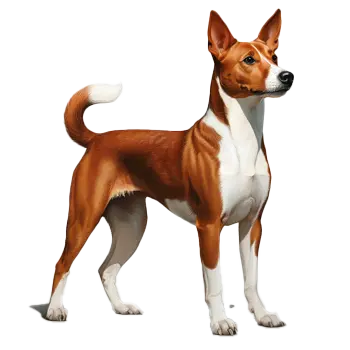
The Basenji is a small to medium-sized dog of elegant appearance, with males standing approximately seventeen inches at the shoulder and weighing around twenty-four pounds, while females measure about sixteen inches and weigh approximately twenty-two pounds. The breed possesses a distinctive square build, with the length of body from shoulder to buttocks approximately equal to the height at the withers, creating a balanced and athletic profile. Despite being lightly built for its size, the Basenji conveys an impression of poised alertness, refined elegance, and exceptional athletic capability that reflects its heritage as a hunting dog in the African Congo. The head features a distinctively wrinkled forehead, particularly prominent when the ears are pricked forward in attention, creating an expression of thoughtful curiosity and intelligence characteristic of the breed. The ears are small, erect, and pointed, set well forward on top of the skull and hooded slightly at the base. The eyes are small, almond-shaped, and dark hazel to dark brown, set obliquely and contributing to the breed's somewhat inscrutable, mysterious expression. The muzzle is shorter than the skull, tapering gradually toward the nose with tight-fitting lips and a scissors bite that reflects the breed's hunting heritage. The Basenji's coat is one of its most practical and distinctive features, being short, fine, and sleek with a texture almost like silk that lies close to the body. This minimal coat requires virtually no grooming beyond occasional brushing and produces almost no doggy odor, as the breed fastidiously grooms itself much like a cat, spending considerable time keeping its coat immaculate. The tail is set high on the croup and curls tightly in a single or double curl over to one side of the back, lying close against the thigh. Accepted colors include chestnut red, pure black, tricolor combining black, tan, and white, and brindle featuring black stripes on a red background. All colors must feature white feet, chest, and tail tip as required markings according to breed standards.
Key Characteristics
Temperament Temperament Temperament Temperament Temperament Temperament The Basenji possesses extremely strong prey drive inherited from its African hunting heritage spanning thousands of years, making the breed generally unsuitable for homes with small animals and requiring considerable caution around cats unless raised together from puppyhood with proper supervision. Most Basenjis absolutely cannot be trusted off-leash in unfenced areas as they will pursue interesting scents or small animals with single-minded focus, completely ignoring recall commands. While affectionate and playful with family members, including older children who respect their space and independence, Basenjis typically remain aloof and watchful with strangers, requiring extensive early socialization to develop appropriate social skills.
Health Considerations Health Considerations Health Considerations Health Considerations Health Considerations Health Considerations Hypothyroidism occurs in Basenjis at rates similar to many other breeds and is readily treatable with daily thyroid hormone replacement medication once properly diagnosed through blood testing. Hip dysplasia, while less common than in larger breeds, does occur and can be screened through radiographic evaluation by certified orthopedic specialists. Patellar luxation affects some individuals, causing intermittent lameness when the kneecap slips out of its normal position. Umbilical hernias are extremely common in Basenji puppies and usually require surgical correction during spay or neuter procedures. Eye conditions including persistent pupillary membrane and corneal dystrophy are also documented in the breed. The Basenji typically enjoys a lifespan of thirteen to fourteen years with appropriate health management.
Beagle
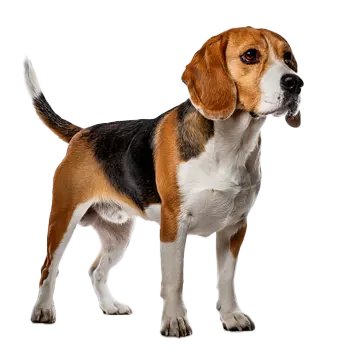
The Beagle is a small to medium-sized hound recognized in two size varieties by the American Kennel Club. The smaller variety stands under thirteen inches at the shoulder and weighs under twenty pounds, while the larger variety measures between thirteen and fifteen inches and typically weighs twenty to thirty pounds. Both varieties share the same sturdy, compact build designed for endurance rather than speed, with a muscular body that conveys stamina and energy without appearing coarse or clumsy. The overall impression is of a solidly built hound capable of sustained effort in the field. The head is fairly long with a slightly domed skull at the occiput and a square, well-defined muzzle of medium length that is straight and not snipey. The expression is characteristically gentle, pleading, and sometimes described as appealing or beseeching, enhanced by large, soft brown or hazel eyes set well apart that seem to ask for treats or attention. The ears are long, broad, and rounded at the tips, hanging gracefully beside the cheeks with a fine, velvety texture and reaching nearly to the end of the nose when drawn forward. The nose is broad and black with full, open nostrils designed for exceptional scenting ability, though lighter pigmentation is acceptable in lighter-colored dogs. The neck is of medium length, rising cleanly from muscular shoulders. The Beagle's coat is a close, hard, medium-length double coat that provides excellent protection against weather, brush, and brambles during work in the field. The undercoat is soft and dense, while the outer coat is smooth and lies close to the body. The classic tricolor pattern features a black saddle over the back, white legs, chest, belly, and tail tip, with rich tan markings on the head and around the saddle edges. Other accepted patterns include red and white in various shades, lemon and white featuring cream coloration with lighter ears, chocolate tricolor, and variations of these combinations. Any true hound color is acceptable. The tail is set moderately high on the back and carried cheerfully erect with a slight curve, featuring a white tip that serves as a flag when the dog is working in tall cover.
Key Characteristics
Temperament Temperament Temperament Temperament Temperament Temperament The Beagle's extraordinarily powerful nose dominates its decision-making process, often leading the dog on unauthorized adventures following fascinating scent trails that capture its complete attention. This characteristic makes reliable off-leash behavior extremely difficult to achieve regardless of training and requires secure fencing to prevent escape attempts that can occur when an irresistible scent beckons. While intelligent and capable of learning, Beagles can prove challenging to train due to their scent-driven distractibility and somewhat stubborn nature that prioritizes interesting smells over owner commands. Food motivation helps considerably in training, though this same intense food drive makes the breed highly prone to overeating and obesity if portions are not carefully controlled and treats limited.
Health Considerations Health Considerations Health Considerations Health Considerations Health Considerations Health Considerations Epilepsy is a hereditary neurological condition seen in Beagles more frequently than in the general dog population, typically first appearing between six months and three years of age with seizures of varying severity. Most epileptic dogs live normal, happy lives with appropriate medication management and regular veterinary monitoring. Eye conditions including cherry eye, glaucoma, cataracts, progressive retinal atrophy, and distichiasis affect some individuals and should be screened regularly. Intervertebral disc disease can occur due to the breed's relatively long back. Musladin-Lueke syndrome is a genetic connective tissue disorder specific to Beagles causing skin and joint abnormalities, for which DNA testing is available. Other conditions occasionally seen include patellar luxation, Factor VII deficiency affecting blood clotting, and various skin allergies.
Important to Remember
Each hybrid dog is unique and may inherit any combination of traits from either parent breed. The information above represents the characteristics of the purebred parent breeds. Your Baseagle may favor one parent over the other or display a blend of both. We strongly encourage you to read the complete breed profiles for both the Basenji and Beagle to fully understand the range of possible temperaments, health concerns, and care requirements.