Aussie-Chi
The Aussie-Chi is a cross between the Australian Shepherd and the Chihuahua. Because each hybrid inherits a unique combination of traits from both parents, we recommend thoroughly researching both breeds before choosing a Aussie-Chi. Pay special attention to temperament, health issues, and care requirements, as your dog may express characteristics from either parent breed.
Australian Shepherd

The Australian Shepherd is a well-balanced, medium-sized herding dog that combines athleticism with striking beauty. Males typically stand 20 to 23 inches at the shoulder and weigh between 50 and 65 pounds, while females are slightly smaller at 18 to 21 inches and 40 to 55 pounds. The breed possesses a solid, muscular build that reflects their demanding work as livestock herders, with sufficient bone and substance to handle long days of physical activity. Their body is slightly longer than tall, providing the agility and endurance necessary for their traditional herding duties on ranches and farms throughout the American West. The Australian Shepherd's coat is one of the breed's most distinguishing features, consisting of a medium-length double coat that is straight to wavy in texture. The weather-resistant outer coat provides protection from the elements, while the dense undercoat offers insulation in both cold and warm conditions. The breed displays a remarkable variety of coat colors including blue merle, red merle, solid black, and solid red, all of which may or may not include white markings and copper or tan points. The merle patterns create beautiful marbled effects with patches of darker color on a lighter background, making each dog's appearance uniquely individual. The head is clean-cut and in proportion to the body, with a slightly rounded skull and a muzzle that tapers gently to the nose. Their eyes are particularly striking and can be brown, blue, amber, or any combination thereof, including heterochromia where each eye is a different color. Ears are triangular and set high on the head, breaking forward or to the side when the dog is attentive. Some Australian Shepherds are born with naturally bobbed tails, while others have full tails that are sometimes docked in countries where this practice remains legal. The overall expression conveys intelligence, alertness, and eagerness, reflecting the breed's keen working instincts and responsive nature.
Key Characteristics
Temperament Temperament Temperament Temperament Temperament Temperament Often described as velcro dogs, Australian Shepherds form intensely close bonds with their owners and prefer to be involved in all family activities. They do not tolerate being left alone for extended periods and may develop separation anxiety if consistently isolated. This breed requires a minimum of 30 to 60 minutes of vigorous exercise daily. They are best suited to active families who can provide ample opportunities for physical activity and mental engagement. Australian Shepherds can be excellent family dogs for households with older children, though their exuberance and herding instincts require supervision around very young children.
Health Considerations Health Considerations Health Considerations Health Considerations Health Considerations Health Considerations Epilepsy occurs in the breed with some frequency, causing seizures that typically first appear between one and three years of age and often require lifelong medication to manage. Hypothyroidism, an underactive thyroid gland, can affect Australian Shepherds and may cause weight gain, lethargy, skin problems, and other symptoms that are manageable with daily medication. Allergies, both environmental and food-related, are common and may cause skin irritation, ear infections, and gastrointestinal issues. The breed also shows increased susceptibility to certain cancers, particularly lymphoma and hemangiosarcoma. Heart conditions including patent ductus arteriosus and mitral valve disease can occur, making cardiac screening advisable for breeding dogs.
Chihuahua
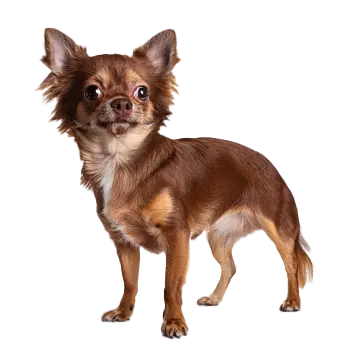
The Chihuahua holds the distinction of being the smallest recognized dog breed in the world, with adults typically standing 5 to 8 inches at the shoulder and weighing between 2 and 6 pounds, with the breed standard setting 6 pounds as the maximum for show dogs. Despite their diminutive size, Chihuahuas possess a compact, well-balanced body with a slightly longer than tall proportion. Their build is fine-boned yet surprisingly sturdy, with a level topline and well-sprung ribs that give the body sufficient capacity despite the small frame. The legs are straight and well-set, with small, dainty feet that contribute to their quick, confident movement. Two distinct coat varieties exist within the breed: the Smooth Coat and the Long Coat. Smooth Coat Chihuahuas have a short, glossy coat that lies close to the body, with a slightly heavier texture around the neck and a more sparse covering on the head and ears. Long Coat Chihuahuas display soft, fine hair that may be flat or slightly wavy, with distinctive feathering on the ears, legs, feet, and a plume on the tail. Both varieties may occur in virtually any color or combination of colors, including solid, marked, or splashed patterns. Common colors include fawn, black, white, chocolate, cream, and various combinations, though merle coloring is not accepted by all breed registries due to associated health concerns. The Chihuahua's head is one of its most distinctive features, displaying a well-rounded apple dome skull that is a defining characteristic of the breed. The skull may have a molera, a soft spot similar to a human infant's fontanel, which is considered acceptable in the breed standard though it should close or decrease as the dog matures. Large, round eyes are set well apart and are luminous and expressive, typically dark in color though lighter eyes may occur in dogs with lighter coat colors. The ears are large, erect, and flaring, set at an angle of approximately 45 degrees, which gives the breed its alert and attentive expression. The muzzle is moderately short and slightly pointed, with a black nose in most color varieties.
Key Characteristics
Temperament Temperament Temperament Temperament Temperament Temperament Despite their small size, Chihuahuas are intelligent and capable learners who respond well to positive reinforcement training methods. However, their independent nature and sometimes stubborn temperament can make training challenging, requiring patience and consistency. They are sensitive dogs who do not respond well to harsh corrections. House training can be particularly challenging due to their small bladder capacity and sensitivity to cold weather, leading some owners to train them to use indoor potty options. Chihuahuas have moderate exercise needs met through short walks and indoor play sessions, making them well-suited to apartment living.
Health Considerations Health Considerations Health Considerations Health Considerations Health Considerations Health Considerations Dental disease is extremely prevalent in Chihuahuas due to their small mouths and crowded teeth, which create ideal conditions for plaque and tartar accumulation. Regular dental care including daily brushing and professional cleanings is essential to prevent tooth loss. Heart disease, particularly mitral valve disease and patent ductus arteriosus, affects the breed with some frequency and may require ongoing monitoring and treatment. Hydrocephalus, an accumulation of fluid in the brain, can occur in puppies and may cause neurological symptoms. Tracheal collapse can cause breathing difficulties and a characteristic honking cough. Using a harness rather than a collar helps reduce pressure on the delicate trachea.
Important to Remember
Each hybrid dog is unique and may inherit any combination of traits from either parent breed. The information above represents the characteristics of the purebred parent breeds. Your Aussie-Chi may favor one parent over the other or display a blend of both. We strongly encourage you to read the complete breed profiles for both the Australian Shepherd and Chihuahua to fully understand the range of possible temperaments, health concerns, and care requirements.