American Hairless Min Pin
The American Hairless Min Pin is a cross between the American Hairless Terrier and the Miniature Pinscher. Because each hybrid inherits a unique combination of traits from both parents, we recommend thoroughly researching both breeds before choosing a American Hairless Min Pin. Pay special attention to temperament, health issues, and care requirements, as your dog may express characteristics from either parent breed.
American Hairless Terrier

The American Hairless Terrier is a small to medium-sized, smoothly muscled, and active terrier presenting a well-balanced, sturdy appearance despite its lack of coat. The breed stands 12 to 16 inches at the withers with weight proportionate to height, typically ranging from 12 to 24 pounds. The body is rectangular in shape, being slightly longer than tall with a ratio of approximately 10 to 9 when measured from prosternum to buttocks compared to withers to ground. This compact structure, combined with medium bone, creates a dog that is neither too light nor too heavy, perfectly suited for its origins as a companion bred from ratting terriers. The head is broad, slightly domed, and wedge-shaped when viewed from both front and side, proportionate to the body size. The skull and muzzle are equal in length, joined by a moderate stop, with powerful jaws well-hinged to allow a wide mouth opening. The eyes are expressive, obliquely set, and may be dark brown, amber, hazel, or blue in the hairless variety. V-shaped ears are set at the outside edges of the skull and may be erect, tipped, or button, adding to the breed's alert, curious expression. The neck is clean, moderately long, and blends smoothly into well-laid-back shoulders. The hairless variety is born with a soft, fuzzy birth coat that gradually sheds from nose to tail, leaving the dog entirely hairless by approximately six to eight weeks of age, though eyebrows and whiskers may remain. The skin is smooth, warm to the touch, and can be any color or pattern except albino or merle, typically presenting as pink with spots of gray, black, golden, or red that enlarge with age. A coated variety also exists, featuring a short, smooth, dense coat. The tail is thick at the base, tapering toward the tip, and carried in a slight upward curve. This breed is unique in having normal dentition unlike other hairless breeds, and is the only hairless dog breed indigenous to the United States.
Key Characteristics
Temperament Temperament Temperament Temperament Temperament Temperament While energetic and playful, American Hairless Terriers have moderate exercise needs that can be met with 30 to 45 minutes of daily activity combined with play sessions. They excel in various dog sports including agility, rally, and obedience, enjoying both the physical challenge and the opportunity to work alongside their owners. The breed can adapt well to apartment living provided adequate exercise and mental stimulation are provided. Some individuals may develop separation anxiety due to their strong attachment to family, making gradual conditioning to alone time important. Their alert nature can lead to excessive barking if not properly trained, though they are generally not as yappy as some small terrier breeds.
Health Considerations Health Considerations Health Considerations Health Considerations Health Considerations Health Considerations Orthopedic conditions including patellar luxation and hip dysplasia can affect the breed, as they do many small terriers. Legg-Calve-Perthes disease, involving degeneration of the femoral head due to inadequate blood supply, may occur and typically requires surgical intervention. Primary lens luxation is a genetic eye condition that can lead to secondary complications including glaucoma, making regular eye examinations advisable. Progressive retinal atrophy has been documented in some lines, gradually causing vision loss. Deafness, heart conditions, and hypothyroidism have also been reported. Responsible breeders conduct genetic testing and health screenings to minimize the transmission of hereditary conditions, and prospective owners should request documentation of health clearances for breeding stock.
Miniature Pinscher
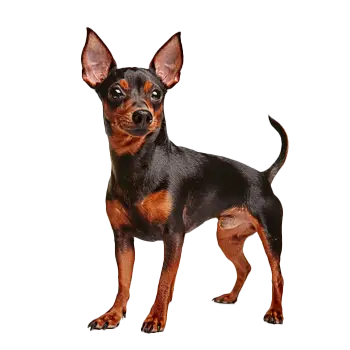
The Miniature Pinscher is a structurally well-balanced, sturdy, compact dog that projects elegance and pride despite its small stature. Standing 10 to 12.5 inches at the withers and weighing 8 to 11 pounds, this toy breed is often referred to as the King of Toys for both its confident bearing and its competitive success in the show ring. The body is short-coupled and square, with the length from forechest to buttocks approximating the height from withers to ground. Despite the similar name and appearance, the Miniature Pinscher is not a miniature Doberman Pinscher but rather a distinct breed believed to descend from German Pinschers, Dachshunds, and Italian Greyhounds. The head appears flat when viewed from the front, tapering forward toward the muzzle, with the skull and muzzle running parallel. The eyes are dark, slightly oval, and full of expression, set well apart to create an alert, intelligent appearance. Ears are set high and may be cropped to stand erect or left natural. The neck is slightly arched, blending smoothly into well-laid-back shoulders. The chest is moderately deep, reaching to the elbows, with well-sprung ribs. The back is level or slightly sloping toward the rear, and the tail is set high and carried erect, traditionally docked in countries where the practice remains legal. The most distinctive characteristic of the Miniature Pinscher is its hackney-like gait, a high-stepping, prancing movement reminiscent of a Hackney horse. This proud, elegant movement is unique among dog breeds and immediately identifies the Min Pin. The coat is short, smooth, and hard, lying flat against the body with a natural sheen. Accepted colors include solid clear red, stag red featuring red with black hair intermingled, and black or chocolate with sharply defined rust-red markings on the cheeks, lips, lower jaw, throat, chest, legs, feet, and above the eyes. The Miniature Pinscher requires minimal grooming, with occasional brushing sufficient to maintain coat health and appearance.
Key Characteristics
Temperament Temperament Temperament Temperament Temperament Temperament The Miniature Pinscher's high energy level demands regular exercise and mental stimulation to prevent boredom-related behavioral problems. These athletic little dogs excel at agility and other dog sports that channel their energy constructively. Their terrier-like heritage gives them a prey drive that may lead them to chase small animals, and their curiosity makes them accomplished escape artists requiring secure fencing. Min Pins can coexist with older children but may not tolerate rough handling from toddlers. They may attempt to dominate other dogs regardless of size difference. Their demanding personalities and exercise needs make them best suited for experienced dog owners who appreciate their spirited nature.
Health Considerations Health Considerations Health Considerations Health Considerations Health Considerations Health Considerations Eye conditions including progressive retinal atrophy and cataracts can affect vision over time, warranting regular ophthalmologic examinations. Epilepsy occurs in some lines, causing recurring seizures that typically require lifelong medication management. Hypothyroidism may develop, affecting metabolism and energy levels. The breed's fine bones and fearless nature make them prone to injuries from falls or rough play, and owners should protect them from situations where their boldness might lead to harm. Obesity can exacerbate joint problems and cause additional health issues, making portion control important. Responsible breeders conduct genetic testing and health screenings to reduce the incidence of hereditary conditions, and prospective owners should seek puppies from health-tested parents.
Important to Remember
Each hybrid dog is unique and may inherit any combination of traits from either parent breed. The information above represents the characteristics of the purebred parent breeds. Your American Hairless Min Pin may favor one parent over the other or display a blend of both. We strongly encourage you to read the complete breed profiles for both the American Hairless Terrier and Miniature Pinscher to fully understand the range of possible temperaments, health concerns, and care requirements.