Afghan Frise
The Afghan Frise is a cross between the Afghan Hound and the Bichon Frise. Because each hybrid inherits a unique combination of traits from both parents, we recommend thoroughly researching both breeds before choosing a Afghan Frise. Pay special attention to temperament, health issues, and care requirements, as your dog may express characteristics from either parent breed.
Afghan Hound
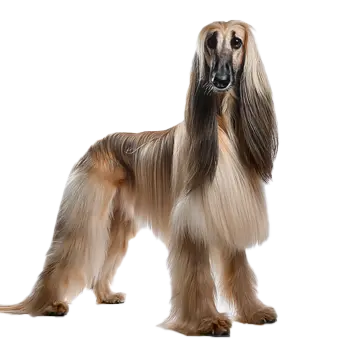
The Afghan Hound is a tall, elegant sighthound that presents an aristocratic appearance with no trace of coarseness or plainness. Males typically stand around 27 inches at the withers while females measure approximately 25 inches, with both sexes weighing between 50 and 60 pounds. The breed possesses a distinctively refined head with a long, narrow skull that balances evenly with the foreface, and a slight but perceptible stop. The eyes convey an exotic Eastern expression, appearing to gaze into the distance, while the long ears are set low on the head and covered with luxurious silky hair. The jaws are strong with a scissor bite, and the nose is preferably black though liver is acceptable in lighter-colored dogs. The Afghan Hound's most striking feature is its magnificent coat, which consists of thick, silky hair that is very fine in texture. The hindquarters, flanks, ribs, forequarters, and legs are well covered with this flowing coat, while the ears and all four feet are heavily feathered. A distinctive characteristic is the short, close-fitting hair that forms a smooth saddle along the back in mature dogs, contrasting with the longer coat elsewhere. The breed is crowned with a prominent topknot of long, silky hair that adds to its regal appearance. The coat should be shown in its natural state without clipping or trimming, and all colors are permissible except merle, though white markings on the head are considered undesirable. Additional distinctive features include very prominent hipbones, large feet with thick pads that served as shock absorbers on rocky Afghan terrain, and a tail that ends with a characteristic ring curl. The hindquarters are powerful and well-muscled, often appearing as high or slightly higher than the shoulders, creating the breed's unique silhouette. The legs are straight and strong, providing the foundation for the breed's remarkable speed and agility. When moving, the Afghan Hound displays great style and beauty, carrying its head and tail high with an elastic gallop that demonstrates tremendous spring and power in its smooth stride.
Key Characteristics
Temperament Temperament Temperament Temperament Temperament Temperament The breed exhibits a strong prey drive inherited from their hunting ancestry, which can make them prone to chasing smaller animals and requires secure fencing for outdoor areas. Despite their calm indoor presence, Afghan Hounds are athletic dogs that require substantial daily exercise and the opportunity to run at high speeds. They can reach speeds up to 40 miles per hour and excel in lure coursing activities. When their exercise needs are met, they become relaxed companions who appreciate soft bedding and comfortable surroundings, revealing a sensitive and affectionate side to their trusted family members.
Health Considerations Health Considerations Health Considerations Health Considerations Health Considerations Health Considerations Afghan Hounds face breed-specific health concerns including Afghan Hound myelopathy, a degenerative spinal cord disease unique to the breed that can lead to progressive paralysis. Bloat, or gastric dilatation-volvulus, is a life-threatening emergency more common in deep-chested breeds that requires immediate veterinary intervention. The breed may also be more susceptible to certain cancers, particularly hemangiosarcoma and osteosarcoma. Additionally, Afghan Hounds have notable sensitivity to anesthesia compared to other breeds, requiring careful veterinary management during surgical procedures. Regular health screenings, maintaining appropriate weight, and establishing a relationship with a veterinarian familiar with sighthound characteristics are essential components of responsible Afghan Hound ownership.
Bichon Frise
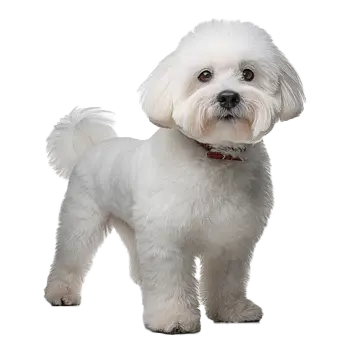
The Bichon Frise is a small, sturdy dog that presents as a white powder puff with a merry temperament evident in its plumed tail carried jauntily over the back. Both males and females typically stand between 9.5 and 11.5 inches at the withers and weigh between 12 and 18 pounds, with the ideal being a compact, well-proportioned dog slightly longer than tall. The head is in proportion to the body, with a slightly rounded skull and a moderately defined stop. The dark, round eyes are surrounded by dark halos that accentuate the breed's soft, inquisitive expression, while the drop ears are covered with long, flowing hair and frame the face beautifully. The Bichon Frise's coat is its most distinctive feature, consisting of a unique double coat that gives the breed its characteristic powder puff appearance. The undercoat is soft and dense, while the outer coat is coarser and curlier in texture. When properly groomed, the coat feels substantial and plush, similar to velvet, and springs back when patted. The coat is trimmed to reveal the natural outline of the body in a rounded fashion, with longer furnishings left on the head, beard, mustache, ears, and tail. The overall effect creates a rounded, cloud-like silhouette that is uniquely appealing. While white is the primary coat color, shadings of buff, cream, or apricot may appear around the ears or on the body, though excessive coloring beyond ten percent of the mature coat is undesirable. The nose is large, round, and black, complementing the dark eyes and contributing to the breed's charming expression. The legs are straight and medium-boned, supporting the compact body with ease, while the feet are round and tight. The tail is set level with the topline and curves gracefully over the back, covered with flowing hair that adds to the breed's elegant appearance.
Key Characteristics
Temperament Temperament Temperament Temperament Temperament Temperament Intelligence is a key trait of the Bichon Frise, contributing to their ease of training and their historical success as circus performers. They are eager to please and respond enthusiastically to positive reinforcement methods, quickly learning tricks and commands when motivated by praise and treats. Early socialization and consistent training help develop their natural confidence and prevent potential shyness. While generally not known as guard dogs, Bichons will alert their families to unusual sounds or visitors, though they typically view strangers as potential new friends rather than threats. Their combination of affectionate nature, playful spirit, and adaptability makes them ideal companions for families, singles, and seniors alike.
Health Considerations Health Considerations Health Considerations Health Considerations Health Considerations Health Considerations Bichon Frises have an elevated risk for several other conditions including bladder stones, which can cause urinary difficulties and may require surgical removal or special diets. The breed shows higher susceptibility to diabetes mellitus and Cushing's disease, both of which affect hormone regulation and require ongoing management. Eye problems including cataracts and corneal dystrophy can develop, sometimes appearing as early as two years of age, and may impact vision if left untreated. Liver shunts, where blood bypasses the liver through abnormal vessels, are another concern that can affect puppies. Regular veterinary checkups, appropriate vaccinations, and attention to changes in behavior or appearance are crucial for maintaining the health and extending the lifespan of these beloved companions.
Important to Remember
Each hybrid dog is unique and may inherit any combination of traits from either parent breed. The information above represents the characteristics of the purebred parent breeds. Your Afghan Frise may favor one parent over the other or display a blend of both. We strongly encourage you to read the complete breed profiles for both the Afghan Hound and Bichon Frise to fully understand the range of possible temperaments, health concerns, and care requirements.