Affen Griffon
The Affen Griffon is a cross between the Affenpinscher and the Brussels Griffon. Because each hybrid inherits a unique combination of traits from both parents, we recommend thoroughly researching both breeds before choosing a Affen Griffon. Pay special attention to temperament, health issues, and care requirements, as your dog may express characteristics from either parent breed.
Affenpinscher
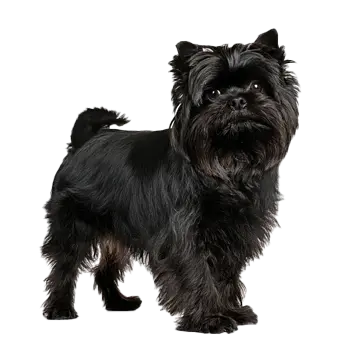
The Affenpinscher is a small, sturdy toy breed with a compact, square-proportioned body and medium bone structure that creates a substantial feel despite its diminutive size. According to breed standards, this distinctive dog stands between 9 and 11.5 inches at the withers and typically weighs between 7 and 13 pounds, with the overall balance and proportion considered more important than exact measurements. The breed presents a well-balanced appearance that is neither delicate nor coarse, with a confident upright carriage that reflects its bold personality. The head is carried proudly and remains proportionate to the body, featuring a round, domed skull with a prominent forehead and a clearly defined stop that contributes to its unique expression. The Affenpinscher's coat is one of its most recognizable features, consisting of dense, rough, harsh, wiry fur approximately one inch in length on the body, requiring regular grooming to maintain its proper texture. The facial hair is longer and shaggier, forming distinctive bushy eyebrows and a pronounced beard that frames the short, straight muzzle and enhances the characteristic expression. This unique facial furnishing creates the famous monkey-like expression that gives the breed its name, as Affe means monkey in German. The coat comes in several colors including black, gray, silver, red, black and tan, and beige, with some black coats displaying a rusty cast or intermixed silver hairs. A small white spot on the chest is acceptable but large white patches are considered faults. The breed's expression is alert and inquisitive, enhanced by round, dark, prominent eyes that convey intelligence and mischief. The ears may be cropped to a point, left natural and standing erect, or carried semi-erect, with all ear styles acceptable. The lower jaw protrudes slightly beyond the upper jaw, creating an undershot bite while maintaining the characteristic monkey expression that defines the breed. The muzzle is short and does not curve upward, with tight black lips. The tail is typically docked and carried high, completing the picture of this spirited little dog that combines terrier-like determination with toy breed charm. The breed moves with a relaxed, fluid gait that is slightly mincing with moderate drive from the rear.
Key Characteristics
Temperament Temperament Temperament Temperament Temperament Temperament Socially, Affenpinschers typically prefer the company of adults and may not tolerate rough handling or excessive lap time well. They can be reserved with strangers initially but warm up once they feel comfortable. The breed generally gets along with other dogs when properly socialized, though they may not back down from confrontations with larger dogs despite their small size. Early socialization is essential to help them develop into well-rounded companions who can navigate various social situations with confidence.
Health Considerations Health Considerations Health Considerations Health Considerations Health Considerations Health Considerations Due to their shortened muzzle, Affenpinschers may experience some degree of brachycephalic airway issues, which can make breathing difficult during hot weather or vigorous exercise. Owners should take care to prevent overheating and avoid strenuous activity in warm conditions. Heart disease, particularly mitral valve disease, has been observed in the breed and typically develops in middle-aged to older dogs. Dental disease is also common due to the breed's small mouth and crowded teeth, making regular dental care and professional cleanings important. Tracheal collapse can occur in some individuals, causing a characteristic honking cough that may require medical management.
Brussels Griffon

The Brussels Griffon is a small, sturdy toy breed with a thick-set, compact body and an almost human-like expression that immediately captures attention and makes the breed instantly recognizable. This intelligent little dog typically stands between 7 and 11 inches at the shoulder, with most individuals measuring 9 to 11 inches, and weighs between 6 and 12 pounds, with an ideal weight of 8 to 10 pounds. The breed standard emphasizes that weight should not exceed 12 pounds. Despite their small size, Brussels Griffons are well-muscled and solidly built, presenting a square profile with good bone structure and a confident, smart carriage that reflects their bold personality. One of the most distinctive aspects of the Brussels Griffon is that it comes in two coat varieties: rough and smooth. The rough-coated variety features a wiry, dense coat with longer hair on the cheeks, chin, and eyebrows that creates the characteristic bearded appearance and requires regular hand-stripping to maintain proper texture. The smooth-coated variety, sometimes called the Brabancon, has a short, glossy, tight-fitting coat that lies close to the body. Both coat types come in the same colors: red, which can range from brownish-red to orangey-tan; belge, a mixture of black and reddish-brown; black and tan; and solid black. Proper coat color and texture are important breed characteristics that distinguish quality specimens. The breed's head is large and round with a domed forehead, contributing to its distinctive and appealing appearance. The face features large, round, prominent eyes set well apart that convey an alert, curious expression and contribute to the almost human-like quality. The muzzle is very short and blunt with an upturned lower jaw that creates a pronounced undershot bite characteristic of the breed. The nose is black and extremely short, set back deeply between the eyes, creating the flat-faced appearance. Small ears are set high on the head and may be cropped or left natural. The tail is set high and typically docked to about one-third its natural length, carried high but not curled over the back. The gait should be purposeful with good reach and drive.
Key Characteristics
Temperament Temperament Temperament Temperament Temperament Temperament Socially, Brussels Griffons tend to be somewhat reserved with strangers initially, though they warm up once they feel secure. They do best in homes where they receive abundant attention and may become mischievous or depressed if left alone too frequently. The breed generally does well with older children who understand how to handle small dogs gently, but they typically do not tolerate rough play or excessive handling. They can coexist with other pets when properly introduced, though they often prefer being the center of attention. Early socialization is important to help them develop confidence in various situations and environments.
Health Considerations Health Considerations Health Considerations Health Considerations Health Considerations Health Considerations A more serious concern in Brussels Griffons is syringomyelia, a condition associated with Chiari-like malformation where the skull is too small for the brain, causing spinal fluid blockages. Affected dogs may scratch constantly at their face and neck, show signs of pain, or experience neurological symptoms. Heart disease, particularly mitral valve disease, is a leading cause of death in older Brussels Griffons, making regular cardiac evaluations important. Patellar luxation and hip dysplasia can also occur in the breed, potentially causing lameness or discomfort. Dental issues are common due to the small mouth and crowded teeth, requiring regular dental care. Allergies affecting the skin are also seen in some individuals.
Important to Remember
Each hybrid dog is unique and may inherit any combination of traits from either parent breed. The information above represents the characteristics of the purebred parent breeds. Your Affen Griffon may favor one parent over the other or display a blend of both. We strongly encourage you to read the complete breed profiles for both the Affenpinscher and Brussels Griffon to fully understand the range of possible temperaments, health concerns, and care requirements.