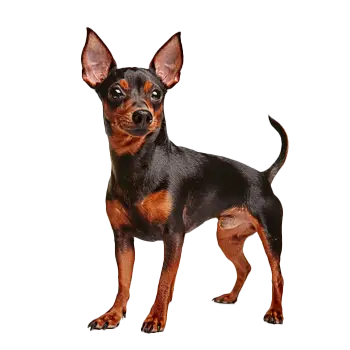
Zwergpinscher

Miniature Pinscher
Gallery coming soon

Furry Critter Network Etsy Shop

Quick Facts

🐕 Breed Group
Toy Group
📏 Size Category
Toy
📏 Height
10-12.5 inches
⚖️ Weight
8-10 lbs
⏱️ Life Expectancy
12-16 years
🧥 Coat Type
Short, Smooth
🎨 Coat Colors
Solid Red, Stag Red, Black and Rust, Chocolate and Rust
😀 Temperament
Fearless, Energetic, Alert, Proud
🏃 Exercise Needs
Moderate to High
🎓 Training Difficulty
Moderate - Independent minded
👶 Good with Children
Better with older children
🐾 Good with Other Pets
With proper socialization

Other Names & Breed Recognition

The Zwergpinscher carries a distinguished heritage reflected in its various names across different regions and kennel organizations. In its native Germany, the breed has been known as the Zwergpinscher since the late nineteenth century, with Zwerg translating to dwarf and Pinscher denoting a terrier-type dog that catches and bites prey. Historical German documents also reference the breed as the Reh Pinscher, named for its resemblance to the small roe deer that once inhabited Germany's forests, capturing the breed's graceful build and elegant movement.

When the breed gained international recognition, English-speaking countries adopted the name Miniature Pinscher to reflect its compact size while maintaining connection to the German Pinscher family. The term Min Pin emerged as an affectionate nickname among enthusiasts and remains widely used in casual conversation. Breed devotees often refer to their dogs simply as Minpins, a further abbreviation that speaks to the familiarity and fondness owners develop for these charismatic companions.

The nickname King of Toys has become synonymous with the Zwergpinscher, acknowledging the breed's confident bearing and dominant personality within the toy dog category. This regal designation reflects both the breed's proud carriage and its historical success in show competition, where Zwergpinschers have consistently demonstrated competitive excellence against other toy breeds.

A common misconception holds that the Zwergpinscher represents a miniaturized version of the Doberman Pinscher, leading some to incorrectly call the breed Miniature Doberman or Mini Dobe. This misunderstanding arose because the Doberman was introduced to America before the Zwergpinscher, and the American Kennel Club's description stating the dog should appear as a Doberman in miniature reinforced the erroneous connection. In reality, the Zwergpinscher predates the Doberman by at least two centuries and developed independently from different ancestral stock.

The breed's recognition by major kennel clubs worldwide has solidified its status as a distinct and valued member of the toy dog community. The American Kennel Club recognized the breed in 1925, initially listing it simply as Pinscher before adding Miniature to the official name in 1972. The breed was first placed in the Terrier Group due to its ratting heritage before moving to the Toy Group in 1930, where it remains today.

The Federation Cynologique Internationale recognized the Zwergpinscher in 1955, placing it in Group 2 with Pinscher and Schnauzer types rather than with toy breeds. This classification acknowledges the breed's working heritage and genetic relationship to other Pinscher varieties. The FCI continues to use the German name Zwergpinscher as the official breed designation, maintaining connection to the breed's origins.

The United Kennel Club recognized the Zwergpinscher in 1936, placing it in the Companion Dog Group where it joins other breeds valued primarily for companionship rather than specific working functions. The Kennel Club of the United Kingdom and Canadian Kennel Club similarly recognize the breed within their Toy Groups, ensuring international consistency in classification that facilitates breeding exchanges and competitive events across borders.

Zwergpinscher Organizations & Standards

The Zwergpinscher benefits from dedicated organizational support that has maintained breed quality and promoted responsible ownership for over a century. The Miniature Pinscher Club of America, established in 1929, serves as the parent club for the breed in the United States, working closely with the American Kennel Club to develop and maintain breed standards that preserve the Zwergpinscher's distinctive characteristics while promoting health and sound temperament.

The breed standard established by major kennel clubs defines the ideal Zwergpinscher as structurally well-balanced, sturdy, compact, and short-coupled with a smooth coat and naturally well-groomed appearance. The standard emphasizes the breed's characteristic hackney-like gaiting action, where the front legs lift high with a slight bend at the wrist, creating the distinctive prancing movement that identifies the breed even at a distance. This unique gait reflects centuries of selective breeding that prioritized elegance alongside functionality.

German organizations historically played the most significant role in establishing breed standards, given the Zwergpinscher's origins in that country. The Pinscher-Schnauzer Klub, formed in 1895, brought together breeders of various Pinscher and Schnauzer types to standardize breeding practices and establish written standards for each variety. Their documentation distinguished the Zwergpinscher from related breeds and established the characteristics that define the breed today.

Size specifications within breed standards specify that Zwergpinschers should stand between ten and twelve and one-half inches at the highest point of the shoulder blades, with eleven to eleven and one-half inches considered most desirable. The ideal weight ranges from eight to ten pounds, though judges evaluate dogs based on overall proportion and balance rather than strict adherence to weight specifications. These parameters ensure the breed maintains its toy classification while preserving the robust structure essential for an active, athletic dog.

Coat and color requirements detailed in breed standards permit solid red, stag red with black hair overlay, black with distinct rust markings, and chocolate with rust markings. For American showing, only these colors qualify for competition, though other colors occasionally appear in pet populations. The short, smooth coat should lie close to the body without undercoat, presenting a sleek appearance that displays the breed's muscular development.

Head characteristics specified in standards describe a tapering head with strong muzzle and dark eyes that display an alert, intelligent expression. Ears may be cropped to stand erect or left natural, though many countries have banned cropping practices, leading to increased acceptance of natural ears in show rings worldwide. The tail traditionally is docked, though natural tails increasingly appear as docking restrictions spread internationally.

Regional breed clubs throughout North America, Europe, and beyond provide essential support for Zwergpinscher owners and breeders. These organizations host specialty shows where breed enthusiasts compete and network, educational programs that disseminate knowledge about proper care and breeding practices, and rescue operations that help rehome dogs whose original circumstances changed. Their collective efforts maintain breed quality while expanding public appreciation for the Zwergpinscher.

Health testing protocols recommended by breed organizations address hereditary conditions that affect Zwergpinschers. The Orthopedic Foundation for Animals maintains databases for patella evaluations, cardiac examinations, and eye certifications that help breeders make informed decisions about breeding pairs. Progressive breeding programs utilize these resources to reduce incidence of hereditary conditions while maintaining breed type and temperament.

The commitment of breed organizations to education extends beyond breeders to encompass new owners seeking information about properly caring for their Zwergpinschers. Clubs provide resources about appropriate nutrition, exercise needs, training approaches, and health monitoring that help owners provide optimal care throughout their dogs' lives. This educational mission represents a significant aspect of organizational activities that benefits dogs and owners alike.

Kennel Club Recognition

  • American Kennel Club (AKC): Recognized in 1925, initially in Terrier Group, moved to Toy Group in 1930
  • United Kennel Club (UKC): Recognized in 1936 in the Companion Dog Group
  • Canadian Kennel Club (CKC): Recognized in the Toy Group
  • Fédération Cynologique Internationale (FCI): Recognized in 1955 in Group 2, Section 1.1 (Pinscher type) as Zwergpinscher
  • The Kennel Club (UK): Recognized in the Toy Group

Zwergpinscher Physical Description

The Zwergpinscher presents an elegant, well-proportioned silhouette that belies its small size, combining sturdy construction with graceful lines that create an impression of refined athleticism. This compact dog measures approximately as long as tall, creating the square profile specified in breed standards that distinguishes well-bred Zwergpinschers from those with exaggerated features.

The head tapers elegantly from a slightly rounded skull toward a strong muzzle, creating a wedge shape when viewed from above. The stop appears gradual rather than pronounced, flowing smoothly from forehead to nose. Dark, slightly oval eyes convey the alert, intelligent expression characteristic of the breed, set well apart and positioned to give an open, honest appearance. Eyes ideally appear as dark as possible, complementing coat color while avoiding the prominent or bulging appearance that constitutes a fault.

Ears set high on the head may appear cropped to stand erect or remain natural, falling forward in a V-shape when uncropped. The trend toward natural ears has increased globally as cropping bans spread and public sentiment shifts. Whether cropped or natural, ears should enhance rather than detract from the breed's overall expression and balance. The ear leather feels thin and soft, moving freely with head movements.

The neck extends gracefully from well-laid shoulders, carried slightly arched and blending smoothly into the withers without excessive throatiness or loose skin. Adequate neck length allows the proud head carriage that distinguishes the breed, projecting confidence through posture alone. The topline appears level or slightly sloping from withers to croup, supported by a strong back without roaching or sagging.

Chest construction provides adequate depth without excessive breadth, reaching approximately to the elbow in mature dogs. The forechest appears moderately filled, creating smooth lines from throat to legs. Ribs extend well back with moderate spring, providing lung capacity appropriate for an active breed while maintaining the streamlined appearance essential to breed type.

The distinctive front assembly of the Zwergpinscher creates the high-stepping hackney gait that serves as a breed hallmark. Shoulders lay back at approximately forty-five degrees, allowing free forward reach during movement. Upper arms angle correctly to position elbows close against the ribs. The forearms descend straight and parallel when viewed from the front, terminating in small, catlike feet with well-arched toes and dark nails.

Hindquarters provide the driving power that propels the Zwergpinscher's energetic movement, with well-angulated stifles and hocks that enable efficient rear extension. Thighs appear well-muscled without excessive heaviness, balancing strength with refinement. Rear feet match the front in compact construction, angling neither in nor out when the dog stands naturally. The tail traditionally is docked, though natural tails are set high and carried erect or slightly curved.

The coat presents a sleek, lustrous appearance, with short hairs lying close to the body without undercoat. This smooth covering displays the breed's musculature to advantage while requiring minimal maintenance. The coat should feel smooth and tight to the touch, never harsh or woolly. Any evidence of feathering, waviness, or excessive length constitutes deviation from the standard.

Color patterns acceptable for show include solid red ranging from light to dark shades, stag red featuring red base color with black hairs interspersed, black with sharply defined rust markings above eyes, on muzzle, throat, chest, legs, and feet, and chocolate with similarly placed rust markings. White markings exceeding one-half inch or black markings on rust points disqualify from competition. The preferred colors display rich saturation without muddy or faded tones.

Movement in the Zwergpinscher deserves special attention, as the hackney gait distinguishes this breed from other toy dogs. The front legs lift high with a slight bend at the wrist before extending forward, creating a proud, prancing action that draws immediate attention. Rear movement provides balanced drive without excessive kick-back. When viewed from front or rear, legs move parallel without deviation, reflecting correct structural assembly.

Affection Level
The Zwergpinscher bonds deeply with family members and enjoys close contact with its favorite people. These loyal dogs show affection through playful antics, following owners around the home, and seeking warm laps for resting.
Good With Children
The Zwergpinscher can coexist well with respectful older children who understand gentle handling. Their small size makes them vulnerable to accidental injury from young children, requiring supervision during interactions.
Good With Other Dogs
The Zwergpinscher often displays bold confidence toward other dogs regardless of size difference. Early socialization helps them develop appropriate canine social skills, though they may always prefer being the dominant presence.
Shedding Level
The Zwergpinscher's short, smooth coat sheds minimally throughout the year, making them relatively easy to maintain. Seasonal increases in shedding remain manageable with regular brushing that removes loose hair effectively.
Grooming Needs
The Zwergpinscher requires minimal grooming compared to many breeds, with their sleek coat needing only occasional brushing and bathing. This low-maintenance aspect appeals to owners preferring dogs without extensive coat care requirements.
Drooling Level
The Zwergpinscher produces virtually no excess drool under normal circumstances. These naturally tidy dogs maintain clean, dry muzzles, making them excellent choices for owners who prefer pristine furniture and clothing.
Coat Length
The Zwergpinscher wears a short, smooth coat that lies close to the body without undercoat. This sleek covering provides minimal insulation, requiring protective clothing in cold weather but offering easy maintenance year-round.
Openness To Strangers
The Zwergpinscher typically approaches unfamiliar people with suspicion, maintaining alert watchfulness until determining whether visitors pose threats. Early socialization broadens their acceptance of new people, though natural wariness often remains.
Playfulness
The Zwergpinscher exhibits boundless playful energy throughout life, approaching games with enthusiasm and creativity. Their athletic abilities enable impressive leaping and quick movements that make playtime entertaining for observers and participants alike.
Protective Nature
Despite their diminutive size, the Zwergpinscher takes guarding duties seriously and will alert to any perceived threats. Their persistent barking and bold confrontations provide early warning, though their small stature limits actual protection capabilities.
Trainability
The Zwergpinscher learns quickly but applies intelligence selectively, choosing when to comply with commands. Creative training approaches using high-value rewards and engaging activities produce better results than repetitive drills with this independent breed.
Energy Level
The Zwergpinscher possesses exceptional energy for its size, remaining active and alert throughout the day. This high energy requires adequate outlets through exercise and play to prevent destructive behaviors born of boredom.

Zwergpinscher History & Development

The Zwergpinscher traces its origins to Germany, where it developed several centuries ago as an efficient barnyard ratter that earned its keep controlling vermin populations in stables and homes. Unlike the common misconception suggesting the breed represents a miniaturized Doberman Pinscher, the Zwergpinscher actually predates the Doberman by at least two hundred years, developing independently from ancestral stock shared with the German Pinscher and influenced by crosses with Italian Greyhounds and Dachshunds.

Historical records and artwork place dogs resembling the Zwergpinscher in Germany as early as the seventeenth century, though definitive documentation begins only within the past two hundred years. Early references mention the Reh Pinscher, named for its resemblance to the small roe deer native to German forests, which displayed the graceful build and elegant movement that characterize modern Zwergpinschers. This poetic comparison captured the breed's refined appearance while distinguishing it from coarser working terriers.

The term Pinscher itself contributes to understanding the breed's development, deriving from either the French pincer meaning to seize or nip, or the English pinch, both referencing the biting action dogs used when dispatching prey. This etymological connection places Zwergpinschers within a family of breeds developed specifically for catching and killing vermin, a function that shaped their physical characteristics and temperament over generations of selective breeding.

During the nineteenth century, formalization of dog breeding practices brought standardization to the Zwergpinscher. The Pinscher-Schnauzer Klub formed in Germany in 1895 to advance distinct Pinscher and Schnauzer varieties, establishing written standards and registration requirements that differentiated breeds previously considered variations within a general type. By this period, breeders recognized smooth-coated and wire-coated Pinschers as distinct varieties requiring separate development.

Ancestral contributions to the modern Zwergpinscher include the German smooth-haired Pinscher, which provided the foundation type, crossed with Italian Greyhounds that contributed elegance and the high-stepping gait, and Smooth Dachshunds that added hunting ability and certain structural characteristics. Dr. H.G. Reichenbach, a German writer and breed authority, documented these crosses in 1936, though the actual breeding work occurred much earlier.

The breed's popularity surged in Germany between 1905 and 1914, when specialty shows attracted dozens of entries and enthusiastic crowds. This golden era established the Zwergpinscher firmly within German dog culture, producing breeding lines that would influence global development for decades. World War I disrupted this progress, though dedicated breeders maintained quality bloodlines through the conflict.

Introduction to the United States occurred around 1919, when early imports generated interest among toy dog enthusiasts despite limited initial recognition. The American Kennel Club registered the first Zwergpinscher in 1925 as Pinscher (Toy), placing the breed initially in the Terrier Group that acknowledged its ratting heritage. Formation of the Miniature Pinscher Club of America in 1929 provided organizational structure that promoted proper breeding and advanced the breed's competitive standing.

Notable early American dogs established the breed's show presence, including CH Konig Hanzelmannchen, a red male brought to the United States by Mrs. Henrietta Proctor Donnell who won Best of Breed at the Westminster Kennel Club Dog Show four consecutive years during the 1930s. Such victories elevated public awareness and attracted serious breeders committed to maintaining quality.

The move from Terrier Group to Toy Group in 1930 reflected evolving understanding of the breed's proper classification, acknowledging its size rather than its working heritage as the primary consideration. The official name change to Miniature Pinscher occurred in 1972, finally standardizing the American designation that remains in use today.

International recognition followed different timelines, with the Federation Cynologique Internationale accepting the breed in 1955 and placing it with other Pinscher types rather than toy breeds. This classification acknowledges the breed's German heritage and genetic relationship to larger Pinschers while distinguishing it from companion breeds developed primarily as lapdogs.

Modern Zwergpinscher breeding balances various priorities including show conformation, companion temperament, and health testing that reduces hereditary conditions. The breed maintains strong popularity as both show dog and family companion, ranking consistently among registered breeds and attracting devoted enthusiasts who appreciate its unique combination of elegance, energy, and personality.

Zwergpinscher Temperament & Personality

The Zwergpinscher possesses a personality that dramatically exceeds its physical dimensions, combining fearless confidence, boundless energy, and devoted affection in a compact package that has earned the nickname King of Toys. This breed approaches life with an intensity and self-assurance that often surprises those unfamiliar with its bold nature, projecting the attitude of a much larger dog despite standing barely a foot tall at the shoulder.

Fearlessness defines the Zwergpinscher's core character, inherited from generations of ancestors that confronted rats and other vermin without hesitation. This courage manifests as willingness to challenge dogs many times their size, approach unfamiliar situations with confidence, and defend family members from perceived threats regardless of actual danger. While admirable in many contexts, this fearlessness requires management to prevent confrontations with larger animals that could result in injury.

Alertness keeps the Zwergpinscher constantly aware of environmental changes, making these small dogs surprisingly effective watchdogs. Their sharp senses detect approaching visitors, unusual sounds, and anything out of ordinary well before larger, less attentive breeds might notice. The breed's vocal nature ensures that detected disturbances receive thorough announcement, sometimes to the consternation of neighbors in close-quarters living situations.

Energy levels in the Zwergpinscher rank among the highest of any breed relative to size, requiring outlets that channel this vigor productively. These dogs rarely rest when activity beckons, preferring motion and engagement to quiet contemplation. Their athletic abilities include impressive jumping that belies their short stature, quick directional changes that challenge pursuers, and sustained activity that outlasts many owners' patience or stamina.

Intelligence in the Zwergpinscher manifests as quick learning, problem-solving ability, and a manipulative streak that applies brainpower toward achieving desired outcomes. These dogs readily figure out how to escape confinement, access forbidden areas, and convince family members to provide treats or attention. Training harnesses this intelligence effectively when approached as partnership rather than domination.

Independence characterizes the Zwergpinscher's approach to life, with these dogs maintaining their own opinions about proper courses of action. This self-determination made their ancestors effective ratters working beyond handler direction but can frustrate owners expecting immediate obedience. Successful Zwergpinscher relationships acknowledge this independence while establishing consistent boundaries.

Affection toward family members balances the breed's independent streak, creating dogs that genuinely enjoy human companionship while maintaining personal dignity. Zwergpinschers seek physical contact on their terms, climbing into laps for warmth and attention when desired but asserting their right to personal space when interaction becomes unwanted. This selective affection differs markedly from breeds that offer unconditional devotion regardless of circumstances.

Possessiveness can develop in Zwergpinschers that lack appropriate socialization and boundaries, manifesting as resource guarding over food, toys, or favored family members. Early training that establishes appropriate sharing behaviors prevents these tendencies from becoming problematic. Well-adjusted Zwergpinschers learn to share resources without defensive aggression.

Playfulness persists throughout the Zwergpinscher's lifespan, with senior dogs often displaying enthusiasm for games that matches puppy exuberance. Their play style tends toward active engagement involving chasing, pouncing, and mock combat rather than gentle interactions. Providing appropriate toys and play partners channels this energy productively.

Relationships with other animals require careful management given the Zwergpinscher's bold nature and prey drive. Small pets like hamsters and birds trigger hunting instincts that can have unfortunate consequences. Larger dogs may respond poorly to the Zwergpinscher's confrontational attitude. Cats and appropriately socialized dogs can coexist successfully with properly introduced Zwergpinschers, though supervision during initial interactions prevents misunderstandings.

Zwergpinscher Family Life & Living Requirements

The Zwergpinscher adapts remarkably well to various living situations, making it suitable for apartments, suburban homes, and country properties alike. This versatility has contributed significantly to the breed's enduring popularity among diverse owners seeking small dogs with big personalities. However, successful integration into family life requires understanding the breed's specific needs and potential challenges.

Apartment living suits the Zwergpinscher well despite its high energy level, as indoor play and regular walks can adequately meet exercise needs when outdoor space is limited. The breed's small size makes it manageable in confined spaces, and its minimal shedding reduces cleaning concerns common with other breeds. Potential challenges include barking tendencies that may disturb close neighbors and the dog's inclination to alert to hallway sounds that filter through apartment walls.

Houses with yards offer Zwergpinschers additional space for supervised outdoor play, though fencing requires careful attention to prevent escapes. These determined, athletic dogs can squeeze through surprisingly small gaps and jump obstacles that seem prohibitive for their size. Buried barriers may be necessary to prevent digging under fences, while secure latches prevent clever dogs from manipulating simple gate closures.

Families with older children often find Zwergpinschers delightful companions that match youthful energy and enthusiasm for play. The breed's robust construction tolerates more active interaction than some fragile toy breeds, though children must still learn appropriate handling. Teaching children to respect the dog's personal space and recognize warning signals prevents negative encounters that could sour the relationship.

Younger children require constant supervision during interactions with Zwergpinschers, as toddlers may inadvertently injure these small dogs through rough handling or falls. Additionally, the Zwergpinscher's quick movements and potential for nipping during play could frighten or harm young children. Families with infants and toddlers should carefully consider whether this breed's characteristics align with their current circumstances.

Senior citizens often appreciate the Zwergpinscher's manageable size and affectionate nature, though the breed's energy level may prove challenging for less active individuals. The dog's alertness provides a sense of security, while its portable size allows easy transport to appointments and social activities. Potential concerns include the breed's strong personality that may overwhelm passive handlers and the physical demands of managing an athletic, determined small dog.

Multi-pet households can accommodate Zwergpinschers when introductions proceed carefully and ongoing management maintains harmony. The breed typically coexists best with dogs of similar size that can match their energy without posing physical threats during play. Large dogs may inadvertently injure Zwergpinschers during roughhousing, while the small breed's confrontational attitude can provoke negative responses from dogs that don't appreciate challenges.

Cats present variable compatibility depending on individual temperaments and introduction timing. Zwergpinschers raised with cats from puppyhood typically accept feline housemates, though the cat's willingness to stand its ground helps establish appropriate boundaries. Adult Zwergpinschers introduced to unfamiliar cats may view them as prey, requiring careful management to prevent chasing behaviors.

Climate considerations significantly affect Zwergpinscher comfort, as their short, single-layer coat provides minimal insulation against temperature extremes. Cold weather necessitates protective clothing during outdoor excursions, while hot weather demands shade and limited exercise during peak temperatures. The breed's low ground clearance means belly contact with hot pavement or cold snow, amplifying discomfort in extreme conditions.

Daily routines provide security for Zwergpinschers that thrive on predictable schedules. Consistent meal times, exercise periods, and sleep schedules reduce anxiety while establishing boundaries that help manage the breed's independent nature. Disruptions to established routines may trigger behavioral changes including increased barking, destructive behaviors, or house training lapses.

Zwergpinscher Training & Exercise Needs

Training the Zwergpinscher requires patience, creativity, and respect for the breed's independent intelligence. These quick-minded dogs learn rapidly but apply their understanding selectively, choosing when compliance serves their interests. Success comes through building relationships that make cooperation more rewarding than resistance, rather than attempting to dominate a breed that responds poorly to authoritarian methods.

Positive reinforcement methods produce optimal results with Zwergpinschers, as these dogs respond enthusiastically to rewards they value. High-quality treats, enthusiastic praise, and play opportunities motivate most individuals effectively. Identifying what specific rewards most interest each dog allows trainers to maintain engagement through varied reinforcement that prevents boredom with predictable patterns.

Housetraining Zwergpinschers demands consistency and patience, as the breed can prove resistant to outdoor elimination schedules. Their small bladders require frequent opportunities to eliminate, especially during puppyhood. Additionally, sensitivity to cold and wet conditions may discourage outdoor elimination during inclement weather, making indoor alternatives like training pads useful supplements to outdoor training.

Basic obedience commands come quickly to intelligent Zwergpinschers, though reliability depends on motivation at the moment of command. Sit typically develops easily given the breed's natural tendency to assume the position. Stay challenges the breed's active nature, requiring gradual duration increases and high-value rewards for success. Come represents perhaps the greatest challenge, as distractions easily override recall in dogs bred to work independently.

Leash training addresses the Zwergpinscher's tendency to pull toward interesting stimuli while protecting their delicate tracheas from pressure damage. Harnesses that distribute force across the chest rather than concentrating it on the neck provide better control while reducing injury risk. Teaching loose-leash walking prevents the constant pulling that makes walks unpleasant for handlers.

Socialization during the critical developmental period establishes foundations for well-adjusted adult behavior. Exposure to varied people, animals, environments, and experiences during puppyhood prevents the excessive wariness or aggression that can develop in dogs with limited early experiences. Puppy classes provide structured socialization while introducing basic training concepts in group settings.

Exercise requirements for Zwergpinschers exceed what their small size might suggest, reflecting the breed's heritage as an active working dog. Daily walks combined with interactive play sessions help channel their abundant energy productively. Mental stimulation through training exercises, puzzle toys, and scent games supplements physical activity to satisfy their intelligent minds.

The breed's athletic abilities enable activities beyond simple walking that can provide satisfying exercise outlets. Agility training modified for toy breeds engages both mind and body while strengthening the handler-dog bond. Rally obedience allows Zwergpinschers to demonstrate their intelligence in structured settings. Fetch and chase games tap into natural prey drive while providing cardiovascular exercise.

Temperature considerations affect exercise planning, as Zwergpinschers tolerate neither extreme heat nor cold comfortably. Summer exercise should occur during cooler morning and evening hours, with indoor play substituting during peak heat. Winter outings require protective clothing and shortened duration to prevent discomfort or injury from cold exposure.

Mental stimulation prevents the behavioral problems that arise when intelligent dogs lack appropriate challenges. Puzzle feeders transform meals into problem-solving opportunities. Scent work engages the breed's capable nose while providing satisfying activity. Training sessions themselves provide mental exercise while building useful skills. Rotating available toys maintains novelty that keeps Zwergpinschers engaged.

The keys to successful Zwergpinscher training include maintaining patience with independent-minded behaviors, celebrating incremental progress, and finding approaches that engage individual dogs' interests. These dogs may never achieve the precision obedience of more handler-focused breeds, but they offer rewarding partnerships for owners who appreciate their unique character and intelligence.

Zwergpinscher Health Concerns

The Zwergpinscher typically enjoys a lifespan of twelve to sixteen years when provided appropriate care, positioning it among the longer-lived dog breeds. This longevity reflects the breed's generally robust constitution, though certain health conditions require attention from prospective and current owners to maximize quality of life throughout the Zwergpinscher's years. Understanding the breed's health profile enables informed decisions about acquisition, veterinary care, and daily management that protect against preventable problems. The Zwergpinscher's small size and toy breed classification bring specific vulnerabilities that differ from larger breeds, requiring attention to conditions that particularly affect diminutive dogs.

Common Health Issues

  • Patellar luxation represents one of the most common health concerns affecting Zwergpinschers, occurring when the kneecap slips from its normal position and causes varying degrees of lameness.
  • Legg-Calve-Perthes disease affects the hip joint in young Zwergpinschers, occurring when blood supply to the femoral head diminishes, causing the bone to deteriorate and the joint to collapse.
  • Progressive retinal atrophy poses a hereditary threat to Zwergpinscher vision, causing gradual degeneration of the retina that eventually leads to blindness.
  • Hypothyroidism occurs when the thyroid gland fails to produce adequate hormones, affecting metabolism and causing symptoms including weight gain, lethargy, skin problems, and coat changes.
  • Mitral valve disease affects some Zwergpinschers as they age, occurring when the heart valve thickens and fails to close properly, allowing blood to leak backward.
  • Regular cardiac monitoring detects problems early.

Preventive Care & Health Monitoring

  • Early stages may produce no symptoms, while advanced disease causes exercise intolerance, coughing, and breathing difficulties.
  • Regular veterinary check-ups enable early detection of developing health problems, with twice-yearly examinations recommended for senior Zwergpinschers.
  • Dental care including professional cleanings and daily home brushing prevents the periodontal disease that commonly affects small breeds and can impact overall health.
  • Weight management through appropriate feeding and regular exercise prevents obesity that stresses joints and contributes to other health problems.

Health screening through organizations like the Orthopedic Foundation for Animals provides databases for patella evaluations, cardiac examinations, and eye certifications that inform breeding decisions and alert owners to potential problems. With appropriate preventive care and prompt attention to emerging health concerns, Zwergpinschers provide many years of energetic companionship that rewards owners who invest in their wellbeing.

Zwergpinscher Grooming & Maintenance

Grooming requirements for the Zwergpinscher rank among the lowest of any breed, making them excellent choices for owners preferring dogs without extensive coat care demands. Their short, smooth coat naturally sheds dirt and requires minimal maintenance to remain clean and healthy. However, basic grooming routines remain important for overall health and hygiene.

Coat care involves weekly brushing with a soft bristle brush or grooming mitt that removes loose hair and distributes natural skin oils. This simple routine keeps the coat sleek and shiny while reducing the minimal shedding that occurs. More frequent brushing during seasonal coat transitions manages increased hair loss without difficulty.

Bathing needs remain minimal for Zwergpinschers that receive regular brushing, with monthly baths typically sufficient unless the dog encounters dirt or odors requiring earlier attention. Using gentle shampoos formulated for dogs protects the skin's natural oils while effectively cleaning the coat. Thorough rinsing prevents residue that could cause irritation.

Nail care requires regular attention, as overgrown nails cause discomfort, affect gait, and can catch on surfaces causing injury or bleeding. Weekly nail grinding or biweekly clipping maintains appropriate length. Many Zwergpinschers resist nail care, making gradual desensitization and positive associations essential for stress-free maintenance. Starting nail handling during puppyhood establishes acceptance that simplifies adult grooming.

Ear cleaning deserves consistent attention despite the Zwergpinscher's erect or semi-erect ears that allow air circulation reducing infection risk. Weekly inspection identifies early signs of problems, while gentle cleaning removes accumulated wax and debris. The ear should appear pink and clean without excessive discharge, odor, or inflammation.

Dental hygiene significantly impacts Zwergpinscher health, as the breed tends toward dental problems including tartar buildup and periodontal disease common in small breeds. Daily tooth brushing represents the gold standard for dental care, though dental chews and water additives supplement brushing when daily attention proves impractical. Professional dental cleanings address problems beyond home maintenance capabilities.

Eye care involves keeping the area around eyes clean, wiping away any discharge that accumulates. The breed's prominent eyes may be prone to irritation from debris, making regular inspection important. Any signs of redness, excessive tearing, or squinting warrant veterinary attention to address potential problems before they worsen.

Skin inspection during grooming identifies potential problems early, including parasites, irritation, lumps, or injuries that might otherwise escape notice. The Zwergpinscher's short coat makes visual examination easy, allowing thorough checks during regular brushing sessions. Any concerning findings should prompt veterinary consultation.

Seasonal considerations affect grooming routines throughout the year. Winter demands attention to dry skin that may develop from heated indoor air, potentially requiring conditioning products or dietary supplements. Summer brings increased parasite activity requiring vigilant prevention and regular checks. Adjusting care to seasonal changes maintains optimal coat and skin condition year-round.

Protective clothing serves functional rather than cosmetic purposes for Zwergpinschers whose single-layer coats provide inadequate insulation. Winter coats and sweaters prevent dangerous cold exposure during outdoor activities. Rain gear keeps the dog dry in wet conditions that would otherwise cause discomfort. Summer cooling products help manage heat sensitivity when temperatures rise.

Professional grooming services remain optional for Zwergpinscher owners, as their minimal coat care needs fall within most owners' capabilities. However, groomers can provide complementary services including nail trimming, ear cleaning, and anal gland expression that some owners prefer to delegate. Finding professionals experienced with toy breeds ensures appropriate handling of these small, sometimes assertive dogs.