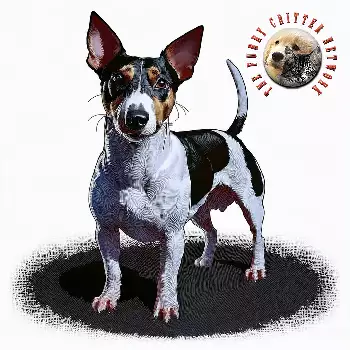
The Yankee Terrier presents a picture of compact elegance combined with functional athleticism, embodying the ideal working terrier physique refined through generations of selective breeding on American farms. This small to medium-sized dog displays a well-balanced, muscular body that communicates both agility and substance without appearing either fragile or coarse. Every aspect of the breed's physical structure reflects its heritage as a versatile farm dog capable of pursuing vermin through tight spaces while maintaining the endurance for long days of work.
The breed's head represents a defining characteristic, forming a smooth, blunt wedge shape when viewed from above or in profile. The skull is broad and slightly domed, tapering gradually toward a well-developed muzzle of equal length. Strong jaws provide the gripping power necessary for the breed's rat-catching duties, while clean, tight lips without flews give the face a neat appearance. The stop between skull and muzzle is moderate, creating a gentle transition rather than an abrupt angle. Nose pigmentation typically matches coat colors, appearing black in most specimens but liver-colored in chocolate-based coats.
The Yankee Terrier's eyes contribute significantly to the breed's alert, intelligent expression. Set obliquely and somewhat wide apart, the eyes are oval-shaped rather than round and come in various shades from dark brown to hazel, with some blue-eyed individuals appearing in dogs with significant white markings. The eyes convey curiosity, intelligence, and the keen awareness characteristic of the breed. Eye rims match nose pigmentation, providing a finished appearance to the face.
Ears represent one of the breed's most variable features, with three acceptable carriage styles recognized by breed standards. Button ears fold forward at the skull line with tips pointing toward the outer corners of the eyes. Erect ears stand upright with firm leather and pointed or slightly rounded tips. Tipped ears display erect carriage with the upper portion folding forward. All ear types should be set at the outer edges of the skull and be proportionate to head size. The variety in acceptable ear carriage reflects the breed's diverse heritage and the practical approach taken by early breeders.
The neck flows smoothly from the head into well-laid shoulders, providing the flexibility necessary for quick movements during hunting activities. It should be of moderate length, slightly arched, and blend cleanly into the shoulders without throatiness. The topline remains level from withers to croup, supported by a strong, muscular back of moderate length. The loin is slightly arched and muscular, providing the power necessary for quick acceleration and turns. The croup slopes gently toward the tail set.
The Yankee Terrier's chest provides adequate room for heart and lung capacity without excessive width that would impede movement. The forechest is moderately prominent, and ribs extend well back with good spring but flatten as they approach the sternum to allow free elbow movement. The underline shows a moderate tuck-up, contributing to the breed's athletic silhouette without appearing extreme or greyhound-like.
Front assembly features well-angulated shoulders with shoulder blades set close together at the withers. Forelegs are straight when viewed from the front, with elbows set close to the body but not pinched. Strong, slightly sloping pasterns provide shock absorption while maintaining structural integrity. Feet are compact and oval-shaped with well-arched toes and thick, resilient pads suited for various terrains. Dewclaws may be removed or left intact according to breeder preference.
The hindquarters provide the driving power essential for the breed's athletic capabilities. The upper thighs are well-muscled and roughly equal in length to the lower thighs, creating balanced angulation. Hocks are well let down and perpendicular to the ground when viewed from behind. Rear feet match the front in structure, completing the picture of a balanced, functional terrier designed for sustained activity.
The tail presents another variable feature, as the breed historically includes both naturally short-tailed individuals and those born with full-length tails. Natural bobtails may be any length from absent to full length. When present, full tails are typically docked to a length proportionate to the dog's size, though many modern breeders choose to leave tails natural in compliance with changing attitudes toward cosmetic procedures. Natural tails are carried in an upward curve when the dog is alert or moving.
Coat texture in the Yankee Terrier should be short, smooth, and dense, lying close to the body while providing adequate protection from the elements. The coat has a slight sheen when healthy and requires minimal grooming. Some individuals display slightly longer whiskers and eyebrows, though the overall impression should remain smooth and sleek. The breed's coat efficiently repels dirt and dries quickly after exposure to water.
Color patterns must include white as a base or major component, appearing in pied patterns with patches of other colors. Acceptable colors include black, chocolate, red, apricot, blue, fawn, tan, and lemon, with or without tan points. Merle and brindle patterns are disqualifying faults according to breed standards. The variety of acceptable colors and patterns reflects the breed's practical development, where function always took precedence over appearance in breeding decisions.
Affection Level
★★★★★
The Yankee Terrier forms extremely strong bonds with family members and thrives on close human contact. They are devoted companions who love nothing more than being with their people and will often follow family members from room to room seeking attention and affection.
Good With Children
★★★★☆
This breed generally does well with children, particularly those who understand how to interact respectfully with dogs. Their playful nature makes them excellent companions for active kids, though supervision is recommended with very young children due to the breed's small size.
Good With Other Dogs
★★★☆☆
The Yankee Terrier can coexist peacefully with other dogs when properly socialized from puppyhood. However, they may display typical terrier assertiveness and should be introduced carefully to new canine companions, especially those of similar or larger size.
Shedding Level
★★☆☆☆
With their short, smooth coat, Yankee Terriers are relatively light shedders compared to many breeds. They experience seasonal shedding increases during spring and fall but generally leave minimal hair around the home with regular brushing maintenance.
Grooming Needs
★★☆☆☆
This breed requires minimal grooming due to their short, sleek coat. Weekly brushing with a soft bristle brush or rubber grooming mitt is typically sufficient to remove loose hair and maintain coat health, making them an excellent choice for owners who prefer low-maintenance grooming.
Drooling Level
★☆☆☆☆
The Yankee Terrier is not known for drooling and keeps a clean, dry mouth under normal circumstances. This breed is an excellent choice for owners who prefer a tidy companion without concerns about excess saliva on furniture or clothing.
Coat Length
★☆☆☆☆
The breed features a distinctively short, smooth coat that lies close to the body. This sleek coat provides easy maintenance while giving the dog a neat, athletic appearance that showcases their muscular, well-proportioned build.
Openness To Strangers
★★★☆☆
Yankee Terriers are typically alert and observant when meeting new people, often requiring a brief warming-up period before becoming friendly. They make excellent watchdogs due to this natural wariness, alerting owners to visitors without being aggressive.
Playfulness
★★★★★
This breed maintains a remarkably playful disposition well into adulthood and even their senior years. They love interactive games, fetch, and any activity that engages both their mind and body, making them entertaining and engaging companions for active families.
Protective Nature
★★★☆☆
While not aggressive guard dogs, Yankee Terriers possess a natural protective instinct toward their families. They will alert owners to unusual sounds or approaching strangers with their distinctive bark, serving effectively as watchdogs for home security.
Trainability
★★★★☆
Highly intelligent and eager to please, the Yankee Terrier responds well to positive reinforcement training methods. They can learn commands quickly and excel in various dog sports, though their occasional stubborn streak requires patient, consistent training approaches.
Energy Level
★★★★☆
The Yankee Terrier possesses abundant energy and requires regular physical and mental stimulation to remain happy and well-behaved. Daily exercise through walks, play sessions, and interactive activities is essential for channeling their natural enthusiasm appropriately.