Xoloitzcuintli

Xoloitzcuintli

Quick Facts

๐Ÿ• Breed Group
Non-Sporting Group
๐Ÿ“ Size Category
Small to Large (three sizes)
๐Ÿ“ Height
Males: 10-23 inches depending on variety, Females: 10-23 inches depending on variety
โš–๏ธ Weight
Males: 10-55 pounds depending on variety, Females: 10-55 pounds depending on variety
โฑ๏ธ Life Expectancy
13-18 years
๐Ÿงฃ Coat Type
Hairless (dominant) or short flat coat (recessive coated variety)
๐ŸŽจ Coat Colors
Black, grey-black, slate, red, liver, bronze; coated variety adds any color
๐Ÿ˜€ Temperament
Loyal, Calm, Alert, Primitive, Attentive, Sensitive
๐Ÿƒ Exercise Needs
Moderate
๐ŸŽ“ Training Difficulty
Moderate
๐Ÿ‘ถ Good with Children
Good with older children; reserved with unfamiliar children
๐Ÿพ Good with Other Pets
Generally good with other pets when raised together; prey drive is moderate

Other Names & Breed Recognition

The name Xoloitzcuintli comes from Nahuatl, the language of the Aztec people. It is a combination of Xolotl - the Aztec god of lightning and death who was depicted with a dog's head - and itzcuintli, which means dog. So the full translation is roughly "dog of Xolotl." The pronunciation that trips up most English speakers is approximately "show-lo-eets-QUEENT-lee," though in Mexico and among breed enthusiasts you will also hear it shortened to simply Xolo, which is pronounced "show-lo." That nickname is widely used in both casual conversation and breed literature, and it is the version most owners actually use day-to-day.

In Spanish-speaking countries, particularly Mexico where the breed originates, the dog is also called Perro sin Pelo de Mexico, meaning "Mexican hairless dog." This descriptive name is used interchangeably with Xoloitzcuintli in Mexican breed documentation and by the national kennel club, the Federacion Canofila Mexicana (FCM). The FCM considers the Xoloitzcuintli a national treasure and the official dog of Mexico.

English-speaking sources have historically used a range of alternate names including Mexican Hairless, Mexican Hairless Dog, and simply Hairless Dog. These names, while descriptive, miss the cultural and historical depth that the breed's Nahuatl name carries. The breed's pre-Columbian heritage is central to its identity, and the movement toward consistent use of the full Nahuatl name reflects growing respect for that heritage in modern dog culture.

The AKC recognized the Xoloitzcuintli in 2011, placing it in the Non-Sporting Group. This was a re-recognition - the breed had appeared in AKC stud books in the early twentieth century before numbers declined to the point where the registry was closed. The UKC places the breed in its Sighthound and Pariah Group, reflecting the primitive heritage that connects Xolos to ancient landrace dogs rather than purpose-bred working breeds. The FCI recognizes the breed in Group 5 (Spitz and Primitive types), Section 6 (Primitive type), as breed number 234.

The Xolo's name in Mexico carries a weight that no casual shortening fully captures. When Mexican families refer to "el Xolo" or "el perro pelรณn," they are referencing not just a dog breed but a cultural artifact - a living connection to the civilizations that preceded European contact. The breed's near-disappearance in the colonial period and its deliberate recovery in the twentieth century gives it a kind of cultural resilience that is acknowledged both in Mexico's formal recognition of the breed as a national symbol and in the care with which Mexican breeders and enthusiasts approach its preservation today.

Xoloitzcuintli Organizations & Standards

The Xoloitzcuintli Club of America (XCA) is the AKC parent club for the breed in the United States. The XCA works to promote responsible breeding, public education about the breed, and health research specific to Xolos. As a parent club, the XCA maintains the breed standard as submitted to and accepted by the AKC, and it coordinates health initiatives including tracking conditions that appear in the breed population. Given how rare the Xoloitzcuintli is - it consistently ranks among the least-registered AKC breeds - the XCA also plays an active role in breeding preservation, working to ensure that the gene pool remains genetically diverse without the kind of founder effect pressure that can cripple rare breeds.

In Mexico, the Federacion Canofila Mexicana governs the breed and considers it a national symbol. The FCM breed standard takes primacy in FCI documentation because Mexico is the country of origin. The standard describes three size varieties - toy, miniature, and standard - and two coat types within each size, creating effectively six phenotypic expressions of the same breed. The hairless variety is caused by a dominant gene, which means every hairless Xolo carries one copy of the hairless gene and one copy of the coated gene. Two copies of the hairless gene is a lethal combination in utero, which is why every litter from two hairless parents will contain some coated puppies. This genetics lesson is important for buyers to understand - coated Xolo puppies in a litter are not anomalies or mixed-breed accidents, they are a necessary and expected part of how the breed reproduces.

The breed standard emphasizes the Xolo's elegant, clean lines, moderate angles, and distinctive hairless skin. The standard is not extreme in any dimension - the Xolo is not asked to be tiny, short-legged, flat-faced, or exaggerated in any structural way. This relative moderation is one reason the breed has a clean health profile compared to many AKC-recognized dogs.

Size varieties are defined by height. Toy Xolos stand ten to fourteen inches at the shoulder. Miniature Xolos stand fourteen to eighteen inches. Standard Xolos stand eighteen to twenty-three inches. All three sizes are shown in the same Non-Sporting Group at AKC events, with separate competition within the breed for each size variety. The FCI similarly divides the breed by size in its structure.

Health testing recommendations from the XCA include hip evaluation, cardiac examination, and eye certification through OFA, though the breed's overall health profile is relatively uncomplicated compared to many modern breeds. The XCA website maintains current health testing guidelines and breeder referral information for anyone beginning their search for a Xolo puppy.

For prospective buyers, working with XCA-member breeders is the most reliable path to a well-bred, health-tested puppy. The Xolo's rarity means that waiting lists are common and rescue availability is limited. Patience and willingness to wait for the right breeder is the norm in this breed, not the exception. Breeders who are actively involved in conformation showing, health testing, and the broader Xolo community are the best starting point for finding a puppy that will represent the breed as it should be.

Kennel Club Recognition

  • American Kennel Club (AKC): Recognized in 2011, Non-Sporting Group
  • United Kennel Club (UKC): Recognized, Sighthound and Pariah Group
  • FCI: Recognized, Group 5

Xoloitzcuintli Physical Description

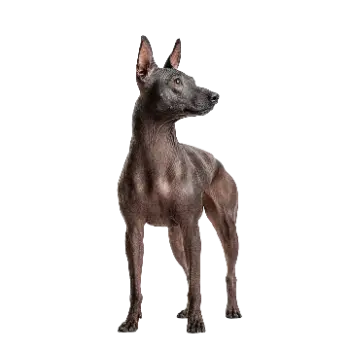
The Xoloitzcuintli's most immediately striking feature is, of course, the hairless skin of the dominant variety. But focus only on the absence of coat and you miss what makes this a genuinely beautiful dog. The Xolo has clean, elegant lines, well-balanced proportions, and a presence that is simultaneously ancient-looking and refined. These are not fragile or delicate animals despite their appearance - they are moderately built, athletic dogs with good bone and substance.

The skull is broad and strong, slightly domed between the ears. The muzzle is long and elegant, tapering toward the nose but never snipy. The stop is well-defined. The jaw is strong with a complete scissor bite. The nose follows coat genetics: dark in dark-coated or dark-skinned individuals, lighter in dogs with lighter pigmentation. One of the Xolo's distinctive features is the skin on the head, which may form slight wrinkles when the dog is alert or attentive, giving an expression of thoughtful focus.

The eyes are almond-shaped and set slightly obliquely, giving the Xolo a characteristic intelligent and slightly exotic expression. Eye color ranges from yellow through brown, with darker eyes preferred in the standard for darker-skinned or darker-coated dogs. The eyes are notably expressive - owners consistently describe the Xolo as a dog that communicates clearly through eye contact and facial expression, which reflects the breed's intense attentiveness to its people.

The ears are a defining feature. Large, upright, and bat-like, Xolo ears stand erect and mobile. They are thin and elegant rather than heavy. Puppies may have ears that are slow to come up, but adult Xolos should have fully erect ear carriage. The ear leathers are smooth and warm to the touch in hairless dogs, and the visibility of the ear veins in a well-lit room reinforces the breed's characteristic warmth - these dogs radiate heat from their skin in a way that has historically made them valued as warming companions.

The neck is long, lean, and elegantly arched, flowing into well-laid-back shoulders. The body is rectangular in proportion - slightly longer than tall. The chest is deep, reaching to or just above the elbow. The ribs are well-sprung. The topline is level and strong. The loin is moderately short and muscular. The underline carries a slight tuck-up that contributes to the breed's elegant profile.

The tail is long and tapering, carried low or in a gentle curve at rest, rising in a slight saber curve when the dog is active. The tail is not plume-tailed or curled. In hairless individuals, the tail skin is smooth and the underlying musculature visible.

Forequarters feature moderate shoulder angulation with straight legs and round, tight feet. The pasterns are slightly sloping. Hindquarters are well-angulated with broad thighs and well-bent stifles. The hocks are well let-down. The Xolo's movement is efficient and ground-covering - a light, easy trot with good reach and drive that reflects the breed's ancient herding-adjacent, chase-adjacent origins.

The skin of the hairless variety is the coat equivalent - it requires the same thoughtful attention that a coated breed's fur does. The skin is smooth, tough, and warm. It should not appear dry, scaly, or dull. Healthy Xolo skin is supple and clean. The color ranges through the full range of dark and dilute pigmentation: black, grey-black, slate, dark bronze, liver, and red are all seen. A small amount of hair on the top of the skull, the tip of the tail, and the feet is permitted in the hairless variety and is considered a characteristic of primitive coat genetics rather than a fault.

The coated variety carries a short, flat, close-lying coat of any color. The coat is not a second-class option - coated Xolos are genetically essential to the breed's reproduction and are fully recognized within the standard. Some people actually prefer the coated Xolo for practical reasons, as the skin care demands are eliminated.

Size differences across the three varieties are meaningful in terms of presence and practicality. A Standard Xolo is a substantial dog - eighteen to twenty-three inches and up to fifty-five pounds is a real animal with real presence. The Toy at ten to fourteen inches is a compact companion. Each size retains the same essential character and physical type at its respective scale.

One detail that surprises people who have only seen photos is how warm hairless Xolos feel to the touch. The skin temperature of a healthy Xolo runs noticeably warmer than a coated dog because there is no insulating layer to trap and diffuse body heat. Running a hand along a Xolo's flank or back is like touching a gently heated surface. This is normal and healthy, not a sign of fever. It is the quality that made the breed valued as a therapeutic warming presence for people with joint pain in Mesoamerican cultures, and it remains one of the more distinctive sensory experiences of spending time with a Xolo.

Affectionate With Family
Xolos form intense bonds with their families and crave close physical contact. They are often described as velcro dogs - always in the same room and preferring body contact when resting.
Good With Young Children
They can be good with children they are raised with but tend to be sensitive and may not appreciate the unpredictability of toddlers. Better suited to households with older, calmer children.
Good With Other Dogs
Xolos generally get along with other dogs, particularly those they are raised with. They may be cautious or selective with unfamiliar dogs but serious aggression is uncommon.
Shedding Level
The hairless variety sheds nothing. The coated variety sheds minimally with a short, flat coat that drops little hair. Both are exceptional for households sensitive to dog hair.
Coat Grooming Frequency
The hairless variety requires skin care rather than brushing - moisturizing, sun protection, and regular baths. The coated variety needs only occasional brushing.
Drooling Level
Xolos are dry-mouthed and tidy. Drooling is not a characteristic of this breed.
Coat Type
The breed comes in hairless and coated varieties. Hairless dogs have smooth, warm skin. Coated dogs carry a short, flat coat requiring minimal grooming effort.
Openness To Strangers
Xolos are typically reserved with strangers and may take considerable time to warm up to unfamiliar people. This is a breed characteristic, not shyness - they are selective about who earns their trust.
Playfulness Level
Moderately playful, Xolos enjoy interactive games and activity but are equally content with calm time beside their person. They are not relentlessly energetic.
Watchdog/Protective Nature
Highly alert and perceptive, Xolos are reliable watchdogs who notice anything unusual and will sound an alert. Their reserve with strangers reinforces this role.
Adaptability Level
Xolos adapt well to different living situations, including apartments, provided their exercise and social needs are met. They handle temperature extremes less well and need protection from cold and sun.
Trainability Level
Intelligent but with a primitive independent streak, Xolos learn well with patient, consistent, positive training. They are sensitive to harsh handling and respond poorly to force-based methods.

Xoloitzcuintli History & Development

The Xoloitzcuintli is among the oldest dog breeds in the world, with archaeological and historical evidence placing hairless dogs of this type in Mesoamerica for at least three thousand years, with some estimates reaching considerably further back. Ceramic figures of hairless dogs have been found throughout Mexico and Central America in pre-Columbian archaeological sites. These figures appear in burial contexts, household settings, and ritual artifacts across multiple civilizations, including the Aztec, Maya, Zapotec, and Colima cultures, suggesting that the hairless dog was a culturally significant animal across a broad geographic and temporal range.

In Aztec cosmology, the Xoloitzcuintli was associated with Xolotl, the deity of lightning, fire, and the underworld, who was believed to guide the souls of the dead through the underworld to their final destination. Dogs were sometimes sacrificed and buried with the deceased to serve this guiding role. The connection between the breed and the afterlife gave these dogs a sacred status that protected them from casual harm. Archaeological evidence of dog remains in funerary contexts confirms that dogs - including hairless types consistent with Xolos - were indeed part of burial practices in Aztec and related cultures.

The dogs were also valued practically. Their warm skin made them valued bed companions, particularly for people with arthritis or joint pain. Spanish chroniclers arriving in the sixteenth century noted both the cultural significance and the practical value of the hairless dogs they encountered. Unfortunately, the Spanish conquest disrupted indigenous culture broadly, and the Xoloitzcuintli population suffered significantly in the centuries that followed as European dog breeds were introduced and the dogs' cultural context was erased.

By the twentieth century, the breed had declined to near-extinction. A serious recovery effort in Mexico began in the 1950s when a group of breed enthusiasts, historians, and kennel club members organized expeditions into remote areas of Mexico to find remaining specimens. What they collected formed the foundation of the modern breed. The FCM formally standardized the breed, and Mexican and international breeders began the careful work of expanding the population without sacrificing health or type.

The AKC first recorded Xoloitzcuintli in its stud books in the early 1900s but closed registration as numbers dropped. The breed was re-recognized fully in 2011. In Mexico, the Xolo is officially the national dog, honored as a living connection to pre-Columbian heritage. Today the breed remains rare worldwide but stable, with dedicated breeders in Mexico, the United States, and Europe maintaining the population with careful attention to genetic diversity.

Modern Xolos are primarily companions, though they are also shown in conformation and have found participants in agility and other dog sports. Their ancient lineage and rarity give them a cultural weight that few other breeds carry. Owning a Xoloitzcuintli connects you, in a very direct way, to thousands of years of human-dog history in the Americas.

The artist Frida Kahlo was a notable Xolo enthusiast, and her paintings of the breed in domestic settings helped bring the dog to broader cultural attention in the twentieth century. Diego Rivera also depicted Xolos in his murals. This artistic representation reinforced the breed's identity as a Mexican cultural symbol during the same period when conservation breeders were working to bring the population back from its lowest numbers. The overlap between cultural revival and breed recovery was not coincidental - both were expressions of a broader Mexican reclamation of indigenous identity in the post-colonial period.

Xoloitzcuintli Temperament & Personality

People who have not spent time with a Xoloitzcuintli often expect something exotic or difficult based on the breed's unusual appearance and ancient lineage. What they usually find instead is a calm, deeply loyal, perceptive dog that is one of the more emotionally intelligent breeds you can share a home with. The Xolo is not a flashy or exuberant dog. It is a quiet presence - watchful, connected, and fundamentally centered on its people.

The bond a Xolo forms with its family is intense and lasting. These dogs track their people's movements, emotional states, and routines with a precision that can feel almost uncanny. They settle near you - or on you - and are genuinely content in the role of companion. This is a breed that was kept close to human bodies for warmth and comfort for thousands of years, and that history is written in the dog's character. They want physical contact. They want proximity. A Xolo that is excluded from the household, kept outside, or left alone for long hours will not thrive.

With strangers, Xolos are characteristically reserved. This is not timidity or poor socialization in a well-raised dog - it is a primitive breed's natural caution with the unfamiliar. A well-socialized Xolo will observe a new person carefully, accept polite interaction after a warm-up period, and may eventually approach for contact on their own terms. They rarely rush to strangers for attention. Owners should be honest with guests: this is a dog that will decide when it is ready to engage, and pushing the interaction tends to backfire.

As watchdogs, Xolos take the job seriously. Their alertness and perceptiveness make them excellent early-warning systems. They notice things - changes in routine, unfamiliar sounds, people in places they should not be - and they communicate this through alerting barks. They are not aggressive guardians, but they are not passive observers either. A Xolo that feels its people or territory are threatened will make itself heard.

The breed's intelligence is quiet and observational rather than the flashy, problem-solving kind you see in Border Collies or Poodles. Xolos read situations and people deeply. They remember. They notice patterns and respond to changes in household routine before you have consciously registered that something is different. This situational intelligence makes them exceptionally attuned companions but also means they pick up on household tension and are affected by emotional environments in ways that more emotionally buffered breeds are not.

Energy level is moderate. Xolos are not couch potatoes but they are also not demanding high-energy athletes. A good daily walk, some interactive play, and time close to their person satisfies most adult Xolos. Puppies and young Xolos carry more energy and require more mental engagement. The breed's exercise needs are manageable for a wide range of owners, which is part of what makes them well-suited to urban and apartment life when given adequate daily activity.

What many Xolo owners mention unprompted is how the dog seems to match their emotional state. On calm days the Xolo is calm, settled, and content beside you. On active days they are up and engaged. This mirroring quality makes them feel unusually companionable in a way that is hard to describe to someone who has not lived with a Xolo. It is part of what makes this ancient breed feel so thoroughly modern and so perfectly matched to the role of close human companion.

Xoloitzcuintli Family Life & Living Requirements

Xolos adapt to a range of living situations better than many breeds of similar heritage. They do well in apartments provided they get daily exercise and are not left alone excessively. They do well on rural properties. The defining factor is not space - it is company. A Xolo needs to be with its people. A house with a large yard where the dog is left outside does not suit this breed at all.

Temperature management is the most immediately practical aspect of Xolo ownership. The hairless variety has no coat insulation. Cold weather requires a coat or sweater for outdoor activity below fifty degrees, and indoor environments should be kept comfortably warm. On the other end, the hairless skin is vulnerable to sunburn, particularly in pale-pigmented dogs. Sun exposure during peak hours should be limited or managed with dog-safe sunscreen. This is not a dramatic daily burden, but it requires consistent awareness. Coated Xolos have slightly more environmental tolerance, though they are still less weather-hardy than heavily coated breeds.

With children, Xolos tend to bond well with kids they are raised with, particularly children who are calm and respectful of the dog's signals. The breed's sensitivity means they do not appreciate rough handling or unpredictable behavior, and they will remove themselves from a situation that feels too chaotic before they escalate. For households with toddlers, close supervision during interactions is smart practice regardless of how gentle the Xolo typically is.

With other pets, Xolos generally coexist peacefully, particularly when raised together. Their prey drive is moderate - not nothing, but not the consuming drive you see in sighthounds or terriers. Cats and small animals should be introduced carefully and the dog's response monitored, but many Xolos live companionably with cats and other household pets without incident.

Shedding is minimal to none depending on variety, which makes the Xolo genuinely appealing to households managing allergies or housekeeping concerns. They are not truly hypoallergenic - no dog is - but the dramatic reduction in shed hair and dander that many allergy sufferers react to makes them a realistic option for households where most breeds cause problems.

The Xolo is not a good fit for people who want an independent, easily managed dog that requires minimal engagement. These dogs need genuine relationship. They need to be included in daily life, brought along when possible, and given meaningful contact with their people every day. If that sounds like the dog you want, the Xolo will deliver that relationship fully.

For people living alone, the Xolo's intensity of attachment can be a profound asset - this is a dog that will be deeply present with you. For multi-person households, the bond typically extends to the whole family rather than fixating on one individual, though most Xolos will have a primary person they track most closely. The practical take-home is this: if your lifestyle includes your dog, the Xolo will thrive. If your lifestyle involves leaving the dog behind frequently or treating it as a peripheral household presence, the Xolo will be unhappy and you will hear about it.

Xoloitzcuintli Training & Exercise Needs

Xoloitzcuintli are intelligent dogs, but their intelligence runs in a different channel than the eager-to-please working breeds that dominate obedience competition. They are thinking dogs with a primitive, independent streak. They learn quickly, but their motivation to comply is tied to relationship and positive experience rather than a burning desire to perform. Training a Xolo requires building genuine trust first. A Xolo that does not trust you will not train reliably for you.

Positive reinforcement is the clear winner with this breed. Xolos are sensitive - correction-based training approaches produce withdrawal, avoidance, and a breakdown in the relationship that is the foundation of their working with you at all. Gentle, consistent, reward-based training using treats, praise, and play builds the willing engagement that makes a Xolo a genuinely pleasant dog to work with. Harsh corrections produce a dog that looks compliant but has mentally checked out.

Early socialization is particularly important for a breed with a natural reserve toward strangers. Puppy socialization classes, deliberate exposure to varied environments, and regular positive interactions with a range of people during the developmental window between eight and sixteen weeks shape whether a Xolo grows into a dog that handles novel situations with calm curiosity or one that defaults to wariness and avoidance. Well-socialized Xolos are not outgoing party dogs, but they are manageable and appropriate in public settings.

Exercise needs are moderate and realistic for most lifestyles. An adult Xolo does well with thirty to sixty minutes of walking and activity daily. They enjoy interactive games, short runs, and exploring new environments on leash. They should not be over-exercised in extreme heat or cold, both because of skin sensitivity and because they are not physically built for extended endurance work. Mental stimulation through training sessions, puzzle toys, and new experiences contributes to their contentment as much as physical exercise does.

Xolos have been successfully trained for agility, rally, and obedience competition. They are not the top of the sport dog world, but they are capable and enthusiastic partners when training is approached with patience and positive energy. Their alertness and body awareness translate well to agility work. Nose work is also an excellent activity for this breed, engaging their intelligence and natural observational abilities in a low-impact, enjoyable format.

Leash training requires consistent attention because Xolos can be reactive toward unfamiliar dogs or stimuli when on leash. Early leash manners training and teaching a reliable attention response to the handler's name are practical investments. A Xolo with solid leash manners is a joy to take out. One that has not been taught them can be an embarrassing amount of drama in public.

Overall, the Xolo is a trainable and willing partner when approached correctly. The breed's intelligence means they are not going to need hundreds of repetitions to learn a behavior. Their sensitivity means that the quality of the training relationship matters more than any specific technique. Build trust, keep sessions positive and interesting, and this ancient dog will surprise you with how much it is willing to learn and offer.

Xoloitzcuintli Health Concerns

The Xoloitzcuintli is considered a generally healthy breed with a cleaner health profile than many AKC-recognized breeds. This is largely attributed to the relatively limited artificial selection the breed has undergone compared to purpose-bred working breeds or heavily standardized show breeds. The Xolo's ancient origins and the conservation-focused breeding that restored the modern population have resulted in a dog with reasonable structural soundness and a modest list of known inherited conditions.

Eye health should be monitored through annual CAER examinations for breeding dogs, as the XCA includes ocular evaluation in its recommended health testing protocol. Cardiac examination by a board-certified cardiologist is also recommended for breeding stock. These screenings are precautionary rather than responses to high disease prevalence, reflecting the responsible approach of an active parent club working to keep a rare breed healthy through systematic monitoring.

Common Health Issues

  • Skin Conditions - Hairless variety, : Without a coat for protection, hairless Xolos are prone to bacterial folliculitis, comedone formation (dog acne), sunburn, and skin irritation. Regular bathing, moisturizing, and sun protection are essential preventive measures rather than optional care.
  • Hip Dysplasia: Malformation of the hip joint that can cause discomfort and reduced mobility. Documented in the breed - OFA or PennHIP evaluation is recommended for breeding dogs.
  • Dental Abnormalities: The gene responsible for hairlessness is linked to incomplete tooth development in some individuals, resulting in missing or malformed teeth. This is most notable in hairless lines - Regular dental hygiene and professional cleanings are particularly important.
  • Periodontal Disease: Resulting from the combination of domestication and - In some individuals, incomplete dental development, dental disease is a meaningful concern in aging Xolos. Preventive dental care from puppyhood is the most effective management approach.

Preventive Care & Health Monitoring

  • Regular skin care for hairless individuals: bathe every one to two weeks with gentle shampoo - Moisturize after bathing, and apply pet-safe sunscreen during peak sun exposure. Inspect skin weekly for signs of irritation, acne, or infection.
  • OFA or PennHIP hip evaluation for breeding dogs to screen for hip dysplasia before breeding decisions are made. - OFA or PennHIP hip evaluation for breeding dogs to screen for hip dysplasia before breeding decisions are made.
  • Daily dental brushing and annual professional dental examinations given the breed's predisposition to dental abnormalities and the long lifespan over which periodontal disease can develop. - Daily dental brushing and annual professional dental examinations given the breed's predisposition to dental abnormalities and the long lifespan over which periodontal disease can develop.
  • Temperature management: provide appropriate insulation in cold weather - Dog coat or sweater below 50 degrees F, and limit sun exposure during peak hours for hairless individuals.

Xoloitzcuintli Grooming & Maintenance

Grooming a Xoloitzcuintli looks very different depending on whether you have the hairless or coated variety. For the coated Xolo, maintenance is simple: a weekly brushing with a soft-bristle brush, an occasional bath, and standard nail, ear, and dental care. The coat is short and flat and does not mat, tangle, or collect debris significantly. The coated Xolo's grooming commitment is genuinely minimal.

The hairless variety requires a different approach that is better thought of as skin care than coat care. Bathing every one to two weeks with a gentle, dog-appropriate shampoo removes dirt, dead skin cells, and the natural oils that can build up and cause blackheads or folliculitis if left too long. After bathing, the skin should be dried thoroughly, particularly in skin folds around the neck and armpits if present. A light application of a fragrance-free, non-comedogenic moisturizer helps keep the skin supple and prevents dryness and cracking, particularly in low-humidity climates or heated indoor environments.

Sun protection is a genuine health need for hairless Xolos, not an indulgence. Dogs with lighter pigmentation are at higher risk for sunburn than deeply pigmented individuals, but all hairless Xolos can burn with extended sun exposure. Pet-safe sunscreen applied to exposed skin during peak sun hours, or limiting outdoor time during midday, manages this risk. The skin on the belly, inner legs, and areas with naturally thinner skin are most vulnerable.

Acne management may be needed for some Xolos. Blackheads and pustules can form if pores become blocked. Gentle cleansing, avoiding heavy or pore-clogging products on the skin, and keeping the dog's sleeping surfaces clean reduce the frequency of breakouts. A veterinarian can advise on medicated washes or spot treatments if breakouts are persistent.

Ear care is routine - weekly checks for dirt, odor, or excess moisture, with cleaning as needed. Nail trimming every three to four weeks. Dental care through daily brushing is particularly important given the breed's dental development considerations. Starting dental hygiene routines early makes the process easier for both the dog and the owner throughout the dog's long life.

Overall, the grooming commitment for a hairless Xolo is different from a coated breed but not necessarily greater. You trade brushing and coat management for skin care and sun management. People who have dealt with heavily shedding or mat-prone breeds often find the Xolo's skin care routine to be a reasonable and even pleasant alternative. The intimacy of caring for a dog's skin directly - knowing its condition, noticing changes quickly - reinforces the close relationship that Xolo ownership is built on.