Turkish Kangal

Kangal Shepherd Dog

Quick Facts

🐕 Breed Group
Working Group
📏 Size Category
Giant
📏 Height
Males: 28-31 inches, Females: 26-29 inches
⚖️ Weight
Males: 110-145 lbs, Females: 90-120 lbs
⏱️ Life Expectancy
12-15 years
🧣 Coat Type
Short, dense double coat with thick undercoat
🎨 Coat Colors
Pale fawn to wolf grey, always with black mask and black ears
😀 Temperament
Calm, protective, independent, loyal, courageous
🏃 Exercise Needs
Moderate - daily walks and access to large, secure outdoor space for patrolling
🎓 Training Difficulty
High - independent thinker requiring experienced, patient handler
👶 Good with Children
Good with family children when properly socialized; supervision required due to size
🐾 Good with Other Pets
Can coexist with household animals when raised together; strong territorial instincts

Other Names & Breed Recognition

The Turkish Kangal is the name most commonly used outside of Turkey to describe one of the oldest and most formidable livestock guardian dogs in the world. If you have encountered this name at a dog show, in breed literature, or from a breeder, you have found the Kangal Shepherd Dog, a powerful flock guardian that has protected sheep and goats from wolves, bears, and jackals across the Anatolian steppe for centuries. The Turkish Kangal designation emphasizes the breed's national identity and distinguishes it from the broader and more controversial Anatolian Shepherd Dog label that has caused decades of confusion in Western registries.

In Turkey itself, the breed is known as the Kangal Copan Kopegi, which translates directly to Kangal Shepherd Dog. The name derives from the town and district of Kangal in Sivas Province, the easternmost province of the Central Anatolia Region, where the breed's purest populations have been maintained. Turkish people also refer to the dogs colloquially as Sivas Kangal, linking them specifically to the province that considers the breed a point of regional pride. The older traditional name Karabash, meaning black head, references the breed's characteristic dark mask and was widely used before the Kangal designation became standardized.

The relationship between the Turkish Kangal and the Anatolian Shepherd Dog has been a source of significant friction between Turkish and American breeders for decades. In the United States, dogs descended from various regional Turkish livestock guardian types were grouped together under the Anatolian Shepherd Dog label beginning in the late 1960s. Turkish authorities have never recognized the Anatolian Shepherd Dog as a legitimate breed, maintaining that the Kangal is a distinct, purebred dog that should not be conflated with mixed regional types. The FCI recognized the breed under its Kangal Shepherd Dog name, and The Kennel Club in the United Kingdom reclassified dogs previously registered as Anatolian Shepherd Dogs to Turkish Kangal Dog in 2013. The breed has also been called the Anatolian Lion, a nickname reflecting both its courage and its cultural significance as a national symbol that has appeared on Turkish postage stamps and coins.

Turkish Kangal Organizations & Standards

The Turkish Kangal's journey through international breed registries has been one of the most politically charged episodes in modern cynology. Unlike most breeds where the main debate involves coat colors or height standards, the Kangal's organizational history has been shaped by a genuine dispute between nations about breed identity, genetic purity, and who has the authority to define what constitutes a legitimate breed. Understanding this history is essential to understanding why the breed appears under different names in different registries.

The Federation Cynologique Internationale definitively accepted the breed in 1989, and the most recent standard was published in 2018. The FCI classifies the Kangal Shepherd Dog in Group 2, Section 2.2 as a Molossoid breed of mountain type. The standard describes a large, powerfully built dog with a dense double coat in colors ranging from pale fawn to wolf grey, always with a characteristic black mask. Males stand between 72 and 78 centimeters at the withers, with a two-centimeter tolerance either way, while females measure between 65 and 73 centimeters. The standard emphasizes the breed's proportionate build and athletic musculature, noting that the Kangal is not as heavy as some other mastiff-type breeds, which gives it greater speed and agility.

In Turkey, the breed is treated as a national treasure. The Turkish government operates breeding kennels where Kangal pedigrees are carefully maintained, and the country has banned the export of Kangal dogs to discourage unregulated breeding and to prevent the breed from being exploited for dogfighting. Government and academic institutions in the Sivas region maintain breeding programs that uphold the traditional standard. The breed has appeared on Turkish postage stamps and coins, reflecting its cultural significance.

The Kennel Club in the United Kingdom recognized the Turkish Kangal Dog with effect from April 2013 and published a provisional breed standard that year. Owners of dogs previously registered as Anatolian Shepherd Dogs could apply to have them re-registered under the new Kangal name, though not all chose to do so. In the United States, the situation remains more complicated. The AKC continues to recognize the Anatolian Shepherd Dog as a separate breed, and the Kangal Dog Club of America has advocated for independent recognition of the Kangal as distinct from the Anatolian. The UKC recognized the Kangal Dog in 1998 under the Guardian Dog Group. Health testing recommendations for the breed focus primarily on hip evaluation, with some organizations also recommending cardiac screening and basic eye examinations.

Kennel Club Recognition

  • United Kennel Club (UKC): Recognized, Guardian Dog Group
  • FCI: Recognized, Group 2: Pinscher and Schnauzer
  • The Kennel Club (UK): Recognized, Pastoral

Turkish Kangal Physical Description

The Turkish Kangal is a dog that commands immediate attention and respect through sheer physical presence. This is one of the largest and most powerful livestock guardian breeds in the world, and its body is built for a single overriding purpose: confronting and driving off predators that would threaten the flock. Every aspect of the breed's structure reflects the demands of working independently on the harsh Anatolian steppe, where the dog must be strong enough to face wolves, fast enough to intercept threats across open terrain, and tough enough to endure extreme weather conditions year-round.

Males stand between 28 and 31 inches at the withers and carry themselves with a bearing that makes them appear even larger. Females are somewhat smaller at 26 to 29 inches but possess the same solid, muscular build. Weight for males typically falls between 110 and 145 pounds, with females ranging from 90 to 120 pounds. The Kangal is notably lighter and more athletic than some other mastiff-type breeds of similar height, and this relative leanness is by design. A dog that needs to chase down a wolf cannot afford to carry the bulk of an English Mastiff. The breed's build prioritizes functional strength, endurance, and speed, with dogs capable of reaching speeds up to 35 miles per hour in short bursts.

The head is large, broad, and powerful, proportionate to the body without being excessively heavy. The skull is slightly domed when viewed from the side, with a moderate stop and a strong, deep muzzle that tapers slightly toward the nose. The jaws are tremendously powerful, and the breed is credited with having one of the strongest bite forces in the canine world. Eyes are medium-sized, set well apart, and range from golden to dark brown, carrying an expression that is calm and intelligent at rest but shifts to intense alertness when the dog detects something worth investigating. Ears are medium-sized, triangular with rounded tips, and hang flat against the head. In working populations in Turkey, ears are traditionally cropped close to the head to reduce vulnerability during fights with predators, though this practice is prohibited in many Western countries.

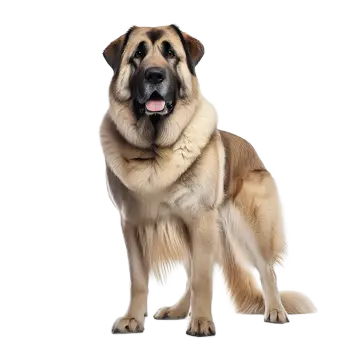
The coat is a functional double layer perfectly adapted to the extreme climate of central Anatolia, where bitter winters and scorching summers are the norm. The undercoat is dense and insulating, providing warmth in winter and protection from solar radiation in summer. The outer coat is short to medium in length, flat-lying, and coarse enough to repel water and snow. The combination is dense enough to resist puncture from wolf bites, an important consideration for a dog whose job description includes physical combat with large predators. Coat color is one of the defining characteristics that distinguishes the Kangal from other Turkish shepherd dog types. The standard requires colors ranging from pale fawn to wolf grey, always with a distinctive black mask covering the muzzle and extending around the eyes. Ears are also black. No other color patterns are acceptable in a purebred Kangal, and this uniformity of appearance is a direct result of the breed's relative genetic isolation in the Sivas-Kangal region.

The body is powerful and well-proportioned, slightly longer than tall, with a deep chest that provides ample lung capacity and a strong, level back. The tail is long, reaching at least to the hock, and is carried low with a slight upward curl at the tip when the dog is relaxed. When alert or in motion, the tail rises and curls forward over the back in a characteristic wheel shape. Movement is fluid and ground-covering, with an easy, powerful stride that the dog can maintain for extended periods while patrolling the perimeter of its territory. There is an economy to the way a Turkish Kangal moves that reflects centuries of selection for endurance over flash.

Affectionate With Family
The Turkish Kangal forms deep, steady bonds with its family and shows genuine warmth to the people it trusts. Its affection is expressed through calm presence and quiet devotion rather than exuberant displays.
Good With Young Children
Gentle and protective with family children when properly socialized, but the breed's massive size means constant supervision is necessary with young kids to prevent accidental injuries from sheer bulk.
Good With Other Dogs
Strong territorial and dominance instincts can create conflict with other dogs, particularly same-sex pairings or assertive breeds. Early socialization and careful management are essential for multi-dog households.
Shedding Level
The dense double coat produces moderate shedding year-round and heavy seasonal shedding twice a year. During coat blowouts, the volume of loose undercoat is substantial and requires daily removal.
Coat Grooming Frequency
Low maintenance for most of the year with weekly brushing sufficient. During the twice-annual shedding season, daily brushing with an undercoat rake becomes necessary to manage the heavy coat blow.
Drooling Level
The Turkish Kangal produces some drool, particularly after drinking or in warm weather, but is not among the heaviest drooling breeds. Keep a towel handy but do not expect constant slobber.
Coat Type
The double coat features a dense, insulating undercoat topped by a short to medium-length outer layer that is coarse enough to repel water, snow, and even wolf bites.
Openness To Strangers
Natural wariness toward unfamiliar people is a core breed characteristic. The Turkish Kangal assesses strangers with calm, measured reserve and extends trust slowly and selectively.
Playfulness Level
Puppies and young dogs show playful energy, but adult Turkish Kangals tend toward a calm, dignified demeanor. Play sessions are enjoyed but the breed does not demand constant entertainment.
Watchdog/Protective Nature
Protection is the breed's reason for existence. The Turkish Kangal is a supreme guardian that takes its protective role seriously, confronting threats with calm courage and unwavering determination.
Adaptability Level
This breed requires space, routine, and a purpose. It does not adapt well to apartment living, frequent relocations, or environments that lack adequate outdoor access for patrolling.
Trainability Level
Highly intelligent but profoundly independent, the Turkish Kangal evaluates commands against its own assessment of the situation. Success requires patience, consistency, and respect for the breed's autonomous nature.

Turkish Kangal History & Development

The name Turkish Kangal exists because the breed needed a way to declare its national identity in an international dog world that had spent decades misunderstanding and misclassifying it. The breed itself is ancient, with roots that likely stretch back thousands of years among the livestock-keeping peoples of Anatolia. But the name Turkish Kangal, with its explicit national prefix, is a more recent development that emerged from a genuine battle over breed identity between Turkish authorities and Western kennel organizations.

The Kangal's origins are tied to the town and district of Kangal in Sivas Province, located in the heart of central Anatolia. One widely held theory suggests that the ancestors of these dogs arrived in Anatolia with migrating Turkic tribes from Central Asia during the eleventh century. DNA studies have shown genetic proximity between Kangals and dogs from Kazakhstan, Uzbekistan, Tajikistan, and Afghanistan, lending support to this Central Asian connection. The relative geographic isolation of the Sivas-Kangal region kept the breed remarkably pure over centuries, free from the crossbreeding that affected livestock guardian dogs in other parts of Turkey. Villagers and shepherds in the region bred these dogs with fierce pride and practical purpose, selecting for courage against wolves, loyalty to the flock, and the physical stamina to work in the extreme continental climate of the Anatolian plateau.

The breed's entry into the Western world began in 1965 when Charmian Steele brought the first Kangals to England. The first English litter was born in 1967. In the United States, the story took a different and more complicated turn. In 1967, a US Navy Lieutenant named Robert Ballard, stationed in Turkey, acquired two working livestock guardians from breeders in the Ankara region. These dogs and subsequent imports became the foundation of what Americans called the Anatolian Shepherd Dog, a designation that lumped together various regional Turkish guardian types including Kangals, Akbash dogs, and mixed specimens from the zones between traditional breeding centers. Turkish breeders objected strenuously, insisting that the Kangal was a distinct purebred that should not be merged with other types under a generic label.

This naming dispute persisted for decades and generated considerable animosity between American and Turkish breed communities. The Nelsons, David and Judith, were the first to bring dogs specifically identified as Kangals to the United States in 1985, providing a separate foundation stock from the earlier Anatolian imports. The Kangal Dog Club of America was formed to advocate for the breed's independent identity. Meanwhile, The Kennel Club in the United Kingdom resolved its own version of the dispute in 2013 by reclassifying the breed from Anatolian Shepherd Dog to Turkish Kangal Dog.

Today the name Turkish Kangal serves as both a breed designation and a statement of cultural ownership. Turkey considers the Kangal a national treasure and has banned exports to protect the breed's integrity. The Turkish government operates official breeding programs in the Sivas region, and the dog appears on stamps and currency as a symbol of national heritage. For the Turkish people, adding the word Turkish to the breed name is not redundant. It is a declaration that this dog belongs to Turkey and that its identity cannot be diluted or redefined by outside registries.

Turkish Kangal Temperament & Personality

The Turkish Kangal possesses a temperament that was shaped not by human obedience training but by the demands of working alone on the steppe with nothing between a flock of sheep and a pack of wolves except the dog's own judgment, courage, and physical power. This is a breed that was developed to think for itself, assess threats independently, and take decisive action without waiting for human instruction. That independence is the defining feature of the Kangal personality, and everything else about the dog's temperament flows from it.

With its family, the Turkish Kangal is calm, steady, and genuinely affectionate. Despite its imposing size and formidable capabilities, this is not an aggressive or volatile dog in the home environment. It is surprisingly gentle with the people it considers part of its inner circle and demonstrates a protective devotion that is quiet and constant rather than anxious or overbearing. The breed tends to position itself where it can monitor the household, choosing spots with good sightlines to doors and windows, and maintaining a relaxed but alert awareness of everything happening around it. This is a dog that is always on duty, even when it appears to be sleeping.

With strangers, the Turkish Kangal is reserved, watchful, and slow to extend trust. This is not a dog that greets visitors with tail-wagging enthusiasm. It will observe unfamiliar people with calm assessment, maintaining a measured distance until it has determined whether the newcomer represents a threat or is accepted by the family. Some individuals will warm up to regular visitors over time, while others maintain a permanent professional detachment from anyone outside the immediate household. This reserve is not nervousness or fear. It is the calculated wariness of a guardian breed that takes its protective role seriously.

The courage of this breed is not theoretical. Turkish Kangals routinely confront wolves, bears, and jackals in their traditional working role, and they do so with a composure that experienced shepherds describe as almost unnatural. The dog does not panic, does not hesitate, and does not back down once it has committed to defending its flock. That same courage translates to the domestic setting, where the Turkish Kangal will place itself between its family and any perceived danger without a moment of indecision. However, the breed also possesses a proportionate response system that distinguishes it from more reactive guardian types. A well-socialized Kangal escalates gradually, moving from alert posture to warning bark to physical confrontation only as the situation demands.

Intelligence in the Turkish Kangal is practical and situational rather than the eager-to-please responsiveness seen in herding or sporting breeds. The dog reads its environment constantly, processes information about potential threats with remarkable accuracy, and makes independent decisions about how to respond. This means the Kangal is not a dog that performs tricks on command or finds repetitive obedience exercises stimulating. It finds purpose in guardian work and in the quiet, steady vigilance that defines its daily existence. Owners who understand and respect this working intelligence will find a deeply rewarding companion. Those who expect the responsiveness of a Labrador will find the experience frustrating.

Turkish Kangal Family Life & Living Requirements

Keeping a Turkish Kangal as a family dog is a serious commitment that requires honest self-assessment from prospective owners. This is not a breed for everyone, and it is certainly not a breed for first-time dog owners. The combination of massive size, independent temperament, and powerful protective instincts means that mistakes in management or socialization can have consequences far more significant than they would with a smaller, more biddable breed. With the right owner and the right environment, however, the Turkish Kangal can be a magnificent family companion.

With children in the household, the Turkish Kangal is typically gentle and protective when properly raised and socialized. The breed has a natural affinity for the vulnerable members of its family group, a trait that translates directly from its centuries-old role protecting young lambs in the flock. Older children who understand how to interact respectfully with a large dog can develop deep bonds with a Kangal. Very young children require constant supervision around a dog of this size, not because the breed is aggressive toward them but because the sheer physical bulk of the animal means that even casual movements can knock a toddler off their feet. Teaching children to respect the dog's space and establishing clear household rules from the beginning is essential.

Other dogs in the household can be manageable but require careful consideration. The Turkish Kangal has strong territorial and dominance instincts that can create conflict, particularly with same-sex pairings or with other large, assertive breeds. Dogs raised together from puppyhood generally establish a workable hierarchy, but introducing an adult Kangal to an existing dog requires patience and structured management. Small pets including cats present a variable picture. While some Kangals raised alongside family cats coexist peacefully, the breed's size means that even playful interactions can be dangerous for smaller animals.

Housing for a Turkish Kangal must include a large, securely fenced outdoor area. This is not a breed suited to apartment living under any circumstances. The fence must be tall and robust because the dog has both the size to clear moderate barriers and the determination to test weak points if it perceives a threat on the other side. The breed thrives in rural settings where it has space to patrol and a purpose to fulfill. Suburban homes with adequate yard space can work, but the owner must be mindful of the dog's tendency to bark at perceived threats, which neighbors in close proximity may not appreciate. The Kangal's dense double coat handles cold weather exceptionally well but can make the dog uncomfortable in prolonged extreme heat.

Turkish Kangal Training & Exercise Needs

Training a Turkish Kangal requires a fundamental shift in expectations if your experience has been with breeds that were developed to work under direct human supervision. This dog was bred to operate independently on the open steppe, making its own decisions about threat assessment and response without waiting for commands from a handler who might be a mile away with another part of the flock. That heritage produces a dog that is highly intelligent but profoundly independent, one that evaluates your requests against its own understanding of the situation before deciding whether to comply.

Building a strong bond based on trust and mutual respect is the foundation of all successful training with this breed. Harsh corrections, physical intimidation, or attempts to dominate through force will backfire catastrophically with a dog this large and this confident. The Turkish Kangal responds to calm, consistent, positive training methods delivered by an owner who has established themselves as a trustworthy leader through daily interactions rather than confrontation. Keep training sessions short and purposeful. This is not a dog that finds repetitive obedience drills intellectually stimulating, and asking it to sit-stay twenty times in a row will produce nothing but mutual frustration.

Socialization is the single most important investment you can make in a Turkish Kangal puppy, and the consequences of neglecting it are severe. A poorly socialized Kangal that grows to 140 pounds with intact protective instincts and no ability to distinguish normal social situations from genuine threats is a liability of the highest order. Begin socialization early and continue it aggressively through the first year. Expose the puppy to as many different people, animals, environments, sounds, and situations as possible, always ensuring that experiences are positive and building the dog's confidence rather than overwhelming it.

Exercise needs for the Turkish Kangal are moderate compared to high-drive herding or sporting breeds, but the dog still requires daily physical activity to remain healthy and mentally balanced. Long walks, opportunities to patrol a large property, and free time in a securely fenced area satisfy most individuals. The breed is not built for sustained high-intensity exercise like jogging or cycling but thrives on the kind of steady, purposeful movement that mimics its natural working pattern of patrolling territory over extended periods. Mental stimulation through environmental enrichment, scent work, and controlled social interactions with people and animals is equally important for preventing boredom and the destructive behaviors that can accompany it in a dog this powerful.

Turkish Kangal Health Concerns

The Turkish Kangal benefits from a genetic heritage shaped by centuries of natural and practical selection in a demanding environment. Dogs that could not withstand the harsh Anatolian climate, the physical demands of confronting predators, and the rigors of working life on limited rations simply did not survive to breed. This functional filtering has produced a breed that is remarkably healthy for its size, with fewer inherited problems than many other large and giant breeds. The typical lifespan ranges from 12 to 15 years, which is excellent for a dog of this size.

The breed's dense double coat provides excellent protection against weather extremes but can contribute to heat stress in hot climates if the dog is overexerted or denied access to shade and water. Skin conditions are occasionally reported but are not a major breed concern. Entropion, a condition where the eyelid rolls inward causing irritation, has been documented in some lines. Overall, the Turkish Kangal is a hardy breed that thrives with basic preventive veterinary care and an owner who understands the importance of appropriate nutrition and exercise management during the critical growth period.

Common Health Issues

  • Hip Dysplasia - Abnormal hip joint development leading to instability, cartilage wear, and arthritis, screened through radiographic evaluation and managed with weight control, appropriate exercise, and nutrition during growth
  • Elbow Dysplasia - Abnormal development of the elbow joint causing lameness and discomfort, occurring at lower rates than hip dysplasia but still warranting screening in breeding stock
  • Bloat (Gastric Dilatation-Volvulus) - A life-threatening emergency where the stomach fills with gas and may twist, requiring immediate veterinary intervention and preventable through feeding management
  • Entropion - A condition where the eyelid rolls inward causing the lashes to irritate the cornea, documented in some lines and correctable through minor surgical procedure
  • Heat Stress - The dense double coat can contribute to overheating in hot climates during vigorous activity, requiring access to shade, water, and avoidance of intense exercise during peak temperatures
  • Skin Conditions - Occasional dermatological issues reported in the breed, typically manageable with proper nutrition, parasite prevention, and veterinary attention when symptoms appear

Preventive Care & Health Monitoring

  • Screen all breeding stock with hip and elbow radiographic evaluations to reduce the incidence of joint dysplasia in future generations - Screen all breeding stock with hip and elbow radiographic evaluations to reduce the incidence of joint dysplasia in future generations
  • Feed a moderate-protein diet during the growth phase to promote slow - Steady development and reduce stress on developing joints, following the traditional Turkish practice of avoiding high-protein puppy foods
  • Feed two or more smaller meals per day rather than one large meal to reduce bloat risk - And avoid vigorous exercise for at least an hour before and after feeding
  • Begin extensive socialization before twelve weeks of age and continue throughout the first year - Exposing the puppy to diverse people, animals, environments, and situations
  • Provide adequate shade - Fresh water, and rest periods during hot weather to prevent heat stress, particularly for dogs living in climates warmer than the breed's native Anatolian environment
  • Maintain robust - Tall fencing around the property to safely contain a dog with the size and determination to test barriers, and inspect fence lines regularly for weak points
  • Schedule regular veterinary checkups including eye examinations to monitor for entropion and other conditions - And maintain routine dental care, nail trimming, and ear cleaning
  • Provide daily moderate exercise through walks and access to a large secure area for patrolling - Supplemented with mental stimulation to prevent boredom in this intelligent breed

Turkish Kangal Grooming & Maintenance

The Turkish Kangal is a low-maintenance breed in the grooming department for most of the year, but the twice-annual shedding season transforms that assessment dramatically. The dense double coat that protects the dog through Anatolian winters and summers sheds its undercoat in massive quantities during seasonal transitions, and owners who are unprepared for the volume of hair that a 130-pound dog can produce will find themselves overwhelmed. During these shedding periods, daily brushing with an undercoat rake or deshedding tool is essential to remove the loose hair and prevent it from matting against the skin.

Outside of shedding season, the coat requires relatively little attention. A thorough brushing once or twice a week is sufficient to keep the coat in good condition and remove any debris the dog has collected during its outdoor activities. The outer coat has a natural coarseness that repels dirt and water effectively, meaning the dog stays cleaner than you might expect for an animal that spends significant time outdoors. Bathing is an infrequent necessity, typically only when the dog has gotten into something particularly unpleasant. Given the breed's size, bathing is a significant undertaking, and it is wise to accustom the puppy to the process early rather than attempting a first bath on a resistant adult that outweighs most people.

Dental care follows standard guidelines for large breeds, with regular brushing several times per week to prevent tartar accumulation and gum disease. Nail trimming should happen every two to three weeks, though dogs that spend time on hard or varied terrain may naturally wear their nails down. Ear care requires regular inspection and cleaning, particularly for dogs whose ears have not been cropped, as the folded ear shape can trap moisture and debris.

The most significant maintenance consideration for the Turkish Kangal is not grooming but infrastructure. This breed requires robust fencing, adequate outdoor space, and shelter that provides protection from weather extremes. The dog's size means that everything from food costs to veterinary expenses scales accordingly. Crates, beds, collars, and other equipment must be sized for a giant breed. Prospective owners should factor these ongoing costs into their decision, because a Turkish Kangal that is inadequately housed or maintained is a dog that will develop problems that are expensive and difficult to resolve.