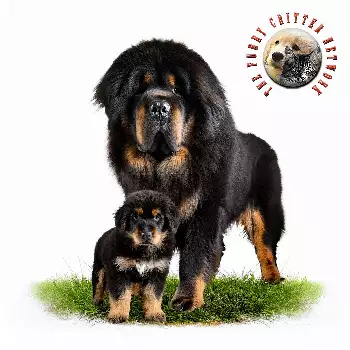
The Tibetan Dog is an imposing animal whose sheer physical presence has served as its primary deterrent against predators and intruders for thousands of years. This is a large, powerfully built breed with a frame that communicates strength, substance, and an unmistakable air of authority. Males typically stand a minimum of twenty-six inches at the shoulder and weigh between ninety and one hundred fifty pounds, while females are somewhat smaller at a minimum of twenty-four inches and seventy to one hundred twenty pounds. The body is slightly longer than it is tall, creating a rectangular proportion that emphasizes the breed's substance and stability.
The head is one of the breed's most striking features. It is broad, heavy, and strong with a massive skull that contributes significantly to the dog's commanding expression. A pronounced stop separates the skull from a square, well-padded muzzle that houses powerful jaws. The broad nose is well pigmented, and thick lips frame a mouth with a complete scissors or level bite. The overall impression of the head is one of dignified power, and when the dog is alert, deep wrinkles may appear on the forehead, adding to the expression of serious attentiveness that characterizes the breed.
The eyes are medium-sized, oval in shape, and set slightly oblique and well apart. They can be any shade of brown, and they convey the breed's characteristic combination of intelligence and watchful reserve. The ears are medium-sized, triangular, and pendant, hanging close to the head and carried forward when the dog is alert. Together the eyes and ears create an expression of noble vigilance that has earned the breed descriptions ranging from regal to leonine.
The neck is strong, well-muscled, and arched, covered by a thick mane of longer hair that is particularly pronounced in males and contributes to the breed's lion-like appearance. This impressive ruff frames the head and enhances the impression of massive size that has made the Tibetan Dog a legendary guardian. The chest is deep with a moderately broad brisket, and the forequarters are well-angulated with strong bone and straight legs when viewed from the front.
The double coat is one of the breed's most functional features, developed over millennia to protect against the extreme cold and harsh conditions of the Himalayan highlands. The undercoat is dense and woolly during cold weather, providing excellent insulation, though it thins considerably during warmer months. The outer coat is long and coarse, lying flat against the body with heavier feathering on the tail, hindquarters, and breeches. One notable characteristic is that the coat lacks the unpleasant odor common to many large breeds, shedding dirt and retaining a relatively clean smell. Colors include solid black, black and tan, various shades of red ranging from pale gold to deep mahogany, and bluish-gray, often with white markings on the chest and feet.
The tail is medium to long, well-feathered, and set high. It curls over the back to one side when the dog is alert or moving and may hang down when the animal is relaxed. The hindquarters are powerful and well-muscled with moderate angulation, providing the drive necessary for a dog that historically patrolled large territories across rugged mountain terrain. The feet are large, strong, and compact with thick pads suited to rough ground. Movement is powerful and deliberate, reflecting the breed's role as a tireless patrol dog rather than a speed-oriented athlete.
Affectionate With Family
★★★☆☆
The Tibetan Dog shows steady, quiet devotion to its household rather than exuberant affection, offering companionship with a dignified reserve that deepens into genuine warmth over time.
Good With Young Children
★★☆☆☆
While gentle with children raised in its own family, the Tibetan Dog's massive size and strong protective instincts require careful supervision during all interactions with young children.
Good With Other Dogs
★★☆☆☆
Same-sex aggression is common in this breed, and its territorial nature means introductions to unfamiliar dogs must be managed carefully to prevent confrontations.
Shedding Level
★★★★☆
The Tibetan Dog sheds moderately throughout the year but undergoes a dramatic annual molt in late winter or spring when the dense undercoat releases in impressive volume.
Coat Grooming Frequency
★★★☆☆
Regular brushing two to three times weekly maintains the coat, with daily attention needed during the annual molt, though the coat's natural self-cleaning properties reduce bathing needs.
Drooling Level
★★☆☆☆
The Tibetan Dog drools less than many breeds of comparable size, though some individuals with heavier lip folds may produce moderate drool, particularly around mealtimes.
Coat Type
★★★★☆
The heavy double coat features a dense woolly undercoat and long, coarse outer coat that varies in thickness with climate and season, providing excellent insulation against extreme temperatures.
Openness To Strangers
★☆☆☆☆
Deeply reserved and watchful around unfamiliar people, the Tibetan Dog was bred specifically to distrust strangers and will position itself protectively when unknown visitors approach.
Playfulness Level
★★☆☆☆
The Tibetan Dog is not a playful breed in the traditional sense, preferring purposeful activity like patrolling to games of fetch or chase, though puppies show more typical playful behavior.
Watchdog/Protective Nature
★★★★★
Few breeds match the Tibetan Dog's protective instincts, honed over millennia of guarding livestock and monasteries against predators and intruders across the Himalayan highlands.
Adaptability Level
★☆☆☆☆
This breed adapts poorly to apartment living, frequent changes, or environments that restrict its need to patrol territory, and it requires experienced owners who understand guardian breed management.
Trainability Level
★☆☆☆☆
Highly intelligent but profoundly independent, the Tibetan Dog makes its own decisions and responds to training on its own terms, requiring patient owners who accept limited conventional obedience.