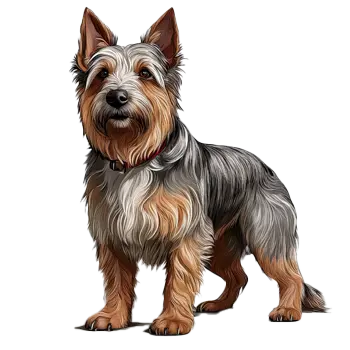
The Sydney Terrier is a small, sturdy, and well-proportioned working terrier that presents an image of robust capability packed into a compact frame. Standing ten to eleven inches at the shoulder and weighing between thirteen and twenty pounds, this breed is noticeably longer in body than it is tall, with a strong, level topline and well-sprung ribs that provide ample room for heart and lungs. The overall impression is one of a tough, hardy little dog with sufficient substance and bone to suggest endurance and working ability, without any suggestion of coarseness or heaviness.
The head is long and strong in proportion to the body, with a flat skull of moderate width and a definite stop between the skull and the foreface. The muzzle is equal in length to the skull and tapers slightly without being snippy, housing a strong jaw with a clean scissor bite. The eyes are small, oval, and dark brown to black, set well apart and expressing keen alertness and intelligence. The ears are small, erect, and pointed, set high on the skull and carried firmly upright with no tendency to flare outward. One of the breed's most distinctive features is the topknot of fine, silky hair on the crown of the head, which is softer and lighter in texture than the harsh body coat.
The body is solidly constructed with a moderately deep chest, strong shoulders, and a straight back that shows no sign of sagging or roaching. The forelegs are straight, well-boned, and set directly beneath the shoulders, while the hindquarters are muscular with moderate angulation providing effective drive. The feet are small, round, and compact with well-arched toes and thick, dark pads that reflect the breed's heritage as a dog that traversed rough Australian terrain. The tail is traditionally docked to approximately two-fifths of its natural length in countries where docking is permitted, and is carried erect but not over the back.
The coat is perhaps the breed's most defining physical characteristic, consisting of a harsh, straight, dense outer coat approximately two to two and a half inches long over the body, with a noticeable ruff of softer hair around the neck and chest. The coat's texture is weather-resistant and functional, providing protection against rain, thorns, and the bites of the snakes and vermin the breed was originally tasked with dispatching. Accepted colors include blue and tan, where the body is a clear, dark blue with rich tan markings on the face, ears, lower legs, and under the tail; solid sandy; and solid red. The blue and tan coloration is the most widely recognized and commonly seen variety.
Affectionate With Family
★★★★★
The Sydney Terrier is an exceptionally devoted companion that bonds deeply with its family and thrives on close human interaction. Despite the breed's tough, working terrier exterior, these dogs are remarkably tender and affectionate with their people, often seeking physical contact through lap sitting, leaning against legs, and following family members throughout the home. Their colonial Australian heritage as companion dogs to settlers and homesteaders forged a breed that combines rugged self-reliance with a profound need for human connection. Sydney Terriers are known for their loyalty, often forming an especially intense bond with one particular family member while remaining affectionate toward the entire household.
Good With Young Children
★★★☆☆
The Sydney Terrier can be a good companion for families with children, but is generally better suited to households with older, more considerate children who understand how to interact respectfully with a small dog. Their small size makes them vulnerable to accidental injury from rough handling, and like many terriers, they have a low tolerance for being grabbed, poked, or having their food and toys disturbed. A Sydney Terrier that feels threatened or cornered may snap defensively. With proper supervision and training on both sides, these dogs can develop wonderful relationships with children who treat them with respect and gentleness.
Good With Other Dogs
★★☆☆☆
The Sydney Terrier's bold, self-assured temperament can make coexistence with other dogs challenging, particularly with dogs of the same sex. This breed was developed in part to work independently and possesses a confidence that borders on assertiveness in canine social situations. They may attempt to dominate larger dogs despite their small size and can be quick to escalate confrontations if they feel challenged. Careful introductions, early socialization, and ongoing management are essential when keeping a Sydney Terrier in a multi-dog household. Some individuals coexist peacefully with canine housemates, especially when raised together from puppyhood, but the breed's terrier temperament means compatibility is never guaranteed.
Shedding Level
★★☆☆☆
The Sydney Terrier is a relatively low-shedding breed, making it a practical choice for owners who prefer a tidy home. The harsh, wiry outer coat holds dead hair rather than releasing it freely, which means loose fur on furniture and clothing is minimal compared to smooth-coated or double-coated breeds with softer textures. Regular brushing helps remove the dead hair trapped in the coat, preventing it from accumulating. Some seasonal increase in shedding may occur during spring and fall coat transitions, but the volume remains modest. The breed's low shedding characteristics, combined with its manageable size, make it a popular choice for those sensitive to dog hair in the home.
Coat Grooming Frequency
★★★☆☆
The Sydney Terrier's rough, weatherproof coat requires regular but not overly demanding grooming maintenance. Brushing two to three times per week with a slicker brush or bristle brush keeps the coat free of tangles and removes dead hair before it can mat. The coat benefits from periodic hand-stripping to maintain its characteristic harsh texture, a process that involves plucking dead outer coat hairs by hand or with a stripping knife. Many pet owners opt for professional grooming every six to eight weeks instead of hand-stripping at home. The coat should not be clipped with scissors or electric clippers, as this softens the texture and dulls the color over time.
Drooling Level
★☆☆☆☆
The Sydney Terrier is virtually drool-free, a characteristic common to terrier breeds with their tight-lipped, clean muzzle structure. Owners will not need to contend with saliva on furniture, clothing, or walls with this breed. Even during meals, anticipation of treats, or periods of excitement, the Sydney Terrier maintains a dry mouth. This makes the breed particularly appealing to owners who value cleanliness and want to avoid the mess associated with drool-prone breeds. The neat, tidy nature of the Sydney Terrier extends beyond its lack of drooling to its overall presentation as a compact, well-groomed little dog.
Coat Type
★★★☆☆
The Sydney Terrier possesses a distinctive rough double coat that is both functional and characteristically terrier in appearance. The outer coat is harsh, straight, and dense, measuring approximately two to two and a half inches in length over the body, providing protection against weather, thorns, and rough terrain. Beneath this lies a short, soft undercoat that adds insulation without excessive bulk. The hair on the muzzle, lower legs, and feet is naturally shorter and tidier, while a distinctive ruff of slightly longer, softer hair frames the neck and chest. The coat's texture and density reflect the breed's origins as a working dog in the varied and often harsh Australian climate.
Openness To Strangers
★★★☆☆
The Sydney Terrier is typically reserved and watchful with unfamiliar people, taking its time to assess newcomers before offering friendship. This cautious approach reflects the breed's heritage as a homestead watchdog in colonial Australia, where alertness to strangers was a valued trait. They are not typically aggressive toward visitors but will announce arrivals with assertive barking and maintain a dignified distance until they are satisfied that the newcomer poses no threat. Once a Sydney Terrier decides to accept someone, it can become quite friendly and charming. Early and ongoing socialization helps prevent excessive wariness from developing into suspicious or territorial behavior.
Playfulness Level
★★★★☆
The Sydney Terrier maintains a lively, playful spirit well into its senior years, approaching games and interactive play with the enthusiasm and energy characteristic of the terrier group. These dogs particularly enjoy games that tap into their natural instincts, including fetch, tug-of-war, and any activity that involves chasing or searching for objects. Their intelligence makes them excellent candidates for puzzle toys and interactive games that challenge them mentally as well as physically. Sydney Terriers have a delightful sense of humor and will often invent their own games or perform comical antics to engage their families in play. Their playful nature makes them entertaining companions who can brighten even the dullest afternoon.
Watchdog/Protective Nature
★★★★★
The Sydney Terrier is an outstanding watchdog that takes its guardian duties with absolute seriousness. Bred to alert colonial Australian homesteaders to approaching visitors, wildlife, and potential threats, this breed possesses an extraordinarily keen awareness of its environment and will sound the alarm at the slightest unusual sound or movement. Their bark is surprisingly robust for their small size, carrying well across distances and serving as an effective deterrent. Sydney Terriers are naturally territorial and will patrol their property with vigilant attention, noting and responding to any changes in their surroundings. While they lack the size to serve as physical guardians, their alertness and vocal persistence make them among the most reliable watchdog breeds.
Adaptability Level
★★★★☆
The Sydney Terrier adapts well to a variety of living situations, from apartments and townhouses to larger homes with yards. Their compact size makes them suitable for smaller living spaces, and their moderate exercise requirements can be met through daily walks and indoor play. They handle changes in routine reasonably well for a terrier breed, adjusting to new schedules, environments, and travel situations without excessive stress. Their versatile nature reflects their colonial origins, where they needed to adapt to the varied and unpredictable conditions of frontier life. However, they are sensitive to prolonged isolation and do not adapt well to being left alone for extended periods.
Trainability Level
★★★☆☆
The Sydney Terrier is intelligent and capable of learning a wide range of commands and behaviors, but brings the characteristic terrier independence to training sessions that can test a handler's patience. These dogs are quick to understand what is being asked of them but may choose to comply on their own terms, evaluating whether the offered reward justifies the requested effort. Harsh training methods are counterproductive with this breed, shutting down cooperation and damaging the trust that is essential to a productive training relationship. Short, upbeat sessions using high-value food rewards and enthusiastic praise yield the best results. Consistency is essential, as Sydney Terriers are adept at identifying and exploiting inconsistencies in rules and boundaries.