Swamp Poodle

Boykin Spaniel

Quick Facts

🐕 Breed Group
Sporting Group
📏 Size Category
Medium
📏 Height
Males: 15.5 - 18 inches, Females: 14 - 16.5 inches
⚖️ Weight
Males: 30 - 40 lbs, Females: 25 - 35 lbs
⏱️ Life Expectancy
10 - 15 years
🧣 Coat Type
Medium-length, wavy to curly
🎨 Coat Colors
Solid liver (chocolate to reddish brown)
😀 Temperament
Friendly, eager, energetic, trainable
🏃 Exercise Needs
High
🎓 Training Difficulty
Easy to moderate
👶 Good with Children
Yes
🐾 Good with Other Pets
Yes, with socialization

Other Names & Breed Recognition

If you have spent any time around Boykin Spaniel enthusiasts in the South Carolina lowcountry, you have almost certainly heard someone refer to this breed as the Swamp Poodle. The nickname captures two defining features in a single phrase: the curly or wavy brown coat, which gives it a passing resemblance to a poodle at first glance, and its deep roots in the swamp habitats of the Wateree River basin where the breed was forged into existence. It is a name that carries genuine affection rather than mockery, born from the kind of familiarity that produces the best nicknames for things people love most.

The Swamp Poodle name emerged informally among hunters and breed fanciers in South Carolina, where this compact brown spaniel has been a fixture of swamp hunting culture since the early twentieth century. Hunters who spent their days navigating section boats through cypress swamps and tupelo-lined waterways with a curly-coated brown dog at their side naturally gravitated toward a name that described what they saw. The poodle comparison was never about pedigree or behavior but about that distinctive coat texture, which ranges from loosely wavy to moderately curly depending on the individual dog.

The breed's formal name, Boykin Spaniel, honors Lemuel Whitaker Boykin, the South Carolina sportsman who developed the breed from a stray spaniel-type dog in the early 1900s. That official name remains the designation used by the American Kennel Club, the United Kennel Club, and the Boykin Spaniel Society. Other nicknames include the Little Brown Dog, a reference to both the breed's coat color and its origin story involving a small brown stray, and The Dog That Doesn't Rock the Boat, describing the breed's compact size and steady demeanor in the small section boats used by Carolina swamp hunters.

The Swamp Poodle nickname remains in active use today, particularly among hunters and longtime breed owners in the southeastern United States. It appears in breed club conversations and casual references at field trials and hunt tests. It is not an obscure or forgotten term but a living piece of the breed's cultural identity, connecting modern owners to the swamp hunting traditions that produced this spaniel.

Swamp Poodle Organizations & Standards

The Swamp Poodle's journey to formal breed recognition is a relatively recent chapter in the world of purebred dogs, but it reflects decades of passionate advocacy by hunters and breed enthusiasts who believed this little brown spaniel deserved a place alongside the more established sporting breeds. The Boykin Spaniel Society, founded in 1977 by members of the Boykin family and dedicated breed supporters, serves as the original breed registry and the guardian of the breed's identity. The BSS began maintaining a formal studbook in 1979 and closed it in 1980, meaning only dogs with BSS-registered parents can enter the registry. This strict standard has been central to preserving the breed's genetic consistency and ensuring that the Swamp Poodle of today traces directly back to the original stock developed in the Wateree River region.

The Boykin Spaniel Club and Breeders Association of America formed in the 1990s with the specific mission of securing American Kennel Club recognition. That effort required years of documentation, demonstrating breed consistency across generations, and proving the population's health and stability. The AKC granted full recognition in 2009, placing the breed in the Sporting Group. This opened doors to AKC conformation shows, obedience trials, agility events, and the Spaniel Hunt Tests that had been a primary motivator for seeking recognition in the first place. The United Kennel Club recognized the breed earlier, in 1985, classifying it within their Gun Dog Group.

The breed standard describes a medium-sized, sturdy spaniel built for endurance in rough terrain and water. Males stand 15.5 to 18 inches at the withers and weigh 30 to 40 pounds. Females stand 14 to 16.5 inches and weigh 25 to 35 pounds. The standard emphasizes balance and working ability over flashy appearance, specifying that the dog should be neither too heavy nor too light to perform the retrieving and flushing work for which it was developed. The only acceptable coat color is solid liver, ranging from light chocolate to deep reddish brown.

Health testing requirements for breeding stock reflect the breed community's commitment to addressing known genetic concerns. The CHIC program requires an OFA hip evaluation, patellar luxation evaluation, an eye examination by a boarded ACVO ophthalmologist, and DNA testing for Exercise-Induced Collapse, Collie Eye Anomaly, and degenerative myelopathy. Cardiac evaluation is recommended but currently optional. The BSCBAA has also encouraged testing for progressive retinal atrophy and intervertebral disc disease as awareness of these conditions in the breed has grown.

Kennel Club Recognition

  • American Kennel Club (AKC): Recognized in 2009, Sporting Group
  • United Kennel Club (UKC): Recognized, Gun Dog

Swamp Poodle Physical Description

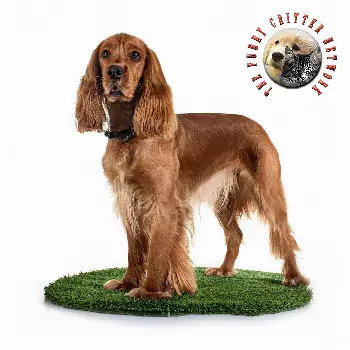
The Swamp Poodle earns its nickname the moment you lay eyes on it. That brown coat, ranging from deep chocolate to a warm reddish liver, carries a wave or curl that immediately calls to mind a smaller, wilder version of a poodle fresh from the marshes. It is this coat, more than any other single feature, that prompted hunters to coin the name, and it remains the trait that most clearly sets the Boykin Spaniel apart from other sporting breeds at a glance. The texture varies between individuals, with some dogs carrying a flat to slightly wavy coat and others developing moderate curls, particularly across the body and along the ears. Regardless of the degree of curl, the coat provides a water-resistant layer that serves the breed well during long days in the swamps and lakes of the Southeast.

Underneath that distinctive coat is a solidly built medium-sized spaniel, compact enough to fit comfortably in a small hunting boat but substantial enough to handle a full day of retrieving in demanding conditions. Males typically stand between 15.5 and 18 inches at the shoulder and weigh 30 to 40 pounds. Females are somewhat smaller, standing 14 to 16.5 inches and weighing 25 to 35 pounds. The breed standard calls for a body that is slightly longer than tall, creating a rectangular silhouette that suggests endurance and agility rather than pure speed. The chest is well developed but not barrel-shaped, providing the lung capacity needed for sustained physical effort without adding bulk that would be a liability in tight quarters.

The head is proportionate to the body, with a broad skull and a well-defined but not abrupt stop. The muzzle is moderate in length and strong enough to carry game comfortably on the retrieve. The eyes are one of the breed's most expressive features, ranging from yellow to amber to rich brown, set well apart and framed by the signature hanging spaniel ears. Those ears are set slightly above or at eye level, lying flat against the head and covered in wavy feathering that adds to the overall impression of a dog built for water work.

The Swamp Poodle's body is designed for function. The back is strong and level, the loin short and muscular with a slight arch, and the croup slopes gently toward the tail set. The tail is traditionally docked to approximately one-third its natural length, leaving enough to serve as a visible signal of the dog's mood and focus while working in thick cover. The legs are straight and well-boned without being heavy, and the feet are slightly oval with firm pads and webbing between the toes that aids in swimming.

Movement is fluid and efficient, with good reach in front and strong drive from behind. The Swamp Poodle covers ground with the easy, ground-eating stride of a dog that was built to work all day without wasting energy. There is no wasted motion, no exaggerated lift, and no tendency for the feet to cross or interfere. Watching one move across open ground or through shallow water, you can see exactly why this breed thrived in the demanding terrain of the Wateree River swamps.

Coat color is exclusively solid liver, encompassing a range of shades from light chocolate to dark reddish brown. Some dogs display lighter feathering on the ears and legs, particularly when sun-bleached, which is acceptable under the breed standard. A small white spot on the chest is permitted by the AKC and UKC, though the Boykin Spaniel Society disqualifies white markings that exceed sixty percent of the chest width. No other white markings are acceptable under any registry.

Affectionate With Family
The Swamp Poodle bonds deeply with its household and craves close daily contact with its people. This breed is happiest when it can be physically near its family throughout the day.
Good With Young Children
Generally patient and playful with children, the Swamp Poodle's enthusiasm can sometimes be physically overwhelming for toddlers. Supervision helps manage the breed's exuberant greetings.
Good With Other Dogs
Most Swamp Poodles get along well with other dogs and integrate smoothly into multi-dog homes. Their spaniel sociability makes them cooperative rather than competitive with canine housemates.
Shedding Level
Shedding is moderate and fairly consistent throughout the year. Regular brushing controls loose hair but expect some coat deposits on furniture and clothing.
Coat Grooming Frequency
Weekly brushing keeps the wavy to curly coat in good condition. The feathered areas on ears, legs, and chest need extra attention to prevent matting.
Drooling Level
The Swamp Poodle is not a drooler. Owners can expect clean, dry interactions with this breed outside of the occasional post-drink dribble.
Coat Type
The medium-length coat ranges from slightly wavy to moderately curly, with feathering on the ears, chest, and legs. It provides functional water resistance for the breed's aquatic work.
Openness To Strangers
The Swamp Poodle greets most new people with friendly enthusiasm rather than suspicion. This is a sociable breed that rarely meets a stranger it does not want to befriend.
Playfulness Level
Playful well into adulthood, the Swamp Poodle brings infectious energy to games of fetch, swimming sessions, and any activity that involves interaction with its people.
Watchdog/Protective Nature
The breed will bark to announce arrivals but is not a natural guardian. Its protective instinct is moderate, driven more by alertness than territorial defensiveness.
Adaptability Level
Adaptable to different living situations provided its exercise needs are met. The Swamp Poodle can adjust to new environments but struggles in sedentary or isolated settings.
Trainability Level
Highly trainable with a strong desire to please and quick comprehension of new tasks. The breed responds best to varied, purposeful training sessions rather than repetitive drilling.

Swamp Poodle History & Development

The name Swamp Poodle tells you exactly where this breed did its most important work. Before the Boykin Spaniel had a formal name, before registries existed, before anyone thought to document pedigrees, there were just small brown dogs with curly coats working the cypress swamps and flooded timber of central South Carolina alongside hunters who depended on them. Those hunters, practical people who named things for what they were, looked at their wavy-coated retrievers splashing through the muck and called them Swamp Poodles. The name stuck because it was accurate.

The breed itself traces to a chance encounter around 1900, when a banker named Alexander L. White found a small stray spaniel-type dog outside the First Presbyterian Church in Spartanburg, South Carolina. White took the dog home, named him Dumpy, and noticed a strong natural instinct for retrieving. He sent Dumpy to his hunting partner, Lemuel Whitaker Boykin, near Camden in the heart of the Wateree River swamp country. Boykin recognized the little dog's potential and began a selective breeding program, crossing Dumpy's descendants with Chesapeake Bay Retrievers, Springer Spaniels, Cocker Spaniels, American Water Spaniels, and various pointing breeds. The result was a compact, sturdy spaniel perfectly suited to the unique demands of South Carolina swamp hunting.

The Swamp Poodle nickname likely emerged during these early decades of the twentieth century, when the breed was still being refined and had no official name beyond informal references to Boykin's dogs or the little brown dogs from Camden. The curly coats that appeared in many of the dogs, inherited from the American Water Spaniel and Chesapeake Bay Retriever lines in their ancestry, made the poodle comparison natural and obvious. Hunters needed a dog small enough to ride in a section boat, a collapsible three-piece watercraft that could barely hold one person and one dog. A Labrador or Chesapeake would capsize the thing. These little curly-coated brown dogs could hop in and out without rocking the boat, a trait so valued it became another of the breed's lasting nicknames.

For decades, the Swamp Poodle was South Carolina's best-kept secret. The breed stayed largely regional, guarded by dedicated owners who were selective about who received their dogs. It was not until 1977 that the Boykin Spaniel Society formalized the registry, and 1985 when the UKC granted recognition. AKC recognition followed in 2009. Throughout this long journey from swamp dog to recognized breed, the Swamp Poodle name persisted in the informal vocabulary of the breed's home territory. South Carolina designated the Boykin Spaniel as its official state dog in 1985 and celebrates September 1 as Boykin Spaniel Day, honoring the breed that defined a regional hunting tradition.

The Swamp Poodle name endures because it connects the modern breed to its working origins in a way that the formal name cannot quite capture. Boykin Spaniel tells you who developed the breed. Swamp Poodle tells you what the breed looked like and where it worked. Both names are true, and both are needed to understand the full identity of this remarkable sporting spaniel.

Swamp Poodle Temperament & Personality

The Swamp Poodle's temperament is shaped by its origins as a versatile hunting companion developed for close partnership with a single handler in demanding field conditions. This is a breed that was created to work alongside one person in a small boat, reading the hunter's cues, holding steady until sent, and then throwing itself into the retrieve with complete commitment. That working relationship produced a dog with an exceptionally strong handler bond and a driving desire to be involved in whatever its person is doing. A Swamp Poodle that is not part of the household's daily life is a Swamp Poodle that will find ways to express its displeasure, typically through destructive behavior, excessive barking, or the kind of creative escape artistry that sporting breeds seem to develop when they feel forgotten.

Intelligence is one of this breed's defining characteristics, but it is a practical, problem-solving intelligence rather than the obsessive precision of some herding breeds. The Swamp Poodle learns quickly and retains training well, particularly when the work has a clear purpose it can understand. This same intelligence means the breed gets bored with repetitive drilling and will begin to freelance if training sessions become monotonous. Experienced handlers know to keep sessions varied and purposeful, which is exactly how these dogs were used in the field: different birds, different terrain, different challenges every outing.

The breed's sociability with people is genuine and broad. Swamp Poodles are typically friendly and outgoing with strangers, lacking the sharp suspicion seen in guardian breeds. They may bark to announce visitors but are far more likely to greet newcomers with enthusiasm than with wariness. This openness extends to children, and the breed is generally patient and stable around kids, though their energy level means they can be physically overwhelming for very small children if not taught appropriate manners. Early socialization helps channel the natural friendliness into polite behavior rather than boisterous jumping and face-licking.

With other dogs, the Swamp Poodle is generally amiable. The breed was not developed for competitive or confrontational work, and most individuals coexist well with other household dogs. Some intact males may display typical same-sex tension, but outright dog aggression is not a breed characteristic and should be treated as a behavioral concern rather than accepted as normal. The breed's spaniel heritage gives it a moderate prey drive focused primarily on birds, and many Swamp Poodles coexist well with cats and other household pets when raised together, though supervision around smaller animals is always wise given the flushing instinct.

The underside of all this enthusiasm and intelligence is that the Swamp Poodle genuinely suffers when understimulated. A bored Boykin does not simply lie down and wait. It digs, chews, barks, and invents its own entertainment in ways that rarely align with household expectations. This breed needs daily physical exercise and meaningful mental engagement to remain the cheerful, biddable companion it is capable of being. Owners who provide that structure find themselves with one of the most devoted and entertaining sporting dogs in existence. Those who do not will discover just how resourceful a frustrated spaniel can be.

Swamp Poodle Family Life & Living Requirements

The Swamp Poodle fits best into an active household that can provide daily outlets for its considerable energy reserves. This is not a breed that thrives in a sedentary environment or one where the dog is expected to entertain itself in the backyard while the family goes about indoor life. The Boykin Spaniel was bred to work in close partnership with people, and it carries that expectation into the home. It wants to be wherever you are, doing whatever you are doing, and it will make its presence known if it feels excluded from family activities.

A house with a fenced yard is the most practical living arrangement for a Swamp Poodle, giving the dog space to move and play between structured exercise sessions. Apartment living is possible but requires a significant commitment to daily outdoor time that many apartment dwellers find difficult to sustain over the breed's ten to fifteen year lifespan. The breed's moderate size, typically 25 to 40 pounds, means it is physically manageable in smaller spaces, but its energy level demands more than a brief walk around the block.

Families with children generally find the Swamp Poodle to be a natural fit. The breed's patience and sociability make it a willing playmate for older children who can match its energy level and participate in games of fetch, swimming, and outdoor exploration. With younger children, supervision is important, not because the breed shows any tendency toward aggression but because its enthusiasm can result in knockdowns and accidental rough play. Teaching both the dog and the children appropriate boundaries prevents the kind of over-the-top excitement that makes life difficult for everyone.

The breed's compatibility with other household pets is generally good, particularly with other dogs. Swamp Poodles tend to be socially flexible and integrate well into multi-dog households. Their bird-oriented prey drive is worth monitoring around smaller pets like rabbits or pet birds, but many Boykins live peacefully alongside cats and other animals when properly introduced. The key consideration for any potential Swamp Poodle owner is honest self-assessment about activity level. This breed will match your energy if you are active and exceed your patience if you are not. Families who hunt, hike, swim, or engage in dog sports will find an eager and tireless partner. Families who prefer a calm house companion that requires minimal exercise should look elsewhere.

Swamp Poodle Training & Exercise Needs

Training a Swamp Poodle is one of the genuine pleasures of owning this breed. The combination of high intelligence, strong desire to please, and natural retrieving instinct makes the Boykin Spaniel one of the more trainable sporting breeds, particularly for owners who approach the process with patience and variety. These dogs respond exceptionally well to positive reinforcement and will work hard for praise, play, and the occasional treat. Harsh corrections are counterproductive with this sensitive breed and can damage the trust-based working relationship that makes training effective in the first place.

Early obedience training should begin the moment a Swamp Poodle puppy enters the home. Basic commands, leash manners, and household rules establish the structure this breed needs to understand its place in the family. Puppy socialization is equally critical, exposing the young dog to different people, environments, sounds, and other animals during the formative weeks between eight and sixteen weeks of age. The breed's natural friendliness means socialization usually proceeds smoothly, but skipping this phase can produce a dog that is uncertain in new situations rather than confident.

For owners interested in field work, the Swamp Poodle's natural flushing and retrieving instincts provide an excellent foundation. Many Boykins take to water work with minimal encouragement, and their enthusiasm for birds is evident early. Formal hunt training builds on these instincts, teaching the dog steadiness, whistle commands, blind retrieves, and the discipline required for safe and effective field work. The breed also excels in AKC hunt tests, agility, rally obedience, dock diving, and other performance events that channel its physical and mental energy into structured activities.

Exercise requirements for the Swamp Poodle are substantial but not extreme. One to two hours of meaningful activity per day keeps most adults physically satisfied and mentally stable. This can include walks, swimming, retrieving games, hiking, or participation in organized training activities. The key word is meaningful. A Swamp Poodle that is turned loose in a yard without interaction will not self-exercise in any productive way. It needs engagement, a task, a partner, or a purpose. Swimming is a particular favorite and provides excellent low-impact exercise that the breed takes to naturally, thanks to its webbed feet and water-resistant coat. Mental stimulation through puzzle toys, scent work, or training sessions supplements physical exercise and helps prevent the behavioral problems that arise from boredom.

Swamp Poodle Health Concerns

The Swamp Poodle faces several breed-specific health concerns that prospective owners should understand before making a commitment. Exercise-Induced Collapse is among the most significant, a genetic condition caused by a recessive mutation in the DNM1 gene that affects approximately ten percent of the breed. Dogs with two copies of the defective gene can tolerate mild to moderate activity but experience muscle weakness, loss of coordination, and potentially life-threatening collapse during strenuous exercise. A DNA test identifies carriers and affected dogs, and responsible breeders test all breeding stock to avoid producing affected puppies.

Pulmonic stenosis, a congenital narrowing of the heart's pulmonary valve, occurs in the breed and can range from a mild murmur to serious cardiac compromise. Cardiac evaluation is recommended for breeding stock. Degenerative myelopathy, a progressive spinal cord disease, has a DNA test available and has been added to the CHIC requirements. More recently, concerns about intervertebral disc disease related to chondrodystrophy have prompted the BSCBAA to encourage DNA testing for IVDD/CDDY, though this has not yet become a CHIC requirement. Typical lifespan for the breed ranges from ten to fifteen years, with most dogs living to the twelve to fourteen year range when properly maintained.

Common Health Issues

  • Exercise-Induced Collapse - EIC, is a genetic condition caused by a DNM1 gene mutation affecting roughly ten percent of Boykin Spaniels, causing muscle weakness and collapse during intense physical activity.
  • Hip dysplasia occurs at a rate of approximately 14.8 percent in the breed per OFA data - Involving abnormal hip joint development that leads to pain, lameness, and arthritis over time.
  • Patellar luxation involves the kneecap slipping out of its normal position - Causing intermittent lameness and discomfort that may require surgical correction in severe cases.
  • Collie Eye Anomaly is an inherited developmental defect of the retina and choroid present in the breed at levels warranting mandatory DNA screening under the CHIC program. - Collie Eye Anomaly is an inherited developmental defect of the retina and choroid present in the breed at levels warranting mandatory DNA screening under the CHIC program.
  • Pulmonic stenosis is a congenital heart defect involving narrowing of the pulmonary valve - Which can produce murmurs, arrhythmias, or cardiac compromise depending on severity.
  • Progressive retinal atrophy - Crd4/cord1 variant, is a degenerative eye condition that causes gradual vision loss and eventual blindness, identifiable through DNA testing.
  • Degenerative myelopathy is a progressive spinal cord disease that affects hind limb function and coordination - With a DNA test available to identify carriers and affected dogs.
  • Juvenile cataracts have been documented in the breed - Causing lens opacity that can impair vision and may require surgical intervention.

Preventive Care & Health Monitoring

  • OFA hip radiographic evaluation or PennHIP assessment should be performed on all breeding stock at or after 24 months of age to screen for hip dysplasia. - OFA hip radiographic evaluation or PennHIP assessment should be performed on all breeding stock at or after 24 months of age to screen for hip dysplasia.
  • Patellar luxation evaluation by a veterinarian with results registered through OFA is required under the CHIC program for this breed. - Patellar luxation evaluation by a veterinarian with results registered through OFA is required under the CHIC program for this breed.
  • Annual eye examination by a boarded ACVO ophthalmologist screens for cataracts - Progressive retinal atrophy, and other inherited ocular conditions.
  • DNA testing for Exercise-Induced Collapse through an OFA-approved laboratory is a CHIC requirement and identifies clear - Carrier, and affected dogs.
  • DNA testing for Collie Eye Anomaly is a CHIC requirement that allows breeders to make informed decisions about mating pairs to reduce incidence. - DNA testing for Collie Eye Anomaly is a CHIC requirement that allows breeders to make informed decisions about mating pairs to reduce incidence.
  • DNA testing for degenerative myelopathy has been a CHIC requirement since 2018 and should be performed on all dogs considered for breeding. - DNA testing for degenerative myelopathy has been a CHIC requirement since 2018 and should be performed on all dogs considered for breeding.
  • Cardiac evaluation is recommended for breeding stock to screen for pulmonic stenosis and other congenital heart defects present in the breed. - Cardiac evaluation is recommended for breeding stock to screen for pulmonic stenosis and other congenital heart defects present in the breed.
  • Regular ear cleaning and thorough post-swim ear drying are essential for this water-loving breed to prevent chronic bacterial and yeast ear infections. - Regular ear cleaning and thorough post-swim ear drying are essential for this water-loving breed to prevent chronic bacterial and yeast ear infections.

Swamp Poodle Grooming & Maintenance

The Swamp Poodle's coat is both its most visually distinctive feature and its primary grooming consideration. That wavy to curly liver-colored coat, the very trait that inspired the breed's nickname, requires regular attention to keep it healthy and functional. Weekly brushing is the baseline, working through the coat with a slicker brush or pin brush to remove loose hair, prevent tangles, and distribute natural oils. The feathering on the ears, chest, legs, and belly is particularly prone to matting, especially after the dog has been swimming or working in heavy cover. These areas deserve extra attention during each grooming session to prevent the kind of tight mats that can trap moisture against the skin and create conditions for irritation or infection.

The Swamp Poodle's love of water is one of its defining characteristics, but it also creates specific grooming demands. After every swim, the ears need to be dried thoroughly and checked for debris. The breed's hanging spaniel ears trap moisture readily, creating an environment where bacterial and yeast infections thrive. A routine of post-swim ear drying, supplemented by periodic cleaning with a veterinarian-approved ear solution, significantly reduces the risk of chronic ear problems that plague many water-loving spaniel breeds. Owners who hunt or exercise their dogs in water frequently should make ear care a daily habit rather than a weekly one.

Bathing frequency depends on the dog's activity level and lifestyle. Working and hunting dogs may need baths more often to remove swamp debris, mud, and the general grime that accumulates during field work. Show or companion dogs can typically go longer between baths, with monthly bathing sufficient for most. Overbathing strips the coat's natural oils and can compromise the water-resistant quality that makes the coat functional in wet conditions. The breed standard calls for minimal trimming, with slight shaping around the head and topline being acceptable. Heavy scissoring or clipper work is not in keeping with the breed's natural appearance, though many field dogs are trimmed shorter for practical reasons during hunting season. Nail trimming should occur every two to three weeks, and dental care through regular brushing or appropriate chew items helps prevent the periodontal disease that affects all breeds as they age.