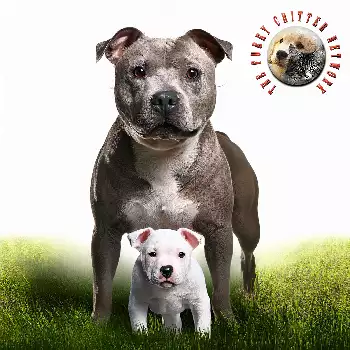

Staffordshire

Staffordshire Bull Terrier

Quick Facts

🐕 Breed Group
Terrier Group
📏 Size Category
Small to Medium
📏 Height
Males: 14-16 inches, Females: 13-15 inches
⚖️ Weight
Males: 28-38 pounds, Females: 24-34 pounds
⏱️ Life Expectancy
12-14 years
🧣 Coat Type
Short, smooth, close-lying
🎨 Coat Colors
Red, fawn, white, black, blue, brindle, or any of these colors with white
😀 Temperament
Courageous, affectionate, bold, intelligent, loyal, tenacious
🏃 Exercise Needs
Moderate to High
🎓 Training Difficulty
Moderate - intelligent but can be willful
👶 Good with Children
Excellent with children; historically known as a reliable family companion
🐾 Good with Other Pets
Can be aggressive toward other dogs; requires careful socialization; variable prey drive

Other Names & Breed Recognition

The Staffordshire is a shortened form of Staffordshire Bull Terrier, a breed that originated in the Staffordshire region of England during the early 19th century. The breed is known by several affectionate nicknames including Staffie, Staffy, and SBT, all of which are widely recognized among dog enthusiasts and the general public alike. In its native United Kingdom, the breed is commonly referred to simply as the Staffie, a name that carries deep cultural significance as the breed holds a special place in British canine heritage.

The Staffordshire Bull Terrier should not be confused with its larger American cousin, the American Staffordshire Terrier, despite the obvious similarities in name and shared ancestral origins. The two breeds diverged significantly through decades of separate breeding programs on different continents, resulting in distinct size differences, structural variations, and somewhat different temperaments. The Staffordshire Bull Terrier is notably smaller and more compact than the American Staffordshire Terrier, typically standing several inches shorter and weighing considerably less.

Kennel club recognition of the Staffordshire Bull Terrier came relatively late considering the breed's long history. The Kennel Club of the United Kingdom granted recognition in 1935, and the American Kennel Club followed in 1974. The breed is also recognized by the Federation Cynologique Internationale, the United Kennel Club, and the Canadian Kennel Club, among other international registries. Each organization classifies the breed within its terrier group.

The breed's recognition journey was complicated by its historical association with dog fighting, and early breed advocates worked diligently to establish a written standard that emphasized the qualities of the Staffordshire Bull Terrier as a companion and show dog. The modern breed standard describes a dog that is smooth-coated, well-balanced, of great strength for its size, muscular, active, and agile, with a particular emphasis on its reliability and trustworthiness as a companion.

Staffordshire Organizations & Standards

The Staffordshire Bull Terrier Club of America serves as the AKC parent club and is the primary organization dedicated to promoting and protecting the breed in the United States. The club maintains the breed standard, organizes specialty shows and performance events, supports health research initiatives, and provides educational resources for owners and prospective owners. Membership in the SBTCA connects enthusiasts with a network of experienced breeders and owners who share a commitment to the breed's welfare and continued improvement.

In the United Kingdom, the Staffordshire Bull Terrier Club, founded in 1935, is the oldest breed club and played an instrumental role in securing Kennel Club recognition. The original breed standard was drafted by a group of dedicated fanciers led by Joseph Dunn, and while it has undergone minor revisions over the decades, the essential description of the breed has remained remarkably consistent. The UK standard places particular emphasis on the breed's temperament, describing it as traditionally of indomitable courage and tenacity, highly intelligent, affectionate especially with children, bold, fearless, and totally reliable.

The AKC breed standard specifies a dog standing 14 to 16 inches at the shoulder with weight proportionate to height, ranging from 28 to 38 pounds for males and 24 to 34 pounds for females. The standard calls for a smooth coat, a broad head with a short foreface, pronounced cheek muscles, and a distinct stop. Movement should be free, powerful, and agile with economy of effort, and the overall impression should be of a dog possessing great strength relative to its compact size.

Breed clubs worldwide have increasingly focused their efforts on health initiatives, sponsoring research into hereditary conditions that affect the breed and promoting the use of available genetic tests. The identification of DNA markers for L-2-Hydroxyglutaric Aciduria and hereditary cataracts represented significant milestones in breed health management, and responsible breed clubs have worked to educate breeders about the importance of testing all breeding stock for these conditions before producing litters.

Kennel Club Recognition

  • American Kennel Club (AKC): Recognized in 1974, Terrier Group
  • United Kennel Club (UKC): Recognized, Terrier
  • FCI: Recognized, Terriers
  • The Kennel Club (UK): Recognized, Terrier
  • Canadian Kennel Club (CKC): Recognized, Terriers

Staffordshire Physical Description

The Staffordshire is a compact, muscular dog that packs remarkable strength into a relatively small frame. Males typically stand 14 to 16 inches at the shoulder and weigh between 28 and 38 pounds, while females measure 13 to 15 inches and weigh 24 to 34 pounds. The breed's physical impression is one of power and agility combined in a balanced, well-proportioned package that is neither cumbersome nor slight. Every aspect of the Staffordshire's build suggests an animal designed for strength and endurance without sacrificing speed or agility.

The head is perhaps the breed's most immediately recognizable feature, being broad and deep with a short foreface and pronounced cheek muscles that give the skull a distinctly wide appearance when viewed from the front. The stop is distinct, and the nose is always black regardless of coat color. The eyes are dark and round, set to look straight ahead, and their expression conveys intelligence and alertness. The ears are rose or half-pricked, carried neatly and not large, contributing to the breed's characteristic expression of keen attentiveness.

The body is close-coupled with a level topline and a broad, muscular chest that descends to the elbow. The ribs are well-sprung, providing ample capacity for heart and lungs, and the forelegs are straight, well-boned, and set wide apart to accommodate the broad chest. The hindquarters are well-muscled with good angulation at the stifle, providing the powerful drive that characterizes the breed's movement. The tail is medium length, set low, tapers to a point, and is carried rather low without curling excessively.

The Staffordshire's coat is smooth, short, and close-fitting, requiring minimal maintenance while beautifully highlighting the muscular definition beneath. Coat colors include red, fawn, white, black, blue, and brindle, with any of these colors potentially combined with white markings. The skin fits tightly to the body without excessive wrinkling, and the overall presentation is of a clean, athletic dog with a smooth, streamlined silhouette that belies the tremendous power contained within its compact frame.

Affectionate With Family
The Staffordshire is renowned for the depth of affection it shows toward its family, earning a well-deserved reputation as one of the most people-loving breeds in existence. These dogs crave physical contact and will seek out every opportunity to be close to their owners, whether snuggling on the couch, resting their head on a lap, or simply leaning against a leg while the family watches television. Their emotional expressiveness is remarkable, and owners frequently describe the Staffordshire as almost human in its ability to convey love, happiness, and devotion through its eyes and body language. This breed's affectionate nature extends to all household members, and they are deeply unhappy when excluded from family activities or left alone for long periods.
Good With Young Children
The Staffordshire has long been celebrated in its native England as an outstanding companion for children, and this reputation is richly deserved. The breed demonstrates extraordinary patience and gentleness with young children, tolerating the often unpredictable behavior of toddlers and small children with remarkable composure. Their compact, sturdy build means they are not easily knocked over or injured during play, and their naturally playful disposition makes them willing and enthusiastic playmates. The Staffordshire seems to have an intuitive understanding of children's vulnerability and adjusts its behavior accordingly, moving more gently and being more tolerant than it might be with adults. As with all breeds, supervision during interactions between dogs and young children is always recommended.
Good With Other Dogs
The Staffordshire's relationship with other dogs is an area that requires honest acknowledgment and careful management. The breed's bull-and-terrier heritage includes a predisposition toward dog-directed aggression that can manifest even in well-socialized individuals. This tendency is more pronounced in same-sex pairings and may develop as the dog matures, sometimes appearing in dogs that were previously friendly with other canines. Early and ongoing socialization helps mitigate this trait but cannot guarantee it will not emerge. Owners should be prepared to manage their Staffordshire carefully around unfamiliar dogs and should never leave the breed unsupervised with other dogs. Successful multi-dog households with Staffordshires do exist, particularly when dogs are of opposite sexes and have been carefully introduced.
Shedding Level
The Staffordshire sheds moderately throughout the year, with a noticeable increase during seasonal coat changes in spring and autumn. Despite having a short coat, the breed produces a steady supply of loose hair that will find its way onto clothing, upholstery, and floors. Individual hairs are short and can embed themselves in fabric, making them somewhat challenging to remove from certain materials. Regular brushing two to three times per week significantly reduces the amount of loose hair deposited around the home. Using a rubber grooming mitt or bristle brush effectively captures dead coat and stimulates the skin. While the Staffordshire's shedding level is manageable compared to heavily double-coated breeds, prospective owners who are particularly sensitive to dog hair should be aware that a completely hair-free home is unlikely.
Coat Grooming Frequency
The Staffordshire's grooming requirements are among the most minimal of any breed, making it an excellent choice for owners who prefer low-maintenance coat care. The short, smooth coat needs only a quick brush once or twice a week to remove loose hair and maintain its natural shine. Bathing is required infrequently, typically once every two to three months or as needed when the dog has gotten particularly dirty. The coat does not mat, tangle, or require professional grooming, and there is no need for trimming, stripping, or clipping. This simplicity in coat care allows owners to focus their grooming time on other essential maintenance tasks such as nail trimming, ear cleaning, and dental care without the added burden of elaborate coat management routines.
Drooling Level
The Staffordshire is not a breed known for excessive drooling, and most owners find slobber management to be a non-issue in daily life. The breed's relatively tight lip structure contains saliva effectively under normal circumstances. Some drooling may occur in anticipation of meals, after drinking water, or during periods of excitement, but this is typically minor and easily managed with a quick wipe. In warm weather, increased panting may be accompanied by slightly more drool than usual. Compared to breeds with loose, pendulous flews, the Staffordshire keeps a remarkably tidy mouth, and owners are unlikely to find drool trails on walls, furniture, or visitors.
Coat Type
The Staffordshire sports a single-layered coat that lies smooth and flat against the body, showcasing the breed's muscular definition and compact athletic build. The coat texture is short, smooth, and close-fitting without any hint of waviness, curl, or feathering. This single coat offers minimal insulation against cold weather, which means the breed requires protection in the form of dog coats or sweaters during winter months in temperate and cold climates. The smooth coat also provides less protection from the sun than longer or thicker coat types, and light-colored Staffordshires may be susceptible to sunburn on exposed skin areas. The coat's simplicity is its greatest advantage from a grooming perspective, requiring almost no specialized care beyond basic brushing.
Openness To Strangers
The well-socialized Staffordshire is typically an enthusiastic greeter of new people, approaching strangers with a wagging tail, wiggly body, and an eagerness to make friends. This breed's genuine love of human company extends beyond its immediate family to encompass most people it encounters. The Staffordshire's exuberant greeting style can sometimes be overwhelming for those unfamiliar with the breed, as these muscular dogs may jump up or lean heavily against new acquaintances in their enthusiasm to say hello. While individual temperaments vary, and some Staffordshires may be slightly more reserved initially, the breed as a whole is far more likely to lick a stranger than to show any form of aggression toward people. This friendliness toward humans is deeply ingrained in the breed and is considered an essential breed characteristic.
Playfulness Level
The Staffordshire is an irrepressibly playful breed that maintains its zest for games and activities well into its senior years. These dogs approach playtime with infectious enthusiasm and boundless energy, throwing themselves wholeheartedly into games of fetch, tug-of-war, and chase. Their terrier heritage gives them a particular fondness for toys that squeak, bounce, or can be vigorously shaken, and they often develop creative and amusing methods of entertaining themselves when human playmates are temporarily unavailable. The Staffordshire's muscular build belies an impressive agility, and they are capable of acrobatic leaps, tight turns, and sudden bursts of speed that make them dynamic and entertaining play partners. Owners should invest in durable, high-quality toys, as the Staffordshire's powerful jaws can make short work of flimsy playthings.
Watchdog/Protective Nature
The Staffordshire possesses a moderate watchdog instinct that is tempered by its generally friendly disposition toward people. While the breed's muscular appearance and broad head can serve as a visual deterrent to would-be intruders, many Staffordshires are more likely to greet a stranger with a wagging tail than a warning bark. That said, these dogs are attentive to their environment and will alert their owners to unusual sounds or activities around the home. When a genuine threat is perceived, the Staffordshire's natural courage and loyalty come to the forefront, and the breed will position itself protectively near its family members. The Staffordshire's protective instinct is generally more oriented toward physical defense of family members than territorial guarding of property.
Adaptability Level
The Staffordshire demonstrates good adaptability to various living environments, a quality enhanced by its compact size and moderate exercise requirements. This breed transitions well between different housing situations, thriving equally in city apartments and suburban homes provided its exercise and companionship needs are met. The Staffordshire's relatively small stature compared to other bull breeds makes it a practical choice for smaller living spaces, and its quiet indoor demeanor means it is less likely to disturb neighbors in shared housing. The breed does not tolerate temperature extremes well, requiring climate control during both hot and cold weather, but this is a manageable consideration for most owners. Travel and routine changes are handled well by most Staffordshires, as their primary concern is remaining close to their family rather than maintaining a rigid routine.
Trainability Level
The Staffordshire is an intelligent breed that is certainly capable of learning a wide range of commands and behaviors, though its terrier independence can occasionally make training a test of patience. These dogs respond best to positive reinforcement methods that incorporate food rewards and play, and they quickly lose interest in repetitive drilling without motivation. Training sessions should be kept short, engaging, and varied to maintain the Staffordshire's attention and enthusiasm. The breed's desire to please its owner provides a useful motivational foundation, though this may be outweighed in certain moments by the distraction of an interesting scent, a squirrel, or another dog. Consistency and persistence from the handler, combined with a sense of humor and realistic expectations, yield the best training outcomes. Many Staffordshires perform impressively in structured activities such as agility and rally, where the combination of physical and mental challenges keeps them fully engaged.

Staffordshire History & Development

The history of the Staffordshire stretches back to early 19th century England, where the breed emerged from crosses between the old-type Bulldog and various terrier breeds in the coal mining communities of Staffordshire and the Black Country. These early bull-and-terrier crosses were initially bred for the blood sports of bull-baiting and bear-baiting, which were popular entertainment among working-class communities. When the Cruelty to Animals Act of 1835 banned these practices, many of these dogs were unfortunately redirected toward dog fighting, which continued illegally.

As dog fighting gradually declined under increased legal enforcement and changing social attitudes, the bull-and-terrier dogs found new roles as companions and family dogs among the working families of the English Midlands. The miners and ironworkers who kept these dogs valued not only their courage and tenacity but also their gentle temperament with family members and their trustworthy nature around children. It was during this transition period that the Staffordshire Bull Terrier's character as a family companion was forged and refined through selective breeding for temperament.

The movement to establish the Staffordshire Bull Terrier as a recognized breed gained momentum in the early 1930s, when a group of dedicated enthusiasts led by Joseph Dunn began working to standardize the breed and distinguish it from other bull-and-terrier types. The Kennel Club granted recognition in 1935, and the first breed standard was adopted. This moment marked the official transformation of the Staffordshire from an informal type to a recognized pedigree breed with a defined standard of excellence.

The breed's journey to America began with British immigrants who brought their beloved Staffies to the United States, though AKC recognition did not come until 1974. The delay was partly due to the existence of the already-recognized American Staffordshire Terrier and the need to clearly differentiate between the two breeds. In the decades since recognition, the Staffordshire Bull Terrier has steadily grown in popularity in the United States while remaining among the most popular breeds in the United Kingdom, where it consistently ranks among the top breeds registered with the Kennel Club.

In its native England, the Staffordshire Bull Terrier has achieved cultural icon status, particularly in working-class communities where the breed has been kept for generations. The breed's reputation as a trustworthy family companion and its association with the hardworking communities of the English Midlands have cemented its place in British cultural identity. Today, responsible breeders on both sides of the Atlantic continue to prioritize temperament, health, and adherence to the breed standard in their breeding programs.

Staffordshire Temperament & Personality

The Staffordshire's temperament is a fascinating study in contrasts, combining the boldness and tenacity of a terrier with the deep affection and sensitivity of a devoted companion. The breed standard itself acknowledges this duality, describing the ideal temperament as possessing indomitable courage alongside total reliability and affection, particularly with children. This combination of toughness and tenderness is the essence of the breed's character and the quality that has endeared it to generations of devoted owners.

Affection is the cornerstone of the Staffordshire personality. These dogs live for human companionship and form profound emotional bonds with their families. They are physically demonstrative in their affection, seeking constant contact through leaning, lap-sitting (despite their muscular build), and enthusiastic greeting rituals that involve full-body wiggles and what owners fondly describe as the Staffie smile, a distinctive open-mouthed expression that makes the breed appear to be grinning with pure joy. This need for closeness means the Staffordshire is not suited to a life lived primarily outdoors or in isolation from its family.

The breed's courage is legendary and deeply embedded in its genetic heritage. A Staffordshire will not hesitate to place itself between its family and any perceived threat, displaying a bravery that seems disproportionate to its compact size. This courage is not expressed as aggression but rather as a calm, confident readiness to protect when necessary. Most Staffordshires go through life without ever needing to demonstrate this protective instinct, but owners can be confident in their dog's willingness to act if circumstances demand it.

The Staffordshire's relationship with children deserves special mention, as it is one of the breed's most celebrated qualities. In England, the breed has historically been described as a nanny dog due to its patient, gentle, and protective behavior around children. The Staffordshire seems to possess an innate understanding that children require special care, and most individuals moderate their considerable strength when interacting with young family members. This natural affinity for children, combined with the breed's sturdy build and playful disposition, makes the Staffordshire an outstanding family companion.

Honesty about the breed's potential for dog-directed aggression is essential for responsible ownership. While many Staffordshires live peacefully with other dogs, the breed's heritage makes dog aggression a realistic possibility that owners must acknowledge and prepare to manage. This trait is not a temperament fault but rather a characteristic of the breed's terrier lineage, and it can manifest even in dogs with extensive early socialization. Responsible Staffordshire owners remain vigilant, practice careful introductions with unfamiliar dogs, and never leave their dog unsupervised with other canines.

Staffordshire Family Life & Living Requirements

The Staffordshire excels as a family companion in households that understand and appreciate the breed's need for close human contact, consistent training, and appropriate management. This breed views itself as a full member of the family unit and expects to participate in daily activities, share living spaces, and receive regular attention and affection. Households that can provide this level of inclusion are rewarded with a dog of extraordinary loyalty and companionship that enriches every aspect of family life.

The breed's compact size makes it well-suited to a range of living environments, from apartments and townhouses to larger homes with yards. Staffordshire owners in apartments should ensure adequate daily exercise through walks, play sessions, and outings to appropriate off-leash areas. A securely fenced yard is advantageous but not essential, as the breed's exercise needs can be met through structured activities and walks. Any fencing should be sturdy and well-maintained, as the Staffordshire's strength and determination can test less robust barriers.

Temperature sensitivity is an important consideration for Staffordshire owners. The breed's short, single-layer coat provides minimal insulation against cold, and these dogs can become uncomfortably chilled during winter walks or outdoor activities in cool weather. Investing in well-fitting dog coats for cold weather outings is a practical necessity in most climates. In hot weather, the breed can overheat relatively quickly due to its muscular build and brachycephalic tendencies, so access to shade, fresh water, and air-conditioned spaces during summer is essential.

Families with children will find the Staffordshire to be an exceptional playmate and companion, provided basic safety practices are followed. Teaching children how to interact respectfully with the dog, establishing household rules about when the dog should be left alone, and always supervising interactions between the dog and very young children create a safe environment for everyone. The Staffordshire's remarkable patience with children does not eliminate the need for adult oversight, particularly during the dog's puppyhood when excitable behavior and mouthing are normal developmental stages.

Prospective owners should research local regulations before acquiring a Staffordshire, as some jurisdictions impose breed-specific restrictions that may affect ownership. Housing providers, homeowners associations, and insurance companies may also have policies regarding bull-breed ownership. Being prepared to address these potential obstacles and demonstrating responsible ownership practices helps ensure a smooth experience and contributes positively to the breed's public image.

Staffordshire Training & Exercise Needs

Training a Staffordshire is an experience that blends rewarding responsiveness with occasional moments of terrier stubbornness, requiring a handler who is patient, consistent, and creative in their approach. The breed's intelligence and desire to please provide an excellent foundation for training, but the Staffordshire's independent thinking means that rote repetition without motivation will quickly lead to disengagement. Positive reinforcement training methods using high-value food rewards, enthusiastic praise, and interactive play produce the most reliable results and strengthen the bond between dog and handler.

Early socialization stands as the single most critical training investment for any Staffordshire owner. The breed's potential for dog-directed aggression makes it essential to expose puppies to a wide variety of dogs, people, environments, and experiences during the critical socialization window from approximately three to sixteen weeks of age. Well-run puppy socialization classes, controlled playdates with known vaccinated dogs, and regular visits to pet-friendly locations all contribute to developing a well-adjusted and socially confident adult dog. Socialization should continue throughout the dog's life, not just during puppyhood.

Exercise requirements for the Staffordshire are moderate to high, reflecting the breed's athletic build and energetic temperament. A minimum of 45 to 60 minutes of daily exercise is recommended, which can include walks, play sessions, training exercises, and structured activities. The breed excels in several canine sports including agility, where its compact agility shines on obstacle courses, and flyball, where its speed and ball drive make it a valuable team member. Weight pulling is another activity that suits the breed's natural strength, and many Staffordshires enjoy swimming once properly introduced to water.

Mental stimulation is equally important for preventing boredom-related behavioral issues in this intelligent breed. Puzzle toys, scent work games, interactive feeders, and training sessions that introduce new commands or tricks keep the Staffordshire's mind engaged and provide satisfaction that physical exercise alone cannot deliver. A Staffordshire that receives adequate mental and physical stimulation is a calm, contented household companion; one that is under-stimulated may redirect its energy into chewing, digging, or other destructive outlets.

Leash training deserves particular attention, as the Staffordshire's strength-to-size ratio means that even a relatively small dog can be challenging to control if it pulls on leash. Starting leash training during puppyhood using positive methods, and utilizing equipment such as front-clip harnesses that discourage pulling, establish good habits that make walks enjoyable for both dog and handler throughout the dog's life.

Staffordshire Health Concerns

The Staffordshire is generally a hardy and long-lived breed, with many individuals reaching 12 to 14 years of age when properly cared for. However, like all purebred dogs, the breed is predisposed to certain genetic and acquired health conditions that prospective and current owners should understand. The availability of DNA tests for several key hereditary conditions has significantly improved breeders' ability to reduce the incidence of these diseases in the breed.

L-2-Hydroxyglutaric Aciduria is a metabolic disorder of particular concern in Staffordshire Bull Terriers. This inherited condition affects the central nervous system and can cause muscle stiffness, exercise intolerance, altered behavior, seizures, and ataxia. A DNA test identifies carriers, affected dogs, and clear individuals, allowing breeders to make informed mating decisions that prevent the production of affected puppies. Every prospective Staffordshire owner should verify that both parents of their puppy have been tested for L-2-HGA.

Hereditary cataracts represent another significant breed-specific health concern. The condition is caused by a recessive gene mutation that leads to progressive opacification of the lens, potentially resulting in blindness. DNA testing reliably identifies carriers and affected dogs, and responsible breeders test all breeding stock. Early detection through annual ophthalmologic examinations allows for monitoring and management, and surgical removal of cataracts may be an option in some cases to restore vision.

Skin conditions are prevalent in the breed, with allergies being the most common dermatological complaint. Environmental allergens, food sensitivities, and contact irritants can trigger chronic itching, redness, hair loss, and secondary bacterial or yeast infections. The Staffordshire's short coat, while easy to maintain, provides less barrier against environmental allergens than longer coats. Management strategies include identifying and avoiding specific triggers, implementing appropriate dietary changes, and working with a veterinary dermatologist for persistent or severe cases.

Mast cell tumors occur with increased frequency in bull terrier breeds, including the Staffordshire. These skin tumors can appear as raised bumps on or beneath the skin surface and range from benign to highly aggressive. Regular skin checks during grooming sessions help detect new lumps early, and any suspicious growths should be promptly evaluated by a veterinarian through fine needle aspiration or biopsy. Early surgical removal of mast cell tumors generally carries a favorable prognosis, emphasizing the importance of vigilant monitoring.

Common Health Issues

  • L-2-Hydroxyglutaric Aciduria (L-2-HGA) - A metabolic disorder particularly prevalent in Staffordshire Bull Terriers that affects the central nervous system. Affected dogs exhibit episodes of muscle stiffness, exercise intolerance, seizures, and behavioral changes. A genetic test is available and all breeding stock should be tested to prevent producing affected puppies.
  • Hereditary Cataracts (HC) - A hereditary eye condition common in the breed where the lens of the eye becomes progressively opaque, leading to impaired vision and potentially blindness. The condition is caused by a known recessive gene mutation, and DNA testing allows breeders to identify carriers and affected dogs before breeding.
  • Hip Dysplasia - Abnormal formation of the hip joint that can lead to arthritis, pain, and reduced mobility. While less prevalent than in larger breeds, Staffordshire Bull Terriers are nonetheless affected at a notable rate. Screening through OFA or BVA/KC hip scoring schemes helps breeders make informed decisions to reduce incidence.
  • Patellar Luxation - A condition where the kneecap slides out of its normal anatomical position, causing intermittent lameness and an abnormal skipping gait. The condition ranges from mild, requiring no treatment, to severe cases that necessitate surgical correction to restore normal joint function and prevent secondary arthritis.
  • Skin Allergies and Demodectic Mange - Staffordshires are particularly susceptible to various skin conditions including environmental allergies, food sensitivities, and demodectic mange caused by Demodex mites. Symptoms include chronic itching, hair loss, redness, and secondary bacterial infections requiring ongoing veterinary management.
  • Mast Cell Tumors - A type of skin cancer that occurs with increased frequency in bull terrier breeds including the Staffordshire. These tumors can range from benign to highly malignant and typically present as raised lumps on or under the skin. Early detection and surgical removal offer the best prognosis.
  • Persistent Hyperplastic Primary Vitreous (PHPV) - A congenital eye condition where fetal blood vessels in the eye fail to regress properly, potentially causing cataracts, lens abnormalities, and vision impairment. The condition is present from birth and can be detected during early ophthalmic screening examinations.

Preventive Care & Health Monitoring

  • Genetic Health Testing - Ensure your Staffordshire has been tested for L-2-HGA and hereditary cataracts, both of which have reliable DNA tests available. If acquiring a puppy, verify that both parents have been tested clear. These tests are inexpensive relative to the cost of managing affected dogs and are considered standard practice by responsible breeders.
  • Ophthalmologic Screening - Schedule annual eye examinations with a veterinary ophthalmologist to monitor for hereditary cataracts and other eye conditions. Early detection of lens changes allows for proactive management and informed decisions about the dog's care and activity level as the condition progresses.
  • Skin Health Monitoring - Perform regular skin checks during grooming sessions, paying particular attention to lumps, bumps, areas of redness, hair loss, or excessive itching. The Staffordshire's short coat makes skin abnormalities relatively easy to detect visually and through touch. Prompt veterinary evaluation of any new skin masses is essential given the breed's predisposition to mast cell tumors.
  • Weight and Joint Management - Maintain the Staffordshire at an optimal body weight to minimize stress on joints and reduce the risk of orthopedic issues. Use body condition scoring to monitor weight, as the breed's muscular build can make visual weight assessment misleading. Provide joint-supportive supplements as recommended by your veterinarian, particularly for dogs over five years of age.
  • Dental Hygiene Program - Establish a daily tooth brushing routine using enzymatic canine toothpaste to prevent periodontal disease. The Staffordshire's strong jaws benefit from veterinary-approved dental chews that provide mechanical cleaning of tooth surfaces. Annual professional dental cleanings under anesthesia allow for thorough evaluation and treatment of any developing dental issues.

Staffordshire Grooming & Maintenance

The Staffordshire's grooming requirements are refreshingly minimal, making it one of the easiest breeds to maintain in terms of coat care. The short, smooth coat needs only a weekly brushing with a soft bristle brush, rubber curry mitt, or grooming glove to remove loose hair, distribute natural oils, and maintain the coat's healthy sheen. This quick grooming session typically takes just five to ten minutes and doubles as a bonding activity and an opportunity to check the skin for any abnormalities, parasites, or signs of allergic reactions.

Bathing the Staffordshire should be done on an as-needed basis rather than a fixed schedule, typically every two to three months or whenever the dog has become particularly dirty or odorous. Using a mild, hypoallergenic dog shampoo helps preserve the skin's natural moisture barrier and reduces the risk of irritation, which is particularly important given the breed's predisposition to skin sensitivities. After bathing, the Staffordshire's short coat dries quickly, eliminating the need for extensive blow-drying sessions that longer-coated breeds require.

Nail maintenance is an essential part of the Staffordshire's grooming routine that should not be neglected. The breed's nails should be trimmed every two to three weeks to prevent overgrowth that can cause discomfort and alter the dog's gait. Many Staffordshires are sensitive about having their feet handled, so gradual desensitization beginning in puppyhood is important. Using treats and praise to create positive associations with nail trimming helps ensure that this necessary maintenance task remains manageable throughout the dog's life. A rotary nail grinder may be better tolerated than traditional clippers for dogs that are particularly anxious about the process.

Ear care involves weekly inspection and gentle cleaning with a veterinary-approved ear cleaning solution and soft cotton balls. The Staffordshire's rose or half-pricked ears allow reasonable air circulation into the ear canal, which helps prevent moisture buildup that can lead to infections. However, owners should still monitor for signs of ear problems including redness, unusual odor, excessive wax production, and head shaking or ear scratching. Prompt veterinary attention at the first sign of ear infection prevents the condition from becoming chronic.

Oral hygiene is a critical component of the Staffordshire's overall care that directly impacts long-term health. Daily tooth brushing with an enzymatic canine toothpaste is the most effective way to prevent plaque accumulation and periodontal disease. The breed's powerful jaws and love of chewing can be leveraged for dental health by providing veterinary-approved dental chews and appropriate chew toys that help mechanically clean tooth surfaces. Annual professional dental cleanings performed under veterinary supervision complement home care and allow for thorough evaluation of dental and oral health.