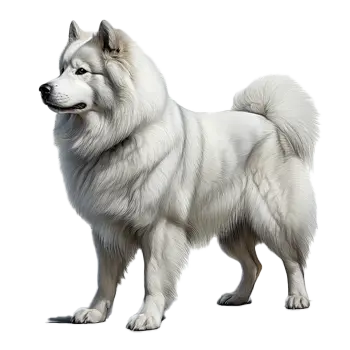
The Smiley Dog is unmistakable. There is no other breed that combines a brilliant white double coat, dark intelligent eyes, and that characteristic upturned mouth into a package that looks quite so perpetually pleased with itself. The Samoyed's appearance is both striking and functional, every feature serving the breed's original purpose as a working dog in the Siberian arctic while also producing one of the most photogenic dogs in existence.
Males stand between 21 and 23.5 inches at the shoulder and typically weigh between 45 and 65 pounds, with females slightly smaller at 19 to 21 inches and 35 to 50 pounds. The body is moderately long relative to height, well muscled, and built for sustained effort rather than explosive speed. The chest is deep, reaching approximately to the elbow, with well-sprung ribs that provide ample lung and heart capacity for the endurance work the breed was designed to perform. The back is straight and strong, with a slight arch over the loin that provides flexibility for the pulling and herding movements central to the breed's working repertoire.
The head is wedge-shaped and broad, with a well-defined stop that gives the face its characteristic expression of alert friendliness. The muzzle is medium in length and tapers slightly toward the nose, which is preferably black but may be brown or liver in some lighter-pigmented individuals. The eyes are dark and almond-shaped, set well apart and slightly oblique, giving the breed a keen, intelligent gaze that balances the smile below. The ears are thick, triangular, and erect, set well apart and covered in fur to protect against frostbite. They are remarkably mobile, tilting and rotating to track sounds and contributing to the breed's expressive repertoire.
The smile itself deserves specific attention because it is the feature that earned this breed its nickname. The lip line curves gently upward at the corners of the mouth, and when the mouth is closed or slightly relaxed, the resulting expression is genuinely smile-like. This upward curve serves the practical function of preventing drool from forming and freezing in extreme cold, but its psychological effect on humans is undeniable. People who encounter a Samoyed for the first time almost universally comment on the smile before noticing anything else about the dog.
The coat is the breed's most demanding physical feature and also its most spectacular. It consists of a dense, soft, short undercoat and a longer, harsher outer coat that stands away from the body, creating the fluffy silhouette that makes the Samoyed look larger than its actual frame. Coat color ranges from pure white to white with biscuit shadings, and cream. The coat is weather-resistant, insulating against extreme cold while also providing protection from sun and insects in warmer conditions. It sheds heavily, particularly during seasonal coat blows in spring and fall when the undercoat releases in dramatic quantities.
The tail is one of the breed's distinguishing features. It is moderately long, well furred, and carried curled over the back or to one side when the dog is alert. When relaxed, the tail may hang down. The profuse tail fur, combined with the body coat, creates the overall impression of a dog wrapped in a luxurious white cloud. Movement should be free and effortless, with good reach and drive, and the breed's gait at a trot should convey the impression of a dog that could maintain that pace for hours across frozen terrain without tiring.
Affectionate With Family
★★★★★
The Smiley Dog thrives on close physical and emotional contact with its family. This breed was literally developed to sleep alongside its people and craves that level of daily intimacy.
Good With Young Children
★★★★★
Exceptionally patient and gentle with children, reflecting a breeding history that included daily interaction with the children of nomadic families. Naturally playful and tolerant.
Good With Other Dogs
★★★★☆
Generally sociable and cooperative with other dogs, benefiting from a heritage of working alongside other canines. Occasional same-sex tension may arise but is not a pervasive breed trait.
Shedding Level
★★★★★
Sheds heavily year-round with dramatic biannual coat blows in spring and fall. The volume of shed fur is among the highest of any breed and requires dedicated management.
Coat Grooming Frequency
★★★★★
The dense double coat demands multiple thorough brushing sessions weekly during normal periods and daily attention during seasonal coat blows. Grooming is a significant time commitment.
Drooling Level
★☆☆☆☆
The upturned lip line that creates the Samoyed's famous smile also prevents drooling. This is one of the cleanest-mouthed breeds you will encounter.
Coat Type
★★★★★
A profuse double coat consisting of a soft, dense undercoat and a longer, harsher outer coat that stands away from the body. Weather-resistant and insulating but extremely high-maintenance.
Openness To Strangers
★★★★★
Greets nearly everyone with enthusiasm and warmth. The Smiley Dog is one of the friendliest breeds toward unfamiliar people and makes a poor guard dog as a result.
Playfulness Level
★★★★★
Maintains a playful, exuberant disposition well into adulthood. The breed's energy and joy during play are infectious and one of its most endearing qualities.
Watchdog/Protective Nature
★★★☆☆
Will bark to alert the household to visitors and unusual activity, but lacks the guarding instinct to follow through. The alert is informational, not threatening.
Adaptability Level
★★★☆☆
Adapts reasonably to different environments but struggles with heat, prolonged isolation, and confined spaces. Best suited to homes that can accommodate its coat, energy, and social needs.
Trainability Level
★★★☆☆
Intelligent and capable of learning complex tasks but retains the independent judgment of an arctic working breed. Responds best to positive, varied training methods rather than strict obedience drilling.