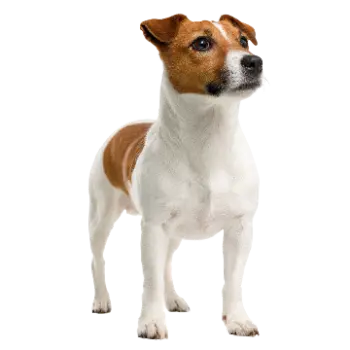
The Shorty Jack is a small dog with a big physical presence. Standing 10 to 12 inches at the withers with weight proportionate to that height, typically ranging from 9 to 15 pounds, the Russell Terrier is compact, sturdy, and built for work that requires both agility and toughness. The body is distinctly rectangular in profile, measuring slightly longer from the point of shoulder to the point of buttocks than from the withers to the ground. This rectangular proportion is a defining characteristic that separates the Russell Terrier from the squarer Parson Russell Terrier and is one of the first things a knowledgeable observer notices.
The chest is the breed's most important structural feature. The standard describes it as small, oval-shaped, and compressible, meaning it should be narrow enough to be spanned by an average-sized man's hands placed behind the elbows, with thumbs meeting at the spine and fingers meeting beneath the sternum. This spannable chest is not an aesthetic preference. It is a functional requirement rooted in the breed's original purpose of entering narrow underground tunnels to bolt foxes. A Shorty Jack with a barrel chest or a chest that drops below the elbow has lost the physical capability that defines the breed.
The head is proportionate to the body, with a flat skull of moderate width that narrows gradually toward the eyes. The stop is well defined but not abrupt. The muzzle is strong and slightly shorter than the skull, with powerful jaws and a full complement of comparatively large teeth that meet in a scissors bite. The nose is fully pigmented and black. The eyes are dark, almond-shaped, and carry an expression of keen intelligence and alertness that is characteristic of the breed. The ears are small, V-shaped, and drop forward close to the skull, with the fold carried level with the top of the skull or slightly above.
The neck is clean and muscular, long enough for the terrier's mouth to extend beyond its forepaws when working underground. Shoulders are well laid back, and the forelegs are straight with moderate bone. The topline is level in motion with a slight arch over the loin that is felt rather than seen. The hindquarters are strong and muscular, providing the drive necessary for a working terrier that needs to dig, jump, and maneuver in tight spaces.
The coat comes in three varieties: smooth, broken, and rough. All three are weather-resistant and predominantly white with tan, black, or tricolor markings. The smooth coat lies flat and close to the body. The broken coat has longer hair with a slight texture but no excessive furnishings. The rough coat is longer throughout and has a coarser texture. No coat type is preferred over another in the show ring, and all three can appear within the same litter. The predominantly white coloring, at least 51 percent, was a deliberate breeding choice that allowed hunters to distinguish the terrier from the quarry when it emerged from a den.
Movement in the Shorty Jack is free, lively, and well-coordinated, with good reach in front and strong drive from behind. The compact build and flexible body allow the dog to change direction quickly and navigate uneven terrain with confidence. Despite the short legs, there is nothing clumsy or restricted about a well-built Russell Terrier in motion. The overall impression is of a small, tough, athletic dog that is ready for anything and completely unaware of its own size.
Affectionate With Family
★★★★★
The Shorty Jack bonds deeply with its family and demands to be involved in every household activity. This is a dog that shows love through constant engagement rather than quiet companionship.
Good With Young Children
★★★☆☆
Playful and energetic with kids but does not tolerate rough handling. Best suited for families with older children who understand how to interact respectfully with a small, assertive terrier.
Good With Other Dogs
★★☆☆☆
Same-sex aggression is documented in the breed, and the Shorty Jack's confidence can escalate into confrontation. Early socialization helps but does not eliminate the need for careful supervision.
Shedding Level
★★★☆☆
Shedding varies by coat type. Smooth coats shed steadily year-round with seasonal increases. Broken and rough coats shed less visibly but require hand-stripping to remove dead hair.
Coat Grooming Frequency
★★☆☆☆
Smooth coats need only weekly brushing. Broken and rough coats require periodic hand-stripping but no elaborate grooming. Overall maintenance is low for all three coat varieties.
Drooling Level
★☆☆☆☆
The Shorty Jack is not a drooler. The tight-fitting lips and compact muzzle structure produce virtually no excess saliva.
Coat Type
★★☆☆☆
Three coat varieties exist: smooth, broken, and rough. All are weather-resistant and predominantly white. No coat type is preferred over another in the breed standard.
Openness To Strangers
★★★☆☆
Initially alert and assessing with unfamiliar people, most Shorty Jacks warm up quickly once they determine a visitor poses no threat. The breed is bold rather than shy or fearful.
Playfulness Level
★★★★★
Relentlessly playful with seemingly boundless energy for games. The Shorty Jack will chase, fetch, tug, and wrestle with enthusiasm that belies its small size.
Watchdog/Protective Nature
★★★★☆
Highly alert and vocal, the Shorty Jack will announce every visitor, delivery person, and passing squirrel. The breed takes its watchdog role seriously despite its compact stature.
Adaptability Level
★★★☆☆
Adapts well to different environments and activities but does not adapt well to inactivity or long periods alone. Small size allows apartment living if exercise needs are fully met.
Trainability Level
★★★☆☆
Intelligent and quick to learn but independently minded. Training requires creativity, patience, and short varied sessions to keep this terrier engaged and cooperative.