Sealyham

Sealyham Terrier

Quick Facts

🐕 Breed Group
Terrier Group
📏 Size Category
Small
📏 Height
Males: 10.5 inches, Females: 10.5 inches
⚖️ Weight
Males: 23-24 lbs, Females: 21-23 lbs
⏱️ Life Expectancy
12-14 years
🧣 Coat Type
Double coat - soft dense undercoat with hard wiry outer coat
🎨 Coat Colors
All white, or white with lemon, brown, blue, or badger markings on head and ears
😀 Temperament
Outgoing, humorous, calm, loyal, determined, alert
🏃 Exercise Needs
Moderate - 30 to 45 minutes daily
🎓 Training Difficulty
Moderate - intelligent but independently minded, responds to positive methods
👶 Good with Children
Yes - patient and playful, supervision needed with very young children due to small size
🐾 Good with Other Pets
Variable - prey drive toward small animals, potential same-sex aggression with other dogs

Other Names & Breed Recognition

The name Sealyham, when used on its own without the word Terrier attached, is one of the most common ways that breed enthusiasts and dog show communities refer to the Sealyham Terrier. It is a geographic name rather than a descriptive one, pointing directly to the Welsh estate where the breed was born. Captain John Edwardes developed his hunting terriers at Sealyham House in Pembrokeshire during the second half of the nineteenth century, and the estate's name became permanently attached to the dogs he produced. When people say Sealyham in a dog context, there is no ambiguity. It means the stocky, white-coated terrier with the distinctive facial fall and the outsized personality.

The breed carries several other informal names. Sealy is the most common nickname, used casually among owners and in breed club shorthand. The full registered name across all major kennel clubs is the Sealyham Terrier. The American Kennel Club placed the breed in its Terrier Group upon recognition in 1911. The Kennel Club in the United Kingdom recognized the breed a year earlier in 1910 and also classifies it in the Terrier Group, though it now carries the additional designation of Vulnerable Native Breed due to its critically low registration numbers. The United Kennel Club, the Canadian Kennel Club, and the Federation Cynologique Internationale all recognize the Sealyham Terrier, with the FCI placing it in Group 3, Section 2 among the Small Terriers.

The breed's rarity today stands in stark contrast to its former prominence. During the early and mid-twentieth century, the Sealyham Terrier was one of the most fashionable and successful show dogs in both Britain and America, favored by celebrities, royalty, and serious exhibitors alike. Its decline in popularity over the following decades reduced it to one of the least registered breeds in most countries where it is recognized. The American Sealyham Terrier Club works actively to promote the breed and maintain its health through education, breeder referrals, and participation in the CHIC health testing program. Whether you call this dog a Sealyham, a Sealy, or simply that funny white terrier with the big eyebrows, you are talking about a breed with more personality per pound than almost any dog alive.

Sealyham Organizations & Standards

The Sealyham Terrier's organized breed community is small but deeply committed to the breed's preservation and health. The American Sealyham Terrier Club functions as the AKC parent club and coordinates breed education, specialty shows, and health initiatives within the United States. The ASTC participates in the Canine Health Information Center program, requiring two specific tests for CHIC certification: a DNA test for primary lens luxation and an ophthalmologist eye examination. These requirements target the breed's most documented genetic health concerns and represent the baseline that responsible breeders should meet before producing puppies. The ASTC also maintains a breeder referral program that connects prospective owners with breeders who adhere to the club's ethical standards, an important service for a breed rare enough that finding available puppies can require patience and planning.

The AKC breed standard presents the Sealyham as a strong, short-legged, wide terrier possessing great substance within a compact frame. The standard calls for a height of approximately 10.5 inches at the shoulder with males weighing around 23 to 24 pounds. The emphasis throughout the standard is on a well-balanced, powerful little dog that conveys determination and courage without coarseness or exaggeration. The head is given particular importance, described as long, broad, and powerful with a punishing jaw, dark deep-set eyes, and the characteristic fall of hair across the forehead that gives the breed its distinctive expression. The overall silhouette should suggest a dog of great substance and endurance packed into a compact, low-to-ground frame.

The Kennel Club in the United Kingdom maintains its own breed standard and has designated the Sealyham Terrier as a Vulnerable Native Breed, a classification that brings additional attention and support to breeds at risk of declining below sustainable population levels. This designation has been instrumental in raising awareness about the Sealyham's precarious population numbers and encouraging new breeding programs. The FCI standard classifies the breed under Group 3, Section 2, describing it as a free, active, and balanced terrier. The Canadian Kennel Club and the United Kennel Club also recognize the breed within their Terrier classifications.

The Sealyham Health Group operates an international database for pedigree and health information, providing a resource that is especially critical for a breed with a limited gene pool. Breeders working with rare breeds face unique challenges around maintaining genetic diversity while still selecting for health and type, and shared health data across national boundaries helps inform breeding decisions that affect the entire global population. The database allows breeders in different countries to evaluate the health history of potential breeding partners, reducing the risk of doubling up on genetic liabilities in a population that cannot afford further narrowing of its gene pool.

Kennel Club Recognition

  • American Kennel Club (AKC): Recognized in 1911, Terrier Group
  • United Kennel Club (UKC): Recognized, Terrier
  • Canadian Kennel Club (CKC): Recognized, Terrier
  • FCI: Recognized, Group 3: Terriers
  • The Kennel Club (UK): Recognized, Terrier

Sealyham Physical Description

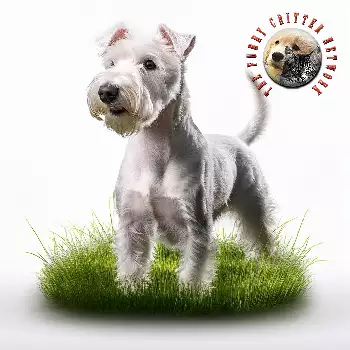
The Sealyham stands low to the ground but carries itself with a confidence and presence that makes it impossible to overlook despite its modest height. At approximately 10.5 inches at the shoulder and weighing 23 to 24 pounds, this is a surprisingly heavy dog for its size, built with the dense bone and muscular development of a terrier designed to work underground against formidable opponents. The breed's achondroplastic structure gives it the characteristically short, strong legs that allowed it to enter and navigate badger setts and fox earths, while the rest of the body maintains the power and flexibility needed for the physical demands of hunting.

The head dominates the breed's profile and accounts for much of its distinctive appearance. It is long and broad, with a slightly rounded skull and a strong, square muzzle that is nearly equal in length to the skull. The jaws are formidable for a small terrier, reflecting the breed's need to defend itself against quarry that could and would fight back. The eyes are dark, oval, and set deep beneath prominent brows, giving the face a keen and slightly quizzical expression. The fall, a profuse growth of longer hair cascading from the forehead, partially obscures the eyes and is one of the breed's most recognizable features. The ears are medium-sized with rounded tips, folding level with the top of the skull and lying close to the cheek.

The body is notably long relative to its height, with a level topline, deep chest, and well-sprung ribs. The loin is short and powerful, and the hindquarters are muscular with well-bent stifles and strong hocks that provide driving power. The forelegs are short and sturdy, as straight as the breed's construction allows, turning neither in nor out. The feet are round, large for the dog's size, and thickly padded, reflecting the breed's digging heritage. The tail is set high and traditionally docked, carried upright in a jaunty manner that adds to the breed's alert, self-assured bearing.

The double coat consists of a dense, soft undercoat covered by a longer, hard, wiry outer coat that provides weather resistance. The coat's predominantly white color may include lemon, tan, brown, blue, or badger-patterned markings confined to the head and ears. The harsh outer coat texture is maintained through hand-stripping in show dogs, while pet owners often opt for clipping as a less labor-intensive alternative. Both approaches require regular brushing to keep the undercoat from matting and the outer coat free of tangles.

The Sealyham moves with a driving, ground-covering stride that carries surprising speed and purpose. The front legs reach well forward while the hindquarters deliver strong propulsion, and the topline remains level throughout. The breed's movement communicates efficiency and determination, qualities that served it well in the field and continue to define its character today.

Affectionate With Family
The Sealyham develops genuine, steady bonds with its household members, showing warmth through companionship rather than constant physical demand. It is a devoted dog that values its family's presence without being overbearing about it.
Good With Young Children
Generally tolerant and good-natured with kids who treat it respectfully, the Sealyham's compact frame makes it better suited to families with older children. Supervision is warranted with toddlers who may handle the dog too roughly.
Good With Other Dogs
The breed's terrier confidence and potential for same-sex aggression mean that interactions with unfamiliar dogs should be managed thoughtfully. Proper socialization helps, but the Sealyham's underlying assertiveness should never be underestimated.
Shedding Level
The Sealyham's wiry double coat produces very little loose hair around the home, making it a practical choice for owners who prefer a cleaner living environment. Stripping or clipping removes dead coat before it sheds naturally.
Coat Grooming Frequency
Regular brushing, hand-stripping or clipping, and daily beard maintenance make the Sealyham a moderate-to-high grooming commitment. The coat's low shedding comes at the cost of consistent hands-on care to keep it healthy.
Drooling Level
This is not a breed that drools. The Sealyham's muzzle structure keeps things tidy, though the beard does collect water and food particles that require regular wiping.
Coat Type
A weather-resistant double coat with a dense soft undercoat and a hard wiry outer layer. The harsh outer texture was developed for protection during underground work and is best maintained through hand-stripping to preserve its proper character.
Openness To Strangers
The Sealyham takes a brief moment to evaluate new people before engaging but generally warms up without excessive hesitation. Most individuals are friendly and welcoming once introductions are completed.
Playfulness Level
Widely recognized for its sense of humor and playful creativity, the Sealyham approaches games and interaction with enthusiasm and often invents its own entertainment. This playful quality persists well through adulthood.
Watchdog/Protective Nature
The Sealyham is a reliable alert barker that will announce visitors and unusual activity with a surprisingly resonant voice for its size. Managing the volume and frequency of alert barking is an ongoing training consideration.
Adaptability Level
Compact size, moderate energy, and a calm indoor temperament make the Sealyham highly adaptable to apartments, houses, and varied living situations. The breed adjusts well to different schedules and environments.
Trainability Level
Intelligent and quick to learn, the Sealyham nonetheless brings classic terrier independence to the training process. Positive, varied sessions that respect the dog's autonomy produce the best results and maintain a cooperative working relationship.

Sealyham History & Development

The name Sealyham has been inseparable from this terrier breed since its creation on the Welsh estate that gave it its identity. Captain John Edwardes began developing the breed at Sealyham House in Pembrokeshire around the middle of the nineteenth century, driven by a desire for a game terrier specifically suited to the hunting conditions of his property. The quarry he pursued included badgers, otters, and foxes, all of which required a dog small enough to enter underground dens yet brave enough to confront and hold dangerous animals at close quarters. Edwardes undertook a deliberate breeding program spanning several decades, crossing various terrier types to produce a dog that met his exacting requirements for size, courage, coat color, and physical capability.

The breeds involved in the Sealyham's creation are not documented with certainty, but historical accounts suggest contributions from the Dandie Dinmont Terrier, the Wire Fox Terrier, the West Highland White Terrier, and possibly the Bull Terrier or Corgi. The white coat was an intentional selection, designed to prevent hunters from accidentally shooting the dog by mistaking it for quarry during a hunt. Edwardes tested his dogs rigorously in the field, and those that failed to demonstrate sufficient courage were removed from the breeding program.

By the early 1900s, the Sealyham Terrier had gained recognition beyond Wales. The breed's first recorded show appearance was in 1903 at a local Welsh event, and formal recognition followed quickly. The Kennel Club recognized the breed in 1910, and the AKC followed in 1911. The Sealyham's popularity rose rapidly in the decades that followed. The breed became a favorite of the British upper class and attracted celebrity owners in both the UK and the United States. Its show record was exceptional, with multiple Best in Show wins at Westminster and Crufts establishing the Sealyham as one of the most successful terrier breeds in competition history.

The breed's fortunes reversed in the second half of the twentieth century. Changing tastes, the rise of other small breeds, and the decline of the hunting traditions that had shaped the Sealyham all contributed to a dramatic drop in registrations. By the early twenty-first century, the Kennel Club had placed the Sealyham Terrier on its Vulnerable Native Breed list. In the United States, annual AKC registrations often number in the low hundreds. The name Sealyham, once among the most recognized in the terrier world, now carries a note of urgency as the breed community works to prevent its extinction through careful breeding, health testing, and public education about what makes this terrier so worthy of preservation.

Sealyham Temperament & Personality

The Sealyham Terrier's personality is a distinctive blend of courage, humor, and calm assurance that makes it unlike most other terrier breeds. Where many terriers are wired for perpetual motion and constant stimulation, the Sealyham operates at a lower gear, bringing a composed and somewhat regal bearing to its daily life while retaining the spark and determination that define the terrier group. This is a dog that can be perfectly content watching the world go by from a comfortable spot on the couch, then spring into alert, purposeful action the moment something catches its interest.

The breed's intelligence is considerable, and it manifests primarily as a shrewd awareness of how to get what it wants. Sealyhams are not the type of dog that will repeat a trick endlessly just to please their handler. They learn quickly but apply that knowledge selectively, cooperating when motivated and cheerfully ignoring requests when they see no personal benefit. This is not defiance in the aggressive sense but rather the pragmatic independence of a breed that was developed to make its own decisions underground, where handler direction was unavailable.

The Sealyham's bravery is a core temperament trait that persists despite the breed's modern role as a companion dog. These terriers do not intimidate easily, and they will hold their ground in confrontations with much larger dogs. This courage needs to be managed through socialization and training, because the Sealyham's willingness to escalate can create serious problems if unchecked. Same-sex aggression is documented in the breed, and introductions to unfamiliar dogs should be handled with care and awareness.

Family relationships are characterized by warm attachment and genuine affection. The Sealyham enjoys its people's company and participates willingly in household routines, but it does not demand constant attention. This independence makes it a good match for owners who appreciate a dog with its own personality rather than one that exists solely to mirror its handler's emotions. The breed's watchdog instincts are reliable, and it will alert to unusual activity with a bark that carries surprising volume for its size.

With strangers, the Sealyham is typically accepting and friendly after an initial assessment period. The breed does not carry the deep suspicion of some terrier types and generally warms up to visitors without excessive caution. Its relationship with children is positive when the children are old enough to interact respectfully, though its small size warrants supervision around very young kids.

Sealyham Family Life & Living Requirements

The Sealyham fits remarkably well into domestic life, offering the terrier personality in a package that works for apartments, houses, and everything in between. Its compact dimensions and moderate energy level make it one of the more adaptable terrier breeds, capable of thriving in smaller living spaces where a larger or more driven terrier would struggle. The breed's relatively calm indoor demeanor means it will not pace, whine, or destroy furniture out of restlessness, provided it receives its daily exercise and mental engagement.

For families, the Sealyham offers a companion that is sturdy enough to participate in household activities without being so large or energetic that it becomes difficult to manage. The breed's patience and humor make it a pleasant addition to homes with older children who can interact appropriately with a small dog. Households with toddlers should supervise all interactions closely, as the Sealyham's compact size leaves it vulnerable to accidental injury from children who have not yet learned to handle animals gently. The breed's tolerance has limits, and a dog that feels physically threatened may react defensively, making adult oversight essential during play.

Exercise requirements are among the lowest of the terrier breeds. A daily walk of 30 to 45 minutes, combined with some play or mental stimulation, is sufficient for most Sealyhams. The breed is happy to accompany its owner on longer outings when offered but does not become destructive or anxious if a day's exercise is shorter than usual. This flexibility makes the Sealyham appealing to older owners, less active individuals, or anyone who wants a dog with spirit but without the relentless energy that some terriers bring. The breed is content to alternate between bursts of playful activity and extended periods of relaxation, making it one of the more balanced terriers in terms of energy management.

The breed's low-shedding coat adds another practical advantage for family living, reducing the pet hair burden on furniture, clothing, and floors. However, the grooming requirements offset this benefit somewhat, as the coat needs regular professional attention in addition to home brushing. Families considering a Sealyham should factor grooming costs and time into their decision, understanding that the coat's beauty and low-shedding quality come with a maintenance commitment that cannot be neglected without consequences for the dog's comfort and appearance.

Sealyham Training & Exercise Needs

Training the Sealyham Terrier is an exercise in negotiation rather than command. This breed possesses the intelligence to understand exactly what you are asking and the independence to evaluate whether compliance serves its interests. The most effective approach is to make training intrinsically rewarding through food, play, and variety, creating a dynamic where the dog wants to participate rather than feeling compelled. Short, engaging sessions that end on a positive note produce far better results than lengthy repetitions that bore the dog into disengagement.

The Sealyham responds poorly to heavy-handed training methods. Physical corrections, raised voices, and confrontational approaches will trigger the breed's stubbornness and produce either active resistance or complete shutdown. The dog is not being disobedient in these moments but is responding to what it perceives as an unreasonable escalation. Calm, consistent, and reward-based methods maintain the cooperative relationship that makes training productive and even enjoyable for both parties.

Socialization during puppyhood is important for any terrier breed, and the Sealyham benefits from early exposure to different people, animals, and environments. The breed's natural confidence gives it a solid foundation, but structured positive experiences help ensure that confidence does not develop into unchecked boldness or reactivity toward other dogs. Puppy classes are valuable for both socialization and foundational obedience work, providing a controlled environment where the young Sealyham learns that other dogs and unfamiliar people are part of normal life rather than challenges to be confronted.

The Sealyham excels in activities that tap into its natural instincts. Earthdog trials allow the breed to demonstrate the go-to-ground behavior it was bred for, and barn hunt provides a similar outlet in a more accessible format. Nosework appeals to the breed's keen sense of smell, and some Sealyhams enjoy agility courses adapted for their shorter stature. Daily exercise needs are moderate at 30 to 45 minutes, and the breed appreciates variety in its routine rather than the same walk every day. Puzzle toys, scent games, and brief training challenges supplement physical activity and keep the Sealyham's mind engaged between outings.

Sealyham Health Concerns

The Sealyham Terrier enjoys a reputation as a generally healthy breed with a lifespan that frequently extends into the mid-teens. However, several conditions are documented in the breed and warrant attention from owners and breeders. Primary lens luxation remains the most significant genetic health concern. This condition involves the weakening and eventual failure of the zonular fibers that anchor the eye's lens, allowing it to dislocate. When the lens moves forward in the eye, it can block the drainage angle and trigger a rapid, painful increase in intraocular pressure that constitutes a veterinary emergency. A DNA test for PLL is available and is required for CHIC certification. Testing breeding stock and avoiding matings between two carriers is the primary strategy for reducing the incidence of this condition.

Intervertebral disc disease represents a structural health risk for the breed. The Sealyham's achondroplastic build, with its relatively long back supported by short legs, creates mechanical stress on the spine that predisposes the breed to disc herniation. Episodes can range from mild discomfort with conservative management to severe neurological deficits requiring surgical intervention. Maintaining a lean body weight and minimizing high-impact activities like jumping from furniture help reduce the mechanical load on vulnerable discs. Allergies affecting the skin are also reported and may require ongoing dietary or environmental management.

Common Health Issues

  • Primary Lens Luxation (PLL) - Weakening and rupture of the zonular fibers that hold the eye's lens in position, causing the lens to dislocate and potentially obstruct fluid drainage, leading to painful secondary glaucoma and blindness without prompt treatment. A DNA test is available and is a CHIC requirement for breeding stock.
  • Retinal Dysplasia - A congenital malformation of the retina present from birth, ranging from mild retinal folding with no functional vision impact to more severe forms that can affect sight. Ophthalmologist screening in puppies between seven and twelve weeks identifies affected individuals.
  • Congenital Deafness - Hearing loss present from birth, associated with the white coat color genetics common to many predominantly white breeds. BAER testing after four weeks of age reliably determines hearing status, and deaf dogs can live full lives with appropriate management strategies.
  • Intervertebral Disc Disease (IVDD) - Degeneration and herniation of spinal discs causing compression of the spinal cord, with symptoms ranging from back pain and reluctance to move to severe paralysis. The breed's achondroplastic conformation places increased stress on the spine, making weight management and avoidance of high-impact jumping important preventive measures.
  • Allergies and Skin Conditions - Environmental or food-related allergies that may present as chronic itching, skin redness, ear infections, or recurrent skin irritation requiring ongoing veterinary management and possible dietary or environmental modification.

Preventive Care & Health Monitoring

  • Primary Lens Luxation DNA testing should be performed on all breeding stock as a CHIC requirement - Allowing identification of carriers and affected dogs and enabling breeders to avoid matings that would produce affected puppies.
  • Annual ophthalmologist eye examinations registered with OFA screen for PLL progression - Retinal dysplasia, cataracts, and other ocular conditions, fulfilling the second CHIC requirement for the breed.
  • BAER testing for congenital deafness is recommended for puppies from lines where hearing loss has been documented - With testing reliable after four weeks of age.
  • Weight management throughout the dog's life is particularly critical for the Sealyham's achondroplastic frame - As excess weight significantly increases the mechanical stress on intervertebral discs and elevates the risk of disc herniation and spinal cord compression.
  • Minimizing jumping from furniture - Vehicles, and other heights reduces the repetitive impact loading on the Sealyham's spine and helps protect against IVDD episodes throughout the dog's lifespan.

Sealyham Grooming & Maintenance

Maintaining the Sealyham's coat in proper condition is a grooming commitment that requires regular attention and, ideally, familiarity with the specific techniques suited to wire-coated terrier breeds. The breed's double coat features a dense, insulating undercoat beneath a longer, harsh outer coat that was designed to protect the dog from weather, brush, and the physical demands of working underground. This coat does not shed in the heavy, seasonal manner of double-coated breeds like retrievers or shepherds, which is a significant practical advantage for indoor living.

Hand-stripping is the traditional grooming method for maintaining the proper texture and color of the Sealyham's outer coat. The process involves removing dead coat by pulling it out with the fingers or a stripping tool, which stimulates the growth of new, correctly textured replacement hair. Show dogs are maintained on a rolling strip schedule that keeps the coat looking its best at all times. Pet owners who prefer a less time-intensive approach can have the coat clipped, understanding that clipping will gradually soften the coat's texture and may lighten or alter the coat color over successive grooms.

Regardless of the grooming method chosen, regular brushing two to three times per week is necessary to prevent matting of the undercoat and tangles in the longer furnishings. The beard and facial fall require daily attention, as food, water, and environmental debris collect quickly and create hygiene problems if neglected. Keeping the area around the eyes trimmed prevents hair from irritating the cornea and ensures the dog has clear, comfortable vision.

Bathing frequency depends on the dog's lifestyle but generally falls in the range of every three to four weeks. A shampoo formulated for wire-coated breeds helps maintain the coat's proper texture. Ears need regular inspection and gentle cleaning to prevent wax accumulation and infection. Nails should be trimmed every two to three weeks. Dental care through consistent brushing and provision of appropriate chewing materials helps manage the plaque and tartar buildup that can lead to periodontal disease over the dog's lifetime.