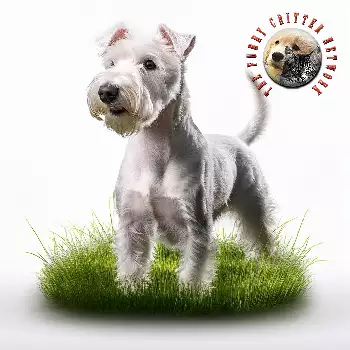
The Sealy is a small but remarkably sturdy terrier whose physical proportions reflect its original purpose as a dog built to pursue dangerous quarry underground. Standing approximately 10.5 inches at the shoulder and weighing around 23 to 24 pounds, the Sealyham Terrier packs considerable substance into a compact frame. The breed is achondroplastic, meaning its short legs are a deliberate structural feature rather than a deficiency, giving the dog the low-to-ground build necessary for entering badger setts and fox earths. Despite the short stature, there is nothing delicate about this dog. The body is strong, flexible, and well-muscled, with a level topline and a deep, broad chest that provides ample lung capacity.
The head is the breed's most distinctive feature and one that judges evaluate closely. It is long, broad, and powerful, with a slightly domed skull and a square, strong muzzle. The jaws carry considerable strength for a dog of this size, a practical necessity for a terrier bred to confront badgers. The nose is black, and the teeth meet in a level or scissors bite. The eyes are dark, deep-set, and widely spaced, giving the face a direct, intelligent expression that is partially veiled by the fall, a distinctive curtain of longer hair that drapes across the forehead. The ears are medium-sized, with rounded tips, folded forward with the inner edge close to the cheek.
The neck is thick and muscular, flowing into well-laid-back shoulders. The forelegs are short, strong, and as straight as possible for an achondroplastic breed, with the feet pointing directly forward. The hindquarters are powerful and well-angulated, providing the drive that allows the dog to move with surprising speed and agility despite its low profile. The feet are large, round, and catlike, with thick pads suited to digging and rough terrain. The tail is set high and carried upright, traditionally docked to a length that completes the breed's outline, though left natural where docking is prohibited.
The coat is a weather-resistant double coat consisting of a soft, dense undercoat and a hard, wiry outer coat. The texture of the outer coat should be distinctly harsh, providing protection against brush, briars, and wet conditions. The coat color is predominantly white, which may include lemon, brown, blue, or badger markings on the head and ears. The white body color was selected so that hunters could easily identify the dog when it emerged from underground or worked in cover alongside darker-colored quarry. The coat requires regular hand-stripping or clipping to maintain its texture and appearance, along with consistent brushing to prevent matting of the softer undercoat.
In movement, the Sealy covers ground with a brisk, businesslike gait that belies its short legs. The stride is free and true, with good reach in the front and strong drive from the rear. The topline remains level during movement, and the overall impression is one of purposeful energy. There is nothing mincing or hesitant about a Sealyham in motion. The breed moves like a dog that has somewhere to go and something important to do when it gets there.
Affectionate With Family
★★★★☆
The Sealy forms loyal, warm bonds with its family and enjoys spending time in their company. It is affectionate without being needy, balancing devotion with the terrier's characteristic independence.
Good With Young Children
★★★☆☆
Patient and good-humored with children who handle it respectfully, the Sealy does best with older kids who understand how to interact with a small dog. Its compact size makes it vulnerable to rough handling by toddlers.
Good With Other Dogs
★★☆☆☆
The Sealyham's confidence and terrier assertiveness can produce friction with other dogs, particularly same-sex pairings. Early socialization improves social skills, but the breed's underlying boldness should not be underestimated.
Shedding Level
★☆☆☆☆
The Sealy's wiry double coat sheds very little, making it one of the lower-shedding terrier breeds. Regular stripping or clipping manages dead coat rather than letting it drop around the house.
Coat Grooming Frequency
★★★★☆
The coat requires regular brushing, hand-stripping or clipping, and daily attention to the beard and facial furnishings. Grooming is a meaningful time commitment but keeps the dog comfortable and looking its best.
Drooling Level
★☆☆☆☆
The Sealy is not a drooling breed, though the beard can collect water and food during eating and drinking, requiring regular wiping to stay clean.
Coat Type
★★★☆☆
The breed carries a weather-resistant double coat with a dense, soft undercoat and a hard, wiry outer coat. The texture should be distinctly harsh, providing protection suited to the breed's original outdoor working role.
Openness To Strangers
★★★☆☆
Most Sealyhams warm up to new people fairly quickly after initial introductions, showing friendly interest without the sharp suspicion found in some terrier types. Individual temperament varies from outgoing to mildly reserved.
Playfulness Level
★★★★☆
The Sealy has a well-documented sense of humor and approaches play with enthusiasm and creativity. The breed invents games, engages readily with toys, and maintains its playful spirit well into adulthood.
Watchdog/Protective Nature
★★★★☆
Alert and attentive, the Sealy will bark reliably to announce visitors or unusual activity. Its vocal alerts are effective for its size, though the tendency toward barking needs management to prevent it from becoming excessive.
Adaptability Level
★★★★☆
The breed adapts well to apartment or house living and adjusts to various household situations with relative ease. Its moderate exercise needs and compact size make it flexible enough for most lifestyles.
Trainability Level
★★★☆☆
The Sealy is intelligent and capable but brings terrier independence to the training process. Sessions must be positive, varied, and rewarding to maintain the dog's cooperation, as forceful methods produce resistance rather than compliance.