Scottish Sheepdog

Border Collie

Quick Facts

🐕 Breed Group
Herding Group
📏 Size Category
Medium
📏 Height
Males: 19-22 inches, Females: 18-21 inches
⚖️ Weight
Males: 30-55 lbs, Females: 27-42 lbs
⏱️ Life Expectancy
12-15 years
🧣 Coat Type
Double coat (Rough: medium-length, weather-resistant; Smooth: short, dense, coarser)
🎨 Coat Colors
Black and white, red and white, tricolor, blue merle, sable, lilac, and other colors and combinations
😀 Temperament
Intelligent, energetic, keen, alert, responsive, tenacious
🏃 Exercise Needs
Very High - minimum 1-2 hours vigorous daily activity plus mental stimulation
🎓 Training Difficulty
Easy for experienced handlers - highly responsive but requires consistency and positive methods
👶 Good with Children
Yes with older children - herding instinct requires management around toddlers
🐾 Good with Other Pets
Varies - herding behaviors may cause friction, early socialization essential

Other Names & Breed Recognition

The Scottish Sheepdog is a name that speaks directly to the heritage and original function of the Border Collie, one of the most capable working dogs ever developed. Before the Border Collie had its own formal breed name, the dogs that worked sheep in the Scottish Lowlands and along the Anglo-Scottish border were broadly referred to as Scottish Sheepdogs or simply sheepdogs. The term described what these dogs did and where they did it, and for most of the breed's early history, no other designation was necessary. Shepherds cared about ability, not pedigree labels, and the dogs that excelled at moving sheep across the rugged border country were valued on their merits regardless of what anyone called them.

The name Scottish Sheepdog fell out of common use as the breed community moved toward more specific terminology. The designation Border Collie was first applied in 1915 by James Reid, then secretary of the International Sheep Dog Society, to differentiate these working sheepdogs from the Scotch Collie that was rapidly evolving into a show breed. The word Border referenced the geographic region where these dogs were most concentrated, the borderlands between England and Scotland, and the word Collie linked them to the broader family of Scottish herding dogs. Once the Border Collie name took hold, the more general term Scottish Sheepdog gradually receded from regular usage, though it still surfaces in historical accounts and among people familiar with the breed's roots.

Today the breed is registered as the Border Collie by the American Kennel Club, the United Kennel Club, the Canadian Kennel Club, The Kennel Club in the United Kingdom, and the Federation Cynologique Internationale. The American Border Collie Association, which emphasizes working ability over conformation, maintains its own registry and remains one of the breed's most influential organizations. The International Sheep Dog Society in the United Kingdom continues to register working Border Collies for sheepdog trials, maintaining a direct line to the breed's functional origins. You may also encounter this breed referred to simply as a Collie in working farming contexts, though that usage can create confusion with the Rough and Smooth Collie, which is a distinct breed. The Scottish Sheepdog designation, while historical rather than current, accurately captures the breed's identity as the preeminent herding dog of Scotland's pastoral landscape.

Scottish Sheepdog Organizations & Standards

The breed known historically as the Scottish Sheepdog is overseen by a network of organizations that reflect its dual identity as both a premier working dog and an increasingly popular show and companion breed. The Border Collie Society of America serves as the AKC parent club and maintains the breed standard used in conformation events. However, the American Border Collie Association predates the AKC's recognition of the breed and continues to register Border Collies based on working lineage, emphasizing herding ability over physical appearance. This parallel registry system reflects a longstanding tension within the breed community between those who prioritize function and those who value conformation.

In the United Kingdom, the International Sheep Dog Society has registered working sheepdogs since 1906 and remains the primary registry for trial-bred Border Collies worldwide. The ISDS stud book traces the lineage of virtually every working Border Collie alive today, and its sheepdog trials are the gold standard for evaluating herding ability. The Kennel Club in the UK also recognizes the Border Collie, placing it in the Pastoral Group, and maintains its own breed standard that permits both rough and smooth coat varieties. The Federation Cynologique Internationale classifies the breed under Group 1, Section 1 as a Sheepdog, and the Canadian Kennel Club registers it in the Herding Group. The United Kennel Club also recognizes the breed within its Herding Dog Group.

The AKC breed standard describes the Border Collie as an athletic, medium-sized dog that combines grace, agility, and stamina in equal measure. Males typically stand 19 to 22 inches at the shoulder, with females slightly smaller at 18 to 21 inches. The standard emphasizes that the Border Collie should appear as a dog capable of working livestock tirelessly over varied terrain, with movement that is free, smooth, and tireless. Two coat varieties are accepted, rough and smooth, and all colors and combinations are permissible with no preference given to any particular pattern.

Health testing is a priority across the breed community. The BCSA participates in the CHIC program, requiring hip evaluation through OFA or PennHIP and annual eye examinations by a board-certified veterinary ophthalmologist until age seven, along with participation in the breed DNA repository. Additional recommended tests include screening for Collie Eye Anomaly, and responsible breeders routinely test for trapped neutrophil syndrome, neuronal ceroid lipofuscinosis, and MDR1 status.

Kennel Club Recognition

  • American Kennel Club (AKC): Recognized in 1995, Herding Group
  • United Kennel Club (UKC): Recognized, Herding Dog
  • Canadian Kennel Club (CKC): Recognized, Herding Dogs
  • FCI: Recognized, Group 1: Sheepdogs and Cattledogs
  • The Kennel Club (UK): Recognized, Pastoral

Scottish Sheepdog Physical Description

The Scottish Sheepdog is a medium-sized dog whose entire physical structure communicates readiness to work. There is nothing exaggerated or overdone about this breed. Every element of its conformation exists because it serves a purpose, and that purpose is the efficient, tireless movement of livestock across demanding terrain. Males generally stand 19 to 22 inches at the shoulder and weigh between 30 and 55 pounds, with females slightly smaller at 18 to 21 inches. The breed's weight range is broad because there is significant variation between working lines and show lines, and the standard deliberately avoids penalizing dogs at either end of the spectrum provided they are fit and functional.

The body is athletic and slightly longer than tall, giving the dog a rectangular outline that supports fluid, ground-covering movement. The chest reaches to the elbow but is not overly broad, maintaining the streamlined shape necessary for quick directional changes. The ribs are well-sprung, the back is strong and gently arched over the loin, and the croup slopes smoothly to the tail set. The overall impression is one of lean, balanced muscularity without any hint of heaviness or coarseness.

The head is perhaps the most expressive feature of the breed. The skull is fairly broad with a distinct but moderate stop, and the muzzle tapers to the nose without appearing snipey. The length of skull and muzzle are approximately equal. The eyes are the breed's most compelling characteristic. Set well apart and oval in shape, they carry an expression that is simultaneously keen, alert, and intelligent. Eye color is typically dark brown, though in merle dogs one or both eyes may be blue or partially blue. The gaze of a working Border Collie is penetrating and intense, reflecting the concentration required to control livestock through eye contact alone. The ears are medium-sized, set well apart, and carried erect or semi-erect, contributing to the alert, focused expression.

The neck is strong and slightly arched, long enough to allow the dog to carry its head low when working. The forelegs are straight with good bone, turning neither in nor out. The hindquarters are well-muscled with strong, moderately angled stifles and low-set hocks that provide powerful drive. The feet are oval, compact, and deep-padded, with well-arched toes that grip the ground effectively. The tail is set low, is moderately long reaching at least to the hock, and is carried low with an upward swirl at the tip when the dog is concentrating. When excited the tail may rise but should never curl over the back.

Two coat varieties are recognized. The rough coat is medium to long with a dense undercoat and feathering on the forelegs, haunches, chest, and underside. The smooth coat is shorter and coarser overall with minimal feathering, though it still carries a dense undercoat for weather protection. Both coat types serve the same function of insulating the dog against the cold, wet conditions typical of the Scottish and English borderlands. The breed appears in virtually every color and pattern, including black and white, red and white, tricolor, blue merle, sable, and lilac. White markings on the face, collar, chest, legs, and tail tip are typical, though the standard specifies that white should not predominate. No color or pattern is preferred over another in judging, reinforcing the breed's identity as a working dog first.

In motion, the Scottish Sheepdog is a study in efficiency. The gait is smooth, low, and ground-covering, with the dog appearing to glide rather than bounce. The head drops to or below the level of the withers when the dog is focused, a posture directly linked to the characteristic crouching approach used to control sheep. Quick changes of speed and direction are executed without loss of balance, and the overall impression is one of effortless endurance rather than raw speed.

Affectionate With Family
The Scottish Sheepdog forms an intense, devoted bond with its family and craves daily involvement in household activities. This breed's loyalty runs deep, and it will shadow its preferred person throughout the day given the opportunity.
Good With Young Children
The breed's strong herding instinct frequently manifests as nipping and circling around young children, which requires consistent management and redirection. Older children who can participate in training and exercise are a better match for this high-drive dog.
Good With Other Dogs
Border Collies generally coexist well with other dogs when socialized early, though their tendency to stare and attempt to herd can provoke conflict with dogs that find this behavior threatening. Individual temperament varies considerably.
Shedding Level
Both coat varieties shed moderately year-round and heavily during the spring and fall coat blows. Regular brushing helps manage loose hair, but owners should expect persistent shedding regardless of grooming frequency.
Coat Grooming Frequency
The rough coat requires brushing two to three times weekly to prevent matting, while the smooth coat is less demanding. During seasonal sheds, daily brushing becomes necessary for both varieties.
Drooling Level
The Scottish Sheepdog is not a drooling breed. Its clean muzzle structure and tight lips mean drool is essentially a non-factor in daily ownership.
Coat Type
Two varieties are recognized. The rough coat is medium-length with feathering and a dense undercoat, while the smooth coat is shorter and coarser with minimal feathering but an equally dense undercoat.
Openness To Strangers
The breed is characteristically reserved with unfamiliar people, assessing newcomers before engaging. This is sensible caution rather than aggression, though inadequate socialization can tip it toward genuine fearfulness.
Playfulness Level
The Scottish Sheepdog's drive to engage in interactive activities is relentless. Whether chasing a ball, running an agility course, or inventing its own games, this breed approaches play with the same intensity it brings to work.
Watchdog/Protective Nature
Alert and observant, the Border Collie will reliably notify its household of unusual activity. While not aggressively protective in the way some guardian breeds are, its vigilance and vocal alerts make it an effective watchdog.
Adaptability Level
The breed can adapt to various living situations if its substantial exercise and mental stimulation needs are met, but it does not tolerate boredom, confinement, or inactivity well. Changes in routine can trigger stress behaviors.
Trainability Level
Widely considered the most trainable of all dog breeds, the Scottish Sheepdog learns with remarkable speed and retains skills reliably. Its eagerness to work with a handler who communicates clearly makes training a deeply rewarding experience.
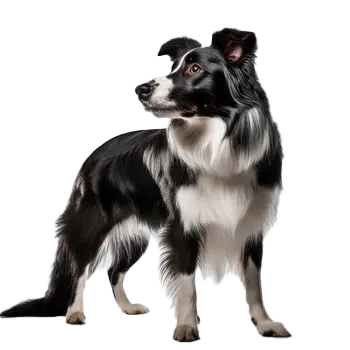

Scottish Sheepdog History & Development

The story of the Scottish Sheepdog is the story of a working dog shaped entirely by the demands of the land and the livestock it served. For centuries, herding dogs of various types worked the farms and hill country of Scotland and northern England, bred by shepherds who cared only about whether a dog could handle sheep effectively. These dogs were not standardized in appearance. They varied considerably in size, coat type, and color, but they shared common traits of intelligence, responsiveness to the handler, and an instinctive understanding of how to move livestock. They were collectively known as sheepdogs, collies, or simply working dogs, and no one saw a need to formalize the distinction between them.

The modern Border Collie traces its founding to a single dog named Old Hemp, born in 1893 in Northumberland, just south of the Scottish border. Old Hemp was bred by Adam Telfer and demonstrated a herding style that was markedly different from the louder, more physical approach common among sheepdogs of that era. He worked sheep with a quiet, crouching intensity, using his gaze to control movement rather than barking or nipping. This eye-based herding style proved extraordinarily effective, and Old Hemp was bred extensively throughout the border region. Virtually every Border Collie alive today can trace its ancestry back to him. His influence was so profound that the International Sheep Dog Society, founded in 1906, retroactively entered him as number nine in its stud book.

The name Scottish Sheepdog was never a formal registry designation but rather a natural description that people used to identify these working dogs from Scotland and the borderlands. As the breed's identity solidified around Old Hemp's descendants and the sheepdog trial community, a more specific name became necessary. In 1915, James Reid coined the term Border Collie to distinguish these trial-bred working dogs from the Scotch Collie, which by then was evolving rapidly under the influence of the show ring into a different type of dog entirely. The Border designation anchored the breed to its geographic heartland, and Collie connected it to the broader Scottish herding tradition.

The breed remained primarily a working dog throughout the first half of the twentieth century, valued on farms across the United Kingdom, Australia, New Zealand, and North America for its unmatched ability to manage sheep. The American Kennel Club did not recognize the Border Collie until 1995, a decision that was controversial within the working community. Many breeders feared that AKC recognition would prioritize appearance over ability and lead to the same divergence between working and show lines that had already occurred with the Collie. The American Border Collie Association opposed recognition and continues to maintain its own separate registry focused on working merit.

Today the Scottish Sheepdog, as some still call this breed, exists in two somewhat divergent populations. Working-bred Border Collies are selected for herding instinct, trainability, and stamina, with appearance being secondary. Show-bred dogs tend to be more uniform in appearance but may carry less intense herding drive. Both populations remain recognizably the same breed, but the philosophical divide between function-first and appearance-first breeding continues to shape the breed's trajectory. The name Scottish Sheepdog, though historical, remains a reminder that this dog was not created for the show ring but for the practical, demanding work of moving livestock across the hills and valleys of Scotland.

Scottish Sheepdog Temperament & Personality

The Scottish Sheepdog possesses what is widely regarded as the most intense working drive of any herding breed. This is a dog that was bred not merely to follow instructions but to solve problems independently in real time, reading the movement of livestock, anticipating escapes, and adjusting position without waiting for a command. That level of intelligence and responsiveness makes the Border Collie a breathtaking partner in the right hands and an overwhelming challenge in the wrong ones. Owners who underestimate the depth of this breed's mental needs will find themselves living with a dog that redirects its considerable energy into destructive, obsessive, or neurotic behaviors.

The breed's hallmark trait is what the herding community calls eye, an intense, focused stare used to control sheep. In a pet home, this same fixation can manifest as obsessive watching, stalking, or chasing of moving objects including cars, bicycles, joggers, and other animals. This is not aggression. It is deeply embedded herding instinct operating without an appropriate outlet. Managing this drive requires providing the dog with structured activities that engage its mind and body, whether through formal herding work, competitive dog sports, or rigorous daily training routines. Without these outlets, the behavior can escalate into compulsive patterns that are difficult to reverse once established.

Border Collies bond powerfully with their primary handler and are extraordinarily attuned to human body language and emotional states. This sensitivity makes them exceptional working partners and highly responsive training subjects, but it also means they are prone to stress in chaotic or inconsistent environments. A Border Collie that is yelled at, handled roughly, or subjected to unpredictable household dynamics will develop anxiety-related behaviors including excessive barking, pacing, and displacement activities like compulsive licking or spinning. The breed does not compartmentalize household tension well and will absorb emotional turmoil in ways that manifest as behavioral deterioration.

The breed's relationship with strangers is typically cautious but not hostile. The standard describes the Border Collie as sensibly reserved toward strangers, and most will stand their ground and assess a new person rather than rushing to greet them. This wariness should not tip into fearfulness or aggression in a well-socialized dog, but puppies that are not exposed to varied people and environments during their critical socialization period may develop persistent shyness.

With other dogs, the Scottish Sheepdog is generally manageable but not always easygoing. Their herding instinct can create friction with dogs that do not appreciate being stared at, stalked, or circled. Some Border Collies develop same-sex tension, particularly intact males. Prey drive is moderate to high, and small animals that flee are likely to trigger a chase response. Early socialization and clear boundaries are essential for peaceful multi-pet households. The defining truth about this breed is that it needs a job. A Border Collie without purpose will invent one, and the owner will almost certainly not approve of its choice.

Scottish Sheepdog Family Life & Living Requirements

The Scottish Sheepdog can be a wonderful family dog, but it is emphatically not the right breed for every household. Families considering a Border Collie need to honestly assess whether their lifestyle can accommodate a dog that requires substantial daily exercise, consistent mental engagement, and a structured routine. This is not a breed that will contentedly spend the day lounging on the couch while everyone is at work. A Border Collie left alone for eight or more hours without stimulation will develop behavioral problems that are predictable, progressive, and difficult to undo.

Families with older children who are active and willing to participate in the dog's training and exercise will find the Scottish Sheepdog to be a remarkably engaged and loyal companion. The breed's intelligence and responsiveness make it a natural fit for families that enjoy outdoor activities, hiking, running, or competitive dog sports. However, families with very young children should proceed with caution. The Border Collie's herding instinct will almost certainly manifest as attempts to control the movement of toddlers and small children through nipping, circling, or body blocking. This is not malicious behavior, but it can be frightening for young children and requires persistent management and training to redirect.

The breed's exercise needs are among the highest of any dog. A minimum of one to two hours of vigorous daily activity is the baseline, not the aspiration. This should include both physical exercise and mental work. A long walk alone is insufficient for most Border Collies. They need activities that challenge their minds, whether that means learning new skills, practicing agility sequences, working on advanced obedience, or engaging in structured games that require problem-solving. Without adequate stimulation, the Scottish Sheepdog will channel its energy into behaviors that owners find unacceptable, including obsessive ball fixation, shadow chasing, fence running, excessive barking, and destructive chewing.

Housing with a securely fenced yard is strongly preferred for this breed. Border Collies are athletic enough to clear a standard four-foot fence and clever enough to find gaps or weaknesses in fencing. Apartment living is not recommended unless the owner is genuinely committed to providing multiple daily exercise sessions and is prepared for the management challenges that come with keeping a high-drive herding dog in a confined space. The Scottish Sheepdog does best in a home where it is included in daily life, given clear expectations, and provided with consistent opportunities to use the remarkable mind it was bred to have.

Scottish Sheepdog Training & Exercise Needs

Training the Scottish Sheepdog is an experience that spoils you for every other breed. The Border Collie learns with a speed and precision that can seem almost uncanny, picking up new commands in remarkably few repetitions and retaining them reliably. This breed consistently ranks at or near the top of canine intelligence assessments, and that ranking is well earned. However, intelligence of this caliber is a double-edged sword. A Border Collie that is under-stimulated will learn things you never intended to teach it, including how to open doors, manipulate latches, and outsmart containment strategies that would hold any other dog.

Positive reinforcement is the most effective training approach for this breed. Border Collies are sensitive dogs that respond poorly to harsh corrections, raised voices, or compulsion-based methods. A handler who relies on intimidation will quickly produce a dog that is either shut down and anxious or actively avoidant. The breed thrives under clear, consistent communication paired with rewards that the individual dog values, whether those are food, toys, or opportunities to work. Training sessions should be kept engaging and varied, because the Border Collie's quick mind will lose interest in repetitive drills faster than most breeds.

Socialization during the first four months of life is critically important for this breed. Border Collies that miss this window often develop reactivity, fearfulness, or an inability to cope with novel situations. Structured exposure to different people, animals, surfaces, sounds, and environments builds the confidence that allows the adult dog to navigate the world calmly. Given the breed's natural reserve with strangers, proactive socialization is not optional but essential.

The Scottish Sheepdog excels across a wide range of competitive and working disciplines. Herding trials remain the breed's traditional proving ground, but Border Collies dominate in agility, flyball, disc dog, rally obedience, and competitive obedience. They are also increasingly used in search and rescue, detection work, and as service dogs. The breed's exercise requirements match its mental needs in intensity. A minimum of one to two hours of vigorous daily activity is necessary, and this should include both physical exertion and cognitive challenges. Running, hiking, swimming, and fetch are all good physical outlets, but they must be supplemented with training work, puzzle activities, or structured games that require the dog to think. A physically tired Border Collie that has not been mentally worked will still be restless and difficult to live with.

Scottish Sheepdog Health Concerns

The Scottish Sheepdog is generally a robust and long-lived breed, with most individuals reaching 12 to 15 years of age when properly cared for. However, several inherited conditions are documented in the breed and require informed management by owners and breeders. Hip dysplasia is the most common orthopedic concern. Approximately ten percent of Border Collie hip radiographs submitted to the Orthopedic Foundation for Animals show evidence of dysplasia, a figure that likely underestimates the true prevalence since only conscientious breeders tend to submit films. The condition causes improper formation of the hip joint, leading to chronic pain, reduced mobility, and arthritis over time. Screening breeding stock through OFA or PennHIP evaluation is the primary tool for reducing its incidence.

Osteochondritis dissecans is a developmental joint condition seen in growing Border Collie puppies, most commonly affecting the shoulder. It occurs when cartilage does not attach properly to the underlying bone and may require surgical intervention. Hypothyroidism has also been documented in the breed, presenting with symptoms including weight gain, lethargy, and coat changes, and is managed with daily thyroid hormone supplementation.

Common Health Issues

  • Hip Dysplasia - Improper development of the hip joint causing the ball and socket to grind rather than glide, leading to chronic inflammation, pain, and progressive arthritis. Approximately ten percent of OFA-submitted radiographs show evidence of dysplasia, and screening breeding stock is essential for reducing incidence.
  • Collie Eye Anomaly (CEA) - A congenital defect involving abnormal development of the choroid layer of the eye, ranging from mild cases with no functional vision loss to severe forms causing retinal detachment. Puppies should be screened by a veterinary ophthalmologist at five to eight weeks, and a DNA test identifies carriers.
  • Idiopathic Epilepsy - A seizure disorder with no identifiable structural cause, typically presenting between six months and five years of age. Episodes vary in frequency and severity and require lifelong management with anti-seizure medication. No genetic screening test is currently available.
  • MDR1 (Multi-Drug Resistance 1) Mutation - A genetic defect affecting drug transport across the blood-brain barrier, making affected dogs dangerously sensitive to ivermectin, loperamide, and certain other medications. DNA testing identifies affected dogs and allows veterinarians to select safe drug alternatives.
  • Trapped Neutrophil Syndrome (TNS) - A hereditary immune deficiency in which the bone marrow produces white blood cells but cannot release them into the bloodstream, leaving affected dogs unable to fight infection. The condition is invariably fatal, typically before age two. A DNA test is available.
  • Neuronal Ceroid Lipofuscinosis (CL) - A fatal neurological storage disease causing progressive mental and motor decline, with symptoms usually emerging between one and two years of age. A DNA test identifies carriers and affected individuals, allowing breeders to prevent affected puppies.
  • Osteochondritis Dissecans (OCD) - A developmental joint condition in which cartilage fails to attach properly to the underlying bone, most commonly affecting the shoulder in growing puppies. Treatment may require surgical removal of the damaged cartilage fragment.
  • Hypothyroidism - An endocrine disorder resulting from insufficient thyroid hormone production, causing symptoms including weight gain, lethargy, coat deterioration, and skin problems. Managed effectively with daily thyroid hormone supplementation once diagnosed through blood screening.

Preventive Care & Health Monitoring

  • Hip evaluation through OFA radiographs or PennHIP assessment should be performed on all breeding stock after the dog reaches two years of age - As this is the minimum age for OFA certification of hip status.
  • Annual eye examinations by a board-certified veterinary ophthalmologist should continue until the dog is at least seven years old - As recommended by the BCSA CHIC requirements, to monitor for progressive ocular conditions.
  • CEA DNA testing should be performed on breeding stock and is recommended for all puppies to identify carriers and affected individuals before symptoms become apparent. - CEA DNA testing should be performed on breeding stock and is recommended for all puppies to identify carriers and affected individuals before symptoms become apparent.
  • MDR1 DNA testing should be completed for every Border Collie so that veterinarians can avoid prescribing medications known to cause severe neurological reactions in affected dogs. - MDR1 DNA testing should be completed for every Border Collie so that veterinarians can avoid prescribing medications known to cause severe neurological reactions in affected dogs.
  • TNS and CL DNA testing should be performed on all breeding stock to prevent the production of puppies affected by these invariably fatal conditions. - TNS and CL DNA testing should be performed on all breeding stock to prevent the production of puppies affected by these invariably fatal conditions.
  • Participation in the BCSA breed DNA repository contributes to ongoing genetic research and supports the long-term health of the breed population. - Participation in the BCSA breed DNA repository contributes to ongoing genetic research and supports the long-term health of the breed population.
  • Controlled exercise during puppyhood protects developing joints from the repetitive stress that can exacerbate conditions like hip dysplasia and osteochondritis dissecans - Particularly on hard surfaces.

Scottish Sheepdog Grooming & Maintenance

The Scottish Sheepdog's grooming requirements are moderate and manageable with a consistent routine, though the specifics depend on whether the dog carries the rough or smooth coat. The rough-coated Border Collie has a medium-length double coat with a soft, dense undercoat and a coarser outer coat that may be straight or slightly wavy. Feathering appears on the forelegs, chest, haunches, and underside, and the coat is longer around the neck and on the tail. This coat type needs brushing two to three times per week to prevent tangles and matting, with particular attention to the areas behind the ears, under the legs, and around the hindquarters where friction causes the most knotting.

The smooth-coated variety has a shorter, denser outer coat with minimal feathering, making it considerably easier to maintain. A weekly brushing with a firm bristle brush is typically sufficient for smooth-coated dogs outside of shedding season. Both coat types shed year-round at a moderate rate, with significantly heavier shedding occurring twice annually during the spring and fall coat blows. During these periods, daily brushing becomes necessary to manage the volume of loose undercoat. A slicker brush and an undercoat rake are the most effective tools for removing dead hair during heavy sheds.

Bathing should be done as needed, generally every six to eight weeks or when the dog becomes dirty or develops an odor. Border Collies that work or play in water, mud, or dense brush may need more frequent bathing. A mild dog shampoo that preserves the coat's natural oils is recommended. The ears should be inspected regularly for debris, wax accumulation, or signs of infection, particularly in dogs that spend significant time outdoors. Active Border Collies often wear their nails down naturally through exercise on hard surfaces, but nail length should still be checked every two to three weeks and trimmed as needed. Dental hygiene requires regular attention through brushing several times weekly and providing appropriate chew items to reduce plaque and tartar buildup.