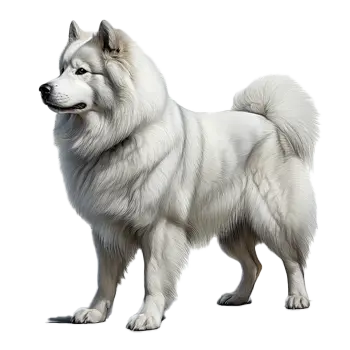
Samoyedskaya

Samoyed
Gallery coming soon

Furry Critter Network Etsy Shop

Quick Facts

🐕 Breed Group
Working
📏 Size Category
Medium
📏 Height
21-23.5 inches (males); 19-21 inches (females)
⚖️ Weight
45-65 pounds (males); 35-50 pounds (females)
⏱️ Life Expectancy
12-14 years
🧥 Coat Type
Double coat - thick woolly undercoat with harsh outer coat
🎨 Coat Colors
Pure white, white and biscuit, cream, all biscuit
😀 Temperament
Friendly, Gentle, Adaptable, Alert
🏃 Exercise Needs
High - needs daily activity and mental stimulation
🎓 Training Difficulty
Moderate - intelligent but independent
👶 Good with Children
Excellent - gentle and playful with children
🐾 Good with Other Pets
Good - sociable with proper introductions

Other Names & Breed Recognition

The Samoyed takes its name from the Samoyedic peoples of Siberia, nomadic reindeer herders who developed and relied upon these versatile white dogs for their survival in one of the world's harshest environments. The breed is known by several names that reflect its rich heritage and the various cultures that have treasured these magnificent dogs. Samoyedskaya, derived from the Russian Samoyedskaya Sobaka meaning Samoyed Dog, represents the breed's official designation in its homeland and among Russian-speaking enthusiasts worldwide.

The original Samoyedic peoples called their dogs Bjelkier, which translates to white dog that breeds white, acknowledging the breed's distinctive coloring that has remained consistent for thousands of years. This ancient name speaks to the importance these dogs held in their native culture and the care taken to maintain their characteristic appearance through generations of breeding. The white coat was not merely aesthetic but served practical purposes in the Arctic environment, providing camouflage in snow and reflecting heat during the brief summer months.

In early Western dog fancy literature, the breed was sometimes referred to as the Samoyede, with the final letter e reflecting an older spelling convention that has since been dropped in English-speaking countries. Some historical documents also reference the breed using various transliterations from Cyrillic script, reflecting the challenges early fanciers faced in standardizing the breed's name across different languages and alphabets.

The breed has also been called the Smiling Sledge Dog, a reference to both its original function pulling sledges across frozen tundra and its distinctive facial expression. The upturned corners of the Samoyedskaya's mouth create a perpetual smile that has become one of the breed's most endearing characteristics. This smile is actually a functional adaptation, preventing drool from forming icicles around the mouth in freezing temperatures while simultaneously giving the breed its friendly, approachable appearance.

Other historical names include the Arctic Spitz, acknowledging the breed's classification within the Spitz family of northern dogs, and the Siberian Spitz, specifying its region of origin. Some early breed literature referred to these dogs as Bjelkier Huskies, though this term has fallen out of use to avoid confusion with the distinct Siberian Husky breed. The White Sled Dog of the North was another descriptive term used in early expedition literature to distinguish these dogs from other working sled breeds.

Today, the breed is universally known as the Samoyed in official contexts, with Samoyedskaya remaining the preferred designation among Russian speakers and those who appreciate the breed's authentic heritage. The breed gained official recognition from major kennel clubs in the early twentieth century, establishing its place among formally recognized purebred dogs while honoring the ancient lineage that stretches back thousands of years in the frozen reaches of Siberia.

Samoyedskaya Organizations & Standards

The Samoyedskaya achieved formal recognition from major kennel clubs during the early twentieth century as Western dog fanciers became aware of this remarkable breed through polar exploration expeditions. The Royal Kennel Club of the United Kingdom granted recognition in the late nineteenth century, with British zoologist Ernest Kilburn-Scott playing a pivotal role in establishing the breed in England. Kilburn-Scott is widely credited as the founder of the Western Samoyed breed, having lived among the Samoyedic people in 1889 and bringing dogs back to England to establish the foundation of the British population.

The first breed standard for the Samoyedskaya was developed in England in 1909, codifying the essential characteristics that define the breed. Kilburn-Scott and fellow enthusiast Frederick Jackson collaborated on this standard, drawing from their firsthand experience with dogs obtained directly from the Samoyedic peoples. The Samoyede Club was founded the same year to promote and protect the breed, though the final e in the name was later dropped in English-speaking countries.

The American Kennel Club officially recognized the Samoyedskaya in 1906, making it one of the earlier northern breeds to achieve AKC registration in the United States. The breed was placed in the Working Group, acknowledging its traditional roles as a draft animal, herder, and all-purpose working dog. The first American Samoyed registered was a Russian import named Moustan of Argentau, brought to the country in 1904 by Princess de Montglyon.

The Samoyed Club of America was established in 1923 and serves as the AKC parent club for the breed. The club promotes responsible breeding, provides education for judges and the public, and hosts events that showcase the breed's versatility and beauty. Annual national specialties bring together enthusiasts from across the country to compete, learn, and celebrate their shared passion for this ancient breed. The club also supports health research initiatives addressing conditions that affect the breed.

The United Kennel Club recognized the Samoyedskaya in 1927, classifying the breed within their Northern Breeds Group. The UKC standard emphasizes the breed's functionality as a working dog while acknowledging its suitability as a family companion. The standard describes the characteristic Samoyed smile as an essential element of breed type, noting that the upturned corners of the tight, dark lips contribute to the breed's signature expression.

The Fédération Cynologique Internationale includes the Samoyedskaya in Group 5, Section 1, which comprises Nordic Sledge Dogs. The FCI standard acknowledges Russia as the breed's country of origin while recognizing the significant contributions of British and Scandinavian breeders in preserving and promoting the breed internationally. The standard emphasizes the breed's balanced construction that enables powerful, efficient movement essential for sled work.

Breed standards across all major registries share common themes in describing the ideal Samoyedskaya. The characteristic smile is consistently mentioned as an essential element of breed expression and type. Standards call for a well-balanced, substantial dog capable of performing traditional work while maintaining an alert, friendly demeanor. The profuse white or biscuit double coat is described in detail, with emphasis on proper texture and density that provides protection against arctic conditions.

The Samoyed Club of America Education and Research Foundation works to advance understanding of health issues affecting the breed and funds research into genetic conditions. Health screening protocols recommended by the club help breeders make informed decisions about breeding pairs. The breed's CHIC requirements include cardiac evaluation, hip evaluation, and genetic testing for conditions known to affect this breed, providing transparency for puppy buyers seeking healthy, well-bred dogs.

Kennel Club Recognition

  • American Kennel Club (AKC): Recognized in 1906 - Working Group
  • United Kennel Club (UKC): Recognized in 1927 - Northern Breed Group
  • Canadian Kennel Club (CKC): Recognized - Working Group
  • Fédération Cynologique Internationale (FCI): Recognized - Group 5 (Spitz and Primitive Types), Section 1
  • The Kennel Club (UK): Recognized in late 19th century - Pastoral Group

Samoyedskaya Physical Description

The Samoyedskaya presents an image of beauty, alertness, and strength combined with an expression of friendliness that instantly endears this breed to all who encounter them. Standing between twenty-one and twenty-three and a half inches at the shoulder for males and nineteen to twenty-one inches for females, the Samoyedskaya is a substantial dog without being coarse, combining power with elegance in a balanced package. The breed's most striking feature is undoubtedly its magnificent white coat, though proper structure and movement are equally important aspects of breed type.

The head of the Samoyedskaya is wedge-shaped when viewed from above, with a broad skull that tapers distinctly toward the muzzle. The stop is well-defined but not abrupt, and the muzzle is moderately long and deep, roughly equal in length to the skull. The expression is the hallmark of the breed, created by the combination of dark, almond-shaped eyes that sparkle with intelligence and mischief, mobile erect ears, and the famous Samoyed smile formed by the upturned corners of the black lips. This smile is not merely aesthetic but serves a practical function, preventing drool from forming dangerous icicles in freezing temperatures.

The ears are thick and covered with fur, triangular in shape, and carried erect. They are mobile, moving independently to catch sounds, and contribute to the breed's alert, intelligent expression. The eyes are dark brown or black, set well apart in the skull, with tight, dark eye rims. The nose is black, though some dogs may develop snow nose, a lightening of pigment during winter months that is acceptable according to breed standards.

The body of the Samoyedskaya is slightly longer than tall when measured from the point of the shoulder to the point of the buttocks, creating a rectangular silhouette that allows for efficient movement. The chest is deep, reaching to the elbows, with well-sprung ribs that provide ample heart and lung room. The back is straight and strong, leading to a well-muscled loin. The topline should be level in motion, with the well-developed hindquarters providing powerful drive.

The tail is one of the Samoyedskaya's distinguishing features, carried curled over the back and often draping to one side or the other. Unlike some Spitz breeds, the tail is not carried in a tight curl but rests on the back with a graceful curve. The tail is long and profusely coated, creating a beautiful plume that frames the dog's rear when viewed from behind. When relaxed or working, the tail may drop, which is acceptable.

The magnificent double coat is perhaps the Samoyedskaya's most recognizable attribute. The outer coat consists of long, harsh, straight guard hairs that stand away from the body, while the undercoat is short, soft, and extremely dense. The coat forms a protective ruff around the neck and shoulders that is more pronounced in males than females. Feathering appears on the back of the forelegs and on the thighs. The coat should appear to sparkle with silver tipping on the guard hairs.

Acceptable colors include pure white, white and biscuit, cream, and all biscuit. The biscuit coloring may appear as an overall tint or as distinct shadings on the ears and body. Any color other than those specified is a disqualification in the show ring. The coat should appear harsh to the touch but gives when brushed against the grain, springing back into place. The texture and density of the coat are more important than length alone.

Movement in the Samoyedskaya should be effortless and ground-covering, with a quick, agile stride that is well-timed. The gait is free, balanced, and vigorous, with good reach in the forequarters and good driving power from the hindquarters. At a trot, the legs converge toward a center line beneath the body as speed increases. The characteristic happy, bouncy movement reflects the breed's joyful nature while demonstrating proper structure and conditioning.

Affection Level
The Samoyedskaya is exceptionally affectionate, forming deep bonds with all family members and craving constant companionship. These dogs thrive on human interaction and become unhappy when isolated from their families for extended periods.
Good With Children
The Samoyedskaya is outstanding with children of all ages, displaying patience and gentleness that makes them ideal family dogs. Their playful nature and tolerance for childish handling have earned them a reputation as excellent companions for families.
Good With Other Dogs
The Samoyedskaya typically gets along well with other dogs, reflecting their heritage of working in teams. They are sociable and generally non-aggressive, though proper introductions help establish positive relationships with new canine companions.
Shedding Level
The Samoyedskaya sheds heavily year-round and experiences dramatic seasonal shedding events called blowing coat when masses of undercoat are released. Prospective owners should be prepared for significant hair management throughout the year.
Grooming Needs
The Samoyedskaya requires substantial grooming commitment, including frequent brushing to prevent mats and manage shedding. During seasonal coat blows, daily brushing becomes necessary to remove the tremendous amounts of loose undercoat.
Drooling Level
The Samoyedskaya is a very clean breed that produces virtually no drool. Their characteristic upturned lip corners help keep saliva contained, making them a tidy choice for those who dislike dealing with doggy drool.
Coat Length
The Samoyedskaya has a profuse double coat with a thick, soft undercoat and longer, harsh outer guard hairs that stand away from the body. Males typically display more impressive ruffs around the neck than females.
Openness To Strangers
The Samoyedskaya greets virtually everyone as a potential friend, displaying enthusiasm and warmth toward strangers. This trusting nature makes them poor guard dogs but excellent ambassadors who spread joy wherever they go.
Playfulness
The Samoyedskaya retains a playful, puppyish attitude well into adulthood and even old age. They enjoy games, interactive toys, and romping with family members, maintaining their mischievous spark throughout their lives.
Protective Nature
The Samoyedskaya is more likely to welcome an intruder with tail wags than to defend territory. While they may bark to announce visitors, their friendly nature makes them unreliable as protection dogs.
Trainability
The Samoyedskaya is intelligent and capable of learning quickly but possesses an independent streak that can make training challenging. They respond best to positive, engaging training methods that keep their interest high.
Energy Level
The Samoyedskaya has substantial energy reserves and requires regular exercise and mental stimulation to remain happy and well-behaved. Without adequate outlets for their energy, they may develop destructive behaviors or excessive barking.

Samoyedskaya History & Development

The Samoyedskaya traces its origins to the harsh frozen tundra of Siberia, where the nomadic Samoyedic peoples developed these versatile dogs over thousands of years. Archaeological and genetic evidence suggests that the breed's ancestors have lived alongside humans in the Arctic regions for at least three thousand years, making this one of the world's most ancient breeds. The dogs served essential roles in the survival of the Samoyedic tribes, providing transportation, herding reindeer, hunting, and offering warmth during the brutal Arctic winters.

The Samoyedic peoples, including the Nenets and related tribes, led a nomadic existence following reindeer herds across the frozen landscape. Their dogs were not merely working animals but treasured family members who shared the chooms, the traditional domed tents, with their human families. Children were left in the care of dogs while parents hunted, and dogs provided essential warmth by sleeping with their owners during the coldest nights when temperatures could plummet to minus sixty degrees. This close relationship fostered the exceptional temperament that characterizes the breed today.

The dogs of the Samoyedic peoples served multiple functions that required versatility and intelligence. They helped herd the reindeer upon which the tribes depended for food, clothing, and shelter. They pulled sledges loaded with supplies across vast distances of frozen tundra. They assisted in hunting, alerting their owners to game and providing companionship during long expeditions. This multifaceted working role selected for dogs that were athletic, intelligent, cooperative, and sound in both body and temperament.

Western discovery of the Samoyedskaya came through polar exploration expeditions in the late nineteenth and early twentieth centuries. European explorers recognized the exceptional qualities of these white sledge dogs and incorporated them into their expeditions. Norwegian explorer Fridtjof Nansen used Samoyeds on his 1893-1896 Fram expedition toward the North Pole, purchasing thirty-three dogs from the Nenets people. While none of the dogs that went onto the ice survived, puppies born during the voyage helped establish the breed in Europe.

British zoologist Ernest Kilburn-Scott is credited with establishing the breed in England and is considered the founder of the Western Samoyed. In 1889, he spent several months living among the Samoyedic peoples and brought a male puppy back to England. Over subsequent years, he and his wife imported additional dogs and began a breeding program that would form the foundation of the British population. The Kilburn-Scotts developed the first breed standard in 1909 and founded The Samoyede Club the same year.

The breed gained significant visibility through its participation in Antarctic expeditions. Carsten Borchgrevink brought ninety Samoyeds to the Southern Cross Expedition of 1898-1900, the first to winter on the Antarctic mainland. Roald Amundsen used Samoyeds among his sled dog teams during his successful 1911 expedition to the South Pole. These expeditions demonstrated the breed's exceptional endurance, willingness to work, and ability to thrive in the most extreme conditions on Earth.

The Samoyedskaya was introduced to the United States in the early twentieth century, with the first AKC registration occurring in 1906. Princess de Montglyon brought several dogs from England, including the first registered American Samoyed, Moustan of Argentau. The breed gradually gained popularity through the efforts of dedicated breeders who established influential kennels and produced dogs that won both in the show ring and in the hearts of family owners.

The Samoyed Club of America was founded in 1923 and has worked continuously since to promote and protect the breed. American breeders developed distinct lines while maintaining the essential characteristics that made the original Samoyedic dogs so valuable. Today's dogs retain the friendly temperament, working ability, and striking appearance of their ancestors, though few are called upon to perform the demanding work for which they were originally bred.

Genetic studies have confirmed the Samoyedskaya's status as a basal breed that predates the emergence of modern breeds in the nineteenth century. DNA analysis of specimens from nearly one hundred years ago found close relationships with dogs from two thousand and eight hundred fifty years prior, demonstrating remarkable continuity of the lineage in its native region. This ancient heritage lives on in modern dogs, connecting today's family companions to the working dogs that helped human societies survive in the Arctic for millennia.

Samoyedskaya Temperament & Personality

The Samoyedskaya possesses one of the most genuinely friendly and people-oriented temperaments in the canine world, a characteristic that can be traced directly to thousands of years of close cohabitation with their human families. Unlike breeds that were kept at a distance from their owners or valued primarily for protective instincts, the Samoyedskaya developed as an integral member of the family unit, sharing living quarters and working cooperatively rather than independently. This heritage has produced a breed that thrives on human companionship and forms deep, lasting bonds with their families.

The characteristic Samoyed smile is not merely a physical trait but reflects the breed's genuinely happy disposition. These dogs approach life with enthusiasm and joy, maintaining a puppy-like playfulness well into old age. Their friendly nature extends to virtually everyone they meet, from family members to complete strangers, which makes them universally appealing but unsuitable as protection dogs. A Samoyedskaya is more likely to welcome an intruder with tail wags and offers of play than to defend territory or possessions.

Despite their friendly nature, Samoyedskayas possess an independent streak that reflects their heritage as thinking working dogs. They were bred to make decisions during their work without constant direction from handlers, and this independence manifests in their approach to training and daily life. They are intelligent enough to understand what is being asked of them but may choose to comply based on their assessment of the request's worthiness. This trait requires patient, creative training methods that keep the dog engaged and motivated.

The Samoyedskaya's social nature means they do not tolerate isolation well. These dogs crave companionship and can develop separation anxiety, destructive behaviors, or excessive barking when left alone for extended periods. They are happiest when included in family activities and may become depressed or anxious in households where they spend long hours alone. Many owners find that keeping two dogs helps provide companionship during necessary absences.

Samoyedskayas are notably vocal dogs with a range of vocalizations that include barking, howling, and distinctive talking sounds. They are not yappy in the manner of some small breeds but will readily alert their families to visitors, interesting sights, or simply to express their opinions. Some individuals are more vocal than others, and excessive barking can become a problem if not addressed through training and adequate exercise. The breed's vocal nature should be considered by prospective owners, particularly those living in close proximity to neighbors.

The breed's gentle nature makes the Samoyedskaya exceptional with children, and they have earned a reputation as outstanding family dogs. They are patient with the handling of young children and seem to understand the need for gentleness around small humans. Their playful nature delights children, and many become devoted protectors and companions to the young members of their families. However, as with all dogs, interactions between children and dogs should be supervised.

Samoyedskayas typically get along well with other dogs, reflecting their heritage of working in teams. They are sociable and generally non-aggressive, though proper introductions help establish positive relationships. Their prey drive is generally lower than that of some other northern breeds, and many coexist peacefully with cats and other pets, especially when raised together. However, individual dogs vary in their reactions to small animals.

The Samoyedskaya's intelligence and sensitivity make them responsive to their owners' moods and emotions. They often seem to sense when family members are sad or unwell and will offer comfort through their presence. This emotional attunement makes them excellent companions for those seeking a dog that truly connects on an emotional level. However, their sensitivity also means they can be affected by household stress or conflict, preferring harmonious environments.

Samoyedskaya Family Life & Living Requirements

The Samoyedskaya makes an outstanding family companion for households prepared to meet this breed's needs for exercise, grooming, and companionship. Their gentle, friendly nature and love of people make them well-suited to family life, though prospective owners should understand the commitments involved in keeping this arctic breed happy and healthy in varied living situations. The breed's adaptability has allowed them to thrive in environments ranging from rural farms to city apartments, provided their essential needs are met.

Families with children often find the Samoyedskaya to be an ideal match, as these dogs display exceptional patience and gentleness with young people. The breed's playful nature provides entertainment for active children, while their tolerance for handling makes them suitable companions for younger family members. Samoyedskayas often form particularly close bonds with children in their families, taking on a nurturing role that reflects their heritage of caring for young ones in their native culture.

The Samoyedskaya's exercise requirements are significant but manageable for active families. These dogs need daily physical activity to maintain their health and mental well-being, including walks, play sessions, and opportunities for more vigorous exercise. A securely fenced yard provides space for play, though the fence must be adequate to contain a dog that can be an accomplished digger and may attempt to escape if bored. The breed enjoys activities that involve their families, making them excellent companions for hiking, camping, and outdoor adventures.

Despite their arctic origins, Samoyedskayas can adapt to various climates with appropriate accommodations. Their heavy double coat provides excellent insulation against cold, making them comfortable in winter conditions that would be miserable for short-coated breeds. However, the same coat can make hot weather challenging, and owners in warm climates must provide air conditioning, shade, and fresh water while avoiding exercise during the hottest parts of the day. The breed should always have access to climate-controlled indoor areas.

Apartment living is possible with a Samoyedskaya, though owners must be committed to providing adequate exercise and managing the breed's vocal tendencies. Their calm demeanor indoors, when sufficiently exercised, makes them surprisingly suitable for smaller spaces. However, neighbors may be less tolerant of occasional barking or howling, and sufficient outdoor exercise becomes even more critical without a yard for play.

The Samoyedskaya's need for companionship is one of the most important considerations for prospective families. These dogs do not thrive when left alone for long hours daily and may develop separation anxiety or behavioral problems without adequate interaction. Families where all members work full-time outside the home may find this breed challenging unless arrangements can be made for midday visits, doggy daycare, or a second pet for companionship.

The breed's shedding is a significant lifestyle consideration that all prospective owners must accept. Samoyedskayas shed year-round, with dramatic seasonal coat blows that release enormous amounts of undercoat. Homes with these dogs require regular vacuuming, and owners should expect white hair on furniture, clothing, and virtually every surface. Those who cannot tolerate dog hair in their environment should consider a different breed.

Samoyedskayas are not well-suited to outdoor-only living despite their cold tolerance. They crave human companionship and should live as indoor family members with full access to the household. Relegating this breed to outdoor living typically results in behavioral problems, excessive barking, and an unhappy dog. These social animals need to be included in family life to thrive.

The financial commitment of ownership extends beyond the purchase price to include quality food, regular grooming supplies or professional grooming, veterinary care, and potential health issues common to the breed. Pet insurance can help manage unexpected medical costs. Prospective owners should honestly assess their ability to meet these financial obligations before acquiring a Samoyedskaya.

Samoyedskaya Training & Exercise Needs

Training a Samoyedskaya requires understanding the breed's unique combination of intelligence, independence, and desire to please. These dogs are certainly capable learners who can master a wide range of commands and behaviors, but they approach training differently than more traditionally biddable breeds. Success comes from finding ways to make training engaging and rewarding while respecting the breed's need to feel like a partner rather than a subordinate.

Positive reinforcement methods work exceptionally well with Samoyedskayas, who respond enthusiastically to treats, praise, and play as rewards for desired behaviors. Harsh corrections or punishment-based training damages the sensitive temperament and typically proves counterproductive, creating a wary or shutdown dog rather than a willing partner. The breed's intelligence allows them to quickly connect behaviors with consequences, making consistent positive reinforcement highly effective.

Early socialization is essential for developing a well-adjusted Samoyedskaya. Puppies should be exposed to a wide variety of people, places, sounds, and experiences during their critical developmental period. While the breed is naturally friendly, proper socialization ensures they develop confidence in novel situations and learn appropriate behavior around different types of people and animals. Puppy classes provide valuable structured socialization opportunities while beginning basic training.

The Samoyedskaya's independent nature can manifest as selective hearing when they find a command inconvenient or uninteresting. This is not defiance or stupidity but rather the breed's natural tendency to evaluate requests and decide whether compliance serves any useful purpose. Successful trainers learn to make compliance rewarding and worthwhile from the dog's perspective, understanding that these dogs work best when they understand the purpose of what they are being asked to do.

Basic obedience commands including sit, down, stay, come, and heel should be taught early and reinforced throughout the dog's life. Samoyedskayas can excel in formal obedience competition, though their independent nature may result in creative interpretations of exercises. Many owners find that their dogs perform better when training sessions are kept short, varied, and fun rather than repetitive and demanding.

Recall training deserves special attention, as the breed can become focused on interesting scents, sounds, or sights and may not respond reliably to calls when distracted. Building a strong recall through extensive positive reinforcement increases safety, though many owners wisely maintain secure fencing rather than relying solely on recall in unfenced areas. The breed's tendency to roam when given the opportunity makes reliable containment essential.

The Samoyedskaya's exercise needs are substantial, requiring daily activity to maintain physical and mental health. These dogs were bred to work hard for extended periods, and without adequate outlets for their energy, they may develop destructive behaviors, excessive barking, or other problems. Most adults need at least an hour of exercise daily, with more active individuals requiring additional activity.

Varied activities keep the Samoyedskaya engaged and satisfied. Walking, jogging, hiking, swimming, and playing fetch all provide physical exercise, while activities that challenge their minds prevent boredom. Many dogs enjoy participating in dog sports such as agility, rally obedience, herding, sledding, carting, and skijoring. These activities provide both physical exercise and mental stimulation while strengthening the bond between dog and owner.

The breed's heritage as sled dogs makes pulling activities particularly appealing. Carting, sledding, and skijoring allow dogs to use their natural pulling instincts in appropriate ways. Even casual pulling of a child's sled or wagon can satisfy this drive while providing exercise and fun for the entire family.

Mental stimulation is as important as physical exercise for this intelligent breed. Puzzle toys, training games, and activities that require problem-solving help keep minds engaged and prevent the boredom that can lead to mischief. Rotating toys, varying walking routes, and introducing new challenges helps maintain interest and engagement.

Samoyedskaya Health Concerns

The Samoyedskaya is generally a healthy breed with a typical lifespan of twelve to fourteen years when provided with appropriate care, nutrition, and veterinary attention. As an ancient breed that developed under demanding natural conditions, the Samoyedskaya benefited from rigorous natural selection that favored sound, healthy individuals. However, like all purebred dogs, they can be predisposed to certain health conditions that owners should understand and monitor throughout their dog's life.

Common Health Issues

  • Hip dysplasia is a significant orthopedic concern in the Samoyedskaya, occurring when the hip joint develops abnormally and fails to function properly.
  • Progressive retinal atrophy is an inherited eye condition that affects some dogs, causing gradual deterioration of the retina and eventual blindness.
  • DNA testing can identify carriers of the X-linked form of PRA, allowing breeders to make informed decisions about breeding pairs to avoid producing affected puppies.
  • Retinal dysplasia is another eye condition found in the breed where the retina develops abnormally, forming folds that can affect vision.
  • Heart disease can occur in the Samoyedskaya, with aortic stenosis and pulmonic stenosis being the most commonly reported cardiac conditions.
  • These congenital abnormalities involve narrowing of heart valves that can affect blood flow and cardiac function.

Preventive Care & Health Monitoring

  • Genetic testing is available, and affected dogs should not be bred to prevent passing the condition to offspring.
  • Regular veterinary check-ups enable early detection of developing health problems before they become serious.
  • Dental care through regular brushing and professional cleanings prevents periodontal disease that can affect overall health.
  • Weight management is essential for maintaining joint health and overall wellbeing.

With attentive care, proper nutrition, regular exercise, and appropriate veterinary attention, the Samoyedskaya can live a long, healthy life as a beloved family companion. Their generally robust constitution, combined with modern health screening tools, helps ensure that this ancient breed continues to thrive for generations to come.

Samoyedskaya Grooming & Maintenance

The magnificent Samoyedskaya coat requires significant grooming commitment to maintain its beauty and health. Prospective owners must honestly assess their willingness to devote time to coat care before acquiring this breed, as the grooming requirements are substantial and cannot be neglected without consequences for the dog's comfort and appearance. However, many owners find grooming sessions to be enjoyable bonding time with their dogs rather than a chore.

The double coat consists of a soft, dense undercoat that provides insulation and a longer, harsh outer coat of guard hairs that repels dirt and moisture. The undercoat is remarkably effective at regulating body temperature, keeping the dog warm in winter and surprisingly cool in summer by creating an insulating layer of air. For this reason, Samoyedskayas should never be shaved except for medical necessity, as removing the coat actually impairs their ability to regulate body temperature.

Regular brushing is essential, with most dogs requiring thorough brushing sessions two to three times weekly during normal shedding periods. A slicker brush, undercoat rake, and long-toothed comb are essential tools for reaching through the dense coat to remove loose hair and prevent mats. Brushing should be thorough, working through all layers of the coat rather than simply skimming the surface. Areas prone to matting include behind the ears, under the legs, and around the collar area.

Seasonal coat blowing occurs once or twice yearly, typically in spring and fall, when massive amounts of undercoat are released over a period of several weeks. During these periods, daily brushing becomes necessary to manage the tremendous volume of loose hair. Some owners use high-velocity dryers to help blow out loose coat, dramatically reducing the duration of the shedding period. Professional grooming during coat blow can be particularly helpful for managing the process.

Bathing should be done as needed, typically every four to eight weeks depending on the dog's activities and lifestyle. The coat has natural dirt-repelling properties, and over-bathing can strip protective oils. When bathing, thorough rinsing is essential, as shampoo residue left in the dense coat can cause skin irritation. Equally important is thorough drying, as moisture trapped in the undercoat can lead to skin problems or even hot spots.

Nail care requires regular attention, with trimming needed every two to four weeks depending on how much natural wear occurs on the nails. Dogs that walk primarily on soft surfaces may need more frequent trimming than those who exercise on pavement or hard ground. Many dogs dislike nail trimming, so early desensitization and positive associations help make the process easier throughout the dog's life.

Ear cleaning should be performed weekly to prevent wax buildup and catch potential infections early. The erect ears allow good air circulation, which helps prevent moisture-related ear problems common in breeds with pendant ears. However, regular inspection and cleaning remain important parts of the grooming routine.

Dental care is essential for maintaining oral health and preventing periodontal disease. Daily tooth brushing with dog-appropriate toothpaste provides the best protection against dental problems. Dental chews, appropriate toys, and professional cleanings as recommended by a veterinarian supplement home care. Poor dental health can affect overall health, making regular dental care an important aspect of maintenance.

The time investment for proper grooming typically runs one to two hours weekly during normal periods, increasing significantly during seasonal coat blows. Those unwilling to commit this time should either plan to use professional grooming services regularly or consider a lower-maintenance breed.