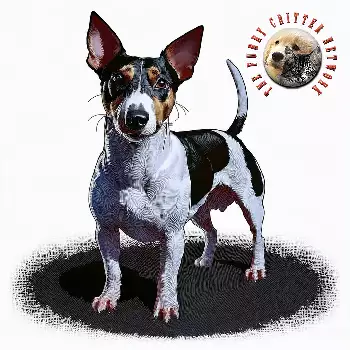
The Rat is a small to medium-sized dog that packs a surprising amount of athletic ability into a compact frame. Standard Rat Terriers stand 13 to 18 inches at the shoulder and typically weigh between 10 and 25 pounds, while miniatures range from 10 to 13 inches and weigh proportionally less. The body is slightly longer than it is tall, providing the low center of gravity and length of stride that make the breed so effective at quick, agile movement. The overall impression is of a dog that is simultaneously elegant and sturdy, with clean lines, visible musculature, and no wasted substance.
The head is smooth and moderately broad, shaped like a blunt wedge when viewed from the front and in profile. The skull is flat with a moderate stop, and the muzzle tapers to a well-developed nose with open nostrils. The jaws are strong and hinged well back, providing the bite power that made these dogs effective ratters capable of dispatching prey with a single, decisive shake. The expression is intelligent, alert, and curious, created by medium-sized, slightly oval eyes that range from dark brown to hazel and occasionally amber in dilute-colored dogs. The ears are one of the breed's most variable features. They may be erect and pointed, tipped forward at the top quarter, or folded forward in a button style, and all three variations are equally correct under the breed standard. This variability reflects the breed's farm-dog heritage, where function mattered far more than uniformity of appearance.
The neck is clean, moderately long, and slightly arched, blending smoothly into well-laid-back shoulders that provide the freedom of movement necessary for a quick, reaching stride. The chest is moderately deep, reaching approximately to the elbow, with well-sprung ribs that provide ample heart and lung room without creating a barrel shape that would impede agility. The topline is strong and level with a slight muscular arch over the loin that contributes to the breed's powerful rear drive and the ability to gather and launch that makes Rat Terriers so explosive when chasing prey.
The forelegs are straight, well-boned for the breed's size, and set well under the body. The hindquarters are well-angulated with muscular thighs that provide the explosive acceleration and directional agility needed to catch fast-moving rodents in confined spaces. The feet are compact and oval, with well-arched toes and thick pads built for traction on varied surfaces from barn floors to open fields.
The tail presents in several forms that are all acceptable within the standard. Some Rat Terriers carry a full-length tail that tapers to a fine point and is carried in an upward curve when the dog is alert. Others are born with natural bobtails of varying lengths, a trait that runs through many lines and reflects the breed's mixed heritage. Docked tails are also seen, particularly in dogs from working farm backgrounds where a shorter tail reduced the risk of injury during ratting work in tight spaces.
The coat is short, dense, smooth, and close-lying, with a slight sheen that indicates good health and condition. It provides modest protection from brush and weather without requiring significant maintenance. The breed comes in a wide range of color patterns including white with black, chocolate, red, blue, fawn, lemon, or apricot markings. Tricolor patterns combining white with two of these colors are common and give many Rat Terriers a distinctive, eye-catching appearance. All dogs must have some white in their pattern, and solid colors other than white are not permitted under the standard. The color variety within the breed is one of its charms, and no two Rat Terriers look quite the same.
Movement is smooth, efficient, and ground-covering with an easy, seemingly effortless quality that belies the speed the dog can produce when motivated. At a trot, the legs converge toward a center line beneath the body, and the gait should convey agility and quick-twitch responsiveness, reflecting a dog that was built to pursue fast, dodging prey through the tight confines of barns, grain stores, and farmyard structures.
Affectionate With Family
★★★★★
The Rat bonds intensely with its family and wants to be involved in every activity. This is a true companion breed that combines lap-dog warmth with terrier energy and loyalty.
Good With Young Children
★★★★☆
Playful and sturdy enough for active children, though the terrier temperament includes a firm insistence on respectful handling. Teaching children appropriate boundaries prevents any issues.
Good With Other Dogs
★★★★☆
Generally sociable with other dogs, particularly when socialized early. Some individuals may display terrier confidence that exceeds their size, requiring management around larger or pushy dogs.
Shedding Level
★★★☆☆
Moderate, consistent shedding with slight increases during seasonal transitions. The short hair is less visible than longer-coated breeds but still accumulates on furniture and clothing.
Coat Grooming Frequency
★☆☆☆☆
One of the lowest-maintenance coats available. Weekly brushing with a soft bristle brush or rubber mitt is all that is needed to keep the coat clean and healthy.
Drooling Level
★☆☆☆☆
The Rat Terrier does not drool. The clean, tight muzzle produces virtually no drool under any normal circumstances.
Coat Type
★☆☆☆☆
Short, smooth, and close-lying with a slight sheen. The coat provides basic protection from brush and sun without requiring any professional grooming or special maintenance.
Openness To Strangers
★★★★☆
Friendlier with strangers than most terrier breeds, the Rat typically greets new people with interest and enthusiasm after a brief initial assessment. Well-socialized adults are openly welcoming.
Playfulness Level
★★★★★
Enthusiastically playful throughout its life, the Rat Terrier approaches games with terrier intensity and infectious energy. The breed retains its playful nature well into its senior years.
Watchdog/Protective Nature
★★★★☆
Alert and vocal about announcing visitors and unusual activity, the Rat Terrier takes its watchdog role seriously. Its bark is surprisingly authoritative for a dog of its size.
Adaptability Level
★★★★★
Highly adaptable to various living situations including apartments, houses, and rural properties. The breed adjusts well to different environments as long as exercise and companionship needs are met.
Trainability Level
★★★★☆
Quick to learn and genuinely responsive to positive reinforcement training. The breed's intelligence and food motivation make it a rewarding training partner, though terrier independence adds occasional negotiation.