Quick Facts

🛡️ Breed Organization
AKC (Hound Group), FCI (Group 10)
🌍 Native Country
Russia
📏 Size & Weight
Large: 26-32 inches, 60-105 lbs
⏱️ Life Expectancy
9-14 years
👶 Average Litter Size
1-11 puppies
🏷️ Breed Group
Sighthound

Other Names

The Psowaya Barsaya carries one of the most historically rich naming traditions in the canine world, reflecting centuries of Russian aristocratic hunting culture and linguistic evolution. The name itself derives from the Russian words "psovaya" meaning "longhaired" and "barsaya" referring to coursing or hunting, creating a descriptive title that literally translates to "longhaired courser." This ancient designation has evolved through various linguistic interpretations and regional adaptations over the centuries.

In contemporary breed registries and international dog communities, this magnificent sighthound is most commonly recognized as the Borzoi, which itself means "swift" in Russian. The breed is also frequently referred to as the Russian Wolfhound, a name that gained particular prominence during the late 19th and early 20th centuries when these dogs were first introduced to Western Europe and North America. This designation emphasized both their country of origin and their primary historical function as hunters of wolves and other large game across the Russian steppes.

Throughout different periods of Russian history, various regional and aristocratic families developed their own naming conventions for their hunting lines. Some historical documents reference these dogs as "Russkaya Psovaya Borzaya," emphasizing their Russian heritage, while others simply called them "Coursing Hounds" or "Swift Hounds" in translation. During the Soviet era, breed documentation sometimes used simplified versions of the traditional names, though dedicated breed enthusiasts worked to preserve the classical terminology.

International breed organizations have adopted different versions of the name based on their particular registration traditions and linguistic preferences. The Fédération Cynologique Internationale recognizes the breed under multiple acceptable names, acknowledging the rich cultural heritage embedded in the traditional Russian terminology while accommodating international communication needs. Modern breed enthusiasts often use these various names interchangeably, though "Psowaya Barsaya" remains the most historically accurate designation for those seeking to honor the breed's aristocratic Russian origins.

Psowaya Barsaya Description

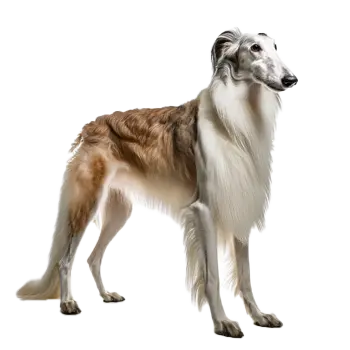
The Psowaya Barsaya stands as one of the most aristocratic and visually striking breeds in the canine world, embodying centuries of careful breeding for both functional excellence and aesthetic perfection. These magnificent sighthounds present an image of fluid grace and controlled power, with every aspect of their physical structure designed to support their role as swift, efficient coursing hunters. Their overall appearance immediately conveys both strength and elegance, creating an unmistakable silhouette that has captivated dog enthusiasts for generations.

Standing at impressive heights ranging from 26 to 32 inches at the shoulder, with females typically smaller than males, the Psowaya Barsaya possesses the substantial size necessary for their traditional hunting duties while maintaining the refined proportions that characterize true sighthound type. Their weight ranges from approximately 60 to 105 pounds, with the variation largely dependent on sex, individual build, and conditioning level. The breed's body structure emphasizes length over height, creating the rectangular profile that optimizes their galloping efficiency and endurance during extended pursuits.

The head of the Psowaya Barsaya represents one of their most distinctive and beautiful features, displaying the refined bone structure and intelligent expression that speaks to generations of selective breeding. The skull is long and narrow, with a barely perceptible stop, flowing smoothly into an elongated muzzle that houses powerful jaws capable of holding large game. Their eyes are large, dark, and expressive, set obliquely to enhance their field of vision during high-speed pursuits. The ears are small, fine in texture, and typically carried folded back against the head, though they may prick forward when the dog is alert or excited.

Perhaps the most immediately recognizable feature of the Psowaya Barsaya is their spectacular coat, which serves both practical and aesthetic purposes. The silky, flowing hair varies in length across different parts of the body, with longer, more abundant coat on the neck, chest, back of legs, and tail, while remaining shorter and closer-lying on the head and front of the legs. This coat distribution provides protection from harsh weather while avoiding impediments to their running ability. The texture should be soft and either flat, wavy, or curly, but never woolly or coarse.

Color variations in the Psowaya Barsaya are numerous and all equally acceptable within breed standards, ranging from solid colors to various combinations and patterns. Common colors include white, cream, various shades of red and gold, gray, black, and combinations thereof. Many individuals display beautiful markings or gradual color transitions that enhance their already striking appearance. The coat requires regular maintenance to preserve its beauty and prevent matting, though the silky texture generally resists tangling better than some other long-coated breeds.

Coat Type
Long, silky, flowing double coat with feathering on legs, chest, and tail
Coat Length/Shedding
Seasonal heavy shedding with year-round moderate maintenance requirements
Openness to Strangers
Reserved and somewhat aloof with strangers, preferring familiar company
Playfulness Level
Enjoys interactive play but tends toward dignified, controlled activities
Watchdog/Protective Nature
Alert but generally quiet, more likely to observe than actively guard or protect
Adaptability Level
Moderate adaptability; requires adequate space and regular exercise opportunities
Trainability Level
Intelligent and capable but independent; responds best to patient, consistent training
Energy Level
Moderate daily energy with short bursts of high intensity exercise needs
Barking Level
Generally quiet breed, barking primarily for specific alerts or communication
Affectionate with Family
Deeply devoted to family members, often forming especially strong bonds with one person
Good with Young Children
Generally patient but may be better suited to families with older, more considerate children
Good with Other Pets
Usually good with other large dogs but strong prey drive affects relationships with smaller pets

Psowaya Barsaya Standard By Organization

American Kennel Club (AKC)

The AKC standard for the Psowaya Barsaya emphasizes the breed's aristocratic bearing and functional sighthound type. The general appearance should be that of a large, narrow, elegant dog capable of great speed and grace. The head should be long and lean with a barely perceptible stop, dark eyes set obliquely, and small ears carried back. The neck should be slightly arched, strong, and well-muscled. The body should be considerably longer than tall, with a deep, narrow chest, well-sprung ribs, and a pronounced tuck-up. The coat should be long and silky, shorter on head and legs, with heavy feathering on hindquarters and tail. All colors are acceptable. Movement should be light and flowing, with great reach and drive. The temperament should be quiet, dignified, and somewhat aloof, but not shy or vicious. Faults include coarseness, shortness of body, poor coat quality, and any deviation from sighthound type.

Fédération Cynologique Internationale (FCI)

Under FCI Standard No. 193, the Psowaya Barsaya is classified in Group 10 (Sighthounds), Section 1 (Long-haired or fringed Sighthounds). The standard describes a dog of aristocratic appearance, tall, lean, and elegant. The head should be long, narrow, and refined, with dark, expressive eyes and small, fine ears. The neck should be long, muscular, and slightly arched. The body should be rectangular in outline, longer than tall, with a deep, narrow chest and well-defined tuck-up. The coat should be silky and soft, either flat, wavy, or curly, but never woolly. Colors include white, golden, silver, gray, tan, and combinations thereof. The gait should be light, elastic, and flowing. The temperament should be calm and balanced, reserved with strangers but devoted to family. The standard emphasizes that any deviation from these points should be considered a fault proportional to its degree.

United Kennel Club (UKC)

The UKC standard for the Psowaya Barsaya describes a large, elegant sighthound of noble bearing and graceful movement. The breed should present a rectangular silhouette, being longer than tall, with a deep, narrow chest and pronounced tuck-up characteristic of coursing hounds. The head should be long and narrow with minimal stop, dark oval eyes, and small ears that fold back against the head. The coat should be silky and flowing, with abundant feathering on the legs, chest, and tail, while remaining short and smooth on the head and front legs. All coat colors and combinations are acceptable. Movement should be effortless and flowing, with long, reaching strides. The temperament should be quiet, gentle, and affectionate with family while remaining somewhat reserved with strangers. The standard emphasizes the importance of maintaining both the functional ability and aristocratic appearance that characterizes this ancient breed.

Other Organizations

Various national kennel clubs and breed organizations worldwide maintain standards for the Psowaya Barsaya that generally align with the major international standards while sometimes incorporating regional preferences or historical interpretations. The Russian Kynological Federation maintains detailed standards that reflect the breed's heritage and traditional function in its native land. Canadian and Australian kennel clubs follow standards closely aligned with either AKC or FCI guidelines, depending on their historical affiliations. Specialty sighthound organizations often maintain additional guidelines focusing on performance ability and coursing function. These various standards collectively work to preserve the essential characteristics of the breed while allowing for some regional variation in emphasis and interpretation of ideal type.

Psowaya Barsaya History

The Psowaya Barsaya traces its magnificent lineage back through the mists of Russian history, with evidence of similar sighthounds appearing in Russian chronicles and artistic works dating to the medieval period. These early coursing hounds likely developed from a complex blend of influences, including native Russian hunting dogs, Middle Eastern sighthounds brought through trade routes, and various European hunting breeds introduced through diplomatic and military contacts. The harsh Russian climate and demanding hunting conditions gradually shaped these dogs into the distinctive breed we recognize today.

During the height of Russian aristocracy, particularly from the 16th through 19th centuries, the Psowaya Barsaya became intimately associated with the hunting traditions of the Russian nobility. Great estates maintained extensive kennels housing hundreds of these magnificent hounds, along with armies of huntsmen, handlers, and support staff dedicated to the elaborate wolf hunting expeditions that formed a central part of aristocratic social life. These hunts were spectacular affairs involving dozens of dogs, mounted hunters, and carefully orchestrated pursuits across the vast Russian steppes and forests.

The breed reached perhaps its greatest refinement during the reigns of the later Tsars, when imperial kennels and those of the great noble families competed to produce the finest examples of the breed. Detailed breeding records were maintained, bloodlines were carefully planned, and the most successful hunting dogs were highly prized for both their functional abilities and their aristocratic beauty. Different families and regions developed their own distinctive lines, some emphasizing speed and agility, others focusing on size and power for tackling larger game.

The tumultuous events of the Russian Revolution and subsequent Soviet period brought devastating changes to the breed's population and breeding programs. Many of the great kennels were dispersed or destroyed, and countless dogs were lost during the political upheavals and economic chaos of the early 20th century. However, dedicated breed enthusiasts, both within Russia and among emigrants who had brought their dogs to other countries, worked tirelessly to preserve the bloodlines and maintain breeding programs despite enormous challenges.

International development of the breed began in earnest during the late 19th century, when Russian nobles began sharing their hunting dogs with foreign dignitaries and fellow aristocrats. The breed gained particular popularity in England, where they were enthusiastically received by hunting enthusiasts who appreciated their speed, grace, and noble bearing. American interest followed shortly thereafter, with the first registrations appearing in the early 1890s and the breed gaining recognition by the American Kennel Club in 1891.

The 20th century brought both challenges and opportunities for the Psowaya Barsaya's development outside Russia. Two World Wars disrupted breeding programs, but the breed's established popularity in Western countries helped ensure its survival and continued development. Breed clubs formed in various countries, maintaining standards and organizing activities that celebrated both the dogs' hunting heritage and their qualities as companions. Modern breeding programs focus on maintaining the breed's essential characteristics while adapting to contemporary needs and lifestyles.

Contemporary Psowaya Barsaya populations worldwide represent a careful balance of preserving historical bloodlines while incorporating selective breeding practices that promote health, temperament, and functional ability. International cooperation among breed enthusiasts has helped maintain genetic diversity and share best practices for breeding and care. The breed continues to honor its aristocratic heritage while adapting to modern roles as companions, show dogs, and participants in various dog sports that celebrate their natural abilities.

Psowaya Barsaya Function

The Psowaya Barsaya was developed and refined over centuries to excel in the demanding role of coursing large game across the challenging terrain of the Russian steppes and forests. Their primary function involved the pursuit and capture of wolves, a task that required not only exceptional speed and agility but also tremendous courage, intelligence, and the ability to work effectively both independently and as part of coordinated hunting packs. This specialized hunting role shaped every aspect of their physical structure, temperament, and behavioral characteristics.

In their traditional hunting role, Psowaya Barsaya worked in teams of two or three dogs, typically released when wolves were sighted in open terrain suitable for coursing. The dogs' exceptional eyesight allowed them to track their quarry across vast distances, while their remarkable speed enabled them to close the gap and engage the wolf. Once caught, the dogs were trained to hold the wolf without killing it, allowing mounted hunters to arrive and complete the capture. This required extraordinary courage and technique, as wolves are formidable opponents capable of seriously injuring or killing hunting dogs.

Beyond wolf hunting, these versatile sighthounds were also employed in pursuing other large game including deer, elk, and various smaller animals that inhabited the Russian wilderness. Their hunting style emphasized visual tracking and high-speed pursuit over scent following, making them particularly effective in open terrain where their speed advantage could be fully utilized. The dogs learned to read terrain, anticipate quarry movements, and coordinate their efforts with other pack members during complex pursuit sequences.

In contemporary settings, the Psowaya Barsaya's functional abilities have found new expression in various dog sports and activities that celebrate their natural talents. Lure coursing provides an outlet for their chasing instincts in a controlled environment, allowing them to pursue artificial quarry across measured courses that test their speed, agility, and persistence. These events help maintain the dogs' physical conditioning while satisfying their psychological need to engage in pursuit behaviors.

The breed's intelligence and trainability, originally developed for complex hunting scenarios, translate well to various modern activities including obedience work, therapy dog programs, and even some forms of agility competition adapted to their size and structure. Their calm, dignified temperament makes them suitable for therapeutic visiting, where their impressive appearance and gentle nature can provide comfort and interest to people in hospitals, nursing homes, and similar settings.

As family companions, Psowaya Barsaya fulfill important social and emotional functions, providing devoted companionship while maintaining their characteristic independence and dignity. Their role often includes that of a living connection to history and tradition, embodying centuries of careful breeding and cultural heritage. Many owners find great satisfaction in preserving and celebrating this living piece of aristocratic Russian history while enjoying the daily companionship of these remarkable dogs.

Exercise and mental stimulation requirements for the Psowaya Barsaya reflect their heritage as active hunting dogs, though their needs can be met through various modern activities. Regular free running in secure areas, long walks, and interactive games help maintain their physical and mental health. Their function in contemporary life often involves serving as ambassadors for their breed, introducing people to the remarkable heritage and characteristics of these magnificent sighthounds through dog shows, educational events, and public appearances.

Psowaya Barsaya Behavior

The behavioral characteristics of the Psowaya Barsaya reflect their aristocratic heritage and specialized hunting background, resulting in dogs that exhibit a unique combination of independence, dignity, and deep family loyalty. These sighthounds possess a naturally calm and reserved demeanor that contrasts sharply with more exuberant breeds, preferring to observe situations carefully before deciding how to respond. Their behavior patterns demonstrate the intelligence and self-reliance that were essential for their historical hunting roles, where they needed to make split-second decisions during high-speed pursuits.

Intellectually, Psowaya Barsaya demonstrate remarkable problem-solving abilities and environmental awareness, traits that served them well when navigating complex hunting scenarios and reading the movements of their quarry. They possess excellent memories and can learn routines quickly, though their independent nature means they may choose when and how to respond to commands based on their own assessment of the situation. This selective responsiveness is not defiance but rather a manifestation of the decision-making capability that made them effective hunting partners.

Social behavior in Psowaya Barsaya tends toward reserve and selectivity, particularly with strangers or in unfamiliar situations. They rarely display the immediate friendliness characteristic of some breeds, instead preferring to assess new people and situations before deciding on their level of engagement. This natural caution, combined with their imposing size and aristocratic bearing, often creates an initial impression of aloofness, though they typically warm to people who respect their space and approach them appropriately.

Within their family unit, Psowaya Barsaya often display profound loyalty and affection, frequently forming particularly strong bonds with one or two family members while remaining friendly toward others. Their expressions of affection tend to be subtle and dignified rather than overtly demonstrative, reflecting their generally calm temperament. They often enjoy quiet companionship, positioning themselves near their favorite people without demanding constant attention or interaction.

The prey drive in Psowaya Barsaya remains strong despite generations of breeding for companionship qualities, and this instinct significantly influences their behavior around smaller animals. They may display intense interest in small, fast-moving creatures, and their response can shift from casual observation to focused pursuit very quickly. This behavior is deeply ingrained and typically cannot be completely eliminated through training, though proper management and early socialization can help owners develop strategies for safe coexistence with smaller pets.

Exercise behavior in the breed reflects their heritage as burst-speed hunters rather than endurance athletes. Psowaya Barsaya typically enjoy short periods of intense activity followed by longer periods of rest and relaxation. They may appear quite calm and even lazy indoors, then suddenly exhibit remarkable energy and speed when given the opportunity to run freely in appropriate spaces. This pattern of activity mirrors their historical hunting style and should be understood and accommodated in their care routines.

Training responses in Psowaya Barsaya require patience and understanding of their independent nature. They respond best to consistent, positive methods that respect their intelligence and dignity. Harsh corrections or repetitive drilling often prove counterproductive, as these dogs may simply choose to disengage from training sessions they find unpleasant or meaningless. Successful training programs typically incorporate variety, positive reinforcement, and activities that engage their natural interests and abilities.

Communication patterns in the breed tend toward subtlety, with many Psowaya Barsaya being naturally quiet dogs that vocalize primarily for specific purposes such as alerting to visitors or expressing particular needs. They often communicate through body language and positioning, using their expressive eyes and graceful movements to convey their intentions and feelings. Understanding these subtle communication methods helps owners develop stronger relationships with their dogs and respond appropriately to their needs.

Psowaya Barsaya Family Dynamics

Within family environments, the Psowaya Barsaya typically establishes itself as a dignified and devoted household member, though their integration requires understanding and appreciation of their unique characteristics and needs. These aristocratic sighthounds form deep emotional bonds with their human families, often displaying remarkable loyalty and affection while maintaining their characteristic independence and selective sociability. Their family role often evolves into that of a calm, observant presence who provides steady companionship without being overly demanding of attention or interaction.

The breed's relationship with children requires careful consideration and management, as their large size, sensitivity to sudden movements, and somewhat reserved nature may not always mesh well with very young or particularly active children. However, when properly introduced and supervised, many Psowaya Barsaya develop wonderfully gentle relationships with children who understand how to interact respectfully with them. Their patient nature and lack of aggressive tendencies generally make them safe around children, though their size alone necessitates supervision during interactions.

As children in the family mature, they often develop special appreciation for the Psowaya Barsaya's calm intelligence and noble bearing. These dogs can become excellent companions for older children and teenagers who enjoy quieter activities such as reading, studying, or gentle outdoor exploration. The breed's natural dignity and impressive appearance often instill a sense of pride and responsibility in young family members who participate in their care and training.

Multi-pet households present both opportunities and challenges when including a Psowaya Barsaya in the family dynamic. Their generally peaceful nature with other large dogs often leads to harmonious relationships, particularly when proper introductions are made and adequate space is available for all pets. However, their strong prey drive requires extremely careful management around cats, small dogs, and other small pets, as their instinctive responses to small, fast-moving animals can override training and socialization efforts.

The breed's role in family routines often centers around their appreciation for predictable schedules and calm household environments. They typically adapt well to family rhythms and often position themselves strategically to observe family activities while remaining available for interaction when invited. Their presence can have a calming influence on household dynamics, as their serene nature and dignified bearing often encourage more thoughtful, deliberate interactions among family members.

Exercise and activity requirements for Psowaya Barsaya can become positive family bonding opportunities when properly planned and executed. Family walks, hiking expeditions, and visits to secure off-leash areas can provide valuable shared experiences while meeting the dog's physical and mental stimulation needs. However, families must understand that these dogs require specialized exercise conditions, particularly secure areas where they can run safely without risk of pursuing wildlife or other small animals.

The emotional support provided by Psowaya Barsaya within family settings tends to be subtle but profound, as their calm presence and devoted loyalty can provide comfort during difficult times while their dignified bearing brings a sense of stability and continuity to family life. Many families find that their Psowaya Barsaya serves as a living connection to history and tradition, representing centuries of careful breeding and cultural heritage that can inspire pride and educational opportunities for family members.

Space and lifestyle considerations significantly impact how successfully a Psowaya Barsaya integrates into family dynamics, as these large, active dogs require adequate room for comfortable living and safe exercise. Families in smaller spaces or urban environments may find the breed challenging to accommodate properly, while those with larger homes and secure outdoor areas often discover that the breed adapts well to family life when their specific needs are understood and met consistently.

Psowaya Barsaya Health

The Psowaya Barsaya generally enjoys relatively good health compared to many purebred dogs, with a typical lifespan ranging from 9 to 14 years depending on various factors including genetics, care quality, and individual constitution. Their size and physical structure do predispose them to certain health considerations common among large, deep-chested breeds, but responsible breeding practices and attentive preventive care can help minimize many potential problems. Understanding the breed's specific health risks and requirements enables owners to provide optimal care throughout their dog's lifetime.

The breed's large size and rapid growth during puppyhood require careful attention to nutrition and exercise management to promote proper skeletal development and avoid complications that can arise from overfeeding or excessive exercise during critical growth periods. Young Psowaya Barsaya should receive high-quality nutrition formulated for large breed puppies, with feeding schedules and portion sizes carefully monitored to maintain appropriate growth rates. Exercise during puppyhood should be moderate and avoid repetitive high-impact activities that could stress developing joints and growth plates.

Cardiovascular health represents a particular area of concern for the breed, as their large size and deep chest configuration can predispose them to various heart conditions. Regular cardiac evaluations by qualified veterinarians help identify potential problems early, when intervention options may be most effective. Maintaining appropriate body weight, providing regular but appropriate exercise, and avoiding unnecessary stress can all contribute to cardiovascular health throughout the dog's lifetime.

The breed's distinctive deep chest and lean build create susceptibility to gastric dilatation-volvulus (commonly called bloat), a potentially life-threatening emergency that requires immediate veterinary intervention. Preventive measures include feeding smaller, more frequent meals, avoiding exercise immediately before and after eating, using elevated feeding stations cautiously, and being aware of early warning signs that might indicate developing problems. Some owners choose preventive surgical procedures to reduce bloat risk, particularly in dogs with family histories of the condition.

Orthopedic health considerations in Psowaya Barsaya include monitoring for hip and elbow dysplasia, conditions that can affect mobility and quality of life if left unaddressed. Regular veterinary examinations, appropriate exercise programs, weight management, and early intervention when problems are detected can help maintain joint health and functionality throughout the dog's lifetime. Breeding stock should undergo appropriate health testing to reduce the likelihood of passing these conditions to offspring.

Common Health Issues

  • Gastric dilatation-volvulus (bloat) - Life-threatening stomach rotation requiring emergency veterinary intervention
  • Cardiomyopathy - Heart muscle disease that can affect cardiac function and longevity
  • Hip dysplasia - Developmental hip joint abnormality affecting mobility and comfort

Recommended Health Testing

  • Annual cardiac evaluation including auscultation and electrocardiogram when indicated
  • Hip and elbow radiographic evaluation for breeding stock and symptomatic individuals
  • Ophthalmological examination to screen for inherited eye conditions

Major Greyhound Specific Rescues

If you're looking to adopt a Greyhound, consider contacting these breed-specific rescue organizations:

Greyhound Adoption Center (Houndsavers)

Established in 1987, this San Diego-based nonprofit has rescued, rehabilitated and found loving homes for thousands of Greyhounds. They provide comprehensive support including veterinary care, behavioral assessment, and ongoing adoption support. Known for their thorough adoption process and commitment to matching the right dog with the right family.

Visit Website
American Greyhound

Dedicated to helping retired racing Greyhounds, Spanish galgos, lurchers, and other sighthounds in need. This volunteer-run organization provides veterinary care and works to find each dog a loving forever home. They also rescue international sighthounds and provide educational resources about the breed.

Visit Website
Greyhound Pets, Inc.

A Pacific Northwest-based 501(c)(3) nonprofit dedicated to finding homes for retired racing Greyhounds in Washington and British Columbia. They provide ongoing education and support to adoptive families and maintain a strong community of Greyhound enthusiasts through events and educational programs.

Visit Website

"Don't Shop... Please Adopt" - There are many wonderful Greyhounds waiting for their forever homes.

Due to the changing nature of rescue organizations, please verify website functionality before contacting.