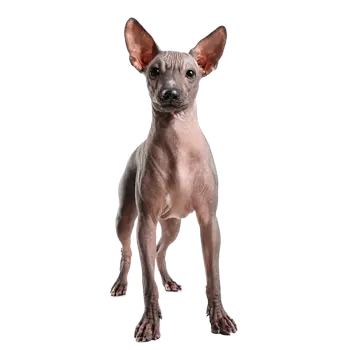
Peruvian Hairless Dog

Peruvian Inca Orchid
Gallery coming soon

Furry Critter Network Etsy Shop

Quick Facts

🐕 Breed Group
Sighthound
📏 Size Category
Small to Large (three varieties)
📏 Height
Small: 9.75-15.75 inches; Medium: 15.75-19.75 inches; Large: 19.75-25.75 inches
⚖️ Weight
Small: 8.5-17.5 lbs; Medium: 17.5-26.5 lbs; Large: 26.5-55 lbs
⏱️ Life Expectancy
12-14 years
🧥 Coat Type
Hairless or Coated
🎨 Coat Colors
Any color including Black, Brown, Gray, Pink, White, Cream, Gold, Red, spotted or solid
😀 Temperament
Affectionate, Loyal, Alert, Reserved with Strangers
🏃 Exercise Needs
Moderate - 20-30 minutes daily
🎓 Training Difficulty
Moderate - intelligent but independent
👶 Good with Children
Yes - best with older, gentle children
🐾 Good with Other Pets
Moderate - prey drive requires supervision with small animals

Other Names & Breed Recognition

The Peruvian Hairless Dog carries a rich tapestry of names reflecting its ancient heritage and the diverse cultures that have treasured this unique breed across millennia. The official registered name with major kennel clubs is the Peruvian Inca Orchid, a romantic designation coined by American dog enthusiast Jack Walklin in 1966 when he brought the first specimens to the United States. This name references both the breed's Peruvian origins and a legend that Spanish conquistadors found these hairless dogs sleeping among wild orchids.

In its native Peru, the breed is most commonly known as the Perro sin Pelo del Peru, which translates directly to Peruvian Hairless Dog. The Quechua word Calato, meaning naked, is also widely used in Peru to describe these distinctive dogs. In Incan times, the breed was known as Allqu, the general Quechua word for dog, though these hairless specimens held special status among the various dogs kept by Andean peoples.

The Spanish conquistadors who encountered these dogs in Incan homes during the sixteenth century called them Perros Flora or flower dogs, supposedly because they found the dogs resting among orchids and other flowers in the gardens of Incan nobility. Other Spanish colonial names included Perro calato, Perro chino (possibly derived from china meaning woman rather than indicating Chinese origins), Perro orquídea, and Perro Chimú, the latter referencing the Chimú civilization that preceded the Incas.

Various other names have been applied to this breed throughout history and across different regions. The terms Viringo and Vitilingo appear in some historical records. Regional variations existed across the vast territory once governed by the Incan Empire, with dogs from different areas sometimes given distinct local designations. The Khala, a Quechua word for naked, is sometimes used interchangeably with the breed name.

The breed's international recognition under the Peruvian Inca Orchid name came through Jack Walklin's efforts to establish the breed in America during the 1960s. He combined elements of the various names and legends surrounding these dogs to create a designation that captured both their exotic beauty and ancient heritage. While some purists prefer the straightforward Peruvian Hairless Dog designation, the Peruvian Inca Orchid name has become standardized in American and international registries, though the FCI uses Perro sin Pelo del Peru as the official name with Peruvian Hairless Dog as the English translation.

Peruvian Hairless Dog Organizations & Standards

The Peruvian Hairless Dog has achieved recognition from major international kennel organizations, though its status varies among registries reflecting the breed's relative rarity outside its homeland. As Peru's only indigenous dog breed still in existence, it holds special cultural significance and has been designated part of the national heritage by the Peruvian government.

The Fédération Cynologique Internationale, the largest international canine organization, has recognized the breed since 1981 under the name Perro sin Pelo del Peru. The FCI classifies the breed in Group 5 covering Spitz and Primitive Types, acknowledging its ancient origins and placement among primitive breed types. The FCI standard, written by the Kennel Club Peruano, serves as the definitive international standard and emphasizes that hairlessness is the most important aspect of the breed's appearance.

The United Kennel Club officially recognized the Peruvian Inca Orchid in 1996, placing the breed within the Sighthound and Pariah Group. This classification acknowledges both the breed's sighthound characteristics and its primitive origins as an ancient breed that developed alongside human civilization. The UKC standard describes an elegant sighthound giving the appearance of speed, strength, and stamina.

The American Kennel Club has included the Peruvian Inca Orchid in its Foundation Stock Service since 1996 and elevated the breed to compete in the Miscellaneous Class beginning in 2011. The breed is designated as a sighthound and can participate in various AKC companion events. As of 2024, the breed remains in the Miscellaneous Class, working toward full AKC recognition, which requires meeting specific criteria regarding breed population, geographic distribution, and parent club development.

The Canadian Kennel Club does not currently fully recognize the breed, though it may be registered with other Canadian registries. The Kennel Club of the United Kingdom also does not currently recognize the Peruvian Inca Orchid, reflecting the breed's limited presence in British dog circles.

In Peru, the breed enjoys protected status. The Peruvian government declared the Peruvian Hairless Dog part of the national patrimony in 2001, providing legal protection for the breed within its homeland. The Kennel Club Peruano maintains the breed standard and oversees breeding programs to preserve this ancient breed. Peruvian law requires that examples of the breed be maintained at archaeological sites and museums as living cultural heritage.

Breed clubs supporting the Peruvian Hairless Dog include the Peruvian Inca Orchid Club of the United States, which has served as the AKC parent club since 2010. This organization works to promote the breed, educate prospective owners, and support responsible breeding practices. Similar clubs exist in various countries, working together to preserve and promote this unique ancient breed.

Kennel Club Recognition

  • American Kennel Club (AKC): Miscellaneous Class since 2011 (Sighthound designation)
  • United Kennel Club (UKC): Recognized in 1996 - Sighthound and Pariah Group
  • Canadian Kennel Club (CKC): Not fully recognized
  • Fédération Cynologique Internationale (FCI): Recognized in 1981 - Group 5 (Spitz and Primitive Types)
  • The Kennel Club (UK): Not recognized

Peruvian Hairless Dog Physical Description

The Peruvian Hairless Dog presents a striking and unmistakable appearance, characterized primarily by its hairless body that sets it apart from nearly all other breeds. The breed standard emphasizes an elegant sighthound silhouette expressing speed, strength, and harmony without ever appearing coarse or heavy. Three size varieties exist within the breed, each maintaining the same proportions and type at different scales.

The most distinctive feature is the hairlessness that defines the breed. In hairless individuals, the skin is smooth, supple, and warm to the touch, with a texture often compared to suede or fine leather. Small tufts of hair may appear on the head, creating a mohawk-like crest, and sparse hair may also be present on the lower portions of the tail and feet. The skin can be any solid color including black, brown, gray, copper, or pink, often with unpigmented spots or patches creating attractive patterns. A coated variety also exists, born in the same litters as hairless puppies, with a short to medium-length single coat that lies close to the body.

The head is broad between the ears and tapers toward the nose, with parallel skull and muzzle planes and a barely perceptible stop. The expression is alert and intelligent, with medium-sized, slightly almond-shaped eyes ranging from black through shades of brown to yellow depending on skin color. Eye rims and nose pigment harmonize with the overall coloring. The ears are medium large, broad at the base, and tapering to a point. In hairless dogs, ears stand erect when alert and may fold when relaxed; coated dogs have semi-prick ears.

The body follows sighthound proportions with a deep chest, well-sprung ribs, and a definite tuck-up in the underline. The ratio between height at withers and body length is approximately 1:1, creating a square appearance, though females may be slightly longer. The back is level with a slightly arched loin, and the croup slopes gently. The tail is set low and tapers to a point, carried in a curve that may rise above the back line when the dog is excited.

The three size varieties share identical type and proportions. The small variety stands 9.75 to 15.75 inches at the shoulder and weighs 8.5 to 17.5 pounds. The medium variety measures 15.75 to 19.75 inches and weighs 17.5 to 26.5 pounds. The large variety ranges from 19.75 to 25.75 inches with weights of 26.5 to 55 pounds. The medium size is most common, while the large variety remains relatively rare.

Movement reflects the breed's sighthound heritage with a soft, flexible gait featuring moderate reach and drive. The breed moves with a rather short, quick step that is efficient and ground-covering. There is a tendency toward single-tracking at increased speeds. The overall impression in motion should be one of grace and efficiency.

An important characteristic specific to the hairless variety is frequently incomplete dentition. The genetic mutation causing hairlessness is linked to dental development, so hairless individuals commonly have missing teeth, particularly premolars. This is not considered a fault in hairless dogs, though the coated variety should have full dentition. The teeth that are present should meet in a scissors or level bite.

Affection Level
The Peruvian Hairless Dog forms exceptionally deep bonds with family members, often becoming devoted to one person in particular. They crave closeness and physical contact, using their warm, hairless bodies to snuggle against loved ones.
Good With Children
Peruvian Hairless Dogs do well with older children who understand how to interact gently with dogs. Their sensitive skin and sometimes delicate frame means they are not ideal for rough play with younger children.
Good With Other Dogs
With proper socialization, Peruvian Hairless Dogs can coexist peacefully with other dogs. They may be reserved initially but can form bonds with canine housemates. Same-size dogs are generally better matches.
Shedding Level
The hairless variety has virtually no shedding, making this breed ideal for those who dislike pet hair. The coated variety sheds minimally. Either variety produces less dander than most breeds.
Grooming Needs
Despite lacking hair, the hairless variety requires regular skin care including moisturizing, sun protection, and periodic bathing to prevent acne and maintain skin health. The coated variety needs standard brushing.
Drooling Level
Peruvian Hairless Dogs are not droolers. Their refined muzzle structure and clean habits mean owners will not encounter drooling issues with this elegant breed.
Coat Length
The hairless variety is nearly completely bald, with only occasional small patches of hair on the head, feet, or tail tip. The coated variety has a short to medium single coat lying close to the body.
Openness To Strangers
Peruvian Hairless Dogs are naturally wary of strangers, taking time to assess new people before warming up. This reserve makes them excellent watchdogs but requires patient socialization to prevent excessive shyness.
Playfulness
While playful with their families, Peruvian Hairless Dogs are not excessively boisterous. They enjoy play sessions and interactive games but also appreciate quiet time. Their energy comes in bursts rather than constant activity.
Protective Nature
Peruvian Hairless Dogs are vigilant watchdogs who take their protective role seriously. They alert to strangers and unusual activity, and their wariness of unfamiliar people makes them naturally protective of home and family.
Trainability
Intelligent and capable learners, Peruvian Hairless Dogs respond well to positive reinforcement training. Their independent streak requires patience, and harsh methods are counterproductive with this sensitive breed.
Energy Level
Peruvian Hairless Dogs have moderate energy levels, requiring daily exercise but not excessive amounts. They enjoy active periods followed by relaxation, making them adaptable to various lifestyles with appropriate daily activity.

Peruvian Hairless Dog History & Development

The Peruvian Hairless Dog claims one of the longest documented histories of any domestic dog breed, with evidence placing hairless dogs in South America for at least three thousand years. This ancient breed's story is intertwined with the rise and fall of great Andean civilizations, from the pre-Incan cultures through the Spanish conquest and into modern times when dedicated enthusiasts have worked to preserve this living cultural treasure.

Archaeological evidence places dogs resembling the modern Peruvian Hairless Dog in the Andean region as early as 300 BCE, though some researchers suggest an even earlier presence. Ceramic vessels and textiles from the Mochica, Vicus, Chancay, and Chimú cultures, which flourished before the Inca Empire, depict hairless dogs with remarkable accuracy. These artistic representations show dogs nearly identical to today's breed, suggesting the type has remained stable across millennia.

The hairless dogs held special status in pre-Columbian Andean societies, though their exact roles varied among cultures. The Chimú people considered them symbols of good luck. Various cultures attributed mystical and healing properties to these warm-skinned dogs, using their body heat to treat arthritis and other ailments. Their urine and feces were reportedly used in traditional medicines. Some evidence suggests the dogs served as bed warmers in the cold Andean nights, their naturally elevated body temperature providing comfort.

The Inca Empire, which reached its height in the fifteenth century, inherited these hairless dogs from the civilizations it absorbed. The Spanish conquistadors who invaded Peru in the 1530s documented finding hairless dogs in Incan homes, noting that they were kept primarily by nobility. The Spanish called them perros flora or flower dogs, supposedly because they were found resting among orchids in the gardens of Incan palaces. The Incas apparently kept hairless dogs indoors and allowed them out only at night to prevent sunburn, while coated individuals could spend time outdoors during the day.

The Spanish conquest devastated Andean cultures and disrupted the careful breeding traditions that had maintained these dogs for centuries. As indigenous populations declined and traditional social structures collapsed, the hairless dogs lost their privileged status. They survived primarily in rural areas, maintained by indigenous communities who continued valuing them as companions and for their purported healing properties. For centuries, the breed existed as a village dog throughout Peru, Bolivia, and neighboring regions.

Modern recognition of the breed began in the mid-twentieth century when the Kennel Club Peruano took steps to standardize and preserve the native hairless dogs. The FCI officially recognized the breed in 1981, establishing international standards. In 1966, American dog enthusiast Jack Walklin encountered these dogs while visiting Peru and brought eight specimens back to the United States, establishing breeding programs and coining the Peruvian Inca Orchid name.

The Peruvian government recognized the cultural importance of the breed in 2001, declaring it part of the national patrimony and enacting legal protections. Today, examples of the breed are required to be kept at archaeological sites and museums as living cultural heritage. While still rare internationally, dedicated breeders worldwide work to preserve this ancient breed, maintaining its unique characteristics while building healthy populations for future generations.

Peruvian Hairless Dog Temperament & Personality

The Peruvian Hairless Dog possesses a temperament shaped by thousands of years as a companion and guardian in Andean homes, creating a dog that combines deep devotion to family with natural wariness of strangers. This primitive breed retains instincts and behaviors that reflect its ancient origins while adapting well to modern family life when properly socialized and understood.

Family devotion defines the Peruvian Hairless Dog's core personality. These dogs form extraordinarily strong bonds with their people, often becoming particularly attached to one family member while remaining affectionate with the entire household. They crave physical closeness and will seek out opportunities to snuggle against their favorite humans, using their naturally warm, hairless bodies to provide comforting contact. This desire for closeness means they do not thrive when left alone for extended periods and may develop separation anxiety without proper conditioning.

The breed's reserve with strangers represents a fundamental characteristic rather than a training issue. Peruvian Hairless Dogs instinctively distrust unfamiliar people and require time to assess new individuals before offering acceptance. This wariness made them valued watchdogs throughout their history, and modern dogs retain these alert, protective instincts. They will bark to announce visitors and remain vigilant about household security. While never aggressive without cause, they take their guardian role seriously.

Intelligence and sensitivity characterize the breed's approach to life. These dogs are perceptive, quickly reading their owners' moods and responding to household dynamics. This sensitivity means they flourish in calm, stable environments and may become anxious in chaotic or tense households. They respond poorly to harsh treatment or loud voices, shutting down rather than complying when pressured. Patient, gentle handling brings out the best in this breed.

The primitive nature of this ancient breed means some individuals display behaviors rarely seen in more derived breeds. They can be somewhat cat-like in their independence and self-grooming habits. Their prey drive remains active, and they will pursue small animals given the opportunity. Some dogs exhibit a range of temperaments from docile to more spirited, reflecting the breed's primitive heritage rather than the more predictable temperaments of heavily standardized modern breeds.

Playfulness emerges in bursts rather than constant activity. Peruvian Hairless Dogs enjoy play sessions with their families and can be quite lively during active periods, but they equally appreciate quiet downtime. After adequate exercise and interaction, they contentedly settle on comfortable surfaces near their people. Their moderate energy level makes them adaptable to various lifestyles, provided they receive sufficient daily activity and mental stimulation.

With children, the breed can be gentle and patient when interactions are respectful. However, they do best with older children who understand how to treat dogs appropriately. Very young children's unpredictable movements and noises can overwhelm sensitive Peruvian Hairless Dogs. The breed's physical vulnerability, particularly the hairless variety's exposed skin, also makes them unsuitable for rough play. Supervision ensures positive experiences for both children and dogs.

Peruvian Hairless Dog Family Life & Living Requirements

Living successfully with a Peruvian Hairless Dog requires understanding and accommodating this unique breed's special needs, from their sensitive skin requiring protection from environmental extremes to their emotional need for close family connection. When their requirements are met, these ancient dogs make devoted, adaptable companions suited to various living situations.

Housing needs for Peruvian Hairless Dogs are relatively flexible, as their moderate size and energy level allow them to adapt to apartments as well as houses with yards. They are decidedly indoor dogs who should live as household members rather than outdoor pets. Their hairless skin provides no protection against temperature extremes, sunburn, or physical hazards, making indoor living essential. They need comfortable, cushioned bedding to protect their skin from pressure points.

Temperature sensitivity represents a primary consideration for this breed. Without fur for insulation, Peruvian Hairless Dogs feel cold and heat more intensely than coated breeds. In cool weather, they require sweaters, coats, or other protective clothing for outdoor excursions. In summer, sun exposure must be limited and dog-safe sunscreen applied to exposed skin during outdoor time. The ideal home maintains comfortable indoor temperatures year-round.

The breed's strong attachment to family means they do not tolerate isolation well. Peruvian Hairless Dogs thrive in homes where family members are present much of the time or can arrange for companionship during absences. Extended periods alone lead to anxiety and potential behavioral problems. These dogs want to be wherever their people are, following family members throughout the house and seeking physical contact whenever possible.

Families with older children find Peruvian Hairless Dogs to be gentle, loyal companions. The breed's sensitivity and the hairless variety's vulnerable skin make them less suited to households with very young children whose interactions tend to be rough or unpredictable. When children are taught to interact appropriately and supervision is maintained, the breed responds with devoted affection.

Multi-pet households require careful consideration. Peruvian Hairless Dogs can coexist with other dogs, particularly when raised together or properly introduced. Similarly-sized dogs often make the best companions. However, their sighthound heritage means they retain prey drive toward small animals. Cats, rabbits, and other small pets may trigger chase instincts. Households with small animals should exercise extreme caution and maintain strict separation if necessary.

Exercise requirements are moderate compared to many breeds. Daily activity totaling 20 to 30 minutes of walks and play typically satisfies their physical needs. They enjoy brief bursts of running and play followed by relaxation. A securely fenced yard provides convenient exercise opportunities, though they should never be left outdoors unattended due to their temperature sensitivity and vulnerable skin. Indoor play and mental stimulation through puzzle toys supplement physical exercise.

Travel accommodates this breed well due to their moderate size and adaptable nature. They prefer accompanying their families to being left behind and can adjust to travel routines. However, temperature-controlled environments remain essential, and protective clothing may be needed for various climates encountered during travel.

Peruvian Hairless Dog Training & Exercise Needs

Training a Peruvian Hairless Dog requires understanding their intelligent but independent nature, approaching education with patience and positive methods that respect their sensitivity while establishing clear expectations. This primitive breed has not been shaped by generations of selection for trainability, so realistic expectations and appropriate techniques yield the best results.

The breed's intelligence is evident in their quick understanding of concepts and their ability to problem-solve. However, intelligence does not automatically translate to eager obedience. Peruvian Hairless Dogs think for themselves, sometimes choosing whether to comply with requests based on what seems reasonable to them. This independent streak challenges trainers accustomed to more biddable breeds but becomes manageable with proper approach.

Positive reinforcement training works best with this sensitive breed. Food rewards, praise, and play motivate without creating the anxiety that harsh corrections cause. These dogs shut down when treated roughly, becoming fearful or avoidant rather than compliant. Gentle, consistent training that makes learning enjoyable produces willing partnership. Short training sessions maintain interest better than lengthy drills that bore this intelligent breed.

Early socialization carries critical importance for Peruvian Hairless Dogs given their natural wariness of strangers. Puppies need positive exposure to diverse people, places, sounds, and experiences during the critical socialization window. These experiences should be controlled and positive, never overwhelming. Well-socialized adults maintain their alert nature while showing appropriate confidence in various situations rather than excessive fear or shyness.

Basic obedience training establishes household harmony and safety. Despite their independent nature, Peruvian Hairless Dogs can learn standard commands reliably when training is consistent and rewarding. Focus on practical commands that enhance daily life and safety rather than precision competition obedience. The breed may never achieve robotic reliability, but they can become well-mannered companions who understand expectations.

Exercise needs are moderate, making this breed adaptable to various activity levels. Daily exercise totaling approximately 20 to 30 minutes satisfies most individuals, though some dogs enjoy more activity. Walks provide mental stimulation through exposure to the environment as well as physical exercise. Brief running opportunities in secure areas allow them to stretch their sighthound legs.

The breed's sighthound heritage means prey drive remains active. They will chase small animals if given opportunity, and this instinct cannot be trained away. Secure fencing and leash walking in unfenced areas are essential safety measures. Never trust a recall command when prey drive might be triggered. Their athletic ability means fencing must be adequate to contain dogs who can jump surprisingly well.

Mental stimulation complements physical exercise in keeping Peruvian Hairless Dogs content. Puzzle toys, interactive feeders, and training games engage their intelligence. Without adequate mental engagement, boredom may lead to destructive behaviors or anxiety. Incorporating their minds into daily activities through simple training exercises, food puzzles, and interactive play prevents behavioral problems.

Dog sports provide outlets for the breed's abilities and energy while strengthening the human-canine bond. Lure coursing appeals to their sighthound instincts. Agility offers mental and physical challenges. Rally provides training in an engaging format. While they may not achieve the precision of more trainable breeds, many Peruvian Hairless Dogs enjoy sport participation and benefit from the activity and interaction these events provide.

Peruvian Hairless Dog Health Concerns

The Peruvian Hairless Dog is generally considered a healthy breed benefiting from its ancient origins and relatively diverse gene pool within its population. With appropriate care addressing their unique needs as hairless dogs, these companions typically enjoy lifespans of 12 to 14 years, rewarding owners with many years of devoted companionship.

Common Health Issues

  • Skin allergies and related dermatological conditions represent common health concerns in the hairless variety due to their exposed and vulnerable skin.
  • Dental disease occurs frequently in hairless Peruvian Hairless Dogs due to the genetic link between hairlessness and dental development.
  • Missing teeth are expected in hairless individuals, and remaining teeth may be more prone to periodontal problems or decay.
  • Epilepsy affects some Peruvian Hairless Dogs, causing seizure activity that ranges from mild to severe.
  • If your dog experiences seizures, veterinary evaluation determines appropriate management, which may include medication to control seizure frequency and severity.
  • Luxating patella, a condition where the kneecap slips out of position, can affect Peruvian Hairless Dogs, particularly the smaller varieties.

Preventive Care & Health Monitoring

  • Regular dental care at home combined with professional cleanings as recommended by your veterinarian maintains oral health throughout life.
  • Maintaining healthy weight reduces stress on joints.
  • Routine blood work helps identify thyroid dysfunction early, allowing for effective management with medication.
  • Regular eye examinations detect developing problems early, and the hairless variety's exposed eyes may be more vulnerable to environmental irritation requiring attentive monitoring.

Health screening through routine blood work and physical examinations helps identify conditions like thyroid imbalances before they become serious problems. With attentive care addressing their unique needs as hairless dogs and regular veterinary monitoring, Peruvian Hairless Dogs typically enjoy healthy lives spanning well into their teens, providing loyal companionship throughout their years.

Peruvian Hairless Dog Grooming & Maintenance

The Peruvian Hairless Dog's grooming needs differ dramatically from most breeds due to their unique hairless characteristic. Rather than coat care, owners must focus on skin maintenance that keeps their dog comfortable, healthy, and protected from environmental hazards. Understanding and committing to these special requirements is essential before bringing a Peruvian Hairless Dog into your home.

Skin care for the hairless variety requires regular attention and appropriate products. The exposed skin needs moisturizing to prevent dryness and cracking, particularly during dry weather or in climate-controlled environments that reduce humidity. Dog-safe moisturizers or oils applied regularly maintain skin suppleness. Avoid human products that may contain ingredients harmful to dogs or that dogs might ingest when licking.

Bathing the hairless variety should occur weekly or bi-weekly to prevent skin problems. Without fur to absorb natural oils, these dogs can develop acne, blackheads, or other skin blemishes if not kept clean. Use gentle, hypoallergenic shampoos designed for sensitive skin. Some owners incorporate exfoliating treatments to prevent buildup that can cause skin issues. Thorough rinsing removes all product residue that might cause irritation.

Sun protection represents a critical aspect of caring for hairless dogs. Their exposed skin burns just like human skin when subjected to ultraviolet radiation. Apply dog-safe sunscreen to all exposed areas before outdoor time during daylight hours. Limit sun exposure during peak ultraviolet hours, and provide shade during outdoor activities. Sun damage can cause immediate discomfort and long-term skin problems.

Temperature protection extends beyond sunburn concerns. In cold weather, hairless Peruvian Hairless Dogs require clothing to maintain body temperature during outdoor excursions. Sweaters, coats, and other protective garments prevent chilling that can quickly affect these dogs lacking insulating fur. Even indoors, some dogs appreciate light clothing during cooler periods. Build a wardrobe appropriate for your climate and your dog's individual temperature sensitivity.

The coated variety of Peruvian Hairless Dog requires more conventional grooming. Their short to medium-length single coat benefits from weekly brushing to remove loose hair and distribute natural oils. Bathing occurs as needed, typically monthly unless the dog gets dirty. The coated variety does not require the intensive skin care regimen of their hairless siblings.

Dental care deserves special attention in this breed. The genetic mutation causing hairlessness is linked to incomplete dentition in hairless individuals, who commonly have missing teeth. The teeth present may also be more prone to problems. Daily tooth brushing and regular professional dental care help maintain oral health. Even dogs with fewer teeth need consistent dental hygiene to protect remaining teeth and gum health.

Nail trimming should occur every few weeks, with frequency depending on how much natural wear the dog's nails receive. The breed's moderate exercise level means nails may not wear down sufficiently on their own. Regular trimming prevents overgrowth that can affect gait and cause discomfort.

Ear care involves weekly inspection and cleaning as needed. Check for signs of infection including redness, odor, or discharge. The erect ears of the hairless variety have good air circulation, reducing but not eliminating infection risk. Clean with veterinarian-approved ear cleaners using gentle technique.