Perro de Pastor Catalan

Catalan Sheepdog

Quick Facts

🐕 Breed Group
Herding Group
📏 Size Category
Medium
📏 Height
Males: 18-22 inches, Females: 17-21 inches
⚖️ Weight
Males: 45-60 pounds, Females: 38-50 pounds
⏱️ Life Expectancy
12-14 years
🧣 Coat Type
Double coat - long, flat or slightly wavy outer coat with dense woolly undercoat
🎨 Coat Colors
Fawn, brown, gray, sable, black and tan, reddish-brown, mixed shading
😀 Temperament
Intelligent, loyal, courageous, alert, gentle, adaptable
🏃 Exercise Needs
High
🎓 Training Difficulty
Moderate - intelligent but can be independent
👶 Good with Children
Yes, excellent family companion
🐾 Good with Other Pets
Generally good when properly socialized; moderate herding instinct around smaller animals

Other Names & Breed Recognition

The Perro de Pastor Catalan is the Spanish-language name for the breed more widely known in English-speaking countries as the Catalan Sheepdog. In its homeland of Catalonia, the breed is most commonly referred to as the Gos d'Atura Catala, which translates directly to Catalan herding dog. Additional names encountered in breed literature include Gos d'Atura, Catalan Shepherd, and Pastor Catalan. The variety of names reflects the breed's deep roots in Catalan pastoral culture and its gradual recognition across international borders throughout the twentieth century.

The breed has achieved recognition from several major international kennel clubs. The Federation Cynologique Internationale classifies the Perro de Pastor Catalan under Group 1 as a sheepdog, acknowledging its primary function as a livestock herding and guarding breed. The United Kennel Club recognizes the breed within its Herding Dog group. The American Kennel Club granted the breed full recognition in the Herding Group, further establishing its presence in the competitive dog world.

Despite its growing international profile, the Perro de Pastor Catalan remains relatively rare outside of Spain and parts of Europe. In Catalonia itself, the breed enjoys significant cultural importance and is considered a symbol of the region's pastoral heritage. Breed preservation efforts in Spain have been instrumental in maintaining healthy bloodlines and promoting the breed's qualities to a wider audience.

The breed's recognition under multiple names across different registries can occasionally create confusion for prospective owners researching the breed. Regardless of the name used, all references point to the same shaggy, intelligent herding dog that has worked alongside Catalan shepherds for centuries in the foothills and valleys of the Pyrenean mountain range.

Perro de Pastor Catalan Organizations & Standards

The breed standard for the Perro de Pastor Catalan is maintained primarily by the FCI, which serves as the international reference point for breeders and judges worldwide. The FCI standard describes a well-proportioned, medium-sized dog with a characteristic long coat that provides protection against harsh mountain weather. Spanish breed clubs, particularly those based in Catalonia, have played a central role in codifying and preserving the breed standard since formal documentation began in the early twentieth century.

The Real Sociedad Canina de Espana serves as the national breed authority in Spain, overseeing registration and breed development efforts. Regional Catalan breed clubs work closely with this national body to promote responsible breeding practices and maintain genetic diversity within the breed population. These organizations coordinate health testing protocols and organize breed-specific events that showcase the Perro de Pastor Catalan's working abilities and conformation qualities.

In countries where the breed has gained recognition, national kennel clubs maintain their own registration programs while generally adhering to the FCI standard as a baseline. The UKC and AKC recognition has opened new avenues for the breed in North American conformation and performance events, generating increased interest among herding dog enthusiasts.

Breed standards across all registries emphasize the Perro de Pastor Catalan's functional build, intelligent expression, and distinctive coat. Judges evaluate the breed based on its ability to reflect the qualities of a sound working herding dog adapted to mountainous terrain, rather than purely aesthetic considerations. This functional emphasis in the standard has helped preserve the breed's working character even as it transitions into more companion-oriented roles.

Kennel Club Recognition

  • FCI: Recognized, Group 1: Sheepdogs and Cattledogs
  • United Kennel Club (UKC): Recognized, Herding Dog
  • American Kennel Club (AKC): Recognized in 2024, Herding Group

Perro de Pastor Catalan Physical Description

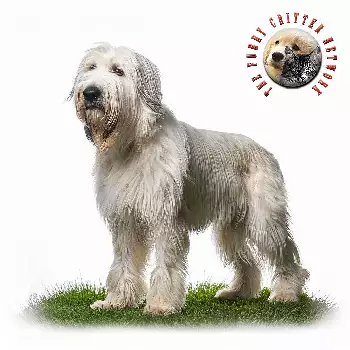
The Perro de Pastor Catalan is a medium-sized, well-proportioned herding dog whose most striking feature is its long, luxurious double coat. Males typically stand between 18 and 22 inches at the shoulder, while females measure slightly smaller at 17 to 21 inches. The body is slightly longer than it is tall, giving the breed a rectangular silhouette that contributes to its efficient, ground-covering gait. Despite its shaggy appearance, the breed is muscular and athletic beneath its abundant coat.

The head is strong and slightly rounded, with a well-defined but not abrupt stop. The muzzle is relatively short compared to the skull length, tapering slightly toward a large, dark nose. The eyes are round, dark amber to brown, and carry an alert, intelligent expression that is partially obscured by the characteristic facial furnishings. The ears are set high, triangular in shape, and hang close to the head, covered in long hair that blends with the coat on the neck and cheeks.

The coat is the breed's defining physical characteristic. The outer coat is long, flat or slightly wavy, with a rough texture that provides natural weather resistance. The dense, woolly undercoat offers insulation against the cold mountain temperatures of the Catalan Pyrenees. Coat colors range through fawn, brown, gray, sable, and black and tan, often with complex shading patterns that can change significantly from puppyhood to maturity. The breed develops a prominent beard, mustache, and eyebrows that give it an endearing, expressive face.

The tail is set low and reaches approximately to the hock. Some individuals are born with naturally short tails, which is an accepted variation within the breed standard. When in motion, the tail is carried in a gentle curve but does not rise above the level of the back. The breed's movement is smooth, agile, and efficient, reflecting centuries of adaptation to working across uneven mountainous terrain. The feet are oval and compact with well-arched toes, providing sure footing on rocky Pyrenean slopes.

Affectionate With Family
The Perro de Pastor Catalan forms exceptionally deep bonds with its family members. This breed thrives on close human companionship and is known for seeking out physical affection and proximity to its owners throughout the day. Historically working alongside Catalan shepherds in the Pyrenean foothills for centuries, the breed developed an intense devotion to its human partners that translates seamlessly into modern family life. These dogs often follow their favorite people from room to room and are happiest when included in daily family activities.
Good With Young Children
The Perro de Pastor Catalan demonstrates a gentle and patient temperament around young children, making it a reliable family companion. The breed's herding background instills a natural protective watchfulness over the youngest members of its household, and these dogs tend to be tolerant of the unpredictable movements and noises that come with small children. Their moderate size reduces the risk of accidental knockdowns. Supervision is still recommended, as the breed may occasionally display mild herding behaviors such as circling or gentle nudging toward children during play.
Good With Other Dogs
The Perro de Pastor Catalan generally gets along well with other dogs, especially when raised alongside them or properly socialized from an early age. This breed tends to be confident rather than confrontational, and its herding background means it is accustomed to working cooperatively. However, some individuals may display mild territorial tendencies or assertiveness with unfamiliar dogs, particularly those of the same sex. Early and consistent socialization with a variety of dogs in different environments helps ensure the Perro de Pastor Catalan develops balanced canine social skills.
Shedding Level
The Perro de Pastor Catalan sheds moderately throughout the year and more heavily during seasonal coat changes in spring and fall. The breed undergoes a distinctive two-stage molt where the rear half of the body sheds first, followed by the front half, giving the dog a temporarily unusual appearance. This unique shedding pattern is well-documented in the breed and is completely normal. During heavy shedding periods, daily brushing is essential to manage loose hair and prevent matting in the dense undercoat.
Coat Grooming Frequency
The long, shaggy double coat of the Perro de Pastor Catalan requires regular grooming attention to remain healthy and tangle-free. Brushing two to three times per week is recommended as a minimum, with more frequent sessions needed during shedding season. The coat can develop mats quickly, particularly behind the ears, under the legs, and around the hindquarters. Despite its rustic appearance, the coat should not be trimmed or clipped excessively, as the natural coat texture provides essential protection against both cold mountain weather and summer heat.
Drooling Level
The Perro de Pastor Catalan is not a drooling breed. With its well-proportioned muzzle and tight lip structure, this breed produces minimal excess saliva under normal circumstances. Owners can expect a clean, dry-mouthed companion that will not leave drool marks on furniture, clothing, or floors. Some minor drooling may occur in anticipation of meals or after vigorous exercise and heavy water drinking, but this is negligible compared to breeds with looser jowl structure.
Coat Type
The Perro de Pastor Catalan possesses a long, double-layered coat that is one of the breed's most defining physical features. The outer coat is long, flat or slightly wavy, and has a somewhat rough texture that provides excellent weather resistance. Beneath this lies a dense, woolly undercoat that insulates the dog against the harsh mountain climates of the Catalan Pyrenees. The coat forms a distinctive beard, mustache, and eyebrows on the face, giving the breed its characteristically expressive and endearing appearance. The hair on the tail and legs is particularly abundant.
Openness To Strangers
The Perro de Pastor Catalan tends to be reserved and watchful around strangers, reflecting its heritage as a guardian of flocks in the Catalan countryside. This breed does not rush to greet unfamiliar people but instead takes a measured, observant approach before warming up. Once the dog determines that a visitor poses no threat, it typically becomes friendly and accepting. This natural wariness makes the breed an effective watchdog without veering into excessive aggression or fearfulness. Proper socialization from puppyhood helps the breed distinguish between normal visitors and genuine threats.
Playfulness Level
The Perro de Pastor Catalan retains a lively, playful spirit well into adulthood. This breed enjoys interactive games, fetch, and agility-style activities that challenge both body and mind. Its herding instincts can make play sessions particularly engaging, as the dog naturally incorporates chasing, circling, and problem-solving into its games. The breed responds enthusiastically to owners who engage them in varied activities and will often initiate play through characteristic bowing and bounding movements. This playfulness makes the breed an entertaining and active household companion.
Watchdog/Protective Nature
The Perro de Pastor Catalan is a naturally vigilant breed with strong protective instincts rooted in its centuries-long role guarding livestock in the Catalan Pyrenees. These dogs are keenly aware of their surroundings and will alert their owners to unusual sounds or the approach of strangers with a deep, authoritative bark. While not typically aggressive, the breed's imposing shaggy appearance and confident demeanor serve as effective deterrents. The Perro de Pastor Catalan takes its guardian role seriously and will position itself between its family and perceived threats when it senses potential danger.
Adaptability Level
The Perro de Pastor Catalan is moderately adaptable but performs best in environments that provide adequate space and mental stimulation. While the breed can adjust to various living situations, it is most comfortable in homes with access to a yard or outdoor area where it can patrol and exercise. Apartment living is possible but requires a committed owner who provides substantial daily exercise and enrichment. The breed handles temperature changes well thanks to its insulating double coat, thriving in cooler climates but managing adequately in moderate warmth. Significant changes in routine or environment may require a gradual adjustment period.
Trainability Level
The Perro de Pastor Catalan is a highly intelligent breed that generally responds well to training, particularly when sessions are varied and engaging. Developed over centuries to make independent decisions while managing flocks across rugged Catalan terrain, this breed brings both problem-solving ability and a willingness to cooperate with its handler. Positive reinforcement methods produce the best results, as the breed is sensitive to harsh corrections and can become withdrawn if treated roughly. The Perro de Pastor Catalan excels in obedience, agility, and herding trials, and benefits from early training that channels its natural intelligence into structured behaviors.

Perro de Pastor Catalan History & Development

The Perro de Pastor Catalan traces its origins to the ancient herding dogs of the Catalan Pyrenees in northeastern Spain. The breed's ancestry is believed to extend back several centuries, with pastoral dogs of this type documented in the mountainous border region between Spain and France for generations. These dogs evolved through natural selection and selective breeding by Catalan shepherds who valued intelligence, hardiness, and the ability to manage flocks across challenging terrain.

During the nineteenth and early twentieth centuries, the Perro de Pastor Catalan was a common sight throughout rural Catalonia, working as an indispensable partner to shepherds managing sheep and goats in the mountain valleys. The breed's versatility extended beyond herding, as these dogs also served as farm guardians, drovers, and general-purpose working dogs on Catalan agricultural properties. The breed's numbers and visibility were closely tied to the health of the pastoral economy in the region.

The Spanish Civil War and the subsequent decades of industrialization and rural depopulation severely impacted the breed's population. As traditional shepherding practices declined throughout the mid-twentieth century, the Perro de Pastor Catalan faced a serious risk of extinction. By the 1970s, dedicated breed enthusiasts in Catalonia recognized the urgency of preservation efforts and began systematic programs to locate remaining specimens, document bloodlines, and rebuild the breed population.

These recovery efforts proved successful, and the breed gradually regained stable numbers throughout the 1980s and 1990s. The Perro de Pastor Catalan gained significant cultural visibility when it served as the mascot for the 1992 Barcelona Olympic Games, introducing the breed to an international audience. This exposure helped spark interest beyond Spain's borders and contributed to the breed's eventual recognition by international kennel clubs. Today, while still relatively uncommon globally, the breed enjoys a dedicated following among herding dog enthusiasts and families who appreciate its intelligence, loyalty, and distinctive appearance.

Perro de Pastor Catalan Temperament & Personality

The Perro de Pastor Catalan possesses a temperament shaped by centuries of close partnership with human shepherds in demanding working conditions. The breed is characterized by a keen intelligence, strong loyalty to its family, and a calm confidence that reflects its heritage as both a herding dog and a flock guardian. These dogs form deep attachments to their owners and are happiest when they can be near their family members, participating in daily activities and routines.

One of the breed's most notable personality traits is its natural alertness combined with a measured, thoughtful response to new situations. The Perro de Pastor Catalan does not react impulsively but instead assesses its environment before taking action. This trait, which served the breed well when making independent decisions about flock management in remote mountain pastures, translates into a composed household companion that does not startle easily or engage in unnecessary alarm barking.

With family members, the Perro de Pastor Catalan is warm, affectionate, and often gently playful. The breed shows particular patience and gentleness with children, adopting a watchful, protective posture around the youngest members of the household. Around strangers, the breed tends toward polite reserve rather than immediate friendliness, warming up gradually once it has assessed that new people present no threat to its family.

The breed retains strong herding instincts that may manifest in household settings as gentle nudging, circling, or attempts to keep family members together during outdoor activities. While these behaviors are generally mild and manageable, they serve as a reminder of the breed's working heritage. The Perro de Pastor Catalan's combination of intelligence, sensitivity, and devotion makes it a deeply rewarding companion for owners who appreciate a dog that is both mentally engaged and emotionally connected.

Perro de Pastor Catalan Family Life & Living Requirements

The Perro de Pastor Catalan adapts well to family life when provided with appropriate exercise, mental stimulation, and companionship. This breed thrives in active households where it can participate in daily activities and feels included as a valued member of the family unit. The breed's moderate size, gentle temperament, and strong attachment to its people make it suitable for families with children of all ages, though supervision is always recommended during interactions between dogs and very young children.

Ideal living arrangements for the Perro de Pastor Catalan include homes with access to a securely fenced yard where the dog can move freely and engage its natural desire to patrol and explore. While the breed can adapt to apartment living, this arrangement requires a significant commitment to daily outdoor exercise and mental enrichment to prevent boredom and the development of undesirable behaviors. The breed's alert nature and tendency to bark at unfamiliar sounds should be considered in close-quarters living situations.

The Perro de Pastor Catalan does not tolerate extended periods of isolation well. This breed was developed to work in constant partnership with its shepherd and carries that need for companionship into domestic life. Homes where at least one family member is present for much of the day, or where the dog can accompany its owner on errands and outings, are best suited to this breed's social needs. Prolonged loneliness can lead to anxiety, excessive vocalization, and destructive behavior.

Climate considerations favor the Perro de Pastor Catalan in cooler to temperate environments, where its thick double coat provides comfortable insulation. In warmer climates, owners must ensure access to shade, fresh water, and air-conditioned spaces during hot weather. The breed should not be exercised vigorously during peak heat. Its coat should never be shaved in an attempt to cool the dog, as the double coat actually provides insulation against heat as well as cold.

Perro de Pastor Catalan Training & Exercise Needs

Training the Perro de Pastor Catalan is generally a rewarding experience thanks to the breed's high intelligence and desire to cooperate with its handler. These dogs are quick learners who respond enthusiastically to positive reinforcement methods including treats, praise, and play-based rewards. The breed's sensitivity means that harsh corrections or heavy-handed training techniques are counterproductive and can damage the trust bond between dog and handler. Patient, consistent training that respects the dog's intelligence yields the best results.

Early socialization is particularly important for the Perro de Pastor Catalan, as the breed's natural wariness toward strangers can develop into excessive shyness or suspicion without proper exposure to a variety of people, animals, and environments during the critical developmental period. Puppy socialization classes, controlled introductions to new experiences, and positive associations with unfamiliar situations help the young Perro de Pastor Catalan develop into a confident, well-adjusted adult.

Exercise requirements for the Perro de Pastor Catalan are substantial, reflecting the breed's working heritage. A minimum of 60 to 90 minutes of daily physical activity is recommended, ideally combining structured walks or jogs with off-leash play in secure areas. The breed excels in canine sports including agility, herding trials, rally obedience, and flyball, all of which satisfy its need for physical exertion and mental engagement simultaneously.

Mental stimulation is equally important to physical exercise for this intelligent breed. Puzzle toys, scent work games, training sessions that introduce new commands or tricks, and activities that allow the dog to problem-solve all help keep the Perro de Pastor Catalan mentally fulfilled. A physically tired but mentally bored Perro de Pastor Catalan may still develop behavioral issues, so owners should strive for a balance of both types of enrichment in the dog's daily routine.

Perro de Pastor Catalan Health Concerns

The Perro de Pastor Catalan is generally a robust and healthy breed, benefiting from centuries of natural selection in demanding mountain environments that favored physical soundness and endurance. The breed's average lifespan of 12 to 14 years is typical for a medium-sized dog and reflects its overall genetic health. However, like all breeds, the Perro de Pastor Catalan is susceptible to certain health conditions that responsible owners and breeders should monitor.

Hip dysplasia is among the most significant orthopedic concerns for the breed. This developmental condition, where the hip joint does not form properly, can lead to pain, reduced mobility, and arthritis over time. Reputable breeders screen their breeding stock through radiographic evaluation programs such as those administered by the Orthopedic Foundation for Animals. Maintaining a healthy body weight and providing appropriate exercise from puppyhood through adulthood helps reduce the severity of hip dysplasia in predisposed individuals.

Eye conditions, particularly progressive retinal atrophy, represent another area of health concern for the Perro de Pastor Catalan. This degenerative condition affects the photoreceptor cells of the retina and can progress to complete blindness. DNA testing is available for some forms of PRA, and annual ophthalmologic examinations are recommended to detect early signs of retinal degeneration. The breed's abundant facial hair should be kept clear of the eyes to prevent secondary irritation and infection.

Preventive healthcare for the Perro de Pastor Catalan should include regular veterinary checkups, up-to-date vaccinations, parasite prevention, and dental care. The breed's long coat requires attention not only for grooming purposes but also for early detection of skin conditions, external parasites, or lumps that might otherwise go unnoticed beneath the dense fur. Owners who maintain a proactive approach to veterinary care and health screening can expect their Perro de Pastor Catalan to enjoy a long, active, and comfortable life.

Common Health Issues

  • Hip Dysplasia - A developmental condition where the hip joint does not fit properly into the hip socket, leading to arthritis and lameness. Medium-sized herding breeds like the Perro de Pastor Catalan should have hip evaluations performed through OFA or PennHIP screening.
  • Progressive Retinal Atrophy (PRA) - A group of degenerative eye diseases affecting the photoreceptor cells of the retina, eventually leading to blindness. DNA testing is available for some forms of PRA and is recommended for breeding stock in the Perro de Pastor Catalan.
  • Patellar Luxation - A condition where the kneecap dislocates from its normal position, causing intermittent lameness and discomfort. The Perro de Pastor Catalan can be affected by this orthopedic condition, particularly in individuals at the smaller end of the breed's size range.
  • Epilepsy - Idiopathic epilepsy has been reported in the Perro de Pastor Catalan, manifesting as recurring seizures without an identifiable underlying cause. The condition can typically be managed with anticonvulsant medication under veterinary supervision.
  • Dental Disease - The Perro de Pastor Catalan's facial hair can trap food particles and moisture around the mouth, increasing susceptibility to periodontal disease if oral hygiene is neglected. Regular dental care is important for this breed.
  • Elbow Dysplasia - A developmental condition affecting the elbow joint that can cause forelimb lameness and progressive arthritis. Active herding breeds like the Perro de Pastor Catalan may be predisposed due to the physical demands historically placed on their joints.

Preventive Care & Health Monitoring

  • Regular Coat Maintenance - Brush the Perro de Pastor Catalan's long double coat at least two to three times weekly to prevent matting and distribute natural oils. Increase frequency during the breed's distinctive two-stage seasonal molt. Pay special attention to areas prone to tangling such as behind the ears and under the legs.
  • Joint Health Monitoring - Schedule regular veterinary joint assessments, especially as the dog ages. Maintain a healthy weight to reduce stress on hips and elbows. Consider joint supplements containing glucosamine and chondroitin as a preventive measure for this active herding breed.
  • Eye Examinations - Arrange annual ophthalmologic examinations to screen for progressive retinal atrophy and other hereditary eye conditions. Early detection allows for better management of vision-related issues. Keep facial hair trimmed away from the eyes to prevent irritation.
  • Dental Care Routine - Establish a regular dental hygiene routine including brushing several times per week and providing appropriate dental chews. The breed's beard and facial furnishings can trap debris around the mouth, making consistent oral care particularly important.
  • Exercise and Mental Stimulation - Provide at least 60 to 90 minutes of daily exercise combining physical activity with mental challenges. The Perro de Pastor Catalan's herding intelligence requires regular enrichment through puzzle toys, training sessions, and varied activities to prevent boredom-related behavioral issues.

Perro de Pastor Catalan Grooming & Maintenance

The Perro de Pastor Catalan's long, shaggy double coat is one of the breed's most distinctive features and requires a consistent grooming routine to remain healthy and manageable. The coat consists of a rough-textured outer layer and a dense, soft undercoat that together provide excellent protection against weather extremes. While the coat's natural texture is somewhat resistant to severe matting compared to silkier coated breeds, regular brushing is essential to prevent tangles and remove loose hair and debris.

A thorough brushing session two to three times per week is the recommended minimum for the Perro de Pastor Catalan. A slicker brush and a long-toothed metal comb are the primary tools needed, with the comb being particularly useful for working through areas prone to matting such as behind the ears, under the forelegs, around the collar area, and on the hindquarters. During the breed's distinctive two-stage shedding process, where the rear half of the coat sheds before the front half, daily brushing becomes necessary to manage the increased volume of loose hair.

Bathing should be performed as needed, typically every four to six weeks or when the dog becomes particularly dirty. The dense undercoat requires thorough rinsing and complete drying after bathing to prevent moisture from becoming trapped against the skin, which can lead to skin irritation or fungal infections. Many owners find that a high-velocity pet dryer is helpful for efficiently drying the Perro de Pastor Catalan's thick coat after bathing.

Beyond coat care, the breed's grooming routine should include regular nail trimming every two to three weeks, ear cleaning to prevent wax buildup and infection in the drop ears, and dental hygiene through brushing or approved dental chews. The facial furnishings, including the beard and mustache, may need occasional tidying and should be checked after meals for trapped food particles. The hair around the eyes should be monitored to ensure it does not obstruct vision or cause irritation to the cornea.