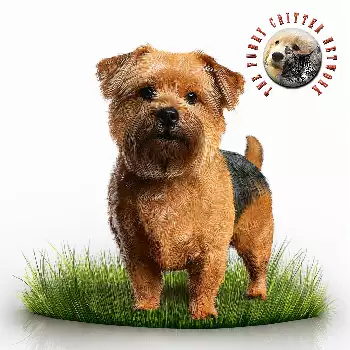
Norfolk Terrier

Norfolk Terrier
Gallery coming soon

Furry Critter Network Etsy Shop

Quick Facts

🐕 Breed Group
Terrier
📏 Size Category
Small
📏 Height
9-10 inches
⚖️ Weight
11-12 pounds
⏱️ Life Expectancy
12-16 years
🧥 Coat Type
Hard, wiry, straight double coat
🎨 Coat Colors
Red, Wheaten, Black and tan, Grizzle
😀 Temperament
Fearless, alert, lovable, confident, not quarrelsome
🏃 Exercise Needs
Moderate - around 1 hour daily
🎓 Training Difficulty
Good - intelligent but can be independent
👶 Good with Children
Excellent
🐾 Good with Other Pets
Good with other dogs, caution with small pets

Other Names & Breed Recognition

The Norfolk Terrier shares a unique and closely intertwined history with the Norwich Terrier, with both breeds originally being considered varieties of the same breed distinguished only by ear carriage. For decades, these small working terriers were collectively known as Norwich Terriers, with breeders producing both prick-eared and drop-eared puppies from the same litters without particular preference for one type over the other. This dual variety existed officially from the breed's initial recognition in England in 1932 and in America in 1936, with both ear types shown together in the same classes and interbred freely.

The names themselves reflect the breeds' East Anglian origins, with Norwich being the historic county town of Norfolk County in England. During the breed's development in the late 19th and early 20th centuries, these small working terriers were known by various informal names reflecting their origins, purposes, or the individuals associated with their development. Cambridge University students who kept them as dorm room ratters called them Cantab Terriers after the Latin name for Cambridge. When they became popular around Trumpington Street, where a livery stable further developed the breed, they were called Trumpington Terriers.

The most significant alternate name was Jones Terrier, named after Frank "Roughrider" Jones, a prominent Irish horseman who sold quantities of these small red terriers to American sportsmen just prior to World War I. Jones's promotional efforts in America helped establish the breed's popularity across the Atlantic, and for years many Americans referred to them simply as Jones Terriers in honor of his role in introducing and promoting the breed. Jones himself designated these terriers as coming from Norwich, which eventually became the official breed name when formal recognition was sought.

The formal separation into two distinct breeds occurred in England in 1964, when The Kennel Club officially designated the drop-eared variety as the Norfolk Terrier and retained the Norwich Terrier name for the prick-eared variety. This decision recognized that breeding programs had begun to develop distinct characteristics beyond just ear carriage, with Norfolks typically showing slightly longer backs and different conformational details that emerged as breeders selected specifically for one ear type or the other. The American Kennel Club and Canadian Kennel Club followed suit in 1979, completing the separation and allowing each variety to develop independently as distinct breeds.

Interestingly, a helpful mnemonic exists for distinguishing between Norfolk and Norwich Terriers based on their names and ear types. The "folk" in Norfolk sounds like "fold," reminding people that Norfolk Terriers have folded or dropped ears. Meanwhile, the "wich" in Norwich sounds like "witch," evoking the pointed, erect ears that might resemble a witch's hat. This memory aid has helped countless dog enthusiasts remember which breed is which, particularly important since the two breeds remain quite similar in most other respects.

Today, while Norfolk Terrier stands as the sole official name recognized by all major kennel clubs worldwide, older references, particularly those from before 1964 in Britain or 1979 in North America, may refer to the breed as drop-eared Norwich Terrier. Historical documents, pedigrees, and breed publications from these earlier periods do not distinguish between what we now recognize as two separate breeds. Understanding this history helps breeders and enthusiasts trace pedigrees and interpret older breed literature correctly.

The Norfolk Terrier's recognition by major kennel clubs worldwide has solidified its status as a distinct breed, though it remains relatively rare compared to many other terrier breeds. This rarity stems partly from conscientious breeding practices by dedicated fanciers who prioritize quality over quantity, and partly from the breed's development primarily as a working terrier and companion rather than being promoted as a fashion statement or status symbol. The breed's devoted following appreciates its authentic terrier character, manageable size, and versatile abilities that make it equally at home as a working dog, show dog, or beloved family companion.

Norfolk Terrier Organizations & Standards

The Norfolk Terrier enjoys recognition from all major kennel clubs worldwide, though the path to this recognition involved the breed's unique history of initially being classified as a variety of the Norwich Terrier before achieving separate breed status. The Kennel Club of England first recognized the Norwich Terrier in 1932, which at that time included both drop-eared and prick-eared varieties that were shown together and interbred freely. The formal separation into distinct breeds occurred in 1964, when The Kennel Club designated the drop-eared variety as the Norfolk Terrier, creating the first official breed standard specifically for this type.

The American Kennel Club registered the first Norwich Terrier in 1936, again initially including both ear types under the single breed designation. American breeders and exhibitors showed both varieties in the same classes for over four decades before the AKC recognized them as separate breeds in 1979. This separation allowed each breed to develop independently, with standards that acknowledged not just the ear difference but other subtle conformational distinctions that had emerged. The AKC places the Norfolk Terrier in the Terrier Group, where it competes against other terrier breeds in conformation showing.

The AKC breed standard describes the Norfolk Terrier as game and hardy, with expressive dropped ears, being one of the smallest working terriers. The standard emphasizes the breed's active, compact nature with good substance and bone, noting that with its natural weather-resistant coat and short legs, it is a "perfect demon" in the field. This versatile, agreeable breed should be capable of going to ground, bolting fox, and tackling or dispatching other small vermin, working alone or with a pack. The standard accepts honorable scars from wear and tear in the show ring, recognizing the breed's working heritage.

Size specifications in the AKC standard call for height at the withers to be 9 to 10 inches at maturity, with bitches tending to be smaller than dogs. Weight should be 11 to 12 pounds or that which is suitable for each individual dog's structure and balance. The standard emphasizes that the length of back from point of withers to base of tail should be slightly longer than the height at withers, distinguishing Norfolk proportions from the more compact, square-bodied Norwich Terrier.

The United Kennel Club recognized the Norfolk Terrier in 1979, the same year the AKC made the separation official. The UKC standard describes one of the smallest of the Terriers, low to the ground, compact and strong with good bone and substance. The breed should have a hard, straight coat that does not require excessive trimming. As a working breed, honorable scars are not to be penalized in the show ring. The UKC emphasizes that this breed was developed to go to ground to bolt fox or find and dispatch other vermin, making it a demon for its size despite being alert and fearless without being aggressive.

The Canadian Kennel Club recognized the Norfolk Terrier as a separate breed in 1977, actually preceding the American separation by two years. Canadian breeders have contributed significantly to breed development, maintaining emphasis on working ability alongside conformation quality. The CKC places the Norfolk Terrier in the Terrier Group and follows breed standards closely aligned with both British and American interpretations while maintaining Canadian perspectives on soundness and working capability.

The Fédération Cynologique Internationale, which serves as the World Canine Organization representing national kennel clubs across much of Europe and beyond, recognizes the Norfolk Terrier within Group 3 (Terriers), Section 2 (Small-sized Terriers), without working trial requirements. The FCI standard follows the British interpretation, providing breed guidelines used across Continental Europe and other FCI-member countries. This international recognition has helped establish consistent breed type across different continents and countries.

The Kennel Club of Great Britain, being the breed's country of origin, maintains the original and most influential breed standard for Norfolk Terriers. The UK standard describes the breed as one of the smallest terriers, a low, keen dog that is compact and strong with short back, good substance and bone. The standard notes that honorable scars from fair wear and tear are permissible, reflecting the breed's working heritage. The British standard particularly emphasizes temperament, describing a "demon" for its size with a lovable disposition that is not quarrelsome, having a hardy constitution while being alert and fearless.

Breed clubs dedicated to the Norfolk Terrier exist internationally, with many countries having active clubs that promote responsible breeding, provide education for breed fanciers, and organize events showcasing the breed's versatility. In America, the Norwich and Norfolk Terrier Club serves as the AKC parent club for both breeds, reflecting their shared heritage and the continuing close relationship between fanciers of both varieties. This combined club emphasizes preserving the working characteristics that made these terriers valuable while promoting responsible breeding practices and supporting activities from conformation showing to earthdog trials.

The Norfolk Terrier Club in the United Kingdom serves as the primary breed club in the country of origin, working to preserve breed type and promote the Norfolk Terrier's unique qualities. The club provides education for breeders and owners, hosts shows and working events, and maintains close communication with The Kennel Club regarding breed standards and health initiatives. Similar clubs exist across Europe, Australia, and other regions where Norfolk Terrier fanciers gather to celebrate and preserve this distinctive terrier breed.

Kennel Club Recognition

  • American Kennel Club (AKC): Recognized 1979 - Terrier Group
  • United Kennel Club (UKC): Recognized 1979 - Terrier Group
  • Canadian Kennel Club (CKC): Recognized 1977 - Terrier Group
  • Fédération Cynologique Internationale (FCI): Recognized - Group 3, Section 2
  • The Kennel Club (UK): Recognized 1964 - Terrier Group

Norfolk Terrier Physical Description

The Norfolk Terrier presents a picture of compact strength and determination, embodying the essential terrier character in a small but sturdy package. Standing just 9 to 10 inches at the withers, with bitches typically measuring slightly less than dogs, this breed ranks among the smallest of working terriers while maintaining substantial bone and muscle that distinguish it from fragile toy breeds. The overall impression should be of a low, keen dog that is compact and strong, with short back, good substance and bone, capable of serious work despite diminutive size.

The body proportions of the Norfolk Terrier differ slightly from its Norwich cousin, with the length of back from point of withers to base of tail being slightly longer than the height at withers. This moderate length, combined with the breed's low station, creates a rectangular rather than square silhouette when viewed from the side. The short coupling and strong loin provide the power needed for the breed's original work of going to ground after fox and other vermin, while the slightly longer back allows the flexibility and reach necessary for sustained trotting over varied terrain.

The Norfolk Terrier's head contributes significantly to breed type and expression, being broad and only slightly rounded with good width between the ears. The skull should be in proportion to the overall dog, neither too large nor too refined. A well-defined stop divides the skull from the muzzle, which is wedge-shaped and strong, measuring approximately one-third less than the measurement from occiput to bottom of the stop. This proportion creates a balanced head with strength that can deliver effective bites to prey without appearing coarse or heavy.

The muzzle itself should appear strong and capable, with tight lips that don't droop or appear pendulous. The teeth are relatively large for the breed's size, meeting in a perfect scissors bite where the upper teeth closely overlap the lower teeth. The jaw power, combined with strong teeth and proper bite, enabled these terriers to dispatch rats and other vermin effectively during their working careers. The nose color corresponds to coat color, being black in most dogs though lighter pigmentation may occur in certain coat colors.

Those expressive dark eyes serve as hallmarks of Norfolk Terrier type and temperament, being small to medium in size, oval in shape, and set well apart on the skull. Eye color should be dark brown or black, creating the sparkling, keen, intelligent expression characteristic of the breed. The eyes are deeply set beneath slight brows, giving them protection during underground work while contributing to the alert, fearless expression that defines Norfolk character. Light or prominent eyes are considered faults as they detract from proper expression.

The ears represent the single most distinctive feature distinguishing Norfolk from Norwich Terriers, with Norfolks having neatly dropped ears that fold forward close to the cheek. The ear leather is medium in size and V-shaped, breaking at skull level to fold forward with tips pointing toward the eye. The ears are set well apart on the skull and covered with short, smooth hair except for slight furnishings at the tips. Proper ear set and carriage are essential to breed type, with erect, prick, or improperly carried ears being serious faults that distinguish the breed from Norwich Terriers.

The neck flows smoothly into well-laid-back shoulders, being of medium length and strong without being stuffy or overly thick. Good neck length allows the terrier to carry its head with alertness while providing leverage needed for shaking and dispatching prey. The shoulders lay back at approximately 45-degree angles, creating the angulation necessary for efficient movement. The upper arm should be roughly equal in length to the shoulder blade, setting the front legs well under the body rather than too far forward.

The forelegs are short but powerful, appearing as straight as is consistent with a digging terrier when viewed from the front. Some slight turning out at the pasterns is acceptable and actually functional for a breed developed to excavate earth while pursuing prey underground. The pasterns should be firm rather than weak, providing spring and shock absorption during movement. The bone should be substantial and round rather than flat or spindly, providing the strength needed for the breed's original work.

The chest and body demonstrate the breed's working terrier construction, with the rib cage being well-sprung and extending well back. The chest should be deep enough to provide adequate heart and lung capacity for sustained work, though not so deep as to interfere with the short legs or create the barrel-chested appearance that would inhibit the breed's ability to navigate underground passages. The underline shows only moderate tuck-up, with the body remaining level from chest to loin rather than showing excessive waist.

The hindquarters provide the driving power for the Norfolk Terrier's characteristic movement, with broad, muscular thighs and well-defined turn of stifle creating the angulation needed for efficient propulsion. The hocks are well let down, meaning they sit relatively low to the ground, and should appear straight when viewed from behind. Rear pasterns should be parallel, neither toeing in nor out. The feet, both front and rear, are round and compact with thick pads and strong nails, providing sure footing on varied terrain.

The tail may be docked or natural, both being acceptable under modern breed standards in regions where docking remains legal and in countries where it has been prohibited. When docked, the tail should be of medium length, strong, and carried erect or slightly forward over the back. Natural tails should be strong at the base, tapering to the tip, and carried with a slight curve, neither curled tight over the back nor hanging down. The tail's carriage reflects the Norfolk's confident, happy temperament.

The coat represents one of the breed's most important features, providing protection from weather, thorns, and the bites of prey animals. The Norfolk possesses a hard, wiry, straight outer coat approximately 1.5 to 2 inches in length, lying close to the body to create a neat outline. Beneath the harsh outer coat lies a definite soft, dense undercoat that provides insulation and additional protection. The combination of these two coat layers creates the weather-resistant covering that allowed the breed to work in harsh conditions.

Coat furnishings contribute to the breed's characteristic scruffy yet tidy appearance, with the mane on neck and shoulders being longer and forming a ruff at the base of the ears and throat. Moderate furnishings of harsh texture appear on the legs, while hair on the head and ears remains short and smooth except for slight eyebrows and whiskers that frame the face. Some tidying is necessary to maintain a neat appearance, but excessive shaping or sculpting is heavily penalized as it creates an artificial look inconsistent with the breed's working terrier character.

Energy Level
Norfolk Terriers possess considerable energy for their small size, reflecting their working terrier heritage and natural athleticism. While not as demanding as some larger sporting breeds, they maintain an active, lively presence throughout the day and require regular opportunities for exercise and play. Their energy level typically matches their environment, adapting to their family's activity patterns while maintaining characteristic terrier spunk.
Exercise Needs
These terriers require approximately one hour of daily exercise, which can be divided into multiple shorter sessions throughout the day. Walks, play sessions, and opportunities to explore safely satisfy their exercise needs without being overwhelming. Their compact size makes them adaptable to various living situations, though they appreciate having safe outdoor spaces where they can investigate interesting scents and express natural behaviors.
Playfulness
Norfolk Terriers maintain playful, spirited personalities throughout their lives, approaching games and activities with enthusiasm and determination characteristic of working terriers. They enjoy interactive play with family members, showing particular fondness for games that engage their problem-solving abilities and prey drive. This playfulness combined with their small size makes them entertaining companions who bring joy and laughter to households.
Affection Level
Remarkably affectionate for a terrier breed, Norfolk Terriers form deep bonds with their families and thrive on human companionship and interaction. They seek physical closeness with their people, happily curling up on laps or snuggling beside family members during quiet times. This loving nature combined with their manageable size makes them ideal companions for those seeking devoted, affectionate dogs without excessive independence typical of some terrier breeds.
Friendliness Toward Other Dogs
Norfolk Terriers generally display friendly, sociable behavior toward other dogs, particularly when properly socialized from puppyhood. Their pack-oriented working heritage means they typically enjoy canine companionship and play well with other household dogs. Some individuals may show terrier assertiveness with unfamiliar dogs of the same sex, but overall the breed is known for getting along well with canine companions.
Friendliness Toward Strangers
While alert and aware of strangers, Norfolk Terriers typically display friendly curiosity rather than aggression or excessive shyness toward unfamiliar people. They serve as effective watchdogs by alerting to visitors, but generally warm up quickly once introduced properly. Their confident nature means they approach new people with interest rather than fear, though they maintain enough wariness to make them reliable sentinels for their families.
Ease of Training
Norfolk Terriers possess good intelligence and can learn quickly, though their independent terrier nature means training requires patience, consistency, and positive reinforcement methods. They respond best to interesting, varied training sessions that keep them engaged rather than repetitive drilling. While generally eager to please compared to some terrier breeds, they maintain enough independence to require skilled handling that balances firmness with positive motivation.
Grooming Requirements
The Norfolk Terrier's wiry double coat requires regular brushing two to three times weekly to prevent matting and remove dead hair. Professional hand-stripping or clipping three to four times yearly maintains proper coat texture and appearance. While not as demanding as some long-coated breeds, they do require committed grooming to keep their protective coats in good condition and maintain the breed's characteristic scruffy yet neat appearance.
Adaptability
Norfolk Terriers adapt well to various living situations including apartments, provided they receive adequate exercise and mental stimulation. Their compact size, moderate exercise needs, and relatively quiet nature for a terrier make them suitable for different household types. They adjust to their families' routines while maintaining their spirited terrier character, thriving equally in active households or with less active owners who ensure regular exercise.
Good With Young Children
Norfolk Terriers typically interact well with children, displaying patience and playfulness that makes them good family companions. Their sturdy build for a small breed means they handle the activity and noise of family life better than more fragile toy breeds. Supervision remains important as with any dog-child interaction, and teaching children to respect the dog's space ensures positive relationships. Their size makes them less intimidating to children while being robust enough for play.
Intelligence
Norfolk Terriers demonstrate notable intelligence, quickly learning routines, commands, and even problem-solving to achieve their goals. Their working terrier background required sharp thinking for hunting vermin independently, resulting in dogs capable of making decisions. This intelligence means they benefit from mental challenges through training, puzzle toys, and interactive games that keep their minds engaged and prevent boredom-related behavioral issues.
Tendency To Vocalize
Norfolk Terriers are generally not excessive barkers compared to some terrier breeds, vocalizing primarily to alert their families to visitors or unusual occurrences. They maintain watchdog instincts without constant yapping, making them suitable for various living situations including apartments. Proper training and adequate exercise help ensure their barking remains appropriate and purposeful rather than becoming a nuisance habit.

Norfolk Terrier History & Development

The Norfolk Terrier's ancestry traces back to the various small working terriers that existed throughout England during the 19th century, particularly in East Anglia. These dogs served primarily as ratters on farms and in stables, controlling the vermin populations that threatened grain stores and spread disease. They also worked as fox bolters, entering underground dens to drive foxes out for waiting hounds during traditional hunting. The exact origins remain somewhat obscure, as record-keeping for working dogs was minimal until formal breed recognition efforts began.

Historians speculate that the Norfolk Terrier developed through crossing local terrier-type dogs with small, short-legged Irish Terrier breeds and possibly the small red terriers used by Romani ratters of Norfolk County. Glen of Imaal Terriers, red Cairn Terriers, and Dandie Dinmont Terriers are mentioned among the breeds believed to have contributed to the early development of what would become both Norfolk and Norwich Terriers. From this mixed heritage emerged the small, red, working terriers that displayed the game temperament and physical capabilities needed for controlling vermin and bolting fox.

The breed's modern development began in the late 19th century when these small working terriers became fashionable among Cambridge University students. The dogs proved ideal for undergraduate life, being small enough to keep in dormitory rooms while possessing the hunting ability to control the rats that plagued college buildings. Students called them Cantab Terriers after Cambridge's Latin name, and the dogs became something of a Cambridge tradition. This exposure to educated, affluent students helped establish the breed beyond purely working circles, bringing it to the attention of the sporting and showing communities.

A significant development occurred when these terriers concentrated around a livery stable on Trumpington Street in Cambridge, where they were further refined and promoted. The stable owner recognized the dogs' potential and worked to maintain a consistent type while selling puppies to students and sportsmen. During this period, the dogs were often called Trumpington Terriers after the street where this influential breeding program operated. The Trumpington Street connection helped establish breeding lines that would prove influential in the breed's later development.

The most significant individual in the breed's early promotion was Frank "Roughrider" Jones, an Irish horseman who recognized the terriers' qualities and began breeding and exporting them to America just prior to World War I. Jones sold quantities of these small, game terriers to American sportsmen, who appreciated their ratting abilities and bold temperaments. His promotional efforts in America were so successful that the dogs became known as Jones Terriers in the United States, a name that persisted for years. Jones himself designated these terriers as coming from Norwich, which would eventually become the official breed name.

The Kennel Club of England granted official recognition to the Norwich Terrier in 1932, marking the first time these small working terriers achieved formal breed status. The first written breed standard was created at this time, describing the ideal Norwich Terrier but making no distinction between drop-eared and prick-eared varieties. Both ear types were shown together in the same classes and could be interbred, with both often appearing in the same litters. This dual variety situation persisted for over three decades in Britain and even longer in America.

The American Kennel Club registered its first Norwich Terrier in 1936, just four years after British recognition. American breeders embraced the breed, appreciating its working ability, manageable size, and engaging personality. During these early years in America, both ear types continued to be shown together and bred together, though some breeders began developing preferences for one type or the other. The formation of breed clubs in both countries helped coordinate breeding efforts and promote the terriers to wider audiences.

As breeding programs matured, breeders began noticing subtle differences between dogs with drop ears and those with prick ears that extended beyond just ear carriage. The drop-eared dogs tended to have slightly longer backs and different head shapes, while temperament variations also became apparent to careful observers. These differences, combined with the practical difficulties of breeding programs that had to contend with unpredictable ear inheritance patterns, led to growing sentiment that the two varieties should be separated into distinct breeds.

The Kennel Club of England made the historic decision in 1964 to officially separate the two varieties, designating the drop-eared variety as the Norfolk Terrier while retaining the Norwich Terrier name for the prick-eared variety. This separation allowed each type to develop independently according to its own characteristics rather than maintaining the fiction that ear carriage was the only difference. British breeders could now focus on refining either Norfolk or Norwich type without concern about producing the "wrong" ears in their litters.

The Canadian Kennel Club followed Britain's lead in 1977, recognizing Norfolk and Norwich as separate breeds. The American Kennel Club completed the separation in 1979, allowing both breeds to develop independently in America as well. This official recognition as distinct breeds represented the culmination of decades of breed development and the recognition that these terriers, while sharing common ancestry and many characteristics, had evolved into distinguishable types deserving separate breed status.

Following the separation, Norfolk Terrier breeders worked to refine and standardize their breed while maintaining the working abilities and temperament that made these terriers valuable. The emphasis remained on preserving the "perfect demon" character described in breed standards—small dogs with big courage, capable of serious work while maintaining affectionate, livable temperaments. Modern Norfolk Terriers descend from the same foundation stock as Norwich Terriers but have developed their own distinct characteristics through selective breeding focused on drop-ear type.

Throughout the late 20th and into the 21st century, Norfolk Terrier breeders have emphasized maintaining genetic diversity within the relatively small gene pool while preserving essential breed characteristics. Health testing has become standard practice among responsible breeders, who screen for conditions like hip dysplasia, patellar luxation, and cardiac issues before breeding. The breed has avoided many of the extreme physical exaggerations that plague some purebred dogs, retaining functional construction suitable for active lives whether as working terriers, show dogs, or beloved companions.

Today's Norfolk Terrier remains true to its heritage as a game, hardy working terrier capable of tackling vermin, exploring outdoors energetically, and providing devoted companionship. While no longer commonly used for their original purposes of ratting and fox bolting, Norfolk Terriers continue to demonstrate their working abilities in earthdog trials and other performance events. More commonly, they serve as companions and show dogs, bringing their fearless, loving personalities to families around the world who appreciate these little dogs with huge hearts and indomitable spirits.

Norfolk Terrier Temperament & Personality

The Norfolk Terrier possesses a temperament that perfectly embodies the best qualities of terrier breeds while avoiding some of the more difficult aspects that can make other terriers challenging companions. At the heart of the Norfolk character lies fearlessness combined with affection, creating small dogs with huge courage who nonetheless remain devoted, loving companions. These terriers approach life with confidence and enthusiasm, rarely showing shyness or timidity despite their small size. Their courage stems from centuries of selective breeding for dogs willing to enter underground dens to confront cornered prey, requiring both physical bravery and mental determination.

Unlike some terrier breeds known for quarrelsome behavior toward other dogs, Norfolk Terriers typically display a lovable, sociable disposition that makes them pleasant companions in multi-dog households and public settings. Their heritage as pack-working dogs selected for cooperating with other terriers during fox hunts contributes to this relative tolerance of canine companions. While they maintain enough terrier spirit to defend themselves if challenged, properly socialized Norfolks generally prefer getting along with other dogs rather than seeking confrontation. This tractable nature makes them more manageable than some terrier breeds for owners who value peaceful coexistence.

Intelligence ranks among the Norfolk Terrier's most notable mental characteristics, with these small dogs demonstrating keen problem-solving abilities and quick learning when properly motivated. Their working heritage required independent thinking underground where human guidance was impossible, resulting in dogs capable of making decisions and solving problems without constant direction. This intelligence translates into trainability when owners use methods that engage the dog's mind and provide clear motivation, though Norfolk Terriers maintain enough independence to resist purely coercive training approaches.

The Norfolk's relationship with their family displays remarkable devotion and affection, with these terriers thriving on human companionship and involvement in family activities. They genuinely enjoy being with their people, following family members throughout the house and positioning themselves where they can observe household happenings. This desire for companionship means Norfolk Terriers should not be left isolated for extended periods, as they may develop separation anxiety or behavioral issues when deprived of social interaction they crave. They do best in homes where someone is present most of the time or where the dog can accompany family members on outings.

With children, Norfolk Terriers typically display patience and playfulness that makes them excellent family dogs when properly supervised. Their sturdy construction for a small breed means they handle the activity and occasional clumsiness of children better than more delicate toy breeds, while their size remains manageable and non-intimidating for youngsters. These terriers often develop special bonds with children, becoming devoted playmates and even protective guardians. Teaching children to respect the dog's space and handle them appropriately ensures positive relationships between Norfolk Terriers and young family members.

The breed's alertness makes Norfolk Terriers effective watchdogs despite their small size, as they notice and announce visitors or unusual occurrences with characteristic terrier vigilance. However, they typically bark purposefully rather than constantly, making them suitable for various living situations including apartments where excessive noise would be problematic. Their warning barks serve practical purposes rather than being nuisance vocalizations, and proper training helps ensure their alertness remains an asset rather than becoming problematic. Once visitors are welcomed by family members, Norfolk Terriers typically display friendly curiosity rather than continued suspicion.

Preying instincts remain strong in Norfolk Terriers, reflecting their heritage as vermin hunters and working terriers. These dogs may pursue small animals including rodents, rabbits, and even cats if not properly introduced and supervised. Their prey drive means they should be kept on leash or in securely fenced areas when outdoors, as the sight of fleeing wildlife can trigger chasing behaviors that override obedience training. In homes with cats or other small pets, early socialization and careful management help Norfolk Terriers learn to coexist peacefully, though supervision remains prudent given their hunting heritage.

Despite their bold nature, Norfolk Terriers are not aggressive dogs when properly bred and socialized. The breed standard specifically notes that aggressive behavior is uncharacteristic and undesirable. These terriers should display confidence and fearlessness without meanness or hostility toward people or other animals. Properly socialized Norfolk Terriers approach new situations with curiosity and interest rather than fear or aggression, making them adaptable companions suitable for various lifestyles and environments. Shy or overly aggressive Norfolk Terriers are considered atypical and should not be bred.

The Norfolk Terrier's energy level remains moderate compared to some working breeds, making them adaptable to various owner activity levels. While they enjoy and benefit from regular exercise, they don't require the extensive daily activity demanded by some sporting or herding breeds. After adequate exercise, Norfolk Terriers typically settle calmly indoors, content to rest near family members or engage in quiet activities. This adaptability makes them suitable for active individuals who enjoy outdoor pursuits as well as less active owners who can provide daily walks and play sessions.

Playfulness characterizes the Norfolk Terrier throughout life, with these dogs maintaining puppy-like enthusiasm well into their senior years. They enjoy interactive games with family members, particularly activities that engage their problem-solving abilities and prey drive like hide-and-seek or puzzle toys. This playful nature makes them entertaining companions who bring joy and laughter to households, though it also means they require regular mental stimulation to prevent boredom-related behavioral issues. Training sessions conducted as games rather than drills keep Norfolk Terriers engaged and motivated to learn.

Norfolk Terrier Family Life & Living Requirements

The Norfolk Terrier adapts remarkably well to family life, bringing spirited personality and devoted companionship to households of various configurations. These small terriers thrive on being included in daily activities, following family members throughout the home and positioning themselves where they can observe and participate in household happenings. Their sociable nature means they genuinely enjoy being part of the family pack, and they should not be relegated to exclusively outdoor living or isolated for extended periods. Norfolk Terriers do best in homes where they can be with their people most of the time.

In terms of living space, Norfolk Terriers adapt well to various housing situations including apartments, townhouses, and single-family homes. Their compact size makes them suitable for smaller living spaces, while their relatively quiet nature for a terrier means they typically don't create noise issues that trouble neighbors. Unlike some larger breeds that require substantial yards for exercise, Norfolk Terriers can meet much of their exercise needs through daily walks and play sessions, making them practical choices for urban living when owners commit to providing adequate activity and stimulation.

The presence of a securely fenced yard provides valuable opportunities for Norfolk Terriers to explore, patrol, and exercise independently, though it isn't absolutely essential if owners ensure adequate leashed exercise. When yards are available, fencing must be secure and extend underground or have barriers at ground level, as these terriers possess digging instincts that might lead them to excavate under fences when motivated by interesting scents or visible prey. Their small size means even relatively small gaps can provide escape routes, requiring vigilance in ensuring enclosures remain secure.

Family dynamics with children generally work well with Norfolk Terriers, whose patient, playful temperaments match nicely with youngsters' energy and enthusiasm. These terriers tolerate the noise, movement, and activity that characterize homes with children, while their sturdy build for a small breed means they handle interactions better than more fragile toy breeds. Norfolk Terriers often become devoted companions to children, participating in play and even demonstrating protective behaviors toward young family members. Supervision remains important to ensure interactions stay positive for both dog and child.

Teaching children appropriate interaction with the family Norfolk Terrier ensures harmonious relationships and prevents problems. Kids should learn that dogs need rest periods, quiet time, and gentle handling. Involving children in age-appropriate care tasks like feeding, grooming, or training creates positive interactions while teaching responsibility. Children should be taught not to disturb the dog while eating or sleeping, and to recognize body language indicating the dog needs space. With proper guidance, Norfolk Terriers and children can develop wonderful relationships.

Daily routines with a Norfolk Terrier typically revolve around providing adequate exercise, mental stimulation, and companionship. Most families establish morning and evening activity periods that include walks, play sessions, or training activities. Norfolk Terriers adapt to their families' schedules, becoming accustomed to regular routines while remaining flexible when circumstances require schedule adjustments. Their moderate exercise needs mean they don't demand the extensive daily activity required by some working breeds, though they benefit from consistent exercise and engagement.

Feeding schedules for Norfolk Terriers typically involve two meals daily for adult dogs, with morning and evening feeding times being common. Puppies require more frequent feeding, usually three to four meals distributed throughout the day to maintain stable blood sugar and support growth. The breed's small size means food costs remain very reasonable, though selecting quality foods appropriate for active small breeds ensures proper nutrition. Norfolk Terriers can be food-motivated, making them prone to weight gain if portions aren't carefully controlled or if they receive excessive treats.

Grooming routines become part of the family schedule with a Norfolk Terrier in residence. Regular brushing two to three times weekly maintains coat health and prevents matting, while professional hand-stripping or clipping three to four times yearly maintains proper coat texture and appearance. Many families learn to perform basic grooming themselves, though professional grooming for more involved maintenance saves time and often produces better results. Ear cleaning, nail trimming, and dental care complete the grooming picture, with most tasks easily manageable at home.

Socialization with other household pets works well with Norfolk Terriers when introductions occur properly and supervision continues until relationships stabilize. These terriers generally coexist peacefully with other household dogs, particularly when raised together or introduced carefully. Their pack-working heritage makes them more accepting of canine companions than some terrier breeds. Cats and other small pets require more careful management given Norfolk prey drives, though many Norfolk Terriers live successfully with cats when raised together from puppyhood. Supervision prevents problems during the adjustment period and whenever prey drives might be triggered.

Vacation planning with a Norfolk Terrier requires consideration of the dog's needs and adaptability. These terriers generally travel well, adapting to new environments when with their families. Their small size makes them practical for various travel modes including car trips, though air travel may pose challenges depending on airline policies. Many dog-friendly accommodations welcome small, well-behaved dogs, expanding vacation options for families with Norfolk Terriers. Alternatively, these terriers typically adapt well to quality boarding facilities or pet sitters when traveling without dogs is necessary.

For times when bringing the dog isn't feasible, finding quality care becomes important. Norfolk Terriers generally adapt well to boarding facilities that provide adequate attention, exercise, and social interaction. Pet sitters who stay in the home or visit regularly work well for dogs who prefer familiar environments. Whichever option families choose, ensuring caregivers understand the breed's social needs, exercise requirements, and any individual quirks helps maintain the dog's wellbeing during owner absences. Many Norfolk Terriers enjoy boarding situations that provide canine playmates and human interaction.

The Norfolk Terrier's role within families often extends beyond simple companionship to include participation in various activities and traditions. Whether joining family walks, playing in the yard with children, accompanying owners on errands, or simply providing warm companionship during quiet evenings, these versatile terriers integrate seamlessly into family life. Their presence enriches households through devotion, entertainment through playful antics, and the motivation toward more active lifestyles that benefits all family members' physical and mental health.

Norfolk Terrier Training & Exercise Needs

Training a Norfolk Terrier requires understanding the breed's intelligent yet independent nature, approaching the process with patience, consistency, and positive reinforcement methods that engage the dog's mind and motivation. These terriers possess good learning abilities and can master various commands and behaviors, though their independent thinking means training must remain interesting and rewarding rather than becoming repetitive or coercive. The breed's working heritage selected for dogs capable of making decisions underground without human guidance, resulting in dogs who think for themselves and require skilled handling that balances direction with respect for their intelligence.

Basic obedience training should begin during puppyhood, ideally starting as soon as a Norfolk Terrier puppy enters its new home around eight weeks of age. Fundamental commands including sit, stay, come, down, and heel form the foundation for good household manners and safety. Norfolk Terriers typically learn these basics within several weeks when training occurs consistently, though their independent nature means they may require more repetition than breeds known for extreme biddability. Short, frequent training sessions work best, keeping lessons engaging and ending on positive notes before the dog becomes bored or frustrated.

Positive reinforcement techniques prove most effective with Norfolk Terriers, whose independent spirits resist harsh corrections or punishment-based training methods. Rewarding desired behaviors with treats, praise, toys, or play motivates these terriers to repeat correct responses. High-value food rewards work particularly well during initial training, gradually transitioning to intermittent reinforcement as behaviors become reliable. Clicker training provides precise timing for marking desired behaviors, helping these intelligent dogs understand exactly which actions earn rewards. The key is making training fun and rewarding, which aligns with the Norfolk's enthusiastic approach to activities they enjoy.

Socialization represents a critical component of Norfolk Terrier development, exposing puppies to various people, animals, environments, sounds, and experiences during the sensitive developmental period before 16 weeks of age. Well-socialized Norfolk Terriers grow into confident, well-adjusted adults comfortable in diverse situations. Puppy socialization classes offer controlled environments for learning appropriate canine social skills while exposing puppies to new experiences under professional guidance. These classes also provide opportunities for owners to learn training techniques and address questions with experienced instructors.

Recall training deserves special attention with Norfolk Terriers, whose prey drives and independent natures can override obedience when interesting scents or sights capture their attention. Building reliable recall requires consistent practice in progressively more distracting environments, using extremely high-value rewards that outcompete environmental temptations. Long training leads allow practice in safe settings where the dog can't self-reward by ignoring commands, gradually building reliability. Even with extensive training, Norfolk Terriers should be kept on leash or in securely fenced areas when outdoors, as their hunting instincts can prove stronger than training in high-distraction situations.

House training typically progresses smoothly with Norfolk Terriers, whose intelligence and desire to maintain clean living spaces facilitate the process. Establishing consistent routines for feeding, eliminating, and supervision helps puppies learn where and when to relieve themselves. Crate training supports house training efforts by utilizing dogs' natural reluctance to soil their sleeping areas. Most Norfolk Terrier puppies achieve reliable house training by four to six months when handled consistently, though some individuals require longer depending on prior experiences and individual temperament. Patience and consistency remain essential throughout the house training process.

Beyond basic obedience, Norfolk Terriers excel in various canine sports and activities that challenge their physical abilities and mental acuity. Earthdog trials allow these terriers to express their working heritage in structured settings, navigating underground tunnels to reach caged rats under controlled conditions. The sport appeals to Norfolk instincts while providing excellent mental and physical exercise. Many Norfolk Terriers show natural enthusiasm for earthdog work even without prior exposure, demonstrating the persistence of working instincts despite generations removed from actual vermin control work.

Agility training suits Norfolk Terriers well, combining physical activity with mental challenges while strengthening the human-canine bond. Though smaller than many agility competitors, Norfolk Terriers can navigate courses efficiently when trained properly. The sport's variety and excitement keep these intelligent dogs engaged while providing excellent exercise. Obedience competition offers another outlet for Norfolk Terriers, demonstrating their trainability and precision in performing commands. Rally obedience provides a less formal alternative that many Norfolk Terriers enjoy, combining obedience elements with a more fluid, engaging format.

Exercise requirements for Norfolk Terriers remain moderate compared to many working breeds, making them adaptable to various owner activity levels. These terriers need approximately one hour of daily exercise, which can be divided into multiple shorter sessions throughout the day. Morning and evening walks combined with play sessions typically satisfy their activity needs. Norfolk Terriers appreciate variety in exercise activities, with different routes, destinations, and activities preventing boredom while working different muscle groups and providing diverse mental stimulation.

Walking represents the foundation of most Norfolk Terrier exercise programs, providing physical activity, mental stimulation through environmental exploration, and socialization opportunities. Brisk walks of 20-30 minutes twice daily typically meet minimum exercise needs, though many Norfolk Terriers enthusiastically participate in longer excursions when owners desire more extensive outings. These terriers should be walked on leash in unenclosed areas, as their prey drives and independence mean they may chase wildlife or fail to respond to recalls when distracted by interesting scents or sights.

Play sessions provide excellent exercise while strengthening the human-canine bond and satisfying Norfolk Terriers' need for interaction. Games of fetch appeal to their retrieving instincts, though individual dogs vary in their interest in returning items rather than keeping them. Tug-of-war can be appropriate when dogs understand rules about releasing items on command, providing good physical exercise and mental engagement. Hide-and-seek games, whether hiding treats, toys, or people, engage Norfolk problem-solving abilities while providing moderate physical activity. Interactive toys that dispense treats when manipulated challenge Norfolk minds while encouraging physical activity.

Mental exercise proves equally important as physical activity for Norfolk Terriers, whose sharp minds require engagement to prevent boredom-related behavioral issues. Training sessions, whether working on basic obedience, tricks, or preparing for performance events, provide cognitive challenges that tire dogs mentally. Puzzle toys that require manipulation to access treats engage problem-solving abilities while providing independent entertainment. Scent work, whether formal nosework training or simple games hiding treats around the house, appeals to Norfolk excellent scenting abilities while providing mental stimulation.

Without adequate exercise and mental stimulation, Norfolk Terriers may develop problematic behaviors including excessive barking, destructive chewing, digging, or hyperactivity. These issues rarely stem from maliciousness but rather represent the dog's attempts to manage unmet physical and mental needs. Prevention involves ensuring consistent, adequate exercise and enrichment rather than attempting to suppress behaviors that arise from under-stimulation. Well-exercised, mentally stimulated Norfolk Terriers typically settle calmly indoors, content to rest near family members between activity sessions.

Norfolk Terrier Health Concerns

Some individuals live even longer with excellent care, quality nutrition, and good genetics.

Common Health Issues

  • Hip dysplasia affects Norfolk Terriers at notably higher rates than would be expected for a small breed, with some studies suggesting approximately one in three Norfolk Terriers may develop this condition.
  • Hip dysplasia occurs when the hip joint develops abnormally, causing looseness, instability, pain, and eventually arthritis.
  • Maintaining appropriate weight and providing regular moderate exercise helps manage hip dysplasia in affected dogs.
  • Patellar luxation represents another common orthopedic concern in Norfolk Terriers, occurring when the kneecap slips out of its normal position in the groove of the thigh bone.
  • Patellar luxation has genetic components, making pre-breeding evaluation important.
  • Heart disease, particularly myxomatous mitral valve disease (MMVD), affects many Norfolk Terriers as they age, with some studies suggesting that approximately 60 percent of Norfolk Terriers show signs of this degenerative condition by their senior years.

Preventive Care & Health Monitoring

  • The Norfolk Terrier generally enjoys excellent health and longevity, with typical lifespans ranging from 12 to 16 years when obtained from responsible breeders who conduct appropriate health testing and carefully select breeding stock.
  • Like all purebred dogs, Norfolk Terriers have predispositions to certain hereditary conditions that prospective owners should understand and responsible breeders work to minimize through selective breeding, health screening, and maintaining genetic diversity within the relatively small breed population.
  • Reputable breeders conduct hip evaluations through OFA or PennHIP screening, breeding only dogs with acceptable hip conformation.
  • Maintaining appropriate weight and providing regular moderate exercise helps manage hip dysplasia in affected dogs.

Purchasers should review these clearances and understand their significance before selecting a puppy. Regular screening throughout the dog's life allows early intervention when problems are detected, potentially improving outcomes and quality of life.

Norfolk Terrier Grooming & Maintenance

The Norfolk Terrier's wiry double coat, while not as demanding as some long-coated breeds, does require regular maintenance to keep it healthy, functional, and looking its characteristic neat yet scruffy appearance. Understanding the coat's structure and purpose helps owners develop effective grooming routines that maintain both coat health and the breed's working terrier character. The coat consists of a hard, wiry outer coat approximately 1.5 to 2 inches in length that lies close to the body, with a soft, dense undercoat providing insulation and additional protection from weather and underbrush.

Regular brushing two to three times weekly removes dead hair, prevents matting, distributes natural skin oils, and allows owners to check for skin issues, parasites, or injuries hidden beneath the coat. A slicker brush works well for general grooming, removing loose hair from both topcoat and undercoat. Following brushing with a metal comb, particularly in areas prone to tangling like behind the ears, in the armpits, and around the legs, ensures no hidden mats develop. The grooming process provides bonding time between dog and owner while maintaining coat health.

Hand-stripping represents the traditional and proper method for maintaining Norfolk Terrier coats, particularly for show dogs. This process involves plucking dead outer coat hairs by hand or with a stripping knife, allowing new harsh coat to grow in while maintaining proper wiry texture. Hand-stripping typically occurs three to four times yearly, with the frequency depending on individual coat growth rates and whether the dog shows in conformation. Learning proper hand-stripping technique requires instruction from experienced groomers or breeders, as improper stripping can damage coat texture and appearance.

Pet Norfolk Terriers whose coats aren't being maintained for showing may be clipped rather than hand-stripped, though clipping gradually softens coat texture over time. Clipping proves faster and easier than hand-stripping, making it practical for pet owners who lack time or skill for traditional coat maintenance. Professional groomers can clip Norfolk coats to maintain breed silhouette while keeping maintenance manageable. Whether hand-stripped or clipped, Norfolk coats should be attended to every three to four months to maintain neat appearance and proper coat function.

Bathing frequency for Norfolk Terriers depends on lifestyle and individual dog factors, though most pet owners find bathing every six to eight weeks maintains cleanliness without excessively stripping natural oils. Show dogs may require more frequent bathing to maintain pristine condition, while working dogs who spend significant time outdoors may need bathing more often when they become muddy or develop strong odors. Using dog-specific shampoos formulated for wire-coated breeds helps maintain coat texture and skin health. Thorough rinsing removes all shampoo residue that could cause skin irritation or leave coat looking dull.

The Norfolk Terrier's distinctive facial furnishings including eyebrows, whiskers, and beard require regular attention to prevent matting and food debris accumulation. The beard often collects food and water during eating and drinking, requiring wiping after meals to prevent staining and odor. These facial furnishings should be combed regularly to prevent tangles, with any mats carefully worked out rather than simply cut away. Maintaining clean, well-groomed facial furnishings contributes significantly to the breed's characteristic expression and neat appearance.

Nail care deserves attention with Norfolk Terriers, as overgrown nails affect foot structure, gait, and comfort. Most Norfolk Terriers require nail trimming every three to four weeks to maintain proper length and prevent nails from clicking on floors or catching on surfaces. Grinding tools offer an alternative to clippers, creating smooth nail edges while being less likely to accidentally cut the quick. Regular nail trimming from puppyhood helps Norfolk Terriers accept the process calmly, though many adults require patient conditioning to nail care if not accustomed to it during development.

Dental care prevents periodontal disease, which affects most dogs by middle age without preventive maintenance. Daily tooth brushing using dog-specific toothpaste removes plaque before it hardens into tartar, protecting gum health and preventing tooth loss. Norfolk Terriers are particularly prone to dental issues, making diligent oral hygiene especially important for this breed. Dental chews and toys supplement but don't replace brushing for maintaining oral health. Professional dental cleanings performed under anesthesia by veterinarians address tartar buildup and treat any existing dental disease.

Ear care deserves regular attention with Norfolk Terriers, though their dropped ears don't create quite the same infection risk as heavily feathered, low-set ears on some breeds. Weekly ear inspections check for redness, odor, discharge, or sensitivity that might indicate infection or ear mite infestation. Gentle cleaning with veterinarian-approved ear cleaner removes debris and excess wax, helping prevent problems before they develop. The hair inside Norfolk Terrier ears should be kept trimmed short to improve air circulation and reduce infection risk.

Paw and pad care extends beyond nail trimming to include checking pads for cuts, cracks, or foreign objects lodged between pads. Hair between pads and around feet should be trimmed short to prevent matting, ice ball formation in winter, and debris collection. Regularly checking feet after outdoor activities catches problems early, preventing minor issues from becoming serious. During winter, removing ice and salt from paws prevents discomfort and chemical burns, while summer activities may require checking for heat-related pad damage from hot pavement.