Nanny Dog

Staffordshire Bull Terrier

Quick Facts

🐕 Breed Group
Terrier Group
📏 Size Category
Medium
📏 Height
Males: 14-16 inches, Females: 14-16 inches
⚖️ Weight
Males: 28-38 lbs, Females: 24-34 lbs
⏱️ Life Expectancy
12-14 years
🧣 Coat Type
Short, smooth, close
🎨 Coat Colors
Red, fawn, white, black, blue, brindle, or any with white
😀 Temperament
Brave, tenacious, affectionate, loyal
🏃 Exercise Needs
Moderate to High
🎓 Training Difficulty
Moderate
👶 Good with Children
Yes
🐾 Good with Other Pets
Varies - requires supervision

Other Names & Breed Recognition

Nanny Dog is the nickname that has become most closely associated with the Staffordshire Bull Terrier's extraordinary bond with children. The label reflects a perception that has been part of the breed's identity for decades: that these muscular, tenacious terriers are among the most naturally gentle and patient companions a child could have. The nickname first entered documented use through a 1971 New York Times article profiling the breed, in which a Staffordshire Bull Terrier breeder described the dog as one that loves children and is often referred to as a nursemaid dog. The term nursemaid evolved into Nanny Dog in popular usage over the following years, and by the late 1980s it had become firmly attached to the breed in both casual conversation and published media.

The Staffordshire Bull Terrier also goes by several other names. Staffie and Staffy are the most common informal references, used by owners and breed enthusiasts throughout the English-speaking world. In the United Kingdom, where the breed remains enormously popular, Stafford is another frequently heard abbreviation. The formal name Staffordshire Bull Terrier reflects the breed's geographic origins in the Staffordshire region of England and its ancestry combining bulldog and terrier stock. The breed should not be confused with the American Staffordshire Terrier, which is a separate and larger breed, nor with the American Pit Bull Terrier, though all three share common historical roots.

The Kennel Club in the United Kingdom recognized the Staffordshire Bull Terrier in 1935, making it one of the first bull-and-terrier types to achieve formal breed status. The breed standard drafted that year established the framework that guides breeders and judges to this day. The American Kennel Club extended recognition in 1974, placing the breed in the Terrier Group. The United Kennel Club and Canadian Kennel Club also recognize the breed, and the Federation Cynologique Internationale classifies it in Group 3 among bull type terriers.

The Nanny Dog nickname carries both affection and controversy. Supporters point to the breed's documented tolerance of children and its unique position as the only breed whose standard specifically references being totally reliable with children. Critics note that the term has been traced to a specific modern source rather than centuries of tradition and argue that labeling any breed as inherently safe around children creates a false sense of security. What is not in dispute is that the Staffordshire Bull Terrier was selectively bred for generations to be exceptionally gentle with humans, including children, and that this trait remains one of the breed's most consistent characteristics when responsibly bred and properly socialized.

Nanny Dog Organizations & Standards

The Staffordshire Bull Terrier Club of America serves as the AKC parent club and oversees breed education, health initiatives, and breeder standards in the United States. In the United Kingdom, the Staffordshire Bull Terrier Club, founded in 1935 alongside the breed's Kennel Club recognition, remains the primary organization supporting the breed in its homeland. Additional regional clubs exist throughout Europe, Australia, and South Africa, where the breed maintains strong followings. The breed's global popularity, particularly in the United Kingdom where it is consistently one of the most registered breeds, ensures active organizational support across multiple countries.

The breed standard describes the Nanny Dog as a smooth-coated, well-balanced dog of great strength for its size. The emphasis on strength relative to size is important because this is a compact, powerful animal that should never appear weak or spindly. Males and females both stand 14 to 16 inches at the withers. Males weigh 28 to 38 pounds and females 24 to 34 pounds. The standard specifically notes that the breed should convey an impression of great strength, muscular activity, and courage, combined with a degree of related refinement. This combination of raw power and controlled athleticism defines the breed's physical type.

The Kennel Club standard for the breed includes language that is unique among all recognized breeds. It describes the Staffordshire Bull Terrier as possessing indomitable courage, high intelligence, and tenacity, coupled with affection for its friends and children in particular. The phrase traditionally of indomitable courage and totally reliable appears in the standard, making this the only breed standard that specifically addresses reliability as a breed characteristic. This language has been central to the Nanny Dog identity and reflects the breed community's commitment to preserving the human-friendly temperament that defines the Staffordshire Bull Terrier.

Health testing protocols for breeding stock address several breed-specific conditions. The CHIC program requires five tests for Staffordshire Bull Terriers: an eye examination by a board-certified veterinary ophthalmologist at a minimum age of one year, a DNA test for L-2-hydroxyglutaric aciduria, a DNA test for hereditary cataracts, an OFA or PennHIP hip evaluation, and an OFA elbow evaluation. Both L2HGA and hereditary cataracts are inherited as autosomal recessive conditions, meaning DNA testing can identify carriers, clear dogs, and affected individuals. Responsible breeders use these tests to ensure that two carriers are never bred together, which prevents affected puppies from being produced. The availability of reliable DNA tests for both conditions represents a significant tool for breed health improvement.

Kennel Club Recognition

  • American Kennel Club (AKC): Recognized in 1974, Terrier Group
  • United Kennel Club (UKC): Recognized, Terrier
  • Canadian Kennel Club (CKC): Recognized, Terriers
  • FCI: Recognized, Group 3: Terriers
  • The Kennel Club (UK): Recognized, Terrier

Nanny Dog Physical Description

The Nanny Dog is a study in concentrated power. Despite standing only 14 to 16 inches at the shoulder, this breed packs remarkable muscle density and physical strength into a compact frame. Males weigh 28 to 38 pounds and females 24 to 34 pounds, and very little of that weight is fat. The overall impression should be one of balanced muscularity, an athletic dog that is agile and quick rather than blocky and slow. The body is close-coupled with a level topline, a deep, broad chest, and well-sprung ribs that provide ample heart and lung room. The legs are straight and well-boned, set wide apart to accommodate the broad chest.

The head is distinctive and immediately identifies the breed. It is short and deep with a broad skull, pronounced cheek muscles, and a well-defined stop. The muzzle is short, and the jaws are strong with a clean, complete scissor bite. The pronounced musculature of the cheeks and jaw gives the head a characteristically wide, powerful appearance that contributes to the breed's unmistakable look. The nose is black regardless of coat color. The ears are either rose-shaped or half-pricked, neither fully erect nor hanging flat, and sit high on the head. Full drop ears or fully erect ears are considered faults.

The eyes are one of the breed's most expressive features and contribute significantly to the Nanny Dog's appeal. They are round, medium-sized, and set to look straight ahead. Eye color is dark and relates to coat color, though dark is preferred in all varieties. The expression these eyes convey is one of intelligent alertness softened by warmth, a combination that has helped win over generations of families. When a Nanny Dog looks up at its owner, the connection feels direct and personal in a way that breed enthusiasts find deeply compelling.

The coat is short, smooth, and lies close to the body, requiring minimal grooming while showcasing the breed's muscular definition. Color variety in the breed is extensive. Accepted colors include red, fawn, white, black, and blue, along with any of these colors combined with white. Brindle in any shade is also accepted, with or without white markings. The coat's short length and smooth texture mean the breed offers little insulation against extreme cold, and owners in colder climates should provide protection during winter months.

The tail is medium-length, set low, and tapers to a point. It is carried rather low and should not curl over the back. The tail's carriage and movement serve as a reliable mood indicator, wagging with enthusiasm during happy moments and dropping lower when the dog is uncertain or relaxed. Movement in the Nanny Dog is free, powerful, and agile, with a ground-covering stride that reflects the breed's athletic heritage. The front legs track parallel when viewed from the front, and there should be no paddling, weaving, or crossing. From the side, the gait shows good reach and drive, and the topline remains level.

Despite the breed's relatively small stature, the Nanny Dog's physical presence is substantial. The combination of a broad chest, heavily muscled shoulders, and confident carriage gives the dog an appearance of being larger and more imposing than its actual height and weight suggest. This physical intensity paired with the soft, warm expression creates the distinctive contrast that defines the breed: a dog built like a athlete that looks at you like your best friend.

The breed's physical compactness is one of its practical advantages as a family dog. At 14 to 16 inches tall, the Nanny Dog fits comfortably in modest living spaces, sits easily on laps despite its muscular weight, and interacts with children at a height that feels approachable rather than intimidating. This accessibility, combined with the solid build that absorbs the rough-and-tumble play children often deliver, makes the breed's physical proportions ideally suited to the family role its nickname implies.

Affectionate With Family
The Nanny Dog lives for its family and expresses affection with full-body enthusiasm. These dogs seek constant physical closeness, often leaning against their people or climbing into laps regardless of their size.
Good With Young Children
Renowned for patience and gentleness with children, the Nanny Dog earned its nickname through generations of demonstrated reliability around kids. Supervision remains important as with any breed.
Good With Other Dogs
The breed carries a historical predisposition toward dog-directed aggression that requires honest acknowledgment and careful management. Not every individual displays this trait, but owners must be prepared for it.
Shedding Level
The short, smooth coat sheds lightly year-round with slightly heavier shedding during seasonal transitions. Regular brushing minimizes loose hair around the home.
Coat Grooming Frequency
Grooming demands are minimal thanks to the smooth, close-lying coat. A weekly brush-over and occasional bath keep the Nanny Dog looking sharp with very little effort.
Drooling Level
Some drooling occurs around mealtimes or during heavy exercise, but the breed is not a persistent drooler. A towel on hand covers most situations.
Coat Type
The coat is short, smooth, and lies close to the muscular body. It offers limited weather protection but is extremely easy to maintain and keeps the dog looking neat.
Openness To Strangers
Most Nanny Dogs greet new people with tail-wagging confidence. The breed's human-directed friendliness is deeply ingrained, and genuine wariness of strangers is uncommon.
Playfulness Level
Energetic and game for nearly any activity, the Nanny Dog brings tireless enthusiasm to playtime. This high play drive persists well into adulthood and makes the breed a natural match for active families.
Watchdog/Protective Nature
Courageous and alert, the Nanny Dog will position itself between its family and perceived threats. The breed's physical presence and confidence serve as an effective deterrent without typically escalating to aggression.
Adaptability Level
Compact size and moderate exercise needs make the Nanny Dog adaptable to various living situations, including apartments. The breed adjusts well to different routines provided it receives sufficient attention and activity.
Trainability Level
Intelligent and willing to work for rewards, but the breed's terrier stubbornness means training requires consistency and patience. Positive methods produce far better results than confrontational approaches.
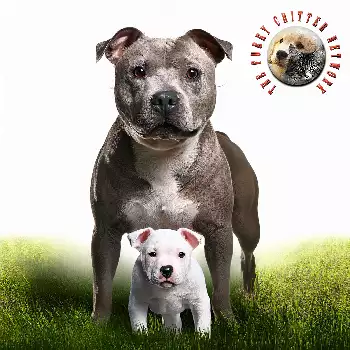

Nanny Dog History & Development

The Nanny Dog nickname is a modern invention, but the qualities it describes have roots stretching back through the breed's entire development. Understanding how a dog originally created for blood sport became synonymous with child-friendly dependability requires following the Staffordshire Bull Terrier's remarkable transformation from pit fighter to family companion. That transformation was not accidental. It was the result of deliberate breeding decisions made by working-class dog enthusiasts who needed their dogs to serve double duty as fighters and household members.

The breed's origins trace to early nineteenth-century England, where the crossing of bulldogs with various terrier types produced dogs known as bull-and-terriers. These crosses were bred for bull-baiting, a sport in which dogs were pitted against tethered bulls. When the Cruelty to Animals Act of 1835 banned bull-baiting and bear-baiting in England, the dogs' owners turned to dog fighting, which could be conducted secretly in smaller spaces. The region of Staffordshire, particularly its pottery communities, became a center for breeding these fighting dogs. The potters, chain makers, and steelworkers who bred them were poor families living in cramped quarters, often with many children. This domestic reality imposed a critical selection pressure.

A fighting dog that also showed aggression toward the humans in its household, particularly children, was useless to a family living in one or two rooms. The breeders could not afford to keep a dog that was dangerous to their own families. According to breed historians, any dog that showed the slightest human-directed aggression was culled from the breeding program. Over decades, this ruthless selection produced a dog with a split temperament that seems paradoxical: capable of intense dog-directed aggression in the pit but remarkably gentle and tolerant with every human it encountered. This dual nature is not a contradiction but rather the intentional result of breeding for two distinct behavioral profiles simultaneously.

The breed achieved formal recognition from The Kennel Club in 1935, thanks largely to the efforts of fancier Joseph Dunn, who organized the first breed club and worked to distinguish the Staffordshire Bull Terrier from the already-recognized Bull Terrier. Recognition shifted the breed's public identity from fighting dog to companion and show dog, though the dog itself had been functioning as a family companion alongside its fighting career for over a century.

The specific term Nanny Dog entered the public record through a 1971 New York Times article about the breed. A Staffordshire Bull Terrier breeder described the dogs as nursemaid dogs, referencing their noted gentleness with children. The term gained traction within the breed community and eventually spread into broader popular culture. By the late twentieth century, Nanny Dog had become a widely recognized shorthand for the Staffordshire Bull Terrier's child-friendly reputation. The AKC's breed description references this nickname, and it remains one of the most commonly cited facts about the breed.

The nickname has attracted both supporters and critics. Those who embrace it point to the Kennel Club standard's unique language about the breed being totally reliable, and to the observable reality that well-bred, well-socialized Staffordshire Bull Terriers consistently demonstrate exceptional patience with children. Those who question it note that the term has been traced to a specific twentieth-century origin rather than a historical tradition, and that applying any categorical safety label to a breed can encourage complacency about supervision. Both perspectives carry validity. The Staffordshire Bull Terrier's affection for children is genuinely one of its defining characteristics, but no breed designation replaces the need for responsible ownership, proper socialization, and adult supervision of all dog-child interactions.

Nanny Dog Temperament & Personality

The Nanny Dog's temperament is defined by a striking duality: extraordinary tenderness toward humans combined with a potential for intensity toward other animals that requires honest acknowledgment and thoughtful management. Understanding both sides of this equation is essential for anyone considering the breed, because the same genetic heritage that produced one of the most reliably human-friendly dogs alive also left a legacy of animal-directed drive that cannot be ignored or wished away.

The human-directed side of the Nanny Dog's personality is where the nickname earns its keep. These dogs form bonds of almost overwhelming intensity with their families. Physical affection is expressed enthusiastically and constantly, through leaning, lap-sitting, face-washing, and a full-body wiggle that communicates pure joy at their person's presence. The breed's devotion to children is not folklore. It is a consistently observed behavioral trait that has been documented by breed organizations, veterinary behaviorists, and generations of owners. The Kennel Club standard's description of the breed as totally reliable reflects a genuine behavioral tendency that responsible breeders have maintained through careful selection. Well-bred Staffordshire Bull Terriers display remarkable patience when children pull ears, grab skin, or engage in the kind of rough handling that would provoke a reaction from many other breeds.

Courage is a core temperament trait that manifests in the Nanny Dog's willingness to position itself between its family and any perceived threat. This is not nervous aggression but calm, confident protectiveness rooted in the breed's historical role. The dog assesses situations quickly and responds with measured intensity rather than panic. This protective instinct makes the Nanny Dog an effective watchdog despite its relatively small size, as the breed's physical confidence and muscular presence carry real deterrent value.

The animal-directed side of the temperament requires separate and equally honest discussion. The Staffordshire Bull Terrier was bred for dog-on-dog combat for generations, and while modern breeding has reduced this tendency significantly, the potential for dog-directed aggression remains present in the breed's genetic makeup. Not every individual will display this trait, and many Nanny Dogs live peacefully alongside other dogs their entire lives. However, the responsible approach is to assume the potential exists and manage accordingly. This means controlled introductions to new dogs, supervision during interactions, awareness of body language, and a willingness to intervene when tension appears. Same-sex pairings carry higher risk in this breed than opposite-sex pairings, and owners should never assume that a dog-friendly puppy will necessarily remain dog-friendly through maturity.

The breed's terrier heritage also contributes prey drive that may be directed toward smaller animals. Cats, rabbits, and other small pets may trigger chase instinct, particularly in dogs not raised with them from puppyhood. This drive varies considerably between individuals, but it is another factor that prospective owners should evaluate honestly.

Intelligence in the Nanny Dog is practical and problem-solving oriented. These dogs figure things out quickly, remember what they learn, and apply their knowledge with determination. The terrier stubbornness that accompanies this intelligence means the dog may test boundaries and require consistent reinforcement of rules. A Nanny Dog that discovers a behavior produces results, whether positive or negative, will repeat it with commitment. Energy levels are moderate to high, and the breed requires daily physical exercise and mental engagement to remain balanced and content. An under-exercised Nanny Dog channels its considerable jaw strength and energy into destructive chewing that can reduce household items to fragments with impressive speed.

Nanny Dog Family Life & Living Requirements

The Nanny Dog thrives in family environments where it receives consistent attention, physical activity, and the companionship it craves. This is fundamentally a people-oriented breed that wants to be involved in daily family routines rather than left to its own devices. The ideal household provides structured interaction, clear boundaries, and enough exercise to satisfy the breed's athletic nature. In return, the Nanny Dog offers a level of devotion and loyalty that is difficult to match.

The breed's compact size makes it genuinely adaptable to various living arrangements, including apartments and smaller homes. Unlike many breeds with high exercise needs, the Nanny Dog does not require a large yard to be content, provided it receives adequate daily exercise through walks, play sessions, and mental stimulation. However, any outdoor space should be securely fenced, as the breed's strength and determination mean that a weak fence will not contain a motivated dog. The Nanny Dog's short coat provides minimal insulation, so in colder climates, outdoor time during winter should be managed with appropriate protection.

The breed's relationship with children is its signature quality and the source of its nickname. Families with children often find the Nanny Dog to be an exceptionally compatible companion. The breed's tolerance for the unpredictable behavior of young children, its willingness to engage in active play, and its protective positioning near its charges all contribute to the enduring association between this breed and family life. That said, responsible ownership demands that no dog of any breed be left unsupervised with young children. The Nanny Dog label describes a temperament tendency, not a guarantee, and adult oversight ensures safety for both child and dog.

The question of other pets in the household requires careful consideration. The Nanny Dog can coexist peacefully with other animals, including other dogs and cats, particularly when raised together from a young age. However, the breed's potential for dog-directed aggression means that introductions should be managed carefully, and the dynamics between dogs in the household should be monitored on an ongoing basis. Some individuals never display any problematic behavior with other animals, while others develop reactivity during adolescence or social maturity. Owners should maintain separate feeding areas, avoid leaving multiple dogs unsupervised together during the adjustment period, and be prepared to manage the situation if conflicts arise.

Exercise requirements are moderate to high. The breed benefits from at least an hour of daily activity, which can include brisk walks, vigorous play sessions, and interactive games. The Nanny Dog's muscular build and athletic heritage make it well-suited to canine sports including weight pulling, agility, and flyball. Mental stimulation through puzzle toys, training exercises, and scent games helps keep the breed's active mind occupied. Without sufficient physical and mental outlets, the Nanny Dog's considerable jaw strength and energy will find expression through destructive chewing that targets furniture, shoes, and anything else within reach.

Nanny Dog Training & Exercise Needs

Training a Nanny Dog is a process that rewards patience, consistency, and a clear understanding of how the terrier mind works. These dogs are intelligent and capable of learning a wide range of commands and behaviors, but they are not the effortless-to-train breed that some companion dogs are. The terrier temperament brings with it a certain independence of thought, a tendency to test whether established rules still apply, and a determination that can be channeled productively or left to become stubbornness depending on the handler's approach.

Positive reinforcement is the foundation of effective Nanny Dog training. The breed responds enthusiastically to food rewards, play, and verbal praise, and its desire to please its handler provides natural motivation. Harsh corrections, physical punishment, or intimidation-based methods are counterproductive with this breed and can damage the trust that makes the dog-handler relationship work. The Nanny Dog's sensitivity to its owner's emotional state means it picks up on frustration quickly, which can derail a training session. Keeping a calm, upbeat tone and ending sessions before either party becomes frustrated produces the best long-term results.

Socialization is critical and should begin as early as possible. The breed's potential for dog-directed reactivity makes broad, positive exposure to other dogs during puppyhood especially important. Controlled introductions, puppy classes, and supervised play with dogs of various sizes and temperaments all help build the social skills that reduce the likelihood of problems later. Socialization should also include exposure to a wide variety of people, environments, and situations to reinforce the breed's natural confidence around humans. A well-socialized Nanny Dog is a confident, relaxed animal that navigates new situations without anxiety or aggression.

Leash manners deserve particular attention because the Nanny Dog's strength relative to its size can make an untrained dog difficult to manage on walks. Teaching loose-leash walking early prevents the dog from learning that pulling is effective. Front-clip harnesses can provide additional control during the training process. Recall training is another priority, as the breed's prey drive and terrier determination can override verbal commands when an exciting stimulus appears. A solid recall trained through high-value rewards and gradually increasing distractions provides an essential safety tool.

Exercise needs complement training and should include both physical exertion and mental challenge. Daily walks of moderate to brisk pace provide a baseline, but the breed benefits from more vigorous activities that engage its athleticism. Tug games, fetch sessions, and structured play that involves problem-solving keep the Nanny Dog physically tired and mentally satisfied. The breed excels in several organized sports, including agility, where its speed and agility are assets, and weight pulling, which channels the breed's strength into a controlled activity. Scent work and nose games tap into the terrier's natural investigative drive and provide excellent mental enrichment. The key principle is that a tired Nanny Dog is a well-behaved Nanny Dog, and the investment in daily exercise pays dividends in reduced destructive behavior and improved household harmony.

Nanny Dog Health Concerns

The Nanny Dog is a robust breed with a lifespan of 12 to 14 years, but it carries several breed-specific health conditions that responsible owners and breeders should understand. The availability of DNA tests for two of the most serious conditions gives breeders powerful tools to reduce their prevalence, and prospective owners should verify that both parents of any puppy have been tested.

Hip dysplasia occurs in the breed and is evaluated through OFA radiographic assessment or PennHIP as part of the CHIC protocol. The condition involves abnormal hip joint formation leading to arthritis and pain. Elbow dysplasia, similarly screened through OFA evaluation, affects the elbow joint and can cause lameness. Both conditions benefit from early detection, weight management, and in severe cases, surgical intervention. Skin conditions including demodectic mange and allergies affect some individuals, and the breed's short coat means skin irritation is often visible early. Certain Staffordshire Bull Terriers are susceptible to mast cell tumors, a form of skin cancer that requires veterinary evaluation of any unusual lumps or growths.

Common Health Issues

  • L-2-hydroxyglutaric aciduria (L2HGA) - A breed-specific metabolic neurological condition causing accumulation of organic acid in the central nervous system. Symptoms include tremors, coordination problems, seizures, and behavioral changes. Inherited as autosomal recessive with a reliable DNA test available for screening.
  • Hereditary cataracts (HC/juvenile cataracts) - Bilateral lens opacity developing within the first months of life and potentially progressing to blindness by age three. Inherited as autosomal recessive with DNA testing available. Surgical lens extraction can restore vision in some cases.
  • Hip dysplasia - Abnormal hip joint development causing progressive arthritis, pain, and mobility reduction. Screened through OFA radiographic evaluation or PennHIP assessment as part of the CHIC protocol.
  • Elbow dysplasia - Abnormal elbow joint formation leading to lameness and chronic discomfort. Evaluated through OFA screening and managed with weight control and appropriate exercise.
  • Mast cell tumors - A form of skin cancer to which the breed shows some susceptibility. Presents as lumps or growths on the skin that require veterinary evaluation and often surgical removal with histopathology to determine grade and prognosis.
  • Demodectic mange - A skin condition caused by Demodex mites that can cause hair loss and skin irritation, particularly in young dogs or those with compromised immune systems.

Preventive Care & Health Monitoring

  • L2HGA DNA test - Identifies dogs as clear, carrier, or affected for L-2-hydroxyglutaric aciduria. Required under the CHIC protocol and essential for preventing affected puppies through informed breeding decisions.
  • Hereditary cataracts DNA test - Screens for carrier status of juvenile cataracts. Required under CHIC and used alongside the L2HGA test to ensure breeding stock is appropriately matched.
  • Ophthalmologist examination - Board-certified ACVO eye exam at minimum age one year to screen for cataracts and other ocular conditions beyond what DNA testing covers.
  • OFA hip and elbow evaluation - Radiographic assessment of joint conformation for all breeding stock. Helps reduce the incidence of structural joint conditions in future generations.
  • Regular skin checks - The breed's susceptibility to mast cell tumors makes routine examination of the skin during grooming sessions an important early detection measure. Any new or changing lumps should be evaluated promptly.
  • Dental maintenance - Regular tooth brushing and professional dental cleanings help prevent periodontal disease, which can affect overall health if left untreated.

Nanny Dog Grooming & Maintenance

The Nanny Dog is one of the lowest-maintenance breeds when it comes to coat care, a practical advantage that has contributed to the breed's popularity with busy families. The short, smooth coat lies close to the muscular body and requires only basic attention to stay clean and healthy. This simplicity of grooming stands in stark contrast to the breed's high demands in other areas of care, including exercise, socialization, and training. Owners who choose the Nanny Dog for its easy coat will find that trade-off balanced by the time investment the breed requires in other aspects of responsible ownership.

Weekly brushing with a soft bristle brush or grooming mitt removes dead hair, distributes natural skin oils, and keeps the coat looking smooth and glossy. The short coat does shed, though lightly compared to double-coated breeds. Seasonal changes may produce slightly heavier shedding, but it never approaches the volume that longer-coated breeds generate. Bathing is needed only occasionally, typically every four to six weeks or when the dog has gotten particularly dirty. The breed's clean, smooth coat dries quickly after baths, and many owners find that a thorough wipe-down with a damp cloth between baths is sufficient for routine cleaning.

Beneath the easy coat care lies a breed that requires regular attention to other physical maintenance needs. Dental care is important because the breed can be prone to dental issues if oral hygiene is neglected. Regular brushing of the teeth, ideally several times per week, helps prevent tartar buildup and periodontal disease. Dental chews can supplement but should not replace mechanical brushing. Nail trimming should occur every two to three weeks, as overgrown nails can affect the dog's gait and cause discomfort. The breed's active nature may naturally wear down nails to some extent, but most Nanny Dogs still need regular trimming.

Ear care involves routine inspection and gentle cleaning. The breed's rose or half-pricked ears allow better airflow than fully dropped ears, which reduces the risk of ear infections. However, regular checks ensure that any early signs of infection, such as odor, redness, or discharge, are caught and addressed promptly. Skin monitoring is another important component of Nanny Dog maintenance. The short coat makes skin conditions visible relatively early, which is an advantage for early detection. Owners should check for unusual lumps, bumps, rashes, or areas of irritation during grooming sessions and consult a veterinarian if anything appears abnormal. Given the breed's susceptibility to mast cell tumors, any new growth should be evaluated rather than dismissed as a benign bump.