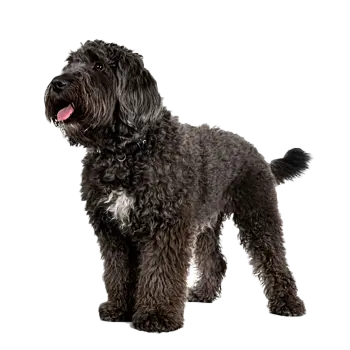
The Mud Dog is built for purpose, and that purpose involves spending long hours in cold water, navigating dense marshland vegetation, and retrieving waterfowl under conditions that would send most breeds scrambling for dry ground. The body is square in proportion, solidly constructed without appearing heavy or cumbersome. Males stand 21 to 24.5 inches at the withers and weigh between 40 and 65 pounds, while females are slightly smaller at 19.5 to 23 inches and 35 to 55 pounds. The overall impression is one of substance and athleticism covered by an extravagant coat that serves a very practical function.
The head is broad and round, with a well-defined but not exaggerated stop. The muzzle is short and square, giving the face a blunt, honest expression that is further obscured by the abundant facial hair. The nose is large and either black or brown, matching the coat color. The eyes are medium-sized, nearly round, and set at the same level as the ear bases. Eye color ranges from dark hazel to dark brown, though the eyes are often largely hidden behind a curtain of curly hair that falls across the brow. Despite this visual obstruction, the Mud Dog navigates its world with confidence and precision. The ears are long, set at eye level, and hang flat against the head, covered entirely in the same curly hair that blankets the rest of the body.
The coat is the Mud Dog's most defining physical characteristic and its most functional asset. Dense, woolly, and composed of natural curls that range from large loose waves to tight ringlets, it covers every inch of the body from skull to tail tip and extends down the legs to the webbed feet. This coat is not merely decorative. It forms a waterproof and insulating barrier that allows the dog to work in frigid water for extended periods without losing body heat. The hair grows continuously rather than cycling through seasonal shed periods, which means the Mud Dog produces far less loose hair than most breeds. This growth pattern does, however, mean that regular trimming is necessary to maintain the coat at a manageable length.
Color variation in the breed is considerable. Black and brown are the most commonly seen colors in conformation settings, but fawn, gray, and white also occur. Pied patterns, where the base color is white with patches of another color, add further diversity. Some dogs display white markings on the chest, feet, or face regardless of their primary color. The coat's texture and curl pattern can vary between individuals, with some dogs carrying looser, wavier curls and others displaying the tighter ringlets that some breed enthusiasts consider more typey.
The Mud Dog's feet deserve special mention because they are fundamental to the breed's function. Large and round with well-developed webbing between the toes, they serve as natural paddles in water. The feet are covered in the same curly coat that covers the body, and this hair must be managed to prevent matting between the toes. The tail is set moderately and carried slightly above the horizontal line of the back when the dog is alert or in motion. It is covered in the same dense coat and often forms a slight hook at the tip. The overall silhouette of the Mud Dog in motion reveals a confident, efficient mover with balanced reach and drive, though the abundant coat can mask the musculature underneath and make the dog appear bulkier than it actually is. When wet, the true athletic build becomes more apparent as the coat clings to the body, revealing the strong shoulders, deep chest, and well-muscled hindquarters that power the breed through water. This transformation from shaggy teddy bear to sleek swimmer surprises people seeing a wet Mud Dog for the first time.
Affectionate With Family
★★★★★
The Mud Dog forms deep attachments to its household and wants to be physically close to its people at all times. These dogs follow their owners like shadows, content simply to be nearby.
Good With Young Children
★★★★☆
Gentle and patient around children, the Mud Dog enjoys participating in family play. Their tolerant disposition makes them reliable companions for kids old enough to respect a dog's space.
Good With Other Dogs
★★★★☆
Naturally sociable, Mud Dogs typically integrate well with other dogs in the household. Their friendly temperament helps them navigate group interactions without conflict.
Shedding Level
★☆☆☆☆
The Mud Dog's continuously growing hair sheds minimally, making it a better choice for people sensitive to loose dog hair. Small tufts may appear occasionally but nothing comparable to double-coated breeds.
Coat Grooming Frequency
★★★★★
The dense, curly coat requires thorough weekly brushing down to the skin to prevent matting, plus professional grooming every six to eight weeks. Neglected coats quickly become painful tangles.
Drooling Level
★★☆☆☆
Drooling is not a significant issue, though the characteristic beard does collect water and can drip after drinking. A nearby towel solves most of the wet-face problem.
Coat Type
★★★★★
The woolly, curly coat ranges from large loose waves to tight ringlets and grows continuously without a natural shedding cycle. It provides excellent insulation in cold water.
Openness To Strangers
★★★★☆
Mud Dogs are generally welcoming toward new people, though some individuals take a moment to assess a situation before warming up. Initial reservation quickly gives way to friendliness.
Playfulness Level
★★★★☆
Playful and enthusiastic, especially around water. The Mud Dog eagerly participates in fetch, swimming, and interactive games, maintaining a cheerful energy level well into maturity.
Watchdog/Protective Nature
★★★☆☆
The Mud Dog will bark to announce visitors or unusual activity, but protective aggression is not part of the breed's character. They alert rather than defend.
Adaptability Level
★★★☆☆
Adaptable to various living situations provided exercise needs are met, though the Mud Dog strongly prefers access to outdoor space and ideally water. They do not handle prolonged isolation well.
Trainability Level
★★★★☆
Intelligent and eager to work with their handler, Mud Dogs take well to positive reinforcement training. Their sensitivity means harsh methods are counterproductive.