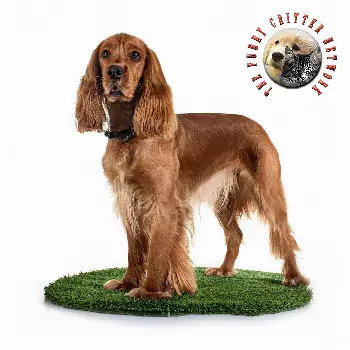
The first thing anyone notices about the Little Brown Dog is, predictably, its color. Every specimen of this breed wears some shade of rich brown, ranging from deep chocolate to warm liver, and this uniform coloring is so defining that it provided the breed's most enduring nickname. The coat may bleach to reddish or tawny tones along the ears and feathering from sun exposure, a natural weathering effect that breeders and judges accept as a mark of a dog that spends time outdoors doing what it was bred to do. White markings are limited to a small patch on the chest in some individuals, but the overwhelming visual impression is of a dog cloaked entirely in warm, earthy brown.
The Little Brown Dog stands between 14 and 18 inches at the shoulder depending on sex, and weighs 25 to 40 pounds, placing it in the medium-size category but at the compact end of the sporting group spectrum. This size was not an accident of breeding but a deliberate design requirement. Hunters on South Carolina's Wateree River needed a dog that could fit comfortably in the small take-apart section boats they used to navigate the swamps. A full-sized retriever loaded down a craft already carrying a hunter, guns, and provisions. The Little Brown Dog offered retriever capability in a package that literally would not rock the boat.
The head is moderately broad with a well-defined stop and medium-length muzzle that conveys strength without heaviness. The eyes are among the breed's most captivating features - large, oval, and set well apart, with a color that ranges from brilliant gold to deep amber. Puppies are born with milky blue-gold eyes that gradually deepen over the first several months of life. The expression produced by these golden eyes against the dark brown face is engaging and intelligent, conveying the alertness of a dog that is always reading its environment and ready for action. The ears are set slightly above eye level, long enough to reach the tip of the nose when pulled forward, and covered with wavy to curly hair that adds to the breed's characteristic silhouette.
The body is compact and well-muscled without coarseness, with a deep chest that provides ample lung capacity for sustained fieldwork and a moderate tuck-up that prevents the barrel-chested look of heavier sporting breeds. The topline is straight and strong, and the overall proportions create a dog that is slightly longer than tall but never exaggerated in either dimension. Legs are straight and well-boned with webbed feet that are a functional feature rather than a novelty - this breed was built for water work, and the webbing provides genuine propulsive advantage when swimming.
The coat is a medium-length double coat that can range from flat to moderately curly, with some individuals displaying a distinctly wavy pattern while others carry tighter curls. Feathering appears on the ears, chest, underbelly, and backs of the legs, varying from light to moderate in density and length. The outer coat provides water resistance essential for a dog that spends significant time in swamps and lakes, while the undercoat offers insulation. Some individuals display a topknot similar to a Llewellin Setter, a nod to the diverse genetic heritage that created the breed. Field dogs are often clipped short for practical purposes, and the standard specifically notes that this trimming should not be penalized.
Movement in the Little Brown Dog should be effortless and ground-covering, reflecting the stamina required for a full day of hunting in demanding terrain. The gait is smooth with good reach in front and strong drive from the rear, and the dog should move with its head up and a bearing that suggests alertness and eagerness. The traditionally docked tail, carried horizontally or slightly above the topline when the dog is engaged, acts as a visible signal of the dog's mood and focus during work.
Affectionate With Family
★★★★★
The Little Brown Dog bonds intensely with its household and craves close physical contact. This breed's transition from field partner to couch companion happens seamlessly, and they genuinely suffer when separated from their people for extended periods.
Good With Young Children
★★★★☆
Little Brown Dogs are naturally gentle and patient with children, approaching young family members with genuine warmth. Their medium size and sturdy build make them less fragile than toy breeds, though their exuberant energy can occasionally overwhelm very small children.
Good With Other Dogs
★★★★☆
This breed's sociable sporting heritage translates into generally peaceful relationships with other dogs. They adapt well to multi-dog households and rarely display territorial aggression, though proper introductions are always recommended.
Shedding Level
★★★☆☆
The Little Brown Dog sheds moderately throughout the year with seasonal increases during spring and fall coat transitions. Regular brushing keeps loose hair manageable, though owners should expect some hair on furniture and clothing.
Coat Grooming Frequency
★★★☆☆
The wavy to curly coat requires weekly brushing to prevent matting, particularly around the ears, chest, and leg feathering. Many owners describe the grooming needs as reasonable compared to other sporting breeds - a true wash-and-wear coat by spaniel standards.
Drooling Level
★☆☆☆☆
This is a clean-mouthed breed that produces very little drool under normal circumstances. Even when excited by the prospect of food or fieldwork, the Little Brown Dog keeps its salivation minimal.
Coat Type
★★★☆☆
The double coat ranges from flat to moderately curly with a weather-resistant quality developed for work in swamps and waterways. Feathering on the ears, legs, chest, and belly varies from light to moderate depending on the individual.
Openness To Strangers
★★★★☆
Little Brown Dogs typically greet new people with tail-wagging enthusiasm rather than reserve. Their friendly disposition extends broadly, making them poor guard dogs but excellent ambassadors for the breed wherever they go.
Playfulness Level
★★★★★
This breed maintains a puppy-like enthusiasm for play well into adulthood. Whether chasing a ball, splashing through water, or inventing their own games, the Little Brown Dog approaches recreation with infectious joy and seemingly limitless energy.
Watchdog/Protective Nature
★★★☆☆
The Little Brown Dog will alert to unusual sounds or visitors with a bark but lacks the suspicion or guarding instinct to follow through. Their default response to most situations is friendly engagement rather than protective wariness.
Adaptability Level
★★★☆☆
While adaptable in temperament, this sporting breed has genuine exercise needs that limit its flexibility in sedentary households. Given sufficient daily activity and human company, the Little Brown Dog can adjust to various living situations, but apartment life requires real commitment to outdoor time.
Trainability Level
★★★★☆
The Little Brown Dog is intelligent and eager to work with its owner, making it highly trainable when motivated. However, the breed carries a streak of independent thinking inherited from its diverse spaniel and retriever ancestry that can surface as selective listening when bored.