Kavkazskaïa Ovtcharka

Caucasian Shepherd Dog

Quick Facts

🐕 Breed Group
Working Group
📏 Size Category
Giant
📏 Height
Males: 27-30 inches, Females: 25-28 inches
⚖️ Weight
Males: 110-220 lbs, Females: 100-180 lbs
⏱️ Life Expectancy
10-12 years
🧣 Coat Type
Double coat, three varieties: long, medium, and short
🎨 Coat Colors
Gray, fawn, tan, pied, brindle, white
😀 Temperament
Bold, fearless, territorial, loyal, independent
🏃 Exercise Needs
Moderate
🎓 Training Difficulty
High - requires experienced handler
👶 Good with Children
Moderate - best with older children, requires supervision
🐾 Good with Other Pets
Low - strong territorial and guarding instincts

Other Names & Breed Recognition

Kavkazskaïa Ovtcharka is the transliteration of the Russian name for this breed, rendered through French phonetic conventions that were standard in international cynology for much of the twentieth century. Kavkazskaïa refers to the Caucasus, the mountain range and region stretching between the Black Sea and the Caspian Sea. Ovtcharka is the Russian word for shepherd dog, derived from ovtsa, meaning sheep. So the name literally translates to Caucasian Shepherd Dog, but the Russian original carries a cultural weight that the English version does not. In the countries where this breed developed and worked for millennia, it has always been an ovtcharka.

The French-influenced transliteration with the diaeresis over the i (Kavkazskaïa) reflects the way Russian breed names were historically adapted for FCI documentation and international dog show catalogs. You will also see the name written as Kavkazskaya Ovcharka using a more modern English transliteration system, or simply as Caucasian Ovcharka, which is the official name used by the United Kennel Club. The FCI standard, maintained by Russia as the country of origin, lists the breed under Standard No. 328 with both Russian and English designations. The American Kennel Club, which granted full recognition in 2020, uses the English name Caucasian Shepherd Dog.

Beyond the official registry names, this breed carries an impressive collection of regional and descriptive titles. In its homeland, different populations were known by local names reflecting their geographic origin: Georgian Mountain Dog, Azerbaijani Shepherd Dog, Dagestani Mountain Dog, and Armenian Wolfhound are all variations that reflect the breed's development across multiple countries and cultures within the Caucasus region. English-language sources sometimes use Russian Bear Dog or Caucasian Mountain Dog, descriptive names that capture the breed's size and original habitat. The term Caucasian Livestock Guardian Dog is occasionally used in working dog literature to emphasize the breed's function rather than its geography.

The variety of names underscores a fundamental truth about this breed: it did not develop in a single location under a single breeding program. It evolved across a vast, mountainous region where isolated valleys and communities independently developed their own populations of guardian dogs from shared ancient stock. The Soviet Union's standardization efforts in the 1920s brought these regional types under a single breed designation, but the diversity persists in the breed to this day, with Georgian-type dogs being larger and heavier-coated than the leaner, shorter-coated steppe types from Azerbaijan.

Kavkazskaïa Ovtcharka Organizations & Standards

The FCI holds the Kavkazskaïa Ovtcharka's international breed standard under number 328, with Russia designated as the country of origin. This standard was developed through the Soviet-era breeding programs that standardized the breed from the various regional types found across the Caucasus. The FCI places the breed in Group 2, Pinscher and Schnauzer, Molossoid and Swiss Mountain and Cattledogs, specifically in Section 2.2, Molossoid breeds, Mountain type. This classification groups it with other powerful mountain guardian breeds whose ancestry traces back thousands of years.

The Russian breed standard calls for a massive, heavily boned dog with a broad skull, powerful jaws, and a thick double coat suited to extreme mountain conditions. Males must stand a minimum of 68 centimeters (about 27 inches) at the withers, with no upper limit specified, which reflects the traditional preference for size in a dog expected to confront wolves and bears. Females must be at least 64 centimeters. The standard recognizes three coat lengths: long with prominent mane, pants, and tail feathering; intermediate length; and short. All three types must have a well-developed undercoat. The standard permits a wide range of colors including gray, fawn, tan, pied, brindle, and white, reflecting the natural variation across the breed's geographic range.

The United Kennel Club recognized the breed in 1995 under the name Caucasian Ovcharka, placing it in the Guardian Dog Group. The UKC standard emphasizes functional working ability and calls for a dog that displays confidence, fearlessness, and strong territorial instincts. This standard also notes that the breed is unsuitable for inexperienced dog owners, a warning that responsible breed organizations worldwide echo consistently. The American Kennel Club's recognition in 2020, after more than two decades in the Foundation Stock Service, placed the breed in the Working Group as the Caucasian Shepherd Dog.

The Caucasian Shepherd Club of America (CSCA) serves as the primary breed club in the United States, working to promote responsible ownership, health testing, and breed education. Given the breed's size and guardian temperament, the club places particular emphasis on health screening, recommending hip and elbow evaluations, cardiac exams, and ophthalmologist evaluations for all breeding stock. The breed does not currently have a formal CHIC program through OFA, but responsible breeders conduct these screenings independently. In Russia and the broader Caucasus region, breed clubs continue to value working ability alongside conformation, and some registries still require temperament evaluations as part of their formal breeding approval process.

Kennel Club Recognition

  • American Kennel Club (AKC): Recognized in 2020, Working Group
  • United Kennel Club (UKC): Recognized, Guardian Dog Group
  • FCI: Recognized, Group 2 - Pinscher and Schnauzer

Kavkazskaïa Ovtcharka Physical Description

There is nothing subtle about the physical presence of a Kavkazskaïa Ovtcharka. This is one of the largest dog breeds on earth, and it is built to look every bit as formidable as it is. Mature males typically stand 27 to 30 inches or more at the shoulder and weigh anywhere from 110 to 220 pounds, with exceptional individuals pushing past that upper range. Females are somewhat smaller at 25 to 28 inches and 100 to 180 pounds, but a large female Kavkazskaïa Ovtcharka still outweighs most adult men's concept of a dog. This is not a breed where the standard specifies an upper weight limit, because the historical function demanded maximum size and power.

The head is massive and broad, with a flat or slightly rounded skull that transitions through a moderate stop to a deep, blunt muzzle shorter than the skull length. The jaws carry tremendous crushing power, developed over centuries of confrontations with apex predators. The lips are thick and close-fitting, with moderate flews that contribute to the breed's characteristic drool. The eyes are medium-sized, oval, set deep under heavy brows, and convey an expression of calm evaluation mixed with absolute confidence. Standard eye colors range from dark brown to hazel, and the overall expression should never appear nervous or uncertain.

The ears are traditionally cropped close to the head in the breed's homeland, creating the rounded ear silhouette that many associate with the Kavkazskaïa Ovtcharka. In countries where cropping is banned or discouraged, the natural ears are medium-sized, triangular, and set high, hanging close to the cheeks. Whether cropped or natural, the ears are densely furred inside to protect against frostbite and debris. The neck is short, powerful, and heavily muscled, often appearing even more massive than it is due to the thick ruff of coat that surrounds it in long-coated specimens.

The body is slightly longer than tall with enormous bone structure and dense musculature throughout. The chest is deep and broad, reaching at least to the elbows, and the ribs are well-sprung to accommodate the powerful heart and lungs needed to sustain a dog of this size. The back is broad, straight, and muscular. The hindquarters carry heavy, powerful thighs that provide the explosive drive needed to cover mountain terrain or confront a predator. Movement should be free and ground-covering with a distinctive rolling quality that reflects the breed's massive build. The gait at speed is more deliberate than athletic, conserving energy for the sudden explosive bursts that guardian work demands.

The coat is the breed's most variable feature, ranging from the spectacular long-coated Georgian mountain type with its full mane, heavy rear feathering, and plume tail to the shorter, tighter coats of the steppe and lowland types. Regardless of length, all three varieties must possess a thick, dense undercoat that provides insulation against the extreme temperatures of the Caucasus, where winter conditions can be genuinely brutal. Acceptable coat colors span a wide range including gray, fawn, tan, red-brown, pied, brindle, and white, with or without darker mask markings on the face. This color variety reflects the breed's development across diverse geographic populations that were never artificially narrowed to a single type.

The tail is set high, heavily furred, and carried in a sickle or loose curl over the back when the dog is alert, dropping to hock level when at rest. The feet are large, round, and well-padded, providing the traction and support needed to navigate rocky mountain terrain while carrying considerable body weight. The overall silhouette of a mature Kavkazskaia Ovtcharka in good condition is one of raw, unrefined power. This is not a dog that has been shaped by show ring aesthetics into something pretty. It is a dog that has been shaped by wolves, bears, and mountain winters into something effective.

Affectionate With Family
The Kavkazskaïa Ovtcharka forms powerful bonds with its household, showing a deep loyalty and protectiveness that defines daily life with this breed. Affection tends to be calm and steady rather than exuberant or demanding.
Good With Young Children
This giant breed can be gentle with children it has grown up alongside, but its sheer size makes supervision essential. Toddlers and young children should never be left alone with any dog this large, regardless of temperament.
Good With Other Dogs
Territorial aggression toward unfamiliar dogs is deeply ingrained in this guardian breed. Same-sex aggression is particularly common, and introductions to new dogs require extreme caution and experienced handling.
Shedding Level
The massive double coat produces heavy shedding year-round, with dramatic coat blows in spring and fall that can fill trash bags with loose fur. This is a serious consideration for anyone concerned about household cleanliness.
Coat Grooming Frequency
Regular brushing several times a week prevents matting in the thick undercoat, with daily sessions needed during seasonal shedding. Long-coated varieties require the most attention, especially around the mane and rear feathering.
Drooling Level
The heavy jowls and loose flews of the Kavkazskaïa Ovtcharka produce moderate drooling, especially around mealtimes, water bowls, and warm weather. A towel near the water dish becomes standard household equipment.
Coat Type
The thick double coat comes in three recognized varieties: long with pronounced mane and feathering, medium length, and short. All three provide substantial insulation against the harsh mountain climates the breed was developed in.
Openness To Strangers
Natural suspicion of strangers is one of the defining characteristics of this breed. The Kavkazskaïa Ovtcharka was developed to view unfamiliar people and animals as potential threats, and that instinct remains powerful.
Playfulness Level
This is a serious, purpose-driven breed that does not typically engage in extended play sessions. Puppies show more playfulness, but adults tend to conserve energy for the guardian work they were built to perform.
Watchdog/Protective Nature
Guarding is not something this breed was trained to do. It is what the Kavkazskaïa Ovtcharka is. The protective instinct is hardwired, always active, and expressed with the full authority of a dog that can weigh over 200 pounds.
Adaptability Level
This breed is one of the least adaptable to urban or apartment living. It requires substantial space, secure containment, and an experienced owner who understands the demands of managing a giant guardian breed.
Trainability Level
The Kavkazskaïa Ovtcharka is intelligent but profoundly independent. It will assess whether your instructions serve a purpose it recognizes. Obedience for its own sake holds no appeal for a dog bred to make autonomous decisions.
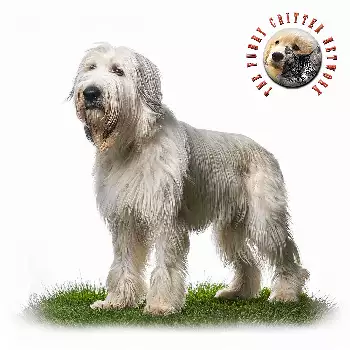

Kavkazskaïa Ovtcharka History & Development

The name Kavkazskaïa Ovtcharka entered the formal world of international cynology through the Soviet Union's breed standardization programs, but the dogs themselves are ancient beyond reliable documentation. Livestock guardian dogs have worked in the Caucasus Mountains for at least two thousand years and possibly much longer. Archaeological and historical evidence suggests that large, powerful guardian dogs were protecting flocks from wolves, bears, and human thieves in this region long before anyone thought to write breed standards or keep stud books. The Caucasus provided the perfect conditions for developing such dogs: isolated mountain valleys, extreme climate, abundant predators, and pastoral communities whose survival depended on the safety of their flocks.

The name Kavkazskaïa Ovtcharka only became formalized in the 1920s when the Soviet government recognized the military and security potential of these massive guardian dogs. The Red Star Kennel, a military breeding facility, began collecting dogs from across the Caucasus region and selectively breeding for size, aggression, and trainability in guard work. This was a significant departure from the breed's traditional pastoral role. Mountain shepherds had valued dogs that could think independently, patrol a perimeter all night, and make autonomous decisions about threats. The Soviet military wanted dogs that could guard prisons, factories, and borders under human direction. Both purposes required courage and physical power, but the behavioral profiles were different, and this tension between traditional guardian instincts and military obedience training has shaped the breed ever since.

The French-influenced transliteration Kavkazskaïa Ovtcharka became the international standard through the FCI's documentation practices, which historically used French as the primary language. When the FCI recognized the breed in 1984, the name appeared in international show catalogs and breed registries in this form. Russian-speaking fanciers continued using the Cyrillic original, while English speakers gradually adopted Caucasian Ovcharka or Caucasian Shepherd Dog as more accessible translations. The UKC's 1995 recognition used Caucasian Ovcharka, reflecting the growing preference for direct transliteration over the French-influenced spelling.

The breed's spread beyond the Soviet Union accelerated after the fall of the Berlin Wall in 1989. Kavkazskaïa Ovtcharkas had been used as patrol dogs along the East German border and in military installations throughout the Soviet bloc. As these facilities closed, dogs entered civilian hands and began appearing in Western European and eventually North American breeding programs. The transition from military and livestock guardian to companion animal has been challenging because the breed's fundamental nature does not change simply because its address does. A dog developed over millennia to view strangers and unfamiliar animals as threats requires experienced management that many prospective owners underestimate.

The AKC's acceptance of the breed into the Foundation Stock Service in 1996 began a long journey toward full recognition, which was finally achieved in 2020 when the Caucasian Shepherd Dog joined the Working Group. Today, the breed remains most numerous in Russia and the Caucasus nations, where it continues to serve as a livestock guardian in rural areas and as a property guardian in both rural and suburban settings. In North America and Western Europe, it occupies a niche among experienced owners who appreciate the breed's imposing presence, unwavering loyalty, and ancient working heritage.

Kavkazskaïa Ovtcharka Temperament & Personality

Understanding the temperament of the Kavkazskaïa Ovtcharka starts with understanding its job description, because this breed has not moved very far from its original purpose regardless of where it lives now. This is a dog that was designed to sit on a mountainside all night, in freezing darkness, making independent decisions about whether the shapes moving in the distance are threats to the flock. No handler is giving commands. No whistle is directing traffic. The dog decides. That decision-making autonomy is the core of the Kavkazskaïa Ovtcharka's personality, and it does not switch off because the dog lives in a house instead of a mountain pasture.

With its own family, the Kavkazskaïa Ovtcharka is calm, steady, and deeply bonded. This is not a breed that bounces off walls or demands constant entertainment. Adults spend much of their day in a state of relaxed alertness, seemingly dozing but actually monitoring everything happening in their territory. When a family member approaches, the response is warm but measured. When a stranger appears, the shift is immediate and unmistakable. The dog's entire posture changes, and there is a focused intensity that communicates clearly: I am aware of you, and I have not decided you belong here yet. This is not trained behavior. It is hardwired.

The breed's relationship with strangers is the single most important temperament characteristic that prospective owners must understand and respect. The Kavkazskaïa Ovtcharka does not warm up to new people quickly or easily. Some never truly accept unfamiliar visitors even with repeated exposure. Others learn to tolerate known guests when their owner clearly signals acceptance, but tolerance is the ceiling for most of these dogs. Expecting a Kavkazskaïa Ovtcharka to greet your dinner party guests with wagging enthusiasm is expecting the breed to be something it is not. Socialization from puppyhood is essential not because it will create a friendly dog, but because it will create a dog that can distinguish between normal social situations and genuine threats. An unsocialized Kavkazskaïa Ovtcharka is a liability. A well-socialized one is manageable.

Aggression toward other dogs, particularly unfamiliar dogs of the same sex, is deeply ingrained and must be managed rather than trained away. This breed was never expected to cooperate with other dogs outside its own established pack. In its traditional working environment, a Kavkazskaïa Ovtcharka might work alongside dogs it has known since puppyhood, but a strange dog approaching the flock would be driven off or worse. That territorial response to unfamiliar canines persists strongly in the modern breed. Dog parks are not an option. On-leash encounters with other dogs on walks require constant awareness and proactive management. Multi-dog households can work if the dogs are raised together and are of opposite sexes, but adding a new dog to a household with an established Kavkazskaïa Ovtcharka demands extreme caution.

Despite the intensity of its guardian nature, the well-bred and well-socialized Kavkazskaïa Ovtcharka is not a ticking time bomb. It is a remarkably stable and confident dog that does not escalate without reason. The breed's courage comes from genuine self-assurance rather than nervous reactivity. When a Kavkazskaïa Ovtcharka decides that a situation requires intervention, the response is deliberate and proportional. This breed gives warnings. It positions itself between its family and the perceived threat. It uses its enormous physical presence to communicate before resorting to anything more. Understanding and reading these signals is part of responsible ownership, and it is one of the reasons this breed should only be in the hands of people who have experience with strong-willed, independent guardian breeds.

Kavkazskaïa Ovtcharka Family Life & Living Requirements

Bringing a Kavkazskaïa Ovtcharka into your home is a decision that reshapes your daily life in ways that smaller, more easygoing breeds simply do not. This is a dog that will grow to weigh as much as a full-grown adult human, and it will do so with a mind of its own and a territorial nature that requires active management every single day. The ideal living situation involves a house with a large, securely fenced yard. Apartment living is not realistic for this breed, and even suburban homes with small yards present challenges when the dog next door becomes an object of fixation.

Fencing needs to be serious. A four-foot decorative fence is not going to contain a determined Kavkazskaïa Ovtcharka, and even if the dog does not jump or climb it, the visual access to passing dogs, delivery drivers, and pedestrians can create constant barrier frustration that makes the dog harder to manage. Six-foot privacy fencing is the practical minimum, and many experienced owners recommend reinforced fencing that prevents the dog from seeing through or pushing against it. This is not about the dog being dangerous. It is about managing a guardian breed's natural responses to activity in and around its perceived territory.

Families with older children who understand how to behave around large dogs generally do fine with this breed. The Kavkazskaïa Ovtcharka can be gentle and protective with children it considers part of the family, but the dog's size alone creates risk with younger kids. A well-meaning bump from a 180-pound dog can knock a toddler off their feet. Roughhousing between children and a giant guardian breed must be prevented, not because the dog is vicious but because the physical mismatch is simply too great. Additionally, the breed's protective instincts can misfire when children's friends visit and engage in the loud, physical play that kids naturally enjoy. The dog may interpret a visiting child's rough play with its own child as a threat, and that misinterpretation can have serious consequences.

The breed's exercise needs are more moderate than many people expect given its size. The Kavkazskaïa Ovtcharka is not a high-energy breed in the way that herding or sporting dogs are. Adults are content with moderate daily exercise, typically around thirty to forty-five minutes of walking plus access to a yard for patrol and exploration. What this breed does need is mental engagement and a sense of purpose. A Kavkazskaïa Ovtcharka that has a territory to watch, a routine to follow, and a family to protect is a content and stable dog. One that is isolated, bored, and disconnected from household life becomes frustrated, vocal, and potentially destructive.

Visitors require advance planning that owners of friendly breeds never have to think about. A reliable protocol for managing the dog when guests arrive is essential, whether that means crating, confining to a separate room, or carefully controlled introductions on leash. This is not optional. It is a fundamental responsibility of owning a breed that views unfamiliar people entering its home as a potential threat.

Kavkazskaïa Ovtcharka Training & Exercise Needs

Training a Kavkazskaïa Ovtcharka is an exercise in negotiation rather than command and compliance. This breed is intelligent enough to understand what you want. The question is always whether it sees a reason to cooperate. Harsh, punishment-based methods are particularly counterproductive with this breed because they damage the trust relationship and can provoke defensive responses from a dog that weighs more than many people. Positive reinforcement works, but even with the best approach, expectations need to be calibrated. This is not a breed that will perform obedience routines with crisp enthusiasm. It is a breed that will learn the rules of the household and follow them when it agrees they make sense.

Socialization during the first four to six months of life is the most critical training investment you will ever make with this breed. The window is relatively narrow and the consequences of missing it are severe. Puppies need controlled, positive exposure to a wide variety of people, environments, surfaces, sounds, and carefully managed dog interactions. The goal is not to make the puppy friendly with everyone. The goal is to build a dog that can accurately distinguish between normal life situations and actual threats. An unsocialized Kavkazskaïa Ovtcharka will treat virtually everything unfamiliar as a threat, and managing a 150-plus-pound dog that is reactive to ordinary stimuli is an exhausting and sometimes dangerous proposition.

Basic obedience training should begin early and focus on the commands that matter most for daily safety: a reliable sit and down, walking on a loose leash without pulling, responding to its name, and accepting handling for grooming and veterinary care. Recall training is important but should be approached with realistic expectations. Most Kavkazskaïa Ovtcharka owners learn quickly that off-leash freedom in unfenced areas is not advisable. The breed's territorial nature and suspicion of strangers make public off-leash situations inherently risky, not because the dog will run away but because it may decide to address a perceived threat before you can intervene.

Exercise requirements are moderate for a breed of this size. The Kavkazskaïa Ovtcharka was built for sustained low-intensity patrolling rather than sprinting or endurance running. Daily walks of thirty to forty-five minutes, combined with yard time for independent patrol and exploration, typically satisfy the breed's physical needs. Puppies and young dogs should not be overexercised because the giant breed skeleton takes longer to mature, and excessive strain on growing joints can worsen the hip and elbow dysplasia that the breed is prone to. Swimming, where available, provides excellent low-impact exercise. The key is consistency rather than intensity, giving the dog a daily routine that includes physical movement and mental engagement without pushing developing joints beyond their limits.

Crate training from puppyhood provides a management tool that makes daily life with a giant guardian breed significantly easier. A Kavkazskaïa Ovtcharka that is comfortable in a crate gives you a safe option for times when the dog needs to be contained, whether during visitor arrivals, home repairs, or veterinary situations. The crate should never be used as punishment, and the dog should associate it with positive experiences. Given the breed's size at maturity, you will need the largest crate available, and even then it may feel like a tight fit.

Kavkazskaïa Ovtcharka Health Concerns

The Kavkazskaïa Ovtcharka is a fundamentally sound breed that has not been subjected to the extreme structural exaggeration that plagues some other giant breeds. Its health challenges come primarily from the simple reality of being an enormous dog. Giant breeds carry more weight on their joints, put more demand on their hearts, and generally have shorter lifespans than smaller dogs. The typical Kavkazskaïa Ovtcharka lives 10 to 12 years, which is respectable for a breed of this size.

Obesity deserves special mention because the Kavkazskaïa Ovtcharka has a strong appetite and relatively moderate exercise needs, a combination that makes weight gain easy if portions are not carefully controlled. Excess weight compounds every other health concern in the breed, accelerating joint degeneration, increasing cardiac strain, and shortening an already limited lifespan. Regular weigh-ins and body condition scoring should be part of your routine veterinary care.

Common Health Issues

  • Hip dysplasia - Abnormal development of the hip joint that causes pain, reduced mobility, and progressive arthritis. Common in giant breeds due to the combination of rapid growth and heavy body weight. OFA or PennHIP screening of breeding stock helps reduce incidence.
  • Elbow dysplasia - Developmental abnormalities in the elbow joint leading to lameness, pain, and arthritis in the front limbs. Like hip dysplasia, influenced by both genetics and growth management during the first two years.
  • Entropion - An inherited eyelid condition where the lid rolls inward, causing the lashes to irritate the eye surface. Produces excessive tearing, discharge, and discomfort. Correctable with a straightforward surgical procedure.
  • Cataracts - Progressive cloudiness of the eye lens that can impair vision over time. Can be inherited or develop with age. Surgical removal is available for advanced cases that significantly affect quality of life.
  • Gastric dilatation-volvulus (bloat/GDV) - A life-threatening emergency where the stomach fills with gas and can twist, cutting off blood supply. Common in deep-chested giant breeds. Requires immediate emergency surgical intervention.
  • Obesity - The breed's strong appetite combined with moderate exercise needs makes weight gain a persistent risk. Excess weight accelerates joint degeneration, increases cardiac strain, and shortens lifespan.

Preventive Care & Health Monitoring

  • Hip evaluation through OFA or PennHIP - All breeding dogs should be evaluated to identify hip joint quality and reduce dysplasia incidence in future generations. Essential for a giant breed with documented hip dysplasia risk.
  • Elbow evaluation through OFA - Breeding stock should be screened for elbow dysplasia to reduce this painful developmental condition in offspring.
  • Cardiac examination - A veterinary cardiac exam screens for structural heart conditions that can affect giant breeds. Recommended as part of the breeding health panel.
  • Ophthalmologist evaluation (CAER exam) - Annual eye exams by a board-certified veterinary ophthalmologist detect entropion, cataracts, and other eye conditions early when treatment is most effective.
  • Weight management throughout life - Keeping the Kavkazskaïa Ovtcharka at a lean body condition is critical for joint health, cardiac function, and overall longevity. Portion control and regular body condition scoring should be standard practice.
  • Bloat prevention feeding protocol - Feeding two to three smaller meals daily instead of one large meal, avoiding exercise immediately after eating, and using slow-feeder bowls all reduce the risk of gastric dilatation-volvulus.

Kavkazskaïa Ovtcharka Grooming & Maintenance

Grooming a Kavkazskaïa Ovtcharka is a commitment that scales with the coat variety. Long-coated dogs, the dramatic Georgian mountain type with the full mane and heavy feathering, require the most work. Medium and short-coated dogs are less labor-intensive but still produce impressive amounts of shed fur because the dense undercoat is present regardless of outer coat length. No version of this breed is low-maintenance in the grooming department.

For long-coated Kavkazskaïa Ovtcharkas, daily brushing is ideal to prevent mats from forming in the thick undercoat, particularly behind the ears, under the legs, and around the rear feathering. A pin brush handles the outer coat while an undercoat rake works through the dense underlayer without damaging the guard hairs. Medium-coated dogs can manage with three to four brushing sessions per week during normal periods. Short-coated dogs are the easiest to maintain but still benefit from twice-weekly brushing. All coat types undergo dramatic seasonal shedding twice a year when the undercoat releases in massive quantities over a two to three week period. During these coat blows, daily raking sessions are essential, and you should prepare yourself mentally for the sheer volume of fur.

Bathing should happen only when genuinely necessary, typically every few months or after the dog gets into something unpleasant. Frequent bathing strips the coat's natural oils and can dry out the skin. When you do bathe a Kavkazskaïa Ovtcharka, set aside a significant block of time because thoroughly wetting, shampooing, rinsing, and drying a dog this size with this much coat is not a quick job. A high-velocity dryer designed for large dogs is a worthwhile investment if you plan to handle grooming at home.

Nail care is important and easy to overlook with a breed this large. Overgrown nails affect gait and joint alignment, compounding the orthopedic stress that giant breeds already face. Trim nails every two to three weeks or as needed based on the dog's activity level and the surfaces it walks on. Start nail handling early in puppyhood because trying to trim the nails of an uncooperative 180-pound adult is a battle you want to avoid. Ear checks should happen weekly, looking for wax buildup, redness, or odor. Dogs with natural hanging ears are more susceptible to trapped moisture and debris than erect-eared breeds.

Dental care rounds out the grooming routine. Brushing the teeth two to three times per week with a canine toothpaste helps prevent the periodontal disease that contributes to systemic health problems as dogs age. Given the Kavkazskaïa Ovtcharka's powerful jaws, dental chews designed for giant breeds provide supplemental cleaning between brushings. Starting all grooming routines during puppyhood, when the dog is small enough to manage easily, builds cooperative habits that make the process manageable for the rest of the dog's life.