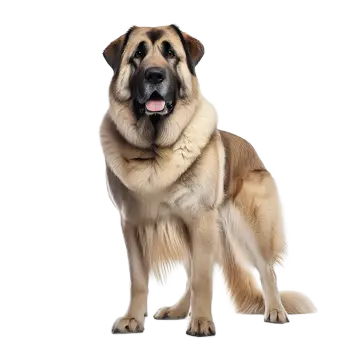
The first thing that strikes you about a Kangal is the combination of size and athleticism. This is not a lumbering, heavy-boned mastiff that plods along. The Kangal carries substantial muscle on a frame that was built for covering ground quickly and efficiently across the rocky, uneven terrain of the Anatolian plateau. Males typically stand 30 to 32 inches at the shoulder and weigh between 110 and 145 pounds, while females are somewhat smaller at 28 to 30 inches and 90 to 120 pounds. Even at these sizes, a well-built Kangal moves with a fluidity that surprises people who expect a dog this large to be slow.
The head is broad and moderately heavy, with a slight stop between the forehead and muzzle. The muzzle itself is blunt but not overly short, giving the jaw the power it needs without the breathing compromises that come with extreme brachycephalic structure. The lips are slightly pendulous but tight enough that excessive drooling is not a daily concern. The eyes are medium-sized, set well apart, and range from golden to dark brown. They carry an expression that people often describe as thoughtful or assessing, which makes sense when you consider this dog spends its working life scanning the horizon for threats.
The ears are medium-sized, triangular, and set fairly high on the skull. They drop forward and lie flat against the head, giving the Kangal a slightly softer expression than prick-eared breeds. In Turkey, working Kangals traditionally have their ears cropped short as puppies to prevent wolves from grabbing hold during confrontations, but this practice is not required by breed standards outside Turkey and is increasingly uncommon even in its homeland.
The body is powerful and rectangular, slightly longer than tall when measured properly. The chest is deep, reaching to the elbow, and provides ample lung capacity for sustained effort. The ribcage is well sprung but not barrel-shaped, allowing free movement of the front legs. The back is strong and level, the loin is slightly arched and muscular, and the croup slopes gently. The tail is long, reaching at least to the hock, and is carried in a characteristic curl over the back when the dog is alert or moving. At rest, the tail hangs low with a slight curve at the tip.
The legs are straight, well-boned, and built for endurance rather than pure speed, though the breed can reach speeds around 35 miles per hour in short bursts. The feet are large and compact with strong, thick pads that handle rocky ground without breaking down. Dewclaws on the rear legs are common and sometimes double, which is typical of many livestock guardian breeds. The overall movement is smooth and ground-covering, with a distinctive elastic gait that experienced breed people recognize immediately. When trotting, the Kangal tracks true with good reach in front and strong drive from behind, covering maximum ground with minimum effort.
The coat is where the Kangal's adaptation to central Turkey's extreme climate becomes obvious. The double coat consists of a dense, soft underlayer that provides insulation against both the brutal Anatolian winters and the fierce summer sun, plus a slightly coarser outer layer that repels water and snow. The coat is dense enough to resist puncture from wolf bites, which is not an accident of breeding but a practical necessity that developed over centuries of working in predator-rich environments. Color ranges from pale fawn to wolf grey, and the black mask covering the muzzle and extending around the eyes is the breed's most recognizable feature. The ears are also dark. Small white markings on the chest or toes are acceptable but not preferred.
Affectionate With Family
★★★★☆
Kangals form deeply loyal bonds with their people, showing steady warmth rather than constant demands for attention. They prefer being near their family and will position themselves where they can keep an eye on everyone.
Good With Young Children
★★★★☆
This breed treats children in the household as part of its flock. Kangals are remarkably gentle and patient with kids they have been raised alongside, though their sheer size calls for supervision with toddlers.
Good With Other Dogs
★★☆☆☆
Same-sex aggression is well documented in the breed, and Kangals tend to view unfamiliar dogs as potential threats. Proper introduction on neutral ground and ongoing management are necessary in multi-dog homes.
Shedding Level
★★★★☆
The dense double coat sheds moderately throughout the year and heavily during two seasonal blowouts. Expect fur on furniture, clothing, and any surface the dog frequents.
Coat Grooming Frequency
★★☆☆☆
Routine coat care is minimal outside of shedding season. A weekly brushing keeps things manageable most of the year, though daily sessions become necessary during the spring and fall coat transitions.
Drooling Level
★★☆☆☆
Kangals are not heavy droolers compared to many large breeds. Some drooling may occur around mealtimes or in hot weather, but it is not a defining feature of daily life with this dog.
Coat Type
★★★☆☆
The double coat consists of a dense, insulating underlayer and a slightly coarser outer coat. Length ranges from short to medium depending on the individual and climate, providing effective protection in both cold and heat.
Openness To Strangers
★★☆☆☆
Kangals are naturally reserved with people they do not know. They will assess unfamiliar visitors carefully and position themselves between the stranger and their family until they determine the person is not a threat.
Playfulness Level
★★★☆☆
Adults are calm and dignified most of the time, though they do enjoy play sessions with their family. Puppies and adolescents are more energetic, but even young Kangals are less boisterous than many other large breeds.
Watchdog/Protective Nature
★★★★★
Guarding is what this breed was born to do. Kangals are always alert to their surroundings and will position themselves at the highest vantage point available. Their deep bark alone is enough to deter most intruders.
Adaptability Level
★★☆☆☆
This is not a breed that adjusts easily to apartment living or frequent moves. Kangals need space to patrol and a consistent environment where they can establish and maintain their territory.
Trainability Level
★★★☆☆
Kangals are intelligent but independent, which means they understand commands and then decide whether following them suits the situation. Cooperative training methods work far better than dominance-based approaches.