Italian Spitz

Volpino Italiano

Quick Facts

🐕 Breed Group
Toy Group
📏 Size Category
Small
📏 Height
Males: 10-12 inches, Females: 10-11 inches
⚖️ Weight
Males: 9-14 lbs, Females: 9-12 lbs
⏱️ Life Expectancy
14-16 years
🧣 Coat Type
Long, dense double coat
🎨 Coat Colors
White, red
😀 Temperament
Lively, alert, affectionate, vocal
🏃 Exercise Needs
Moderate
🎓 Training Difficulty
Moderate
👶 Good with Children
Yes, with supervision due to small size
🐾 Good with Other Pets
Yes, generally good with socialization

Other Names & Breed Recognition

The Italian Spitz is the English descriptive name for the Volpino Italiano, and it tells you two essential things about this dog right away. It is Italian, and it belongs to the spitz family of breeds, that ancient group of dogs characterized by pointed ears, curled tails, and dense double coats adapted to cold weather. What the name does not convey, and what surprises almost everyone who encounters this breed for the first time, is how rare it is. There are estimated to be fewer than four thousand Volpino Italianos alive in the world today, making the Italian Spitz one of the rarest recognized breeds on the planet.

The formal Italian name Volpino Italiano translates roughly to little Italian fox, a reference to the breed's sharply pointed muzzle, erect triangular ears, and alert, foxy expression. It is a name that fits perfectly. Other names that appear in historical records include Cane di Firenze, or Dog of Florence, reflecting the breed's strong association with Tuscany, and Cane del Quirinale, linking it to the Quirinal Palace in Rome. In casual Italian conversation, the dog is simply called a Volpino.

Despite its long history and distinctive appearance, the Italian Spitz is not recognized by the American Kennel Club. The AKC declined the breed in 2006 citing its similarity to the American Eskimo Dog, a decision that remains a point of frustration for breed enthusiasts who argue that the two breeds have entirely separate histories and are not interchangeable. The United Kennel Club recognized the Volpino Italiano in 2006 under its Northern Breed group. The FCI classifies it under Group 5, European Spitz, and The Kennel Club in the UK places it in the Toy group.

People frequently mistake the Italian Spitz for a Pomeranian or a small American Eskimo Dog, and the visual similarity is understandable. All three breeds share spitz ancestry and general proportions. But the Italian Spitz is its own distinct breed with its own history, its own temperament profile, and a lineage in Italy that predates either of those other breeds by centuries. Some breed historians actually believe the Volpino contributed to the development of the Pomeranian rather than the other way around, though the exact genetic relationships remain debated.

Italian Spitz Organizations & Standards

The breed standard for the Italian Spitz was developed and is maintained by the Ente Nazionale della Cinofilia Italiana, the Italian national kennel club, and has been adopted by the FCI as the international reference document. The standard describes a small, compact, square-bodied spitz with a long, straight, stand-off coat, erect triangular ears, and a tail that curls over the back. The overall impression should be one of liveliness and alertness wrapped in an abundant coat that gives the dog a slightly larger appearance than its actual body size would suggest.

FCI classification places the Italian Spitz in Group 5, Section 4, European Spitz. The standard specifies a height at the withers of 25 to 30 centimeters for males and 25 to 28 centimeters for females, with a body weight typically ranging from 9 to 14 pounds. Accepted coat colors are solid white and solid red, though white is considerably more common and more frequently seen in show rings. The red should be a deep, saturated color sometimes described as champagne at its lightest, and some pale orange shading on the ears is acceptable.

In the United States, breed activity is organized primarily through small networks of dedicated fanciers and breeders rather than a large national parent club with AKC affiliation. The lack of AKC recognition limits the breed's visibility in the American dog world but has not prevented a small, committed community from maintaining breeding programs and importing dogs from Italy and other European countries. The United Kennel Club provides the primary competitive venue for American owners through its Northern Breed classification.

The Kennel Club in the United Kingdom recognizes the Italian Spitz in its Toy group and applies standard breed health monitoring. Because the breed's global population is so small, responsible breeding is especially critical. Every litter represents a significant portion of the available gene pool, and breeders must balance the desire to preserve breed type with the need to maintain genetic diversity. Health screening recommendations include testing for primary lens luxation, which has a DNA test available, and evaluation for patellar luxation. Any breeder who dismisses the importance of these tests in a breed this rare should not be trusted with its future.

Kennel Club Recognition

  • United Kennel Club (UKC): Recognized, Northern Breed
  • FCI: Recognized, Group 5
  • The Kennel Club (UK): Recognized, Toy

Italian Spitz Physical Description

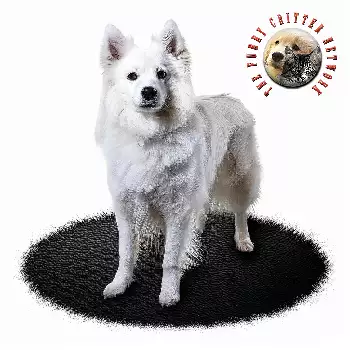
The Italian Spitz is a small dog with a presence that exceeds its physical dimensions. Standing 10 to 12 inches at the shoulder and weighing between 9 and 14 pounds, it is firmly in toy territory by size. But the abundant coat, erect carriage, and alert expression give the dog a visual impact that makes it seem larger and more substantial than it actually is. Pick one up and you realize there is a surprisingly compact, fine-boned little dog underneath all that fur.

The head is proportionate to the body and wedge-shaped when viewed from above, tapering from a moderately broad skull to a pointed muzzle that earns the breed its fox comparison. The stop is moderately defined, and the muzzle is straight and fine without being snipey. The nose is small, dark, and well-pigmented. The ears are triangular, erect, and set high on the skull, positioned close together and pointing forward with the alert tension characteristic of all spitz breeds. The eyes are round, medium-sized, and dark brown, giving the face an expression that is simultaneously bright, curious, and slightly amused.

The body is square in proportion, meaning the length from the point of the shoulder to the rear roughly equals the height at the withers. The chest is moderately deep, the ribs are well-sprung, and the topline is straight and level. The legs are fine-boned but straight and well-proportioned, ending in small, compact feet. Despite the delicate bone structure, the Italian Spitz is not fragile in the way some other toy breeds can be. It is a sturdy, well-constructed little dog that moves with a smooth, free stride and carries itself with the confidence of something much larger. The hindquarters carry enough angulation to provide real driving power for the dog's size, and the overall balance between front and rear assembly gives the breed its characteristic light, springy movement.

The tail is one of the breed's most expressive features. It is set high on the croup and carried in a tight curl over the back, covered in long, flowing hair that creates a plume effect when the dog is standing still. When the Italian Spitz is relaxed, the tail may loosen slightly, but in motion or on alert it curls tightly and adds to the breed's overall impression of compact energy. The tail plume blends with the longer hair on the hindquarters, creating a continuous line of coat that contributes to the breed's distinctive silhouette.

The coat is the breed's crowning feature. It is long, straight, and stands off from the body rather than lying flat, creating a voluminous silhouette. Around the neck, the coat forms a thick ruff or mane that is especially pronounced in males. The hindquarters are covered in longer hair that creates a trousered effect, and the tail, which curls over the back, is covered in long, flowing plume. The undercoat is dense and soft, providing insulation that reflects the breed's ancient adaptation to varying Italian climates. Coat color is solid white or solid deep red. White is the more common color and the one most people associate with the breed.

Movement in the Italian Spitz is light, quick, and free. The dog covers ground with a smooth, balanced trot that shows good reach in the front and adequate drive from the rear. There is nothing plodding or heavy about how this breed moves. It is an agile, quick little dog that can change direction instantly and shows a natural springiness in its step that reflects its energetic personality. At rest, the Italian Spitz tends to position itself in elevated spots, perching on furniture or cushions where it can survey its territory with the alertness of a tiny sentry.

Affectionate With Family
The Italian Spitz forms intense bonds with its household and actively seeks out physical contact and attention throughout the day.
Good With Young Children
Friendly with children but fragile due to small size, requiring supervision to prevent accidental rough handling that could injure the dog.
Good With Other Dogs
Generally sociable with other dogs when properly introduced, though some individuals may posture beyond their actual size.
Shedding Level
Moderate shedding year-round with heavier seasonal blowouts when the dense undercoat releases in clumps.
Coat Grooming Frequency
The long double coat needs brushing several times per week to prevent matting, with particular attention around the neck ruff and hindquarters.
Drooling Level
Virtually no drooling, as expected from a small spitz breed with tight, clean lip structure.
Coat Type
A long, straight, stand-off double coat that forms a distinctive mane around the neck and feathering on the hindquarters and tail.
Openness To Strangers
Naturally reserved with unfamiliar people and quick to announce their arrival, though not aggressive once properly introduced.
Playfulness Level
Energetic and playful with a mischievous streak, this breed retains its love of games and antics well into maturity.
Watchdog/Protective Nature
Exceptionally alert and vocal, the Italian Spitz takes its watchdog role seriously and will announce every visitor, delivery, and passing squirrel with conviction.
Adaptability Level
Adapts well to various living situations including apartments, provided its exercise and companionship needs are met.
Trainability Level
Intelligent and capable of learning quickly, but carries a strong independent streak that requires patience and creative motivation to work through.

Italian Spitz History & Development

The name Italian Spitz places this breed within the broader spitz family, but the dog's actual history in Italy runs far deeper than any classification system can convey. Spitz-type dogs have been present on the Italian peninsula for thousands of years, and evidence suggests the Volpino's ancestors were already distinct from other European spitz varieties by the early medieval period. These were not imported dogs. They developed on Italian soil over centuries, serving roles that ranged from palace companion to farmyard alarm system.

The breed achieved its highest visibility during the Italian Renaissance, when it became a favorite of both aristocratic and common households. Italian nobles kept Volpini as cherished lap dogs and status symbols, while farmers and cart drivers valued the same dogs as alert, vocal watchdogs that would announce the approach of strangers, predators, or anything else that moved. This dual role, pampered companion and working alarm, defined the Italian Spitz for centuries and is still visible in its temperament today. Michelangelo reportedly owned a Volpino, and dogs resembling the modern breed appear in Italian paintings dating to the early 1500s.

The breed was also known regionally as the Cane di Firenze in Tuscany and the Cane del Quirinale in Rome, reflecting its widespread presence across multiple Italian regions. Some breed historians believe the Italian Spitz contributed genetic material to the development of the Pomeranian, as Italian traders and travelers carried these dogs throughout Europe during the Renaissance period. Whether this is true or not, the Italian Spitz is certainly among the oldest of the European spitz breeds and may well have influenced others rather than being derived from them.

The decline of the Italian Spitz began in the late nineteenth century and accelerated through the twentieth. As the German Spitz and later the Pomeranian gained popularity across Europe, the Volpino gradually fell out of fashion even in its homeland. By 1965, only five known dogs of the breed remained. The situation was genuinely dire, and without intervention the Italian Spitz would have joined the long list of European breeds lost to changing tastes and neglect.

A recovery project launched in the 1980s drew on the surviving dogs, including animals found on remote Italian farms where the breed had persisted without formal breeding programs. These farm dogs had been kept as watchdogs and companions by families who valued their alert nature and had never stopped breeding them, even as the registered population collapsed. Through careful selection and dedicated effort, Italian breeders gradually rebuilt the population. Today the breed numbers several thousand worldwide, but it remains one of the rarest recognized breeds in existence. The Kennel Club Italiano recognized the breed in 1913, and the UKC granted recognition in 2006. The AKC has not accepted the breed, a decision that limits its visibility in the United States but has not diminished the dedication of the small community that maintains it.

Italian Spitz Temperament & Personality

The Italian Spitz has a personality that is far larger than its body, and that is not just a cute way of describing a small dog. This breed genuinely believes it is the center of the household, and in practice most owners end up confirming that belief because the dog is so engaging and entertaining that it naturally draws attention. The Italian Spitz is lively, curious, opinionated, and endlessly alert to everything happening in its environment. It is not a quiet breed. It is not a passive breed. It is a small dog with a big presence and a voice it is not shy about using.

The watchdog instinct is the most immediately noticeable behavioral trait. The Italian Spitz will announce every visitor, every delivery truck, every bird that lands in the yard, and every suspicious sound it hears from three rooms away. This is the breed's ancient function. For centuries these dogs served as the alarm system for Italian households, barking to alert larger guard dogs or human occupants to approaching strangers. That programming runs deep and does not switch off because you live in a suburban neighborhood. Managing the barking requires early training with a reliable quiet command and consistent reinforcement throughout the dog's life. Without that management, the Italian Spitz can become a nuisance barker that strains your relationship with your neighbors.

Beneath the alert exterior is an intensely affectionate companion that bonds strongly with its family. The Italian Spitz wants to be with its people, preferably on their laps or at the very least in the same room. It is a social breed that does not handle isolation well and can develop anxiety-related behaviors if left alone for extended periods. This is a dog that does best in households where someone is home for most of the day or where the dog can accompany its owner to activities and errands.

With strangers, the Italian Spitz is cautious and reserved rather than aggressive. It will bark first, assess second, and warm up gradually once it decides the new person is acceptable. This is not a breed that greets everyone with tail wags and kisses. It reserves its full affection for its inner circle and takes its time extending trust to outsiders. With other dogs, the Italian Spitz is generally sociable when properly socialized but may display a confidence that exceeds its physical capabilities, posturing or challenging much larger dogs without any apparent awareness of the size difference.

The independent streak in this breed is real and should not be underestimated. The Italian Spitz is smart, perhaps too smart for some owners, and it will test boundaries, find loopholes in household rules, and figure out how to get what it wants through charm, persistence, or creative problem-solving. This intelligence makes the breed entertaining to live with but also means it needs consistent structure and clear expectations. An Italian Spitz that is allowed to make its own rules will become a tiny dictator with a very loud voice.

Italian Spitz Family Life & Living Requirements

The Italian Spitz adapts to a wider range of living situations than most people expect from a breed with such a long, high-maintenance coat. Its small size makes it genuinely suitable for apartment living, provided the barking is managed through training and the dog receives adequate daily exercise and mental stimulation. A house with a yard is nice but not necessary. What is necessary is consistent human companionship, because the Italian Spitz does not thrive when left alone for long stretches.

With children, this breed can be a wonderful companion if the children are old enough to understand that a small dog is not a toy. The Italian Spitz is playful and affectionate with kids it has grown up with, but it is also small enough to be injured by rough handling, accidental drops, or being stepped on. Families with toddlers or very young children should think carefully about whether a toy-sized breed is the right choice at this stage, or whether waiting until the children are a bit older would be safer for everyone. Supervised interaction is always the rule.

The breed's social nature means it often does well in multi-pet households. Italian Spitz dogs generally get along with other dogs when introduced properly, and many coexist peacefully with cats, especially if raised together. The breed does not have a strong prey drive, so small household animals are typically safe, though the Italian Spitz's alert barking might stress more timid pets. Introducing a new animal of any kind should be done gradually and with close supervision until everyone has settled into the new dynamic.

One practical consideration that comes up frequently with this breed is the barking. The Italian Spitz is vocal by nature and by centuries of selective breeding. If you live in an apartment with thin walls or a neighborhood with noise-sensitive neighbors, this is something to plan for before bringing the dog home, not after. Training a quiet command early, providing enough mental stimulation to prevent boredom barking, and managing the dog's exposure to trigger stimuli like street-facing windows can all help keep the volume at a livable level.

The financial commitment of owning an Italian Spitz is moderate compared to larger breeds. Food costs are low, veterinary expenses for routine care are manageable, and the breed's general good health means emergency costs are less frequent. The main ongoing expense is grooming, whether you do it yourself or pay a professional, because the double coat requires consistent maintenance to stay healthy and mat-free.

Italian Spitz Training & Exercise Needs

Training an Italian Spitz requires an appreciation for the breed's intelligence combined with patience for its independence. This is a dog that learns quickly but does not always see the point of doing what you ask unless there is something in it for it. Food motivation is generally high, and short, upbeat training sessions that use treats as rewards produce the best results. Long, repetitive drills will bore this breed, and a bored Italian Spitz will find its own entertainment, which usually involves ignoring you entirely or inventing a new game that has nothing to do with what you were trying to teach.

The single most important training priority is establishing a reliable quiet command. The Italian Spitz will bark. That is non-negotiable. What you can control is the duration and the ability to turn it off on cue. Start teaching the quiet command from the first week the puppy comes home and reinforce it consistently throughout the dog's life. Reward silence, redirect excessive barking, and avoid yelling at the dog to stop barking, which it interprets as you joining in. This is a lifelong management effort, not something you fix once and forget about.

Socialization should begin early and include exposure to a wide range of people, environments, sounds, and other animals. The Italian Spitz's natural caution around strangers benefits enormously from early positive experiences with unfamiliar people and situations. A well-socialized Italian Spitz is confident and curious in new environments. A poorly socialized one becomes suspicious and reactive, which amplifies the barking problem and makes daily life more stressful for everyone.

Exercise needs are moderate and very manageable. Two or three short walks per day totaling around 30 to 45 minutes, combined with some indoor play or a backyard romp, will satisfy most adult Italian Spitz dogs. This is not a breed that needs miles of running or hours of intense physical activity. What it does need is mental engagement. Puzzle toys, scent games, trick training, and interactive play sessions keep the Italian Spitz's active mind occupied and reduce the boredom-driven behaviors that develop when this intelligent breed has nothing to think about.

During the growth period, exercise should be appropriate to the puppy's size and development. Avoid letting puppies jump from heights or engage in activities that stress their small joints. The breed matures relatively quickly compared to larger breeds, but the fine bone structure still deserves protection during the first year. Indoor play sessions and short, controlled walks are plenty for a growing Italian Spitz.

Italian Spitz Health Concerns

The Italian Spitz is a healthy breed by almost any measure, with a lifespan of 14 to 16 years that ranks among the longest of any recognized breed. The combination of small size, robust constitution, and centuries of natural selection in working environments has produced a dog that generally avoids the serious health problems plaguing many modern breeds. That said, there are specific conditions to be aware of, and the breed's extreme rarity makes health-conscious breeding especially important because every individual dog carries outsized significance for the gene pool.

Cataracts and degenerative valve disease have both been reported in the breed at low frequency. Regular veterinary checkups that include cardiac auscultation and eye examination will catch early signs of either condition. The Italian Spitz's overall health profile is genuinely excellent, and with appropriate screening, dental care, and weight management, most dogs in this breed live long, comfortable lives with relatively few health-related interruptions.

Common Health Issues

  • Primary lens luxation (PLL) - A genetic condition in which the fibers holding the eye lens degenerate, allowing the lens to dislocate and potentially causing secondary glaucoma and vision loss, with a DNA test available for carrier identification.
  • Patellar luxation - A common toy breed orthopedic condition where the kneecap slips out of its normal groove, causing intermittent lameness that ranges from mild skipping to chronic pain requiring surgical correction.
  • Dental disease - Accelerated tartar accumulation and periodontal disease caused by the breed's small mouth and crowded dentition, leading to gum inflammation, tooth loss, and secondary systemic infections if not managed through regular brushing and professional cleanings.
  • Cataracts - A clouding of the eye lens that develops gradually and can progress to significant vision impairment in older dogs, monitored through routine eye examinations.
  • Degenerative valve disease - A progressive deterioration of the heart valves that affects blood flow efficiency, occasionally reported in the breed and detectable through cardiac auscultation during routine veterinary checkups.

Preventive Care & Health Monitoring

  • PLL DNA testing before breeding to identify carriers and affected dogs - Allowing breeders to make informed pairing decisions that reduce the incidence of this painful eye condition in future generations.
  • Veterinary patellar evaluation to screen for luxation and establish a baseline grade - Guiding decisions about exercise management, weight control, and potential surgical intervention for more severe cases.
  • Daily dental brushing with canine toothpaste and early initiation of professional veterinary dental cleanings to prevent the accelerated periodontal disease this breed's small mouth structure predisposes it to. - Daily dental brushing with canine toothpaste and early initiation of professional veterinary dental cleanings to prevent the accelerated periodontal disease this breed's small mouth structure predisposes it to.
  • Annual veterinary eye examination to screen for primary lens luxation in dogs not cleared by DNA test - As well as cataracts and other age-related ocular changes.
  • Regular cardiac auscultation as part of annual wellness exams to detect early signs of degenerative valve disease - Allowing for monitoring and intervention before the condition progresses.
  • Weight management through measured feeding and consistent daily exercise to protect the small joints from excess mechanical stress and reduce the progression of patellar luxation. - Weight management through measured feeding and consistent daily exercise to protect the small joints from excess mechanical stress and reduce the progression of patellar luxation.
  • Consistent coat maintenance including brushing two to three times weekly and thorough drying after bathing to prevent moisture-related skin irritation beneath the dense double coat. - Consistent coat maintenance including brushing two to three times weekly and thorough drying after bathing to prevent moisture-related skin irritation beneath the dense double coat.

Italian Spitz Grooming & Maintenance

The Italian Spitz has a coat that looks like it requires professional attention several times a month, but the reality is more manageable than the appearance suggests. The double coat is long, straight, and stands off from the body, creating that characteristic voluminous silhouette. It needs brushing two to three times per week to prevent matting, with particular attention to the areas where friction occurs: behind the ears, under the legs, around the neck ruff, and in the feathering on the hindquarters and tail. During seasonal coat blowouts, which typically happen twice a year, daily brushing becomes necessary to remove the dense undercoat as it releases in clumps.

Bathing frequency depends on lifestyle and personal preference. Under normal conditions, a bath every four to six weeks keeps the coat clean and fresh. Use a quality dog shampoo that does not strip the natural oils from the coat, and always comb out any tangles or mats before getting the dog wet, because water will tighten knots and make them much harder to remove afterward. Thorough drying after bathing is important because the dense undercoat holds moisture, and damp coat against the skin can lead to irritation or hot spots.

The Italian Spitz is a naturally clean breed that tends to keep itself tidy, which is a pleasant surprise for owners who expected a white-coated toy dog to be a constant laundry project. White-coated dogs can develop tear staining around the eyes, which shows up prominently against the pale fur. Regular wiping around the eyes with a clean, damp cloth helps minimize staining, and addressing the underlying cause, whether allergies, diet, or tear duct issues, is more effective than trying to bleach or cover the staining after it develops.

Dental care is arguably the most important maintenance task for this breed and one that many owners underestimate. The small mouth and crowded teeth make the Italian Spitz significantly more prone to periodontal disease than larger breeds, and the consequences of neglecting dental health extend well beyond bad breath. Daily brushing is ideal. At minimum, aim for three to four times per week, and schedule professional dental cleanings with your veterinarian on a regular basis starting earlier in life than you might for a larger dog.

Nail trimming should happen every two to three weeks. The breed's fine nails can curl if allowed to grow too long, causing discomfort and altering the dog's gait. Ear care is minimal since the erect ears allow good airflow, but a quick weekly check for debris or wax buildup is still good practice. The Italian Spitz's grooming needs are real but not overwhelming. The commitment is consistent weekly maintenance with seasonal increases, and the payoff is a dog that looks like a tiny, perfectly groomed lion whenever you take it out in public.